The first thing Pipitone outgrew was the house. Scott Pipitone had started a design firm in 1992, backed by a friend who lent him enough for an Apple computer and printer. The first paying job was a poster series for blood donors. Soon there were employees, children, cats, a collie and the smell of sauce drifting from the kitchen into a workspace that had consumed the living and dining rooms. This is the sort of origin story agencies like to sand into mythology. The useful part is more ordinary: the work kept needing another room.
By 2000, the firm had moved into a former residence and storefront on Perrysville Avenue in Pittsburgh's Observatory Hill. In 2002 it acquired the neighboring property. Another expansion followed. Walls became glass, old facades stayed visible, and a one-person graphic-design practice became an integrated marketing company. Physical space was the first constraint to fail. Disciplinary space went next.

The glamour of knowing what a specifier means
Pipitone now sells the familiar integrated-agency menu: brand strategy and design, websites and digital campaigns, SEO and paid media, public relations, crisis planning, social content, influencer work, analytics and automation. What makes the list matter is where the company has chosen to learn the nouns. Its public portfolio is thick with architectural glass, insulated panels, restroom equipment, nuclear energy, industrial materials, senior care and community finance.
These categories have a hidden dramatic structure. The person who notices a product is often not the person who specifies it. The person who installs it may never meet the person who approved it. Architects, interior designers, engineers, estimators, contractors, distributors, independent representatives and internal sales teams can all stand between a campaign and a sale. A pleasant advertisement is not enough. Each character needs a reason to move the plot.
“The best branding starts with understanding your audience.”Scott Pipitone, founder, president and CEO
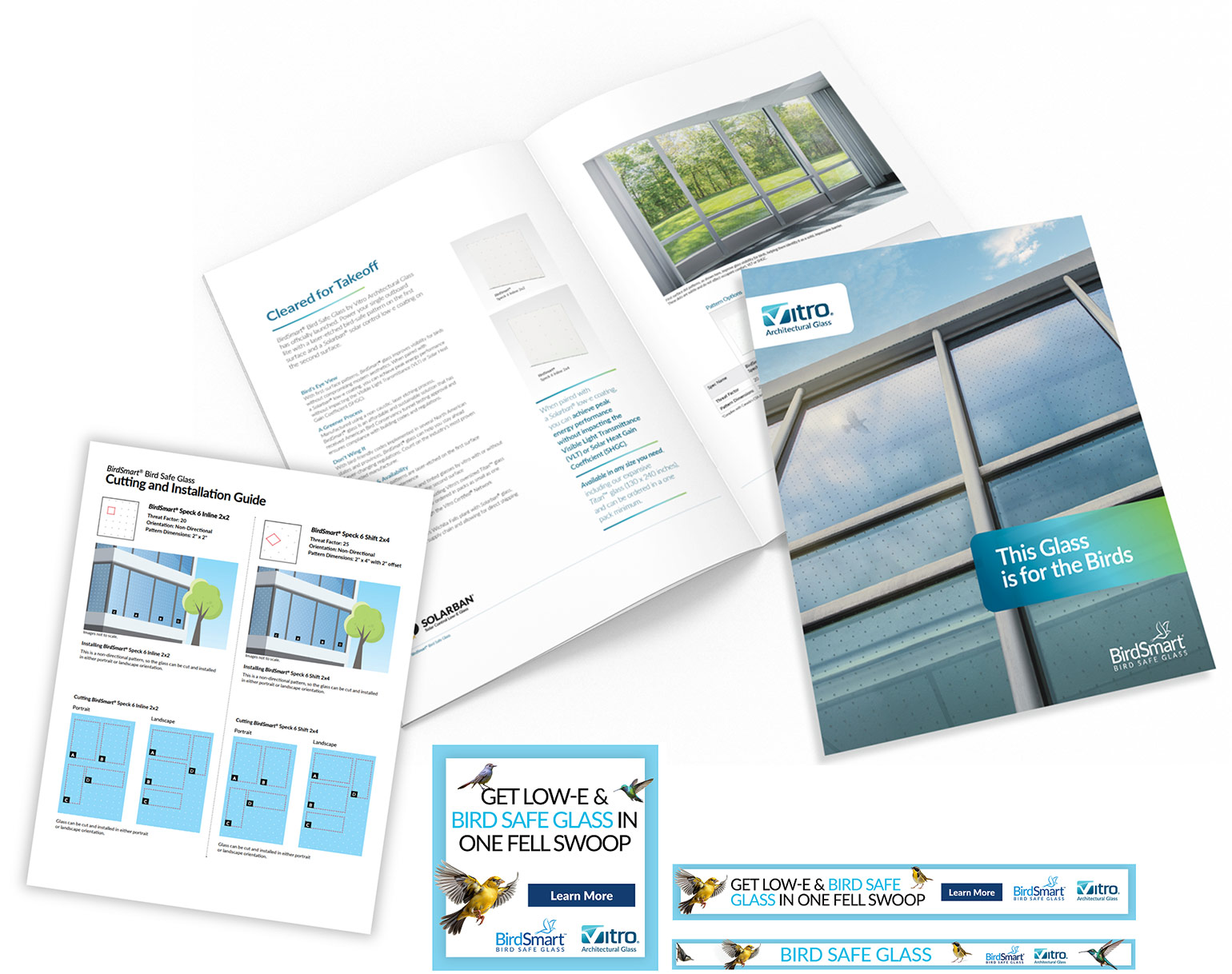
That line sounds obvious until you look at the work. For Vitro's BirdSmart bird-safe glass, the job was not simply to name a product and run ads. Pipitone made training materials for the sales force, installation guidance for fabricators, continuing education for architects, videos for trade shows, media outreach, digital creative and social content. In less than nine months, more than 900 samples shipped. In Vitro's 2025 brand study, 58 percent of respondents preferred BirdSmart over competing bird-friendly glass brands.
Integration arrived as a client problem
Pipitone did not wake up one morning and decide that every capability belonged on a slide. The pressure came from assignments that would not respect departmental borders. A sustainability claim needs brand positioning, evidence, a useful website, trade-media credibility and sales follow-up. A product launch needs naming, training and demand. A crisis plan needs people who know the reporters before the phone rings.
For years, Pipitone shared clients with PUSH SEVEN, a Pittsburgh public relations firm. Vitro might use Pipitone for advertising and web strategy while PUSH SEVEN handled PR. Scott Pipitone was comfortable with the arrangement, observing that clients often assemble their own agency team. In 2020, the firms joined more formally when Pipitone acquired PUSH SEVEN. The decision did not reject specialization. It pulled another specialty inside the room while promising to preserve the relationships clients already trusted.
This is the part another company can copy. Begin with the value chain, not the channel plan. List everyone whose yes is required. Write down what each person fears getting wrong. Build the evidence and tools that make that decision easier. Only then choose the clever line, ad format or platform. Pipitone's 30-minute internal Brand Makeover Challenge compresses the opening move: teams receive an absurd product, define exactly what it is, decide whom it serves and pitch it. The joke works because vagueness becomes visible quickly.
Client needs crossed from design into strategy, digital, media relations and crisis work. Shared accounts made the case for a broader team.
The method needs access to product experts, customer evidence and enough time to learn a category. A shallow brief or a one-off content quota removes its advantage.
A strawberry pie explains the rest
Not every assignment comes with glazing specifications. In 2022, Pittsburgh restaurant chain Eat'n Park and Grist House Craft Brewery made Strawberry Pie Forever, a sour beer based on the restaurant's seasonal pie. Pipitone assembled media kits with the story, a branded glass and four cans, then hand-delivered them to local food editors, broadcasters, influencers and beer enthusiasts. The cans sold out in two hours. The remaining kegs were gone within days. Fans bartered cans online.
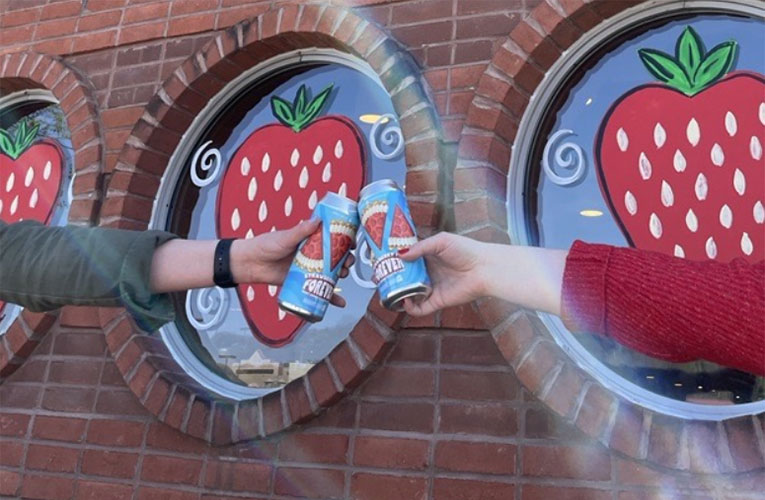
The tactic was small enough to copy and specific enough to work. Pipitone did not mail a generic press release to a giant list. It identified the people most likely to enjoy the collision of two local institutions and put the product in their hands. The campaign reached 4,575 journalists, earned six articles and reported a potential audience of 9.24 million, but the two-hour sellout is the cleaner signal: attention became behavior.
The middle of the market, by choice
Pipitone sits between a narrow specialist and a sprawling network agency. It has senior category expertise and enough disciplines to carry a program from research to reporting, while remaining independent and rooted in one Pittsburgh neighborhood. Public marketplace data positions it accordingly: projects start at $25,000-plus, with an hourly range of $150 to $199. That is not a menu price for any specific assignment, but it signals the kind of problem the firm is built to take on - consequential, multi-channel and difficult to hand off three times.
The buying test
Pipitone is most useful when the product is complex, several audiences influence the sale and trust matters as much as reach. A company seeking a cheap burst of undifferentiated content would be paying for depth it has chosen not to use.
The agency's scorecard spans the practical and the institutional. A Bobrick campaign about access to menstrual products passed 1.2 million impressions. Kingspan's sustainability resource center drew more than 11,000 page views. A neighborhood-business outreach effort helped support 679 Pennsylvania pandemic-relief grants and nearly $3 million in debt relief. In February 2026, Pipitone collected 13 PRSA Pittsburgh Renaissance honors, including Best in Show for BirdSmart, which received a perfect judging score.
Awards decorate the case. The more interesting achievement is continuity. Pipitone has worked with one client relationship for more than 30 years. It has remained on Perrysville Avenue while its assignments moved across industries and borders. The office stopped being a house long ago, but the company still grows as if it were deciding whether to take the next room: only when the work makes a persuasive case.