There is a revealing sentence on the website of Marcus Thomas, an advertising agency outside Cleveland. It does not concern creativity, culture or any of the other soft nouns that agencies polish until they shine. It concerns private equity. “We brought in private equity to help us grow,” the agency says. “It slowed us down.” Five words. A whole management seminar.
The investment arrived in 2021, when Chicago’s Svoboda Capital Partners recapitalized the firm on undisclosed terms. The advertised purpose was familiar: find talent, enter markets, buy capabilities and compete at a higher level. Four years later, Marcus Thomas completed an internal majority ownership buyback. The price was not disclosed. The agency’s explanation was blunter than most transaction announcements: too many voices, too many competing priorities.
That is what Marcus Thomas did, what it cost and what failed, insofar as the public record permits an honest answer. It took outside capital; the dollars remain private. Decision-making speed appears to have gone first. The management team changed its mind when capital intended to accelerate the agency began adding friction. Then insiders bought back control.
An old firm built from new organs
Calling Marcus Thomas an 89-year-old agency is both true and a little misleading. Ira Thomas Associates began in Youngstown in 1937. Marcus Advertising followed in Cleveland in 1946. In 1992, Mark Bachmann and partners bought Ira Thomas; in 2000, that group acquired Marcus Advertising and created the modern firm. The long life is inherited. The current shape was assembled.
The assembly matters. In 2011, Marcus Thomas bought DigiKnow, a Cleveland digital shop with operations in Buenos Aires. Search, analytics, mobile and development moved inside the agency. In 2018 came Devs United, a Salesforce-focused customer-engagement company. Campaigns could now connect with CRM records, automation and sales data instead of ending at the edge of an ad placement.

Today the menu runs from research, strategy and creative through media, PR, social and content production, then keeps going into user experience, custom development, data management and platform integration. The customers are marketing teams that have discovered their campaign is the easy part. Dexcom, the Ohio Lottery, Akron Children’s, KeyBank, Moen, Vitamix, Sherwin-Williams brands and Stanley Black & Decker brands appear on its client lists.
This is the problem the company solves: a brand’s public story and its private machinery rarely agree. The ad promises ease. The website forgets the customer. The CRM knows something useful but tells nobody. The dashboard arrives after the decision. Marcus Thomas sells the coordination of those parts.
The distinctive product is not an advertisement. It is the absence of the seam between the advertisement and everything that must happen next.
A lottery ticket is also a technology brief
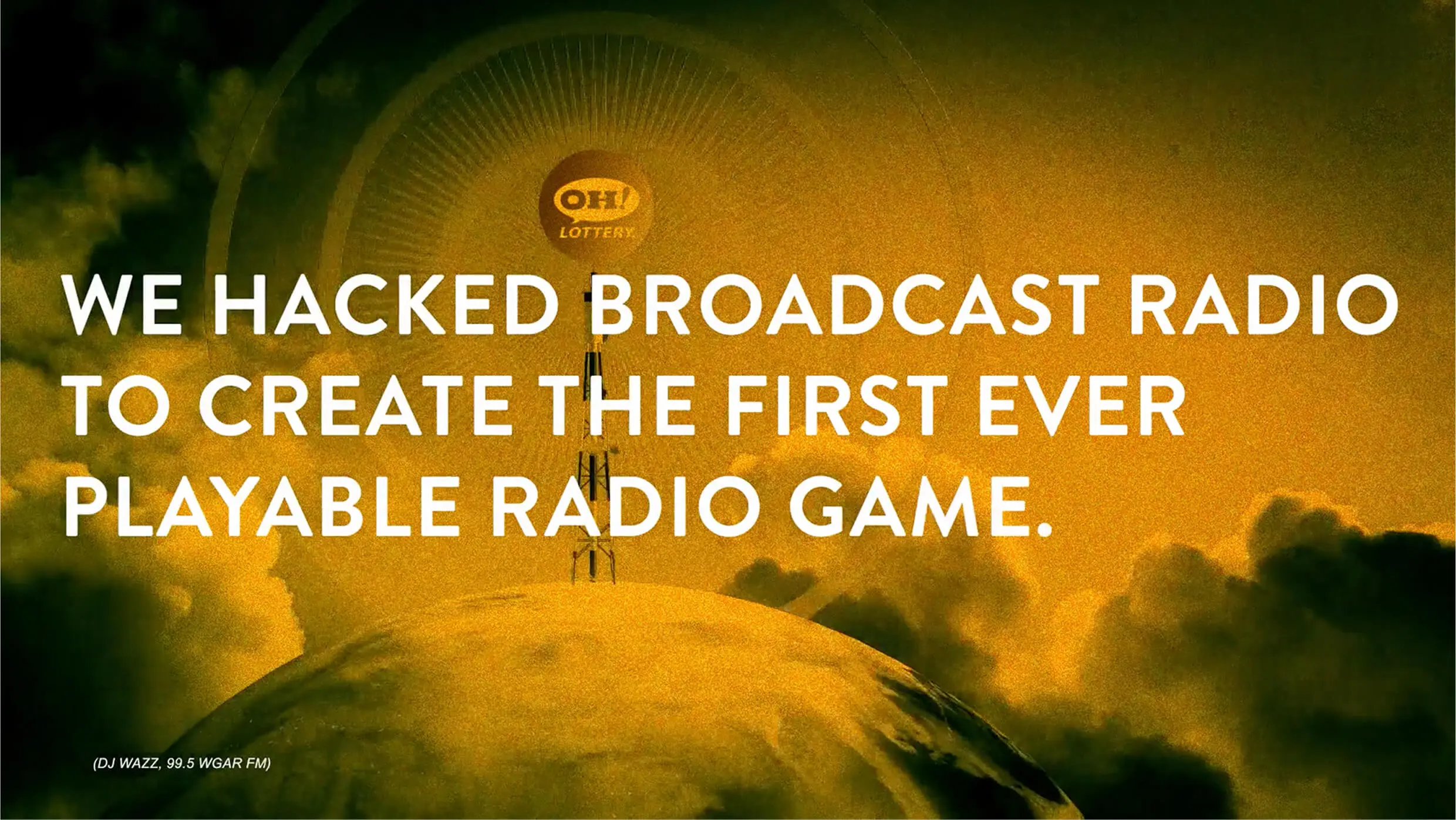
The Ohio Lottery is the tidy example. The relationship began in 2002. Marcus Thomas has since handled media and sponsorship work, built digital experiences and marketed loyalty systems. Its lottery practice even offers a mobile, cashless payout product. In 2024, the agency won a national Gold ADDY for a stranger experiment: a broadcast-radio spot listeners could actually play.
The agency has also built Nucleus, a campaign-management platform born from its own operational annoyance. Nucleus sits over tools such as Salesforce, Adobe, HubSpot, Slack and Teams to organize approvals, deployment and reporting. It is software made by people tired of watching marketers spend their lives moving work between software. That does not make Marcus Thomas a SaaS company in disguise. It makes the product evidence of the agency’s preferred territory: where creative work meets the plumbing.
The small-team claim meets a large menu
Integrated agencies all promise integration. The phrase is nearly self-cancelling. Marcus Thomas makes a more testable claim: small, senior, cross-trained teams; one brand; one profit-and-loss statement. If PR earns more work because a technologist fixed the experience, the departments are not bargaining over whose revenue it is. At least in theory, shared economics remove a reason not to collaborate.
There is evidence in the client tenure. The agency says partners stay an average of 10 years. The Ohio Lottery has stayed for more than two decades. Akron Children’s dates to 2003 on the 4A’s roster; Stanley Black & Decker brands to 2007; KeyBank to 2014; Dexcom to 2016. Longevity does not prove every campaign worked. It does suggest the agency remained useful after the first campaign ended.
Its market position sits between two alternatives. A specialist shop may know one channel more deeply but requires the client to manage the joins. A global holding company can marshal every discipline but may introduce layers, separate economics and junior staffing. Marcus Thomas offers breadth with a regional independent’s shorter chain of command. Its footprint - Cleveland, Cincinnati, Buenos Aires and Santiago - makes the pitch plausible beyond Ohio without pretending to be a worldwide network.
What another company can actually copy
The tempting lesson is “avoid private equity,” but that is too easy and probably wrong. Outside capital did not invent bureaucracy, and independence does not cure it. The useful lesson is to name the scarce resource before accepting the money. For Marcus Thomas, that resource appears to have been decision rights. Growth capital was valuable only while it preserved the speed and client bias the agency sold.
A practical imitation guide
- Give a client one accountable team, not a tour of the org chart.
- Align economics across disciplines so a good referral does not punish the referrer.
- Add capabilities that close a customer journey, not ones that merely enlarge a services page.
- Track relationship length beside awards; repeat business is the less photogenic trophy.
- Before taking capital, write down which decisions the investor will influence and how fast those decisions must remain.
The approach depends on conditions that are easy to miss. A full-service model needs enough recurring work to keep specialists sharp and busy. Shared economics require leaders willing to surrender departmental turf. Small senior teams become expensive if clients buy only isolated projects. And buying back control is available only to a business with financing, cash flow and owners prepared to take the risk. Without those conditions, “one P&L” becomes a slogan and breadth becomes overhead.
Marcus Thomas’s story is therefore less romantic than a declaration of independence. It is a story about organizational latency - the small delays created when a question must cross another desk, a budget must satisfy another constituency or a promising idea must defend itself twice. An advertising firm can survive a mediocre line of copy. It cannot indefinitely survive losing attention to its own machinery.
The agency spent 25 years acquiring the ability to do more. Its latest move was a wager that doing more sometimes begins by removing one voice from the room.