In 1957, Orlando was the sort of place where a boy could smell orange blossoms when the wind cooperated. Walt Disney World did not exist. TikTok, obviously, did not exist. Even the notion that a person might watch television on a telephone would have sounded like a fairly poor advertising pitch. Yet that was the year Chuck Fry and Bob Hammond opened the agency that became &Barr.
There is a temptation to tell this as a survival story. An agency makes it through television, cable, the internet, search, social media, streaming and artificial intelligence. Everyone claps for its stamina. But stamina is the least interesting explanation. Plenty of companies stand still for a long time. &Barr has done something trickier: it kept the family name, the Lake Eola address and the local accent while repeatedly replacing the machinery underneath.
Today it sells research, brand strategy, creative, production, media buying, search, analytics, social media and public relations. Its clients include banks, credit unions, tourism boards, restaurants, schools, attractions and nonprofits. In plain English, organizations hire &Barr when they need to work out what to say, make the thing that says it, put it in the right places and determine whether anyone cared.
The client goes before the ampersand
The name contains a compact piece of account strategy. The agency likes to put a client's name in front of its own: AAA&Barr, Rosen&Barr, Space Coast&Barr. It is a little cute, as advertising devices often are. It is also revealing. The company is not organized around a packaged product. It is organized around becoming the missing half of somebody else's problem.
Consider AAA. Its national account team was handling club relationships, strategy and Google campaign management at the same time. The first thing to fail was not the advertisement. It was attention. Too many campaigns were competing for too few hours. &Barr took over 15 paid-search accounts and more than 200 campaigns in 50 days. Then it changed automated bidding, refreshed responsive search creative and revised keywords with research and forecasting.
The first failure was often not creative. It was a mistaken diagnosis of the constraint.
The agency did not stop at Google. It shifted money into Discovery, display, YouTube and connected television, then supported travel and insurance offers as well as membership. The reported result was a 79 percent increase in membership sign-ups through Google channels and more than 200,000 sign-ups across the campaigns. We do not know the dollar budget. That matters. A percentage is not an invoice. But the sequence is useful: relieve the operational bottleneck, improve the existing engine, then widen the channel mix.
The expensive audience is the wrong one
FlexPoint Education Cloud had a different problem. It was a new name in a specialized market, selling online-learning tools to the people who choose curriculum for schools and districts. The conventional answer to low awareness is more reach. &Barr chose less reach, aimed more precisely.
The team identified publications read by education decision-makers, acquired lists based on the job titles that mattered and used one-to-one programmatic targeting. The plan combined site-direct placements, newsletters, native content, print, webinars and thought leadership. More important, it incorporated the previous year's lessons. That is what changed the plan: evidence about which people and placements were producing qualified interest.
Qualified leads rose 566 percent, the cost per lead fell 93 percent year over year and media spend fell 53 percent. Again, no raw dollar figure is public. The honest cost story is comparative: the second approach used just under half the media spend and produced far more of the outcome the client wanted. Cheap attention had lost its appeal. Precision changed their mind.
A full-service agency is a bet on fewer seams
Specialist agencies argue that focus creates depth. In-house teams argue that proximity creates speed. Large networks argue that scale creates access. &Barr's place in the market is between those choices: an independent regional agency with enough disciplines to run a national media assignment and enough local memory to understand why a Central Florida housing campaign requires more than generic concern.
For Habitat for Humanity Greater Orlando & Osceola County, research showed that familiarity was not the obstacle. People knew the organization. They misunderstood its mission and beneficiaries. The brief changed from creating awareness to correcting perception. Children talked on camera about dream careers; the campaign placed those dreams beside the roughly $106,000 annual income then needed to afford a Central Florida home. It generated nearly four million impressions and a reported 33 percent increase in website traffic.
The useful distinction
Awareness problem: People have not heard of you. Buy and earn attention.
Perception problem: People know the name but carry the wrong story. Supply evidence, language and a reason to reconsider.
That distinction is easy to copy and easy to skip. It requires research before production. It also requires the people who discover the insight to remain close to the people who write the line, buy the placement, prepare the spokesperson and read the response. Integration works when those handoffs would otherwise destroy useful context.
Build the thing you can use twice
For Florida's Space Coast, the team wanted the emotional force of a rocket launch without depending on a rocket launch occurring on schedule, in good weather, while cameras were rolling. So it commissioned a 3D Falcon Heavy model. The asset could appear in spring and summer work and remain in the client's library. During an eight-week campaign, the destination recorded more than 800,000 website visits, 63,448 flight bookings and 20,988 hotel bookings. Tourism development tax collections later grew from $16 million in fiscal 2018-19 to a projected $26 million-plus in fiscal 2025, though no single campaign can reasonably claim all of that growth.
The same instinct appears in social work. Space Coast Credit Union's feed had been driven largely by recruiting. &Barr turned it into an always-on publishing and service operation, with moderation rules, education, giveaways, live Miami Dolphins content and a library of reusable assets. The reported totals passed three million organic impressions, 54,000 engagements and 3,400 new followers. A channel stopped behaving like a jobs board and started behaving like a small newsroom.
The limits are part of the lesson
There is no universal recipe hidden beside Lake Eola. Hyper-targeting works when the buyer can be identified and reached. It is weaker when demand depends on broad cultural fame or when privacy rules make the audience map unreliable. An integrated agency earns its keep when a problem crosses disciplines. A narrow assignment may be cheaper and better in the hands of a specialist. Reusable assets help when a brand will deploy them consistently; otherwise, the 3D rocket becomes an expensive file in a forgotten folder.
The client must also share data, tolerate testing and permit the budget to move. If every channel allocation is politically fixed, optimization becomes theater. If a company cannot agree on the desired action, reporting will produce large numbers with small meaning. &Barr's public case studies are strongest when they connect exposure to sign-ups, bookings, qualified leads or traffic. They are less instructive when only impressions are available.
What a smaller team can copy on Monday
- Write the problem as a constraint, not a deliverable. “Our national team cannot manage 200 campaigns” is more useful than “we need search ads.”
- Separate awareness from perception. Ask what the audience already believes before purchasing another impression.
- Compare reallocating the current budget with requesting a larger one. The FlexPoint and AAA work began by changing the mix.
- Commission assets with a second and third use in mind. A content library compounds; a one-night stunt expires.
- Choose one action that matters after attention: a sign-up, qualified lead, booking, visit or changed behavior.
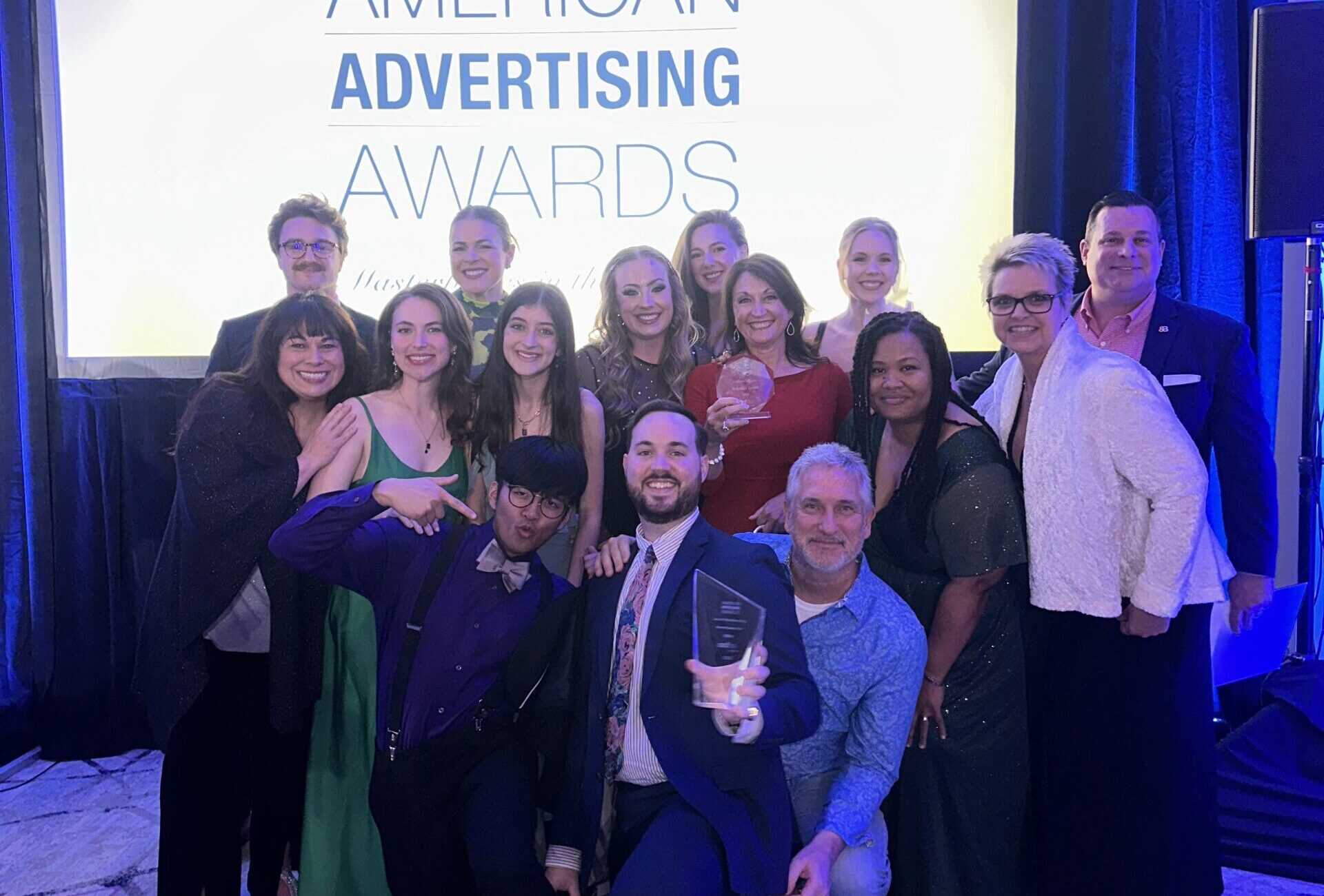
Pete Barr Jr. took over as president and CEO in 2001, inheriting a name that had already lived through several media eras. Under him, the agency expanded social capability, won regional and international awards and added assignments with Ripley's and First Internet Bank. The Space Coast relationship, begun in 2020, now runs through 2030. The company reported 100 percent client retention in 2025.
Longevity can look like a museum display: dusty proofs, old logos, a founder staring nobly from a wall. At &Barr, the more telling artifact may be the ampersand. It is a hinge, a small mark designed to join two things. The channels will keep changing. The useful question remains remarkably old: what belongs on the other side?