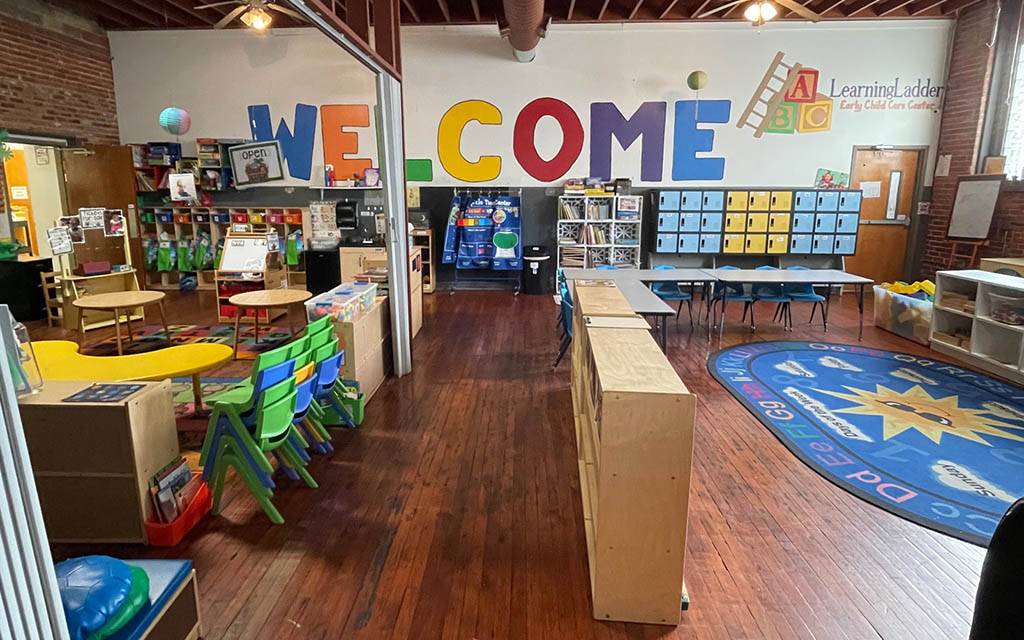
The problem was an elevator. Kenya and Sean Johnson had bought a building in downtown Erie to expand The Learning Ladder, their childcare business. Demand was hardly mysterious: in September 2025, Kenya reported 105 children on its waiting list. But inside the promising shell, the infrastructure needed more work than expected. The elevator had to meet code. A business with customers waiting outside still needed money to make the inside usable.
- Bridgeway lends to businesses, nonprofits, and community property projects across a three-state region.
- Borrowers can receive business assistance alongside financing.
- Its flexibility comes with underwriting, repayment obligations, and product-specific eligibility.
The elevator in the business plan
The Johnsons returned to Bridgeway Capital, which had helped finance their original childcare center. Two loans closed in July 2025 to refinance the property and finish renovations. An expansion intended to make tripling enrollment possible also involved plans for 18 apartments. Those were ambitions, not completed results. The telling detail is the sequence: demonstrated demand, a purchased building, unexpected work, then a revised financing package.
Bridgeway’s account quotes Sean describing the experience as “being celebrated, not tolerated.” That is a useful clue to its positioning. A conventional loan assessment can leave a borrower with a viable service and an awkward transaction searching for another option. Bridgeway’s proposition is to examine that awkwardness closely enough to structure a loan around it.
A lender built for the gaps
Founded in 1990 after the regional steel industry’s collapse, the Pittsburgh nonprofit is a certified Community Development Financial Institution, or CDFI. Its territory covers western Pennsylvania, eastern Ohio, and northern West Virginia. Its customers include small businesses, nonprofits, and real estate projects with community benefits. The problems it takes on include collateral gaps, credit challenges, and transactions combining several kinds of funding.
The distinction is in what accompanies the money. Bridgeway offers business assistance and cohort programs that help owners improve operations and prepare for financing. It also measures where lending goes and what it supports. In fiscal 2025, it reported that 93% of lending dollars reached low-to-moderate-income areas or nonprofits serving low-income people. Geography and purpose are part of the investment decision.
of FY2025 lending dollars went to low-to-moderate-income areas or nonprofits serving low-income individuals.
Patient money has a price
There is no reason to romanticize borrowing. Bridgeway’s March 2026 small business sheet lists typical loans of $30,000 to $1 million, five-year terms, and fixed rates from 6.25% to 10.5%. The origination fee is 2%, plus closing costs. On a $100,000 loan, that fee alone would be $2,000. Interest and closing costs come in addition.
The same sheet requires at least two years in operation and a minimum credit score of 625. Bridgeway’s FAQ says business loans require a guarantee from an owner or someone with a stake in the business, excluding nonprofits. Its published application process allows four to six weeks after a complete submission. An idea on a napkin or a bill due tomorrow calls for a different conversation.
Products address different problems. Construction and owner-occupied property loans finance physical space; bridge loans address delayed receipts; energy efficiency loans address building upgrades. For eligible southwestern Pennsylvania nonprofits owning and occupying their premises, the Rainy Day Loan offers preapproval up to $100,000 for urgent repairs, with no interest or fees. Drawn funds are repaid over five years.
When the grant arrives after the bill
Consider Etna Center for Community. Its renovation combines a library, gathering space, offices, and four affordable apartments. Bridgeway supplied a preliminary grant for design and engineering. Later, the organization won a $1.5 million Pennsylvania Redevelopment Assistance Capital Program grant. The catch: reimbursement required paying eligible costs first.
Bridgeway provided bridge financing. The October 1, 2026 account scheduled the center’s opening for October 17. Here the expertise is understanding the order in which money moves. A grant award can establish a source of repayment while leaving construction short of cash. The lender finances the interval.
Simplified sequence. Actual disbursement and repayment depend on the financing agreement.
The factory comes with a second act
Bridgeway has also become a property developer and operator. In 2013, with Richard King Mellon Foundation support, it bought 7800 Susquehanna Street in Pittsburgh’s Homewood neighborhood. The former Westinghouse facility became workspace for manufacturing, makers, nonprofits, and job training. Its website lists 29 tenants employing more than 100 people, with affordable rents and flexible, long-term leases.
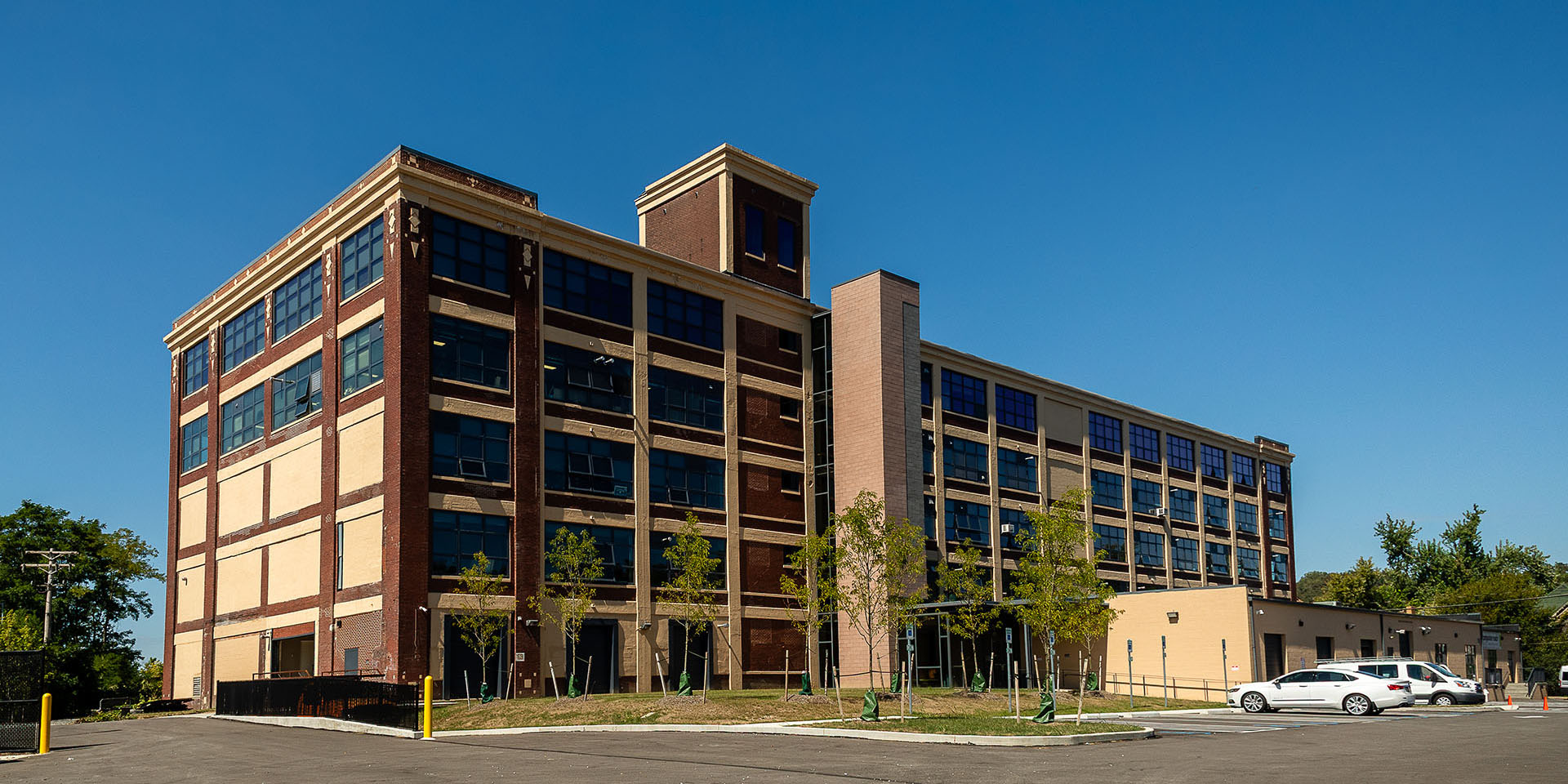
Pittsburgh Urban Initiatives records a $7.1 million total cost for the 2015 project. That figure describes a particular redevelopment transaction, not every investment since acquisition. The lesson is physical: a maker may need suitable workspace as urgently as working capital. Long leases and affordable rent can give expansion somewhere to happen.
The support needs support, too
Creative businesses occupy an unusually visible place here. Monmade connects regional makers with design and development professionals. ACRE brings business support to rural creative entrepreneurs; NWPAMade and Next Leap offer further cohort pathways. These programs work on the business surrounding the craft: operations, connections, and access to customers.
In 2025, a federal funding cut ended a multiyear grant supporting ACRE and other assistance. Chief Programs Officer Adam Kenney described assembling resources with colleagues and partners to keep ACRE running. The episode exposes a dependency: coaching has costs even when it accompanies a loan. Sustaining the service requires its own financing.
What to borrow from the idea
Bridgeway combines grants and institutional capital with income from lending, property, and investments. KeyBank announced a $5 million credit line in 2023; a new $1 million Erie County Gaming Revenue Authority investment followed in 2026. Banks can therefore be both alternatives for borrowers and suppliers of capital to the nonprofit lender.
Its FY2026-2028 plan targets $75 million in lending to mobilize $250 million in project investment. The practical idea to copy is to identify the precise obstruction: a funding delay, unsuitable space, missing business skills, or an unexpected repair. Then match support to that obstruction. It requires credible repayment, local knowledge, and funders willing to support the work around the loan. A waiting list helps make the case. Someone still has to pay for the elevator.