The awkward moment in an education business arrives when you still know how to sell the lesson, but no longer believe you should. Authority Hacker reached that moment after a decade of teaching SEO. Gael Breton and Mark Webster had built courses around a pleasing proposition: create a useful website, attract search traffic, earn money from recommendations. Then the ground underneath that proposition shifted.
They announced that their flagship courses would close. The podcast would keep going. This is where the company becomes interesting: the microphone survived a change of conviction. Today, The Authority Hacker Podcast is the public conversation around a business teaching established operators how to use AI and automation.
- Listen free. Practical discussions for business owners and marketers.
- Know the shift. Affiliate SEO gave way to AI implementation.
- Pay for help. Courses, workflows and community sit inside the AI Accelerator.
- Start small. Test one recurring task before rebuilding your business.
Five videos. Twenty-nine dollars.
Authority Hacker began in 2014. The founders had run a marketing agency that grew to about 30 people. They brought complementary skills: Webster knew about building websites; Breton knew SEO. In a historical interview with Memberium, Webster recalled that they liked the content work more than working for clients. Teaching offered another way to use that experience.
Their first paid education product, in 2015, was five videos for $29. Webster later identified underpricing as an early mistake. They raised prices and, to their surprise, conversion rates did not fall. They also examined refunds: 90% of customers who requested one had not joined the premium Facebook group. That observation pointed them toward better onboarding. It did not prove that joining a group caused satisfaction.
There is a useful business lesson tucked into those two findings. Price and participation mattered alongside the videos. A customer could buy information and still fail to enter the setting where it became useful. The company had to work on that setting, too.

Google moved the goalposts
The show began in 2016, according to its publisher. Its original subjects were SEO, affiliate marketing and online growth. It found a receptive audience: in an Ahrefs marketing-podcast poll published in 2021, Authority Hacker finished first with 108 votes. Ahrefs acknowledged the sample’s bias toward SEO professionals. The result tells us something about the show’s standing among practitioners, rather than all podcast listeners.
The larger test came in 2024. In his public closure announcement, Breton cited Google updates, the flood of AI content and changes to search results. He said the content-site model had become unreliable for most people. The Authority Site System and Authority Hacker Pro, he wrote, had generated eight figures in revenue. That was a statement about those courses, not a disclosure of annual company revenue.
“Because I refuse to sell courses teaching strategies that no longer work reliably for most people.”
Gael Breton / on closing the flagship courses
What failed was the predictability of the offer. Teaching a beginner to build a business dependent on search traffic had become harder to defend. The founders could still sell the courses; they chose to change direction. Readers do not have to share every judgment about Google to appreciate the decision.
From listening to doing
The current company sits between business media and practical education. Its podcast introduces ideas; its paid products help people implement them. The audience now includes small business owners and marketers who already have work to improve. Breton leads AI strategy and product development; Webster handles marketing, operational systems and community.
Consider the AI SEO Audit workflow. A user supplies a URL and context. Claude Code draws on connected Ahrefs or DataForSEO data, with Google Search Console optional, checks the site and compares competitors. The output prioritizes bottlenecks and includes prompts for making changes. It also exports a report. The distinctive move is connecting diagnosis to a task someone can perform.
Editorial guide: the automation still needs an owner.
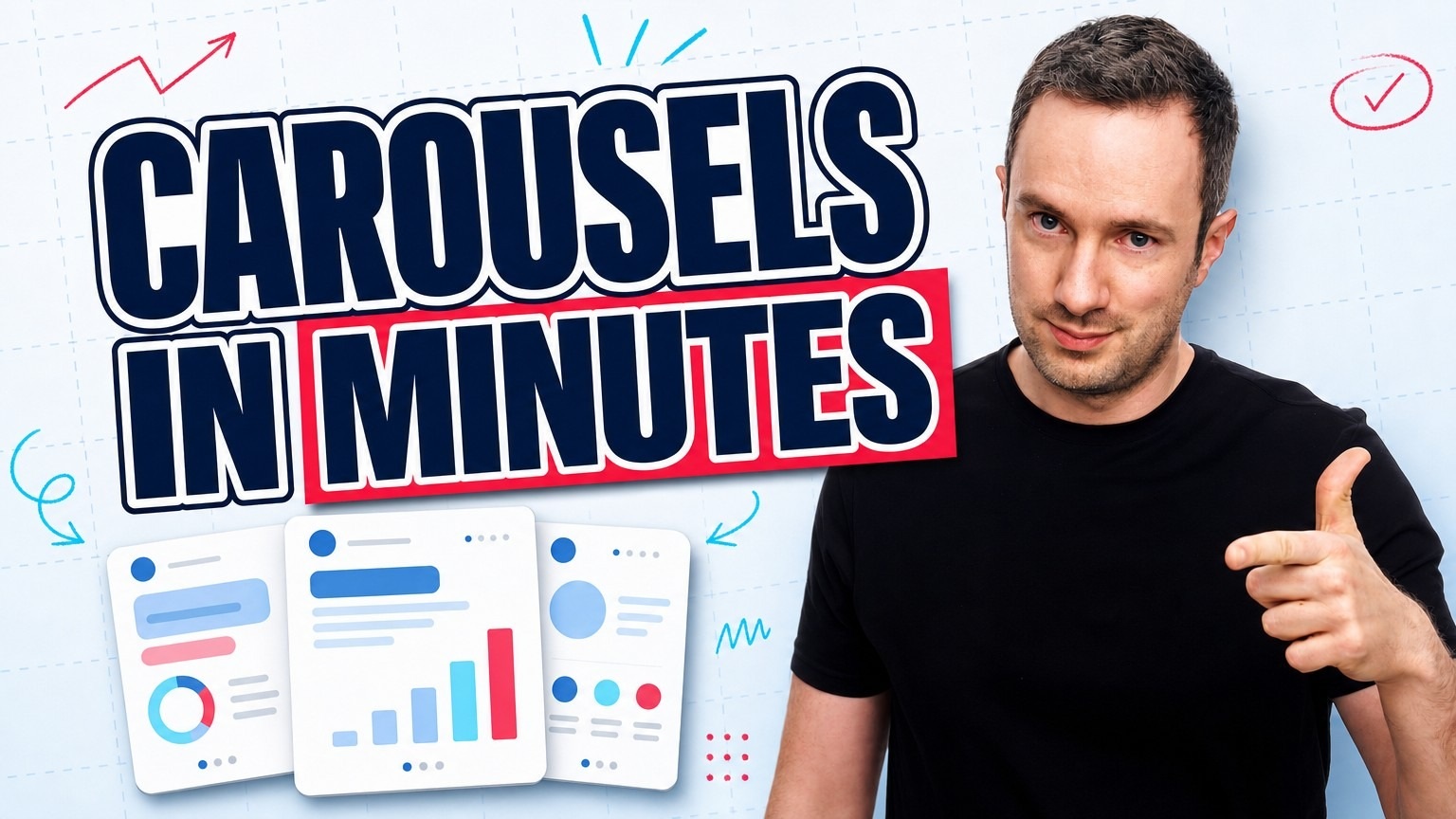
Another workflow turns a blog post, transcript or research document into LinkedIn and Instagram carousels. It selects points, writes slides, generates branded visuals and exports the assets. That is a concrete use for a marketing team with good material and too little production time. Thin source material still leaves a thin argument, however attractive the slides.
Free ears. Paid hands.
The podcast is free. So are two introductory Claude Code video lessons. The commercial offer is the AI Accelerator: courses, reusable skills, community access and office hours. As checked in October 2026, Standard costs $149 monthly or $1,188 billed annually. The advertised $99 monthly equivalent requires paying for the year. External AI and data tools may add their own bills.
Same advertised Standard access. Different payment commitments.
Higher tiers add closer founder access. This gives the business recurring revenue while tools and lessons keep changing. The podcast listing also invites sponsorship offers. Its free-show alternatives include Marketing School and Niche Pursuits; customers considering paid help can compare courses, consultants or building workflows themselves. Authority Hacker’s appeal is the combination of marketing experience, working examples and ongoing help.
Copy the experiment
The practical way to try it is modest. Pick one recurring job. Record the time it takes today. Run a workflow on material you understand. Review the output, count corrections and compare the total effort. A faster first draft means little if the cleanup consumes the afternoon.
That approach requires a real task, usable data and someone willing to check results. A listener looking for passive income may find the new offer less comfortable than the old promise of a content site. A business owner with a repetitive bottleneck has a better starting point. The podcast’s most useful invitation is to become a little more experimental about work you already do.