The coffee counter near your departure gate may look like another outpost of a national chain. Behind the familiar sign, however, can sit a local operator with a decidedly unglamorous problem: finding the money to open the doors. Airport concessions have expensive beginnings, complicated contracts and cash-flow schedules that do not always cooperate with a conventional loan. The boarding announcements keep coming. The financing can take rather longer.
Lendistry has built a program for that mismatch. Its airport financing offers quarterly payment options for qualifying concession operators, aligning debt payments with how the business receives distributions. In July 2026, it announced a $100 million credit facility from East West Bank to support the program. A locally owned airport licensee is precisely the sort of business that makes the company’s broader argument tangible: a recognizable brand does not necessarily mean easy access to capital.
Founded in 2015 by Everett K. Sands, Lendistry is a minority-led small-business lender and grant administrator. It combines institutional money, online processing and community relationships. The product can be a working-capital loan, acquisition financing or the machinery behind a state relief program. Its customers include entrepreneurs seeking money and institutions seeking a workable way to distribute it.
Small-business loans and grants deployed
Those totals describe several kinds of work. Grant money passed to recipients is different from a loan portfolio, and neither figure is company revenue. The distinction matters when judging a business whose scale grew during an extraordinary emergency.
A banker builds another route
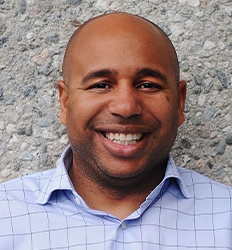
Sands arrived with experience at community and national banks, including Wells Fargo. His career also included leadership at minority depository institutions. He brought familiarity with credit decisions, operations and the places where borrowers lose their way between having a viable business and presenting an acceptable application.
Lendistry’s answer was to combine banking expertise with digital access. Its Community Development Financial Institution identity puts underserved borrowers at the center of that effort. Its nonprofit partner, The Center by Lendistry, adds business education and advice. Together, the proposition extends from obtaining capital to understanding how to use it.
The operating permissions arrived over time. Lendistry received an SBA Small Business Lending Company license in 2022; Lendistry SBLC gained Preferred Lender status in 2023. Those milestones gave the business a broader role in government-backed lending. A software interface is useful. The authority and expertise to make the loan are what put money behind the screen.
344,000 applications. Fifteen days.
The pandemic supplied an unforgiving test. California’s small-business relief program began with $500 million and drew a flood of demand. At an April 2021 briefing, Sands recalled the opening rush:
“No one expected us to have 344,000 applications in the first 15 days.”Everett Sands / April 2021
The problem was larger than an online queue. Owners had different languages, different paperwork and different levels of experience with financial institutions. Applications were available in 18 languages. Lendistry and its partners helped applicants finish documents after the application deadline, and more than 100 partner organizations covered all 58 California counties.
The revealing adjustment was allowing application help to continue after intake closed. The process made room for people who needed assistance assembling a complete file. For anyone designing a public program, that is a useful lesson to copy: build support into the application process, especially when the intended recipients are unlikely to have an accountant waiting beside them.
Borrow the audience, build the loan
Amazon offered a different test: could financing reach entrepreneurs through a platform they already used? The companies began a Community Lending pilot in 2021 with a $10 million goal. By September 2022, it had lent more than $35 million to over 800 sellers. Amazon made it a long-term offering, with a plan to lend more than $150 million over the following three years.
The announcement included Colsen, a Miami ecommerce business whose co-owner described using financing to expand its product selection. That is the ordinary commercial logic beneath the partnership: inventory, manufacturing, staffing and marketing require cash before the resulting sales arrive. The pilot’s results gave Amazon a stated reason to continue the arrangement.
Lendistry later added financing for Walmart Marketplace sellers. Its current Walmart page describes term loans and SBA working-capital options, with program-specific qualifications. Visa followed another route in February 2026, announcing a $100 million working-capital facility with Lendistry as part of Visa & Main. Visa’s broader offering also includes marketing help and business tools.
These partnerships suggest a repeatable approach. Start where the owner already does business, then bring the financing operation to that audience. The lender still has to evaluate the borrower. A marketplace account or a famous corporate partner cannot settle the question of repayment.
A credit facility is not a windfall
Consider the transaction KeyBank closed in November 2025: a $100 million senior secured revolving credit facility for a Lendistry subsidiary. The collateral was a portfolio of small-business loans. This is borrowing capacity supported by financial assets, with a revolving period followed by amortization. It is different from an investor buying a stake in a startup.
KeyBank’s description also gives a useful view of how Lendistry earns money. It originates loans, services most of them, and receives additional fee income for facilitating government loans and grants. Its institutional customers can purchase an administration operation covering intake, verification, reporting and servicing.
Banks, corporate partners and public programs
Applications, underwriting, deployment and servicing
Financing or program-specific grants
That combination gives it a particular place in the market. A bank can lend; a software vendor can sell processing tools; a public agency can establish a fund. Lendistry offers lending and the work of administering capital. Its value to an institution depends on how reliably those pieces operate together.
The airport program illustrates the specialization. Quarterly payment options address the timing of concession distributions, while eligibility includes Airport Concessions Disadvantaged Business Enterprise certification. Copying the idea requires understanding a sector’s contracts and cash flow. Changing the wording on a general-purpose loan page would accomplish much less.
The price of breathing room
For borrowers, the practical question is the repayment schedule. As reviewed in September 2026, Lendistry advertised business term loans from $10,000 to $350,000, fixed rates starting at 11.99 percent and terms of one to five years. The estimated processing window was three to seven business days. Larger standard SBA 7(a) loans reached $5 million, with longer terms and a 35-to-90-business-day processing estimate.
Starting interest rates are not an all-in price or a promise to every applicant. Lendistry says origination charges and applicable SBA guarantee fees may apply. Applications themselves are free. A useful comparison includes fees, total repayment, variable-rate exposure where relevant, collateral, personal guarantees and the timing of payments.
That keeps the company’s mission in perspective. A business unable to support debt payments does not become financeable because a lender emphasizes inclusion. Nor does an owner needing immediate money have the same options as one planning a property purchase months ahead. Product eligibility, operating history and repayment capacity still set boundaries.
The alternatives depend on the job: a conventional bank or another SBA lender for a substantial expansion, a community lender for a particular local program, or an online business lender for shorter-term needs. Lendistry’s appeal is the combination of channels and assistance. The right comparison remains the offer available to the individual business.
The paperwork is part of the product
Lendistry’s institutional platform includes customized program sites, document collection, customer support, fraud checks and portfolio reporting. These are easily overlooked in a funding announcement. They are also the work that determines whether a program’s eligibility rules can be applied consistently across thousands of applicants.
The Center by Lendistry addresses another part of preparation. Its programs include digital growth assistance in English and Spanish and support for contractors seeking opportunities in the clean-energy economy. Advice can help an owner prepare a stronger business; borrowing supplies the capital. Neither automatically substitutes for the other.
There is a pleasantly literal detail in Lendistry’s own procurement. Its Tustin office, announced in 2023, was designed, equipped and furnished using local small-business vendors. The company describes its workplace as a work-hard-and-be-nice environment. Buying from the businesses it wants to finance gives that positioning a concrete expression, right down to the office furniture.
From relief checks to rebuilding
The next chapter reaches beyond storefronts. In August 2026, Lendistry Home Loans announced a disaster recovery mortgage pilot for homeowners displaced by the Pacific Palisades and Eaton fires. Bank of America committed $15 million in seed capital and the California Community Foundation committed $5 million. The announcement anticipated applications opening in early fall.
The pilot proposes lower liquidity requirements and more flexible cash-flow underwriting to help households rebuild. Its initial scope is limited. The idea nevertheless follows a familiar pattern in Lendistry’s work: identify where standard financing is failing to fit a particular situation, assemble partners and design a program around the obstacle.
For the airport operator, the online seller or the household preparing to rebuild, that argument eventually comes down to an unromantic calculation. Does the money arrive when it is useful, on terms the borrower can carry? Lendistry’s next decade will be measured in those answers, one payment schedule at a time.