At 6:47 on a Sunday evening in January 2015, a university student received an email from Andhy Koesnandar. The subject was “Internship Opportunity at Cermati.com”. Bobby Priambodo had not yet begun thinking seriously about an internship. Koesnandar, evidently, had begun thinking about him.
There was a reply, then a quiz. It should take a web developer no more than half an hour, Koesnandar explained. Tools were allowed, including Google. The invitation offered a practical introduction to a company still being assembled: here was some work; would you like to try it?
It is an appealingly modest opening for a financial technology business. Before the investor announcements and the collection of companies, a founder was recruiting a student by email. Cermati had been co-founded the previous December. Its marketplace would launch in April. The grand ambition already existed; someone still had to help build the website.
A return ticket with different terms
Koesnandar arrived at that Sunday evening with an American education and seven years at Microsoft behind him. He studied computer science and mathematics at the University of Nebraska, followed by a master's in computer science. An MBA at the University of Washington's Foster School of Business added another discipline to the collection. His studies there ran from 2012 to 2014, overlapping with his Microsoft career.
At Microsoft, his work included Dynamics, cloud software and Bing Travel. From November 2010 to November 2014, he managed development for Bing Travel, working on travel research, flight information and data from outside providers. A person looking for a flight sees a price and a departure time. The engineer sees the work required to put reliable information in the same place.
There is a useful continuity between that work and Cermati. Both involve helping people navigate choices assembled by different institutions. Travel has its own talent for making comparison tiresome. Financial products add fees, eligibility and consequences that remain after the browser closes. Moving between those worlds changed the stakes of an old engineering problem.
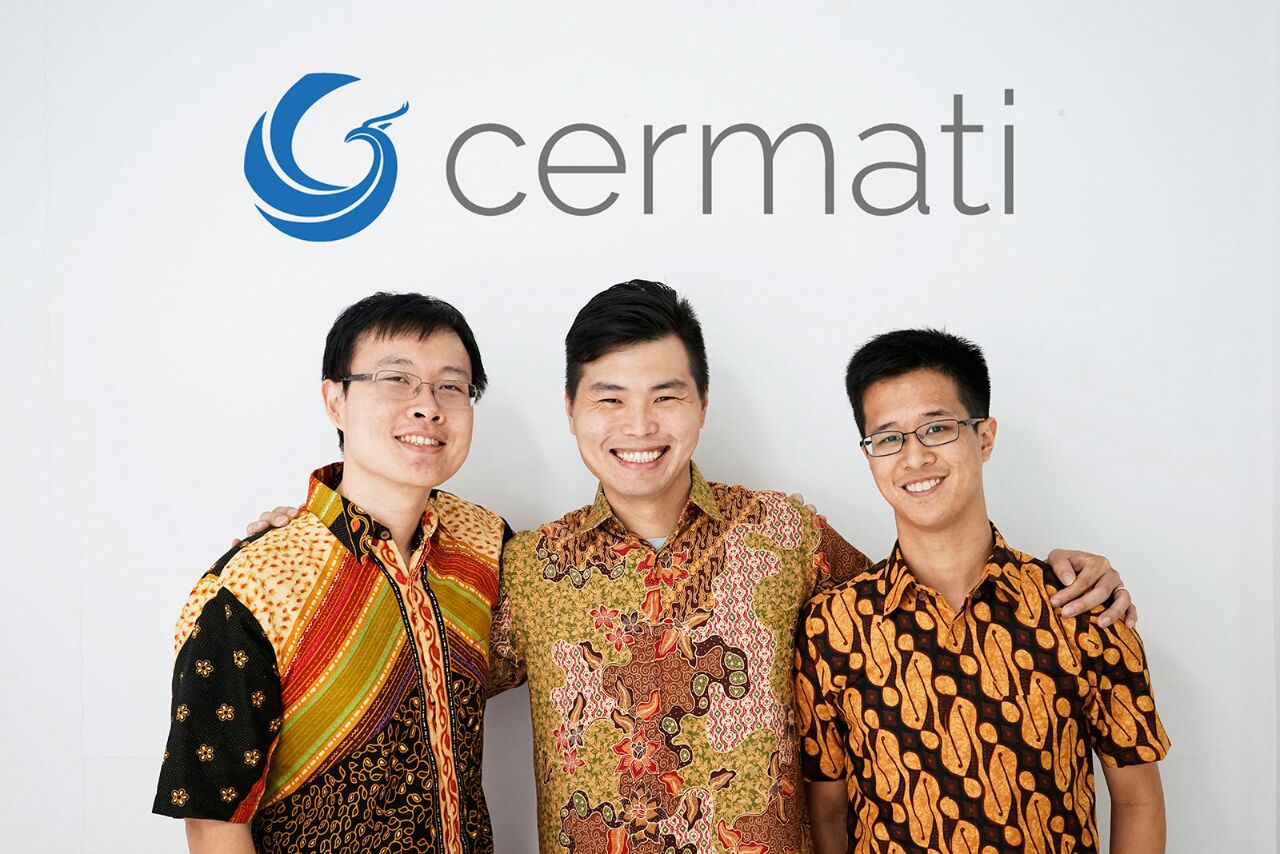
He returned to Indonesia and began Cermati with Oby Sumampouw and Carlo Gandasubrata. In 2017, he recalled seeing smartphones in villages around Pasuruan and during a visit to Papua. Those observations encouraged his belief that an internet connection could become a route to financial information and services. The device was already reaching people. The question was what useful access could follow.
The comparison before the application
Cermati's starting proposition was straightforward: make financial products easier to research, compare and apply for online. Credit cards, loans and savings products could be viewed through one marketplace. Information that otherwise required a succession of separate enquiries became something a customer could examine together.
The idea carried a quiet demand for the companies supplying those products. A comparison works only when the terms can be explained. The appealing button at the end of an application cannot compensate for confusion at the beginning. In a 2017 interview, Koesnandar described wanting products that customers could understand, with standardised features and an application process they could follow.
“Technology has been our backbone so far.”
Andhy Koesnandar, February 2017
He also made a distinction that matters to his ambition. Opening a bank account does not exhaust a person's financial needs. People who already have accounts may still struggle to understand other available products. Cermati could therefore work on access to information as well as access to the account itself. The useful question became whether a customer could make an informed next choice.
That gives the business a less theatrical centre than the usual story of an app changing everything. A product page must be legible. An application must get through. A partner must be ready to receive it. The ordinary steps are the service. Customers generally have other plans for their afternoon than learning the internal organisation of a bank.
The supermarket gets a workshop
By September 2018, Cermati was announcing Series B investment from Djarum Group. Earlier backers East Ventures, Beenos Partners and Finch Capital exited in that transaction. Koesnandar's explanation of the next stage included wider reach and additional product lines. The company was also looking beneath its own marketplace.
He described plans to develop identity verification and fraud detection using artificial intelligence. The ambition was moving from showing customers products to helping financial institutions handle the work behind an application. A marketplace learns a great deal about where an application becomes difficult. That knowledge can become software for the institution on the other side.
His shorthand was a supermarket of financial products. It was a helpful image: several choices, one place to examine them. Yet the technology work suggested a building with a sizeable workshop behind the shelves. Verification, data handling and connections to partners would decide how much of the promise survived an actual transaction.
Engineering and development
Co-founding, then public launch
BCA Digital and Blibli partnership
In July 2021, Cermati Fintech Group introduced its Banking as a Service offering through a partnership with BCA Digital and Blibli. The integration put blu banking functions inside Blibli's application, including account opening, transfers and payments. A customer could use those services without switching to a separate banking app.
The earlier marketplace invited customers to visit a destination. Embedded banking allowed a service to appear where customers were already spending time. For Koesnandar, the partnership extended existing work with Blibli and Indodana on paylater. The group was accumulating several ways to connect financial providers with people, rather than asking one website to do every job.
By 2022, he was discussing the accumulated experience in digital onboarding, identity checks, fraud detection and credit scoring as a basis for further business lines. The path from comparison pages to financial infrastructure becomes easier to follow through those practical tasks. Each application had work attached to it. Some of that work could be made into a product of its own.
Trust has a maintenance bill
A financial marketplace also accumulates responsibility for information customers entrust to it. In 2020, Cermati faced a publicly reported data breach. Koesnandar said the company was working with Indonesia's National Cyber and Encryption Agency to investigate and would involve independent security consultants to improve its systems. He also said corrective measures had been taken.
The episode belongs in the story because the business depends on more than convenience. Asking people to compare products is one promise. Asking them to submit personal information adds another. Expansion brings that obligation along with it, whether the service appears on Cermati's own pages or inside somebody else's application.
His present responsibilities also extend into governance. Cermati Protect lists him as president commissioner, and Indodana Finance lists him as its president commissioner. These roles sit alongside his position leading the group. They show how far his working brief has travelled from a single marketplace: there are distinct businesses to oversee as well as products to develop.
A programmer with a lunch preference
The institutional titles leave room for smaller details. Cermati's engineering biography records that Koesnandar would happily eat KFC every day. The other founders receive similarly personal introductions: Sumampouw's pursuit of Jakarta's bakmi flavours, Gandasubrata's enthusiasm for escape rooms. For a page recruiting engineers, lunch is a perfectly respectable subject.
The same engineering site stresses code review, knowledge sharing and pragmatic problem solving. Those are company principles, rather than proof of any individual's daily behaviour. But the early internship account supplies a concrete example of a founder making contact himself. Koesnandar's recruitment email gave a student both an invitation and a small piece of the work to attempt.
It is tempting to read a whole personality into that exchange. The exchange is interesting enough on its own. A senior engineer who had worked on widely used products was answering a student's questions and explaining a hiring exercise. In the first weeks of a company, the distance between founder and applicant can fit comfortably inside an inbox.
What remains after the campaign
In the group's 2023 impact report, Koesnandar signed his letter as Group Chief Executive Officer. Dated September 2024, it described a continuing effort to put straightforward financing and protection products into online and offline purchasing journeys. The language of access had survived the changes in the business around it.
By January 2026, another kind of material was receiving attention: promotional waste. The group worked with Kertabumi in South Tangerang on recycling equipment and the reuse of paper, fabric and plastic. It reported collecting 660 kilograms of mixed waste. Koesnandar spoke about giving branding materials a longer useful life. Even a financial technology company eventually has to decide what happens to the banners.
In April, he joined an Earth Day programme involving the planting of 1,000 trees at Eduforest in Bekasi, alongside Kertabumi and West Java forestry representatives. Such activities widen the frame around a company usually described through its financial services. They also place its chief executive in a setting where the work is quite literally outside the application.
The most consistent line through Koesnandar's career remains the effort to make a complicated choice easier to act on. Flights, financial products, applications and partner systems each require someone to arrange information into something usable. Cermati's story begins before the customer clicks. It begins, among other places, with a founder sending an email on a Sunday evening and making the next step clear.