Oby Sumampouw had an engineering interview to conduct. He knew the routine: begin with recursion, see how the candidate handled it, move on. At LinkedIn, this had been familiar territory. At his new company in Indonesia, the question produced a different result. He found himself explaining computer science concepts to the person he was supposed to be assessing.
His verdict on the encounter was wonderfully unpolished: “My first engineering interview was ugly.” The sentence has the advantage of putting the interviewer in the dock. Here was a founder with experience at established technology companies, discovering that experience could supply the wrong measuring stick. A hiring problem had become a problem with his own method.
The episode belongs to Cermati’s beginnings. It also offers a useful entrance into Oby’s career. Much of his work involves the systems behind a product: the software, the organisation, the decisions that allow other people to work. Occasionally, the system that needs attention is an assumption carried home in the founder’s luggage.
“My first engineering interview was ugly.”
Oby Sumampouw, May 2015
A return ticket with a technical education
Oby spent 13 years in the United States before returning to Indonesia to start Cermati. His route into software crossed several campuses. He studied biochemistry and microbiology at the University of Washington, then pursued computer science at Stanford. The University of Pennsylvania’s commencement record also lists him receiving a Master of Computer and Information Technology in August 2008. The degrees describe a change of academic direction without requiring a tidy conversion story.
At Washington, he was involved in leadership before he had a technology company to lead. A student mentor profile from UW Leaders lists him as a senior. The programme’s mentors helped create and teach leadership workshops and supported other students during the academic year. His own entry supplies a less institutional detail: his favourite movie was the Lord of the Rings trilogy. His preferred campus activity was spending time with people in the programme.
It is a modest glimpse of a young person among peers. No childhood prophecy is necessary. There is a student, a field of study, a mentoring role, and three very long films. Later job titles can make an earlier life look like preparation for them; this little entry allows it to remain a life of its own.
The work underneath the screen
His engineering experience included a Google internship and roughly a year and a half at Oracle. Then came four years at LinkedIn. From October 2010 to October 2012, he worked in Content Intelligence, on the machinery for acquiring, storing, curating and presenting content. LinkedIn Today, sharing tools and the share counter were among the products in his remit.
In October 2012 he moved into Service Infrastructure. The customers for that team were other LinkedIn engineers. Its work sat beneath application code, including the communication and discovery systems that let services talk to one another. Oby’s public career account names R2, D2 and an internal framework called Offspring among his responsibilities. It is a distinctly backstage sort of engineering: the application can look simple because somebody has dealt with the complicated parts underneath it.
That background helps explain the scope of the job he took on at Cermati. A marketplace has a visible face, but it also needs a working relationship between the software and the people operating it. Helping build the company meant taking responsibility for both. His title, CTO and co-founder, left ample space for tasks that arrived without an elegant label.
A company small enough for a conversation
Cermati began with Oby, Andhy Koesnandar and Carlo Gandasubrata. Oby dates the co-founding to December 2014; the marketplace launched in April 2015. The distinction matters because an early company is already being built before the public can visit its product. Interviews, project choices and working habits were taking shape in that interval.
Bobby Priambodo, an early intern, remembers interviewing with Oby and Andhy on January 22, 2015, in an apartment room at Grand Slipi Tower in West Jakarta. In his recollection, the team still numbered about six or fewer. He needed an internship project substantial enough to meet his course requirements. Oby suggested a mobile application project that had been left untouched, and Bobby took it on under his supervision.
The account brings the company down to a recognisable scale. A student had paperwork to satisfy. A founder had work that needed doing. Between them, a project became possible. It is a more useful picture of an early workplace than the polished language of company building usually permits: someone trying to fit a real task into the constraints of an actual semester.
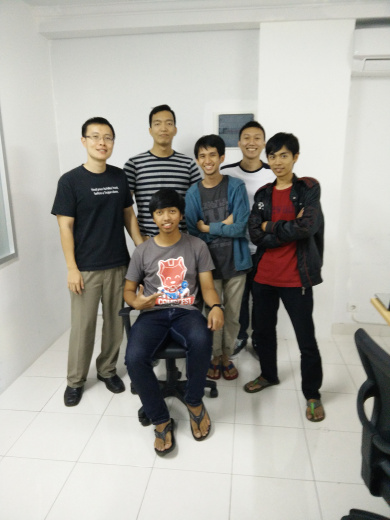
Meanwhile, Oby’s hiring assumptions were receiving their own examination. A recruit he believed would have fallen below LinkedIn’s interview standard proved effective at learning and delivering work. He reconsidered how he assessed candidates. His May 2015 essay proposed paid days working together, examining previous work, and treating the company’s stage as part of the hiring decision. It was an account of changing his mind while the business was young enough for the consequences to be immediate.
The call centre enters the story
Two years later, another engineering interview joined a person’s curiosity to a neglected practical problem. Edwin Tunggawan wanted to work closer to infrastructure after web product development. In his recollection of an April 2017 conversation, Oby brought up a call-centre VoIP system running on physical infrastructure. It needed integrating with the back-office system, and nobody was working on that integration.
Edwin accepted the unfamiliar assignment. His work began with WebRTC code and configuration, then widened as he worked more closely with the call-centre operations team. He later became a lead and then a manager in the infrastructure platform team. He presents the interview dialogue as a reconstruction, but the practical sequence is clear: an interest, a task, and a growing responsibility.
The telephone system is a useful interruption to the sleek mental picture of fintech. A financial app can lead to a conversation with a customer, and that conversation relies on equipment, configuration and colleagues. The engineering challenge reaches beyond the browser. Oby’s role in this episode was to recognise a match between someone wanting to learn and a part of the business waiting for attention.
The marketplace grows more rooms
By 2018, Cermati was expanding beyond distributing ready-made financial products into technology for distribution, identity verification and underwriting. Djarum Group led its Series B investment. In his comments at the time, Oby credited Beenos Plaza with guidance on mobile marketplace technology and later identity and customer-verification tools. The account gives investors a role as people who supplied knowledge as well as money.
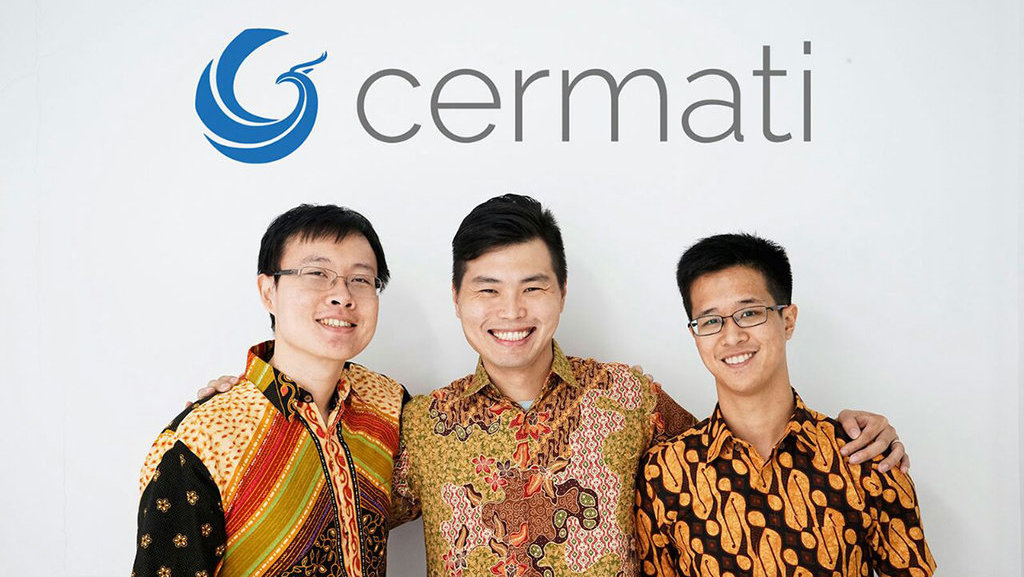
In April 2021, the company received Series C investment involving MDI Ventures and the KB-MDI Centauri Fund. Oby appeared with fellow founders and investors at the signing. The announcement described the intended work: build teams, develop technology, expand offerings and partnerships, and extend distribution. That list is a reminder of how many ordinary operating decisions sit inside the phrase “funding round”.
The current group brings together several kinds of financial business. Cermati.com provides a marketplace; Indodana Finance offers instalment credit; Indodana Fintech provides technology-based funding services. Cermati Protect and Cermati Invest add insurance and investments. A person searching for a product may encounter a single brand. The co-founder’s working environment has become a collection of businesses with different requirements.
Product map, not a chart of ownership or individual performance.
A wider brief, and a bowl of bakmi
Oby’s public description of his responsibilities now extends into corporate strategy, continuous improvement, technology, human resources and supporting operations. Cermati Protect also lists him as a commissioner. The insurance broker became Cermati Protect after its 2019 acquisition; in September 2025 its legal name changed to PT Cermati Pialang Asuransi. The brand stayed in place. These are the sorts of organisational details that accumulate around the original product.
The group’s work continues to expand. On September 21, 2026, Indodana Finance announced a 700 billion rupiah funding facility from HSBC Indonesia to support PayLater expansion. Its announcement described a merchant network across 180 cities and regencies. The facility belongs to that business; it provides a current view of the group’s operating scale rather than a personal achievement to pin on Oby.
There is also a less formal way to locate him. Cermati’s engineering biography describes his quest to try every bakmi flavour in Jakarta. A city contains plenty to investigate when lunch becomes a project. Happily, the noodle detail arrives without a claim that it explains his leadership style. It is simply an appetite, in a career whose public vocabulary otherwise runs heavily to systems and organisations.
His public GitHub profile contains small testing and utility projects, and he is listed among the editors of the Cermati Group Tech Blog. These traces sit alongside the corporate titles. They keep the engineer in view even as the remit widens. There is still work to inspect, a technical community to participate in, and something to learn.
The hiring episode remains a telling place to leave him. An experienced engineer came home with methods that had served him elsewhere. Building a company required him to examine them in use. The result was a founder willing to publish an awkward encounter, acknowledge what it taught him, and keep working. For a profession devoted to finding errors, applying that habit to oneself seems a sensible occupation.