A bank account looks like an arrival. Your name is in the system. Your money has somewhere to go. Yet the next decisions can remain awkward: which credit card, which loan, which insurance policy? Cermati Fintech Group grew around that unfinished business. The Indonesian company began by helping people compare financial products. Its subsequent history suggests that explaining a choice and making that choice usable are two rather different engineering problems.
- Cermati.com helps Indonesians research and apply for financial products.
- The group expanded into financing, digital funding, insurance and investments.
- Its enduring challenge is connecting convenient customer experiences to institutions, capital and servicing.
01 / The account was only the beginning
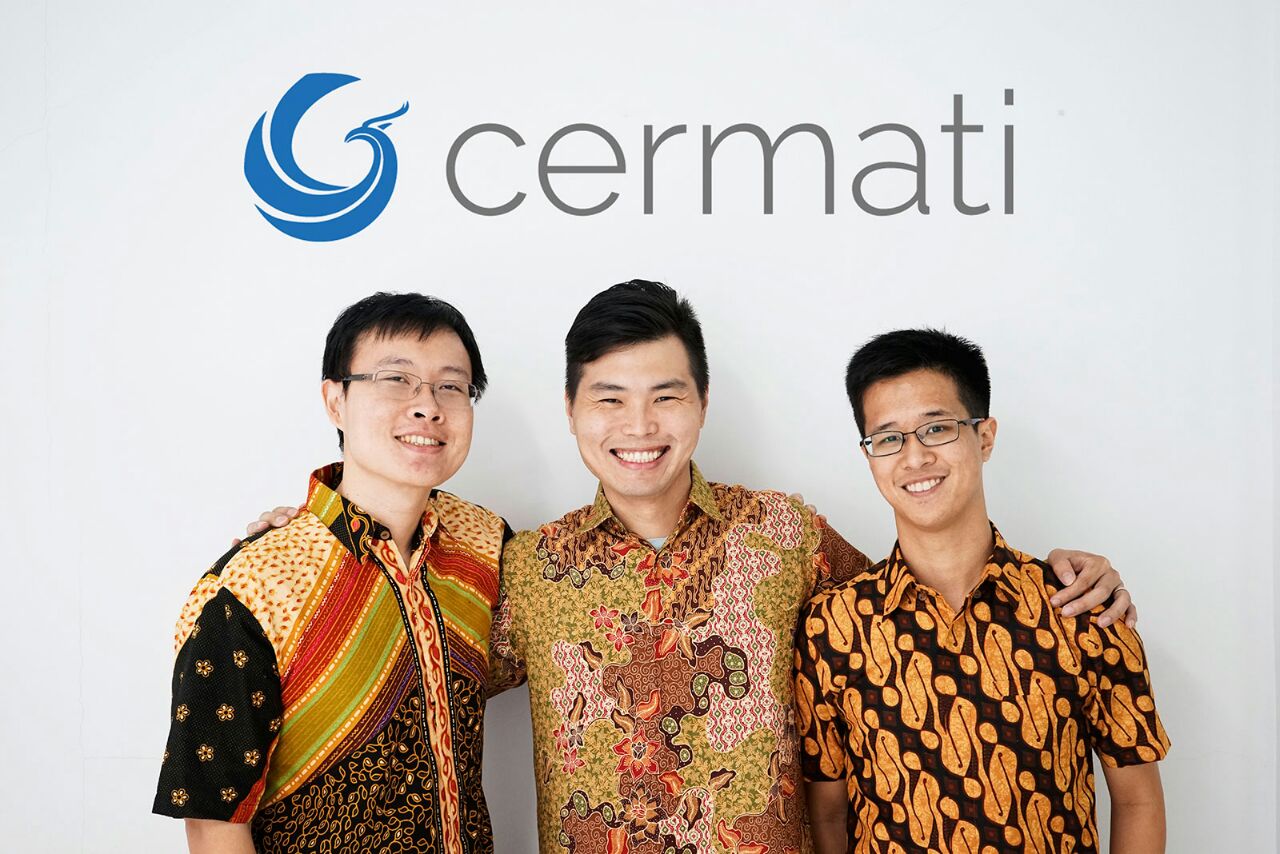
When Cermati launched in April 2015, its founders brought experience from companies including Microsoft, LinkedIn and Google. Andhy Koesnandar, Oby Sumampouw and Carlo Gandasubrata were building for Indonesia. The original proposition was understandable: put financial options online, make their features easier to compare, and help people apply. A bewildering purchase could become a sequence of manageable decisions.
In a 2017 interview, Andhy described a customer who already had a bank account but little exposure to other financial products. That observation widened the meaning of inclusion. Getting into banking was one step; finding useful services within it was another. Cermati could serve the person standing between those two steps.
02 / The banks had different clocks
The practical obstacle was behind the page. Financial institutions had uneven digital capabilities, Andhy told the same interviewer. Some were easy to connect; others needed discussions and assistance with their digital strategy. Cermati’s work included waiting for partners with complicated internal operations.
“Technology has been our backbone so far.”Andhy Koesnandar, 2017
By the 2018 Series B announcement, the company’s scope included digital identity verification, risk assessment and distribution of microloans and insurance. A marketplace had become a technology partner. Helping someone locate a product led into helping institutions acquire, assess and serve that customer. The expansion followed the work required to complete the transaction.
03 / Five doors, different jobs
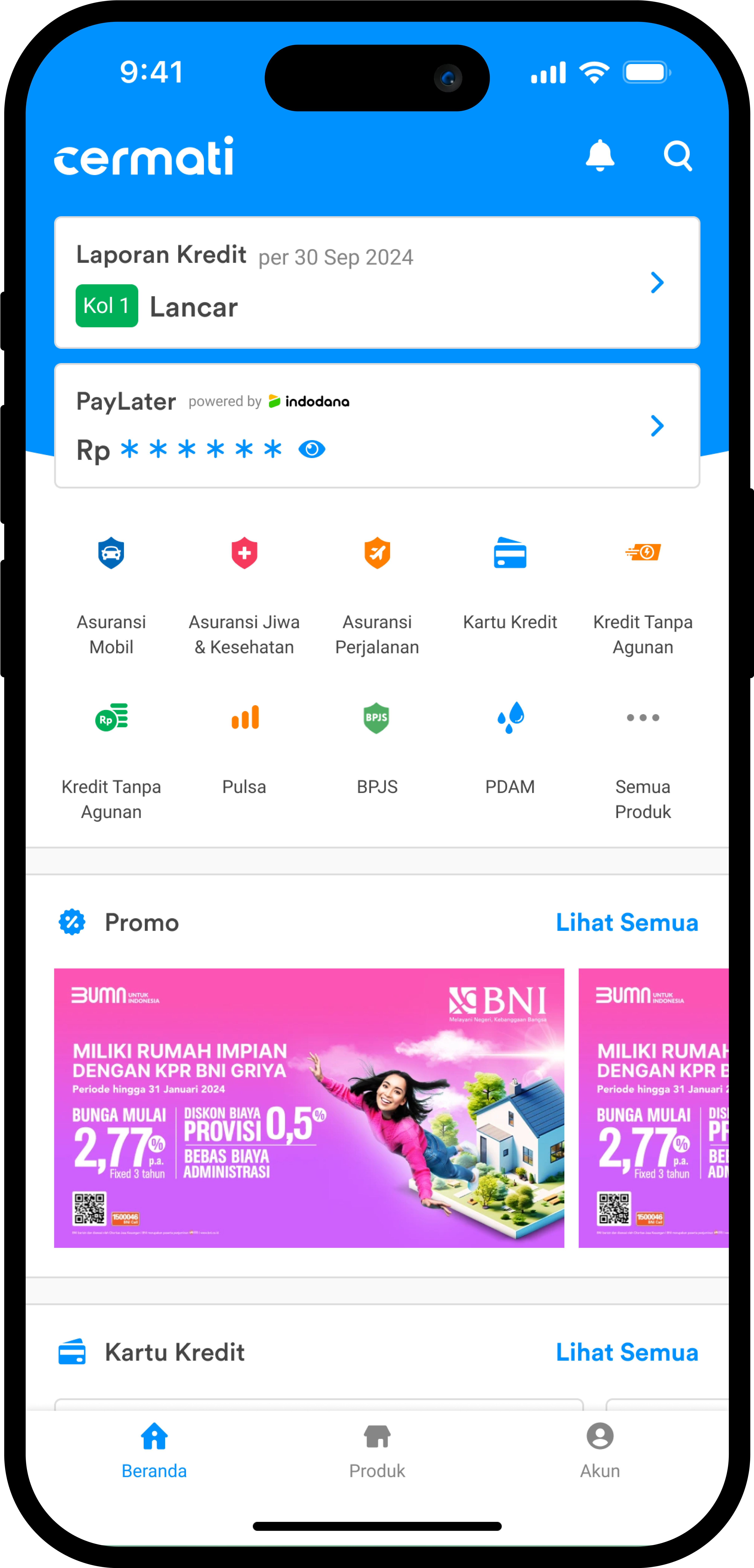
Today, the names matter. Cermati.com is the aggregator: a place to explore loans, credit cards and insurance, alongside other services such as bill payments. The group website presents the remaining businesses separately. That separation helps explain what a customer can actually do, and which part of the group is doing it.
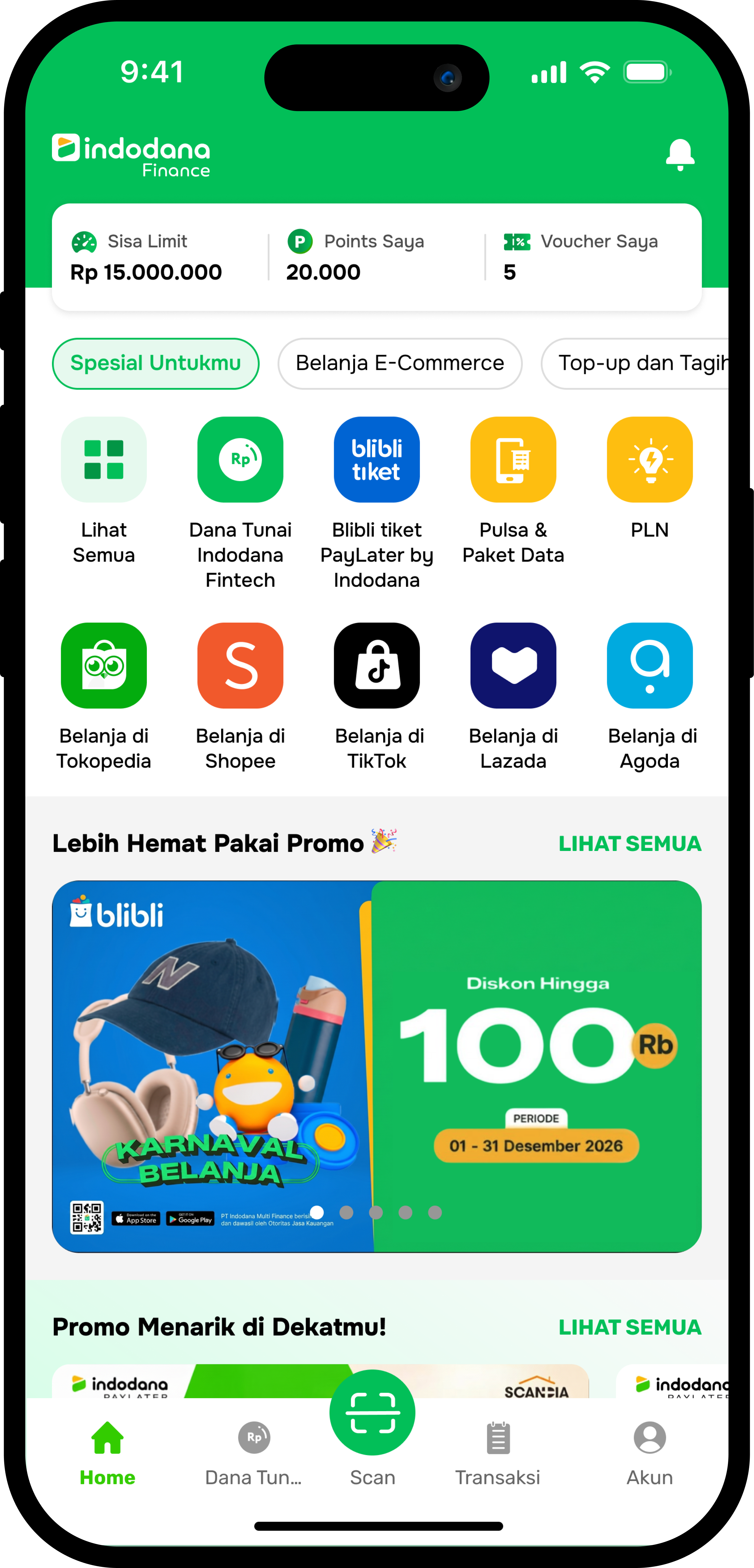
Indodana Finance offers merchant credit and instalments. Users apply through its app, supply identity information and wait for verification. Approved limits can fund purchases at participating merchants. Its website also advertises a shared PayLater limit across Indodana Finance, Blibli and tiket.com. Indodana Fintech is the distinct technology-based funding platform, with its origins in November 2017.
Cermati Protect, established in 2019, handles insurance brokerage. Its offerings include employee benefits and specialised insurance, giving the group business customers as well as individuals. Cermati Invest, also established in 2019, provides an online marketplace for mutual funds and bonds. Someone comparing a card, an employer arranging cover and an investor choosing a fund are using different services.
The competitive position follows from this spread. Kredivo is an alternative for merchant instalment credit. A bank’s own application channel can substitute for marketplace distribution. Cermati’s distinctive proposition is the combination of financial discovery, distribution technology and several financial businesses. That breadth does not prove each service is the right choice for every customer.
Group-reported figures for 2023. Policies and users measure different things.
The group’s 2023 impact report records 8.3 million active users, IDR 10 trillion in financing and more than 20 million insurance policies issued. These are company-reported measures of different activities, rather than interchangeable counts of customers. The report also says it did not engage external independent assurance. The figures show the scale of the reported operation; they do not establish how much every customer benefited.
04 / Free to compare. Credit has a price.
The original marketplace earned commissions on applications while remaining free to consumers, according to the 2017 account. The larger group has more kinds of economic activity. Financial distribution sits alongside brokerage and financing, where the customer’s contract introduces prices that a comparison page does not.
Indodana Finance’s published PayLater disclosure lists interest of 0% to 4.50% and service charges of 0% to 5%, with transaction minimums and further conditions. Promotions and instalment rounding can change the amount paid. Those ranges are not an all-in annual rate. The useful number is the total repayment shown for the particular purchase, including applicable charges.
The same disclosure describes late-payment penalties and the recording of credit transactions in Indonesia’s SLIK system. Convenience therefore has conditions. Approval is required, purchases depend on participating merchants, and repayments need to fit the borrower’s income. Insurance likewise needs a policy that covers the relevant risk. A quick purchase cannot settle those questions by itself.
05 / The money behind the money
The financing history has two tracks. In September 2016, Cermati raised a disclosed US$1.9 million Series A from East Ventures and Beenos Plaza. Orange Growth Capital supplied an extension in February 2017. Djarum Group led the 2018 Series B; MDI Ventures and the KB-MDI Centauri Fund participated in Series C funding in April 2021.
More recently, Indodana Finance announced an IDR 1.5 trillion BCA funding facility in July 2026 and an IDR 700 billion HSBC Indonesia facility in September. Bank facilities support financing capacity. They should be read separately from equity rounds, which fund a company’s development and ownership. Mixing the two makes a large number less informative.
Teams, technology
and business expansion
Capacity to finance
customer purchases
HSBC’s facility announcement puts Indodana Finance’s merchant network across 180 cities and regencies. That reach helps explain why partners matter so much to this model. A financing product gains practical value when it is available where a customer wants to buy something. The distribution network is part of what the customer receives.
06 / Copy the patient part
The group’s engineering materials describe code review, continuous integration and internal knowledge sharing. They also list measurement and pragmatic problem-solving. These are the company’s stated practices, but they fit the demands of a business whose customer experience depends on many organisations working together.
The lesson worth borrowing is a sequence: simplify the decision, examine the handoff, then build the capabilities needed to deliver. Cermati’s growth makes that sequence visible. For users, the corresponding habit is equally practical: identify the provider, compare the complete terms and understand the obligation before applying. Opening the next door is useful when you know what is on the other side.
Explore Cermati
Start with the service that fits your question.