Before Everett K. Sands could explain a credit decision, he could operate a cash register. His grandfather ran a tailoring business in Washington, D.C., and the boy’s duties included sweeping the floor and taking customers’ money. Stitching was somebody else’s department. Sands has cheerfully admitted that his talents did not extend to a needle and thread.
The more consequential lessons happened away from the counter. Driving around Washington with his family, he would hear that a business had once occupied another address. There had been several locations. There had even been a school where people could learn the trade. The family was describing a larger enterprise than the one he knew.
In Sands’s telling, inadequate access to capital and poor financial and tax advice had narrowed his grandfather’s possibilities. The shop survived, but the business lost ground. He grew up wondering how the family’s circumstances, and the surrounding community, might have developed with a different financial partner. The question accompanied him into his own working life.
Today Sands is the founder and CEO of Lendistry, a company that lends to small businesses and administers grant programs. His interest in the borrower began long before he had a borrower to assess. It began with people he knew, a business he worked in, and addresses that carried an explanation he did not yet understand.
An education beyond the classroom
His route out of Washington took him to boarding school in New Hampshire and then to the University of Pennsylvania. The education extended beyond those institutions. Staying with friends exposed him to adults whose experiences with money and business differed from his family’s. He remembers listening while they talked about what had worked and what had failed.
At Penn, he worked three jobs, including cleaning fish tanks, working at Banana Republic, and working in the cafeteria. He also organized parties to earn money. The details are pleasingly practical. Before the lending platforms and congressional appearances, there were schedules to juggle and tanks that would not clean themselves.
He became interested in buying real estate around age 21. Property offered an entry into financing: income came from tenants, expenses had to be covered, and the relationship between borrowing and ownership could be studied. Business finance presented a more complicated set of questions, which suited someone who repeatedly describes himself as a numbers enthusiast.
Sands went on to work at minority depository institutions and at Wells Fargo. At the national bank, he led teams in Washington and later Orange County. His Penn Institute for Urban Research biography records an increase in his Washington team’s market share from 6 percent to 26 percent in one year. In Orange County, annual originations rose from $150 million to $490 million under his leadership.
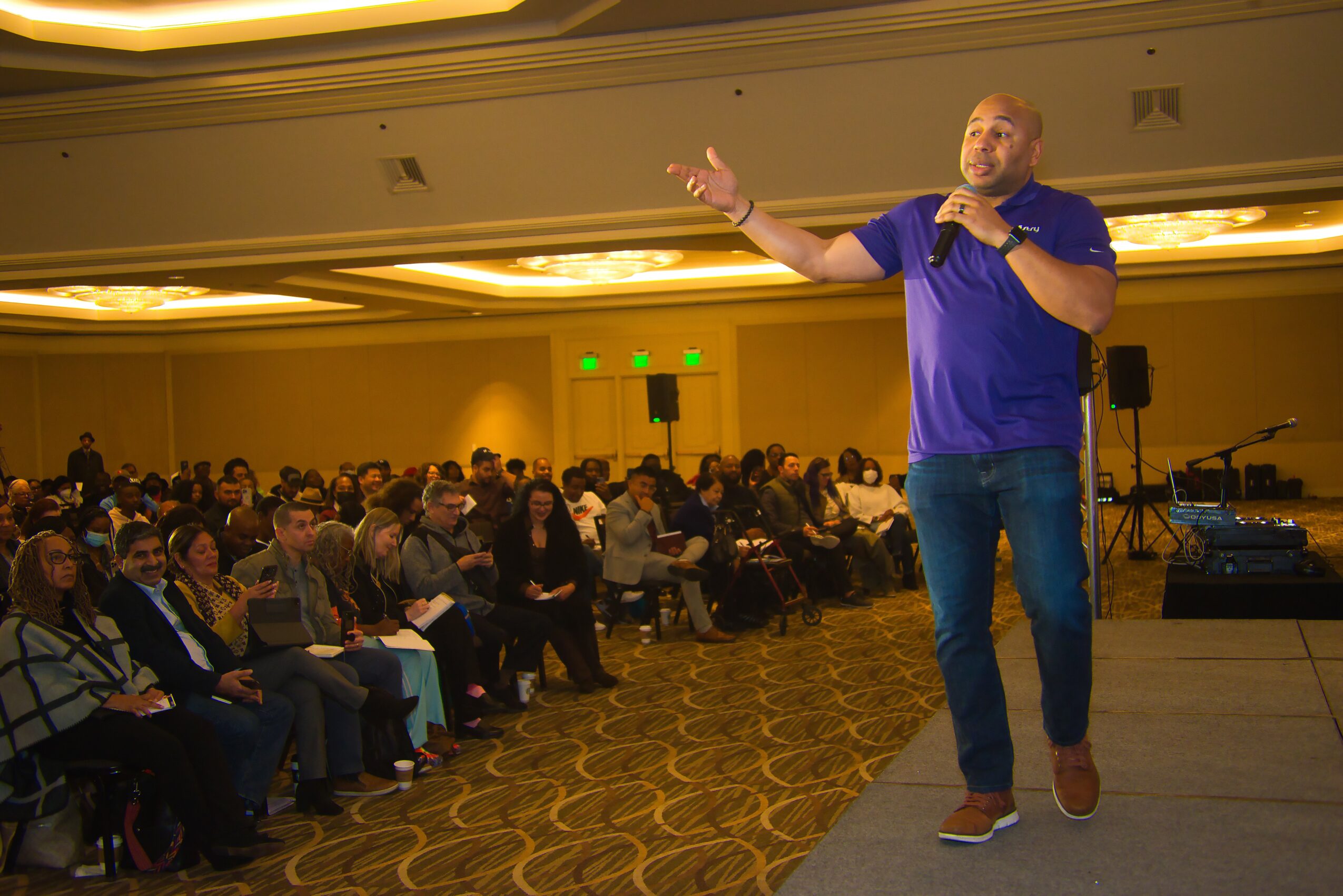
A good business can be the wrong size
That career gave him experience on the institution’s side of the desk. Banks have operating costs, product boundaries, and decisions about which work they can perform efficiently. A borrower can have a credible business and still need a loan that a particular bank has little interest in making. Sands came to see that mismatch as an opening.
He explains the problem with a hypothetical borrower who has strong income and an excellent credit score, but asks for an amount the bank does not offer. The familiar instructions about becoming creditworthy have been followed. The product still does not exist at that counter. An entrepreneur cannot deposit a reassuring principle.
Lendistry, founded in 2015, brought experienced banking professionals together with an online application platform. The company became a Community Development Financial Institution, a designation tied to serving communities with limited access to financing. Its nonprofit partner, The Center by Lendistry, provides business education and technical assistance. Borrowing and preparing to borrow belong in the same conversation.
The permissions accumulated over years. In 2022, Lendistry received a Small Business Lending Company license and created its SBLC entity. In 2023, that entity gained SBA Preferred Lender status. These milestones sound administrative because they are. A lending company’s ambitions have to pass through rules, systems, and approvals before they become useful to a business owner.
By October 2026, Lendistry’s website reported $11 billion in small business loans and grants and 640,000 businesses supported. The distinction between loans and grants matters: the combined figure describes capital distributed through different programs. It is a measure of the company’s reach, rather than Sands’s personal fortune or a single loan portfolio.
and grants
supported
Company-reported cumulative figures · October 2026
Fine print, with a side of baseball
Sands also takes the argument into public policy. In testimony submitted to Maryland legislators in February 2024, he supported commercial financing disclosures and challenged the idea that showing an annual percentage rate was impractical. He compared the speed of calculating APR with a baseball double play, eating a Berger cookie, and signing one’s name.
It was a locally tailored argument from a former tailoring-shop cashier. The arithmetic, he maintained, was routine. Clear pricing would help entrepreneurs compare financing offers and understand what they were accepting. His position put transparency alongside access: a business can obtain money and still be poorly served by the terms attached to it.
There is an appealing impatience in this part of his public voice. Finance supplies plenty of opportunities to make a simple question sound forbidding. Sands’s testimony made disclosure sound like ordinary work that a responsible lender should already be doing. The cookie was doing useful rhetorical service.
His advisory and board responsibilities extend that interest beyond Lendistry. They include the Penn Institute for Urban Research, Goodwill of Orange County, and the Los Angeles Area Chamber of Commerce. In 2024, EY named him a Greater Los Angeles Entrepreneur Of The Year award winner. Lendistry’s biography also records his selection as a national finalist that year.
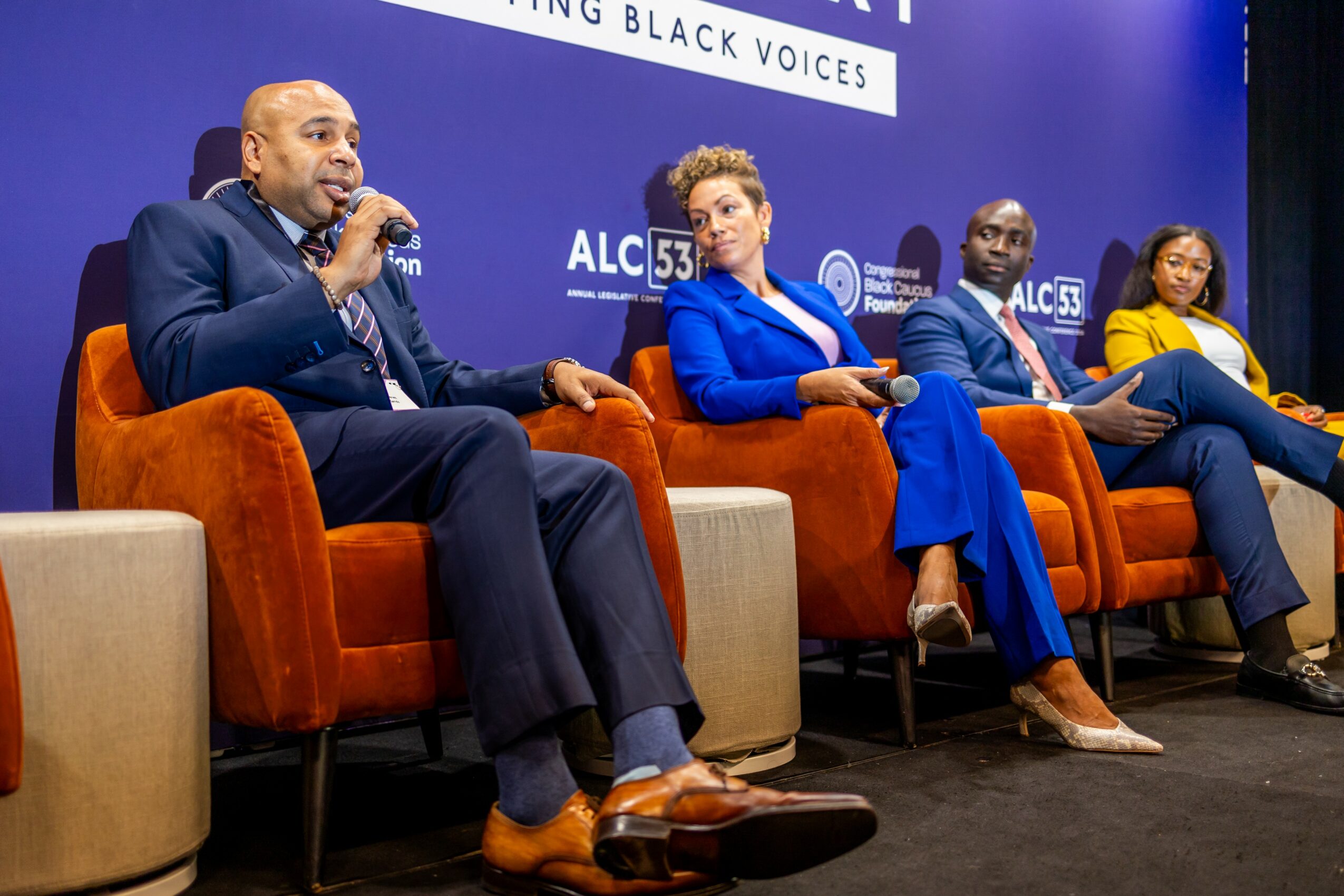
The borrower who changed his mind
One of the more revealing episodes in Sands’s career begins with his own hesitation. In 2019, an airport concession operator wanted to borrow. Sands initially doubted the transaction because the applicant lacked sufficient collateral. Then a credit officer with experience in the sector explained how those businesses worked. Sands went to an industry conference and learned more.
Airport operators often occupy locations they do not own, under arrangements that can involve master concessionaires and airport-specific rules. A busy terminal does not automatically translate into a loan application a conventional lender understands. Sands had encountered another gap between a business’s prospects and the machinery available to finance it.
Lendistry built an Airport Concessions Program. By July 2026, it reported $98 million deployed to businesses in 16 states. That month, East West Bank provided a $100 million credit facility to support the program, with a further $100 million of potential borrowing capacity through an accordion feature. The additional capacity depends on the program’s growth; it is separate from money already deployed.
Community Reinvestment Fund, USA also participates in loans originated through its partnership with Lendistry. Such arrangements share the financing burden and help the originating lender preserve its customer relationship. The banker who initially saw reasons to hesitate had helped assemble other institutions around the opportunity.
“We took the time to learn,” Sands said when the East West facility was announced. It is a modest description of an important turn. He had been willing to let a colleague’s knowledge alter his own assessment. For someone whose business rests on reconsidering overlooked borrowers, that willingness is part of the job.
- 2019A borrower prompts a closer look at airport concessions.
- July 2026$98 million deployed across 16 states.
- The next step$100 million East West Bank facility supports expansion.
Why a lender turns up courtside
The same interest in where entrepreneurs gather has taken Lendistry into women’s sports. The company became the Los Angeles Sparks’ official small business lender in 2024. In April 2026, the Chicago Sky announced a multi-year partnership, including Lendistry’s support for the Sky Foundation’s Women’s Small Business Cohort. A lender’s name on a basketball court came with work away from it.
The Chicago program’s announced design included twelve participants, four weeks of business development, and a pitch competition awarding $20,000 each to four businesses. In May, the Atlanta Dream announced its own partnership with Lendistry, including plans to spotlight local businesses at home games and hold a designated Small Business Night.
These partnerships connect visibility with preparation. A small business can be introduced to a crowd, receive practical guidance, and meet an institution that might eventually finance its next step. There is a commercial purpose for Lendistry, too. Sands has described its marketing decisions as combining its mission with the needs of the business.
A separate relationship with Visa widened the capital side in February 2026. Visa & Main launched with a $100 million working capital facility with Lendistry, alongside initiatives to help businesses reach customers and use business tools. The details differ from a sports partnership, but the underlying concern is recognizable: an opportunity is easier to use when a business can prepare for it.
“Put an extra zero on it.”
Everett K. Sands’s favorite quote
Still curious, still keeping score
Sands has made conversation part of the work. He hosts Small Business Unscripted, interviewing entrepreneurs and business leaders about building companies. The show makes room for the decisions and mistakes behind a finished biography. For a founder who learned by listening to other people’s business conversations, taking the interviewer’s chair has a certain continuity.
He remains a reader of other founders’ stories. He credits working several jobs with teaching time discipline, and Toastmasters with helping him communicate and consider opposing views. These are skills acquired through practice. They fit the airport episode rather well: listen carefully enough and the answer may change.
There are lighter entries in his personal ledger. He enjoys travel, names Rich Dad, Poor Dad among his favorite books, and gives a delightfully uncomplicated restaurant preference: somewhere with ice cream. His favorite quote is similarly economical: “Put an extra zero on it.” A banker is entitled to a numerical flourish.
The ambition underneath those details has remained consistent. Sands wants entrepreneurs to have financing and a partner who understands what they are trying to build. His grandfather’s shops gave that wish a particular shape. Each new borrower arrives with a different business and different accounts, but the old question remains available: what might happen if this owner gets the right support in time?