Thirty-nine interviews is a long way to get a job. Sharran Srivatsaa remembers one of them lasting about 45 seconds. A Goldman Sachs managing partner arrived with a binder of prospective clients, pushed it toward him and asked him to pick up the phone and book an appointment. Here was the candidate’s chance to demonstrate that he could sell. Srivatsaa asked for a script.
In his telling, the partner packed up, shook his hand and left. Later, Srivatsaa learned that asking for guidance had been the useful answer. The exercise was designed to reveal coachability. A person willing to learn how to represent someone else could be more valuable than a person determined to perform confidence. It is a pleasingly economical interview: an elaborate recruitment process interrupted by a small admission of ignorance.
He got the job. Then, a few years later, he left it. That second decision explains more about the career of Acquisition.com’s CEO and managing partner than the first. Srivatsaa keeps acquiring skills, testing them somewhere unfamiliar, and bringing the results back as lessons for other people. His résumé has the itinerary of someone who kept changing planes.
A bank check, an Iowa campus
He came to the United States from India as a college student. The money his parents sent was in an international cashier’s check. He has described discovering that it would take two weeks to clear, leaving him with funds on paper and very little he could spend. He went looking for campus pizza parties. On other days, he recovered discarded meals.
He tells that episode plainly enough to preserve its uncomfortable detail: there was food available, and he needed it. The contrast with his later career in luxury property is conspicuous, but the early problem was more immediate than any future business lesson. A check clearing eventually is small comfort when lunch is due now.
Luther College, in Decorah, Iowa, gave him a different kind of footing. He graduated in 2001 with a bachelor’s degree in computer science. His early professional life included technology work and tennis, followed by an MBA with honors at Vanderbilt. The routes between those stops were anything but straight. Engineering, resort work and finance all eventually appeared in the same career.
In May 2023, he returned to Luther to deliver its commencement address. The student who once waited for money to clear was now being asked to tell graduates what he had learned. A college reunion usually involves remembering where one lived. His involved explaining how many times one can start again.

The weather cancelled his business model
Before the brokerage offices, there were tennis courts. Srivatsaa worked as a teaching professional in the Caribbean and on Maui. He has recalled coaching Bill and Melinda Gates and Richard Branson. It is an unusual networking arrangement: the person holding the racket gets to correct the billionaire.
On Maui, rain interrupted lessons and therefore income. He responded with video-analysis coaching packages, finding a way to sell instruction without depending on an uninterrupted session outside. His technical background had met a practical problem. The customer wanted help playing better; the conventional way of delivering that help had a weather clause.
That episode makes the later teaching businesses easier to understand. The durable part of the service was his ability to explain and diagnose. Changing the delivery let him keep working. Long before his podcast, he was experimenting with how to package knowledge so that someone could use it beyond a particular hour on a particular court.
Learning the price of a seat at the table
Vanderbilt brought him closer to capital markets, and it was where he met his future wife. He joined Goldman Sachs in 2008, during the financial crisis. Credit Suisse also became part of his banking career. For someone moving from resort tennis into finance, the change was considerable. The interview story remains useful because it shows that he did not arrive pretending to know everything.
Eventually, advising business owners made ownership itself more attractive. In his account of the move into Teles Properties, he borrowed against his house through a private financing arrangement to buy his stake. He also remembers a long period without a salary. The decision to become an operator came with a bill, and the business did not immediately pay it.
There is an awkwardness here that the neatly ascending career chart tends to erase. A financial adviser knows how to read a profit-and-loss statement. Running the enterprise behind that statement demands a different collection of skills. People need decisions, customers need reasons to stay, and the next payroll does not wait for the owner to finish learning.
“You don’t want to get good at something that you hate.”
Sharran Srivatsaa, on leaving Goldman Sachs
Five years, and a much larger brokerage
At Teles, Srivatsaa and his partners set out to expand a Southern California brokerage. The figure associated with that period is $3.4 billion in annual property sales volume, reached after roughly tenfold growth over five years. That measures the properties sold through the brokerage. It is a different accounting category from brokerage revenue or the price paid to acquire the company.
By August 2017, when Douglas Elliman announced its agreement to buy Teles, the deal included 530 agents and 20 locations, along with an additional Colorado office. The announcement named Peter Loewy, Peter Hernandez and Evan Ageloff beside Srivatsaa as partners who would continue with Elliman’s western operation. Growth had required a group of people, and the sale announcement read that way.
Approximate starting figure. Endpoints only; bars do not show annual results. Sales volume measures property transactions.
The numbers give the story its scale. His recollections give it texture. He describes the early learning as uncomfortable and repetitive, requiring him to figure out operations while already responsible for them. A title can be printed quickly. Competence tends to take longer, with several people watching.
After finishing his time at Douglas Elliman in 2018, he wrote down 37 lessons from the Teles years. They ranged from hiring and communication to written plans and community. He also regretted how few vacations he had taken. It was a growth retrospective with a few overdue corrections in the margins.
His recurring concern was the distance between a large goal and an actual plan. The detailed work mattered: tracking, reporting, understanding how the pieces fit together. In that light, the brokerage expansion looks less like one grand decision than years of decisions that had to agree with each other.
“Good process drives good results.”
One of Srivatsaa’s Teles lessons
A network with fewer fences
Real appointed him president in December 2022, creating a role that included agent attraction and education. The company’s technology-based brokerage model gave him another setting in which to connect growth with teaching. Chairman and CEO Tamir Poleg remained at the helm; Srivatsaa joined a leadership team building an agent-centered platform.
His explanation of Real’s revenue-sharing culture was revealing. He resisted thinking of the brokerage as separate downlines, each with its own guarded circle. He argued for access across the network, so an agent’s sponsor would not become the boundary of that agent’s working relationships.
He also made the case for small teams: a solo agent can spend so much time serving current clients that finding the next clients becomes difficult. Help changes the capacity of the business. To him, collaboration belonged in the mechanics of the company, alongside compensation and retention. Being pleasant at the annual gathering would hardly settle the question.
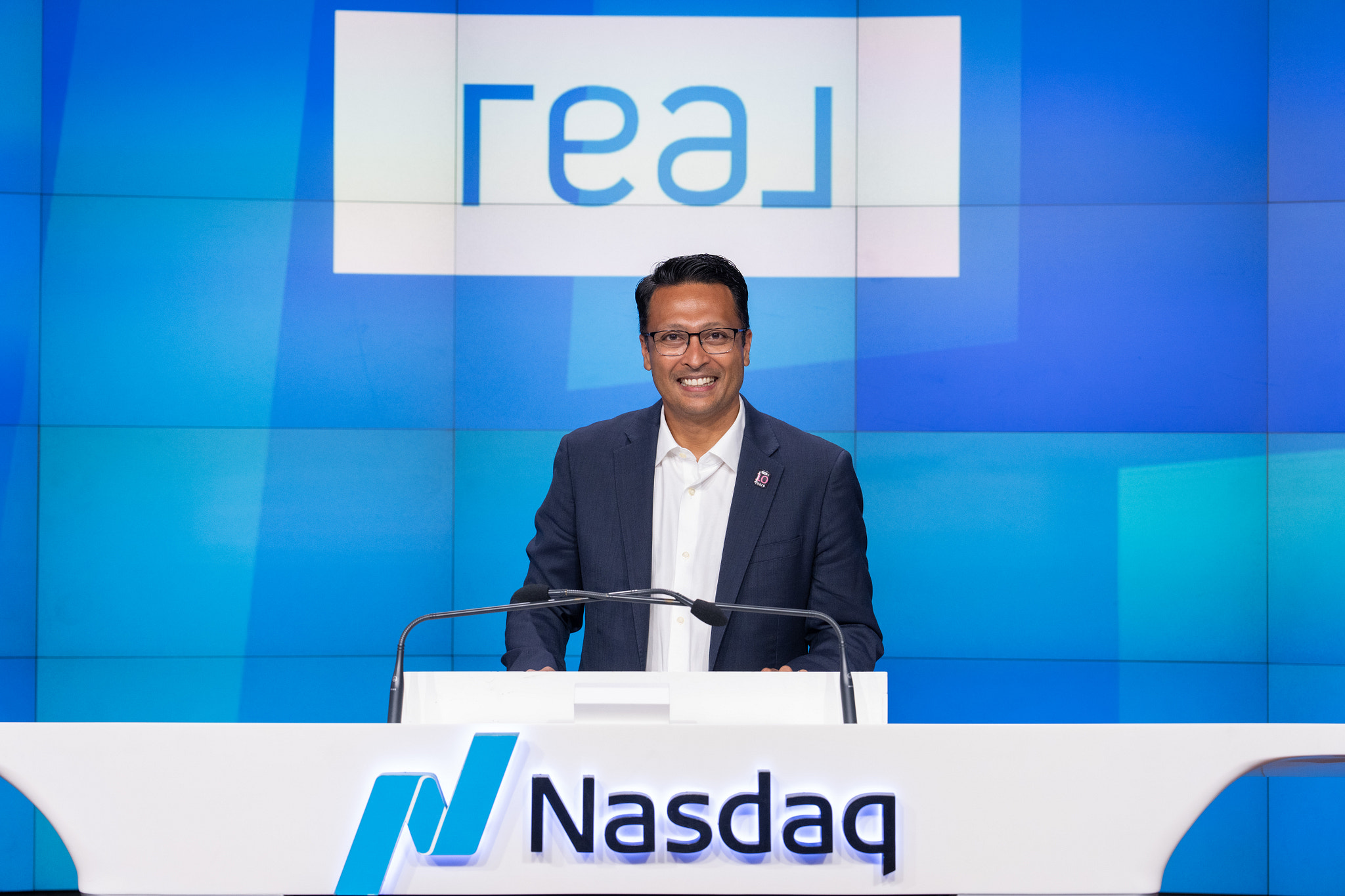
In March 2025, Real announced his transition from president to its board, effective June 1, subject to approvals. The company then supported more than 26,000 agents in the United States and Canada. His board brief emphasized representing agents. The person who had helped bring people into the network would continue to argue for them inside its governance.
Asked about the move, he emphasized the culture he had helped develop and the company’s commitment to hard work and kindness. He described the decision with Poleg as collaborative. The shift left him connected to Real while changing the kind of work he did there.
Friends, then partners
Alex and Leila Hormozi were already friends and business connections when Acquisition.com became his next operating chapter. He had advised them on earlier deals, including Gym Launch’s sale, and they had invested in his real estate projects. There was history before there was a new title.
His account of the partnership negotiations is almost comically short. They asked him to email what he wanted. He sent bullet points. The reply brought in the lawyers. What occupied him more was arranging how they would work together without damaging the friendship. The economic terms were easier to put on a page than the relationship rules.
He now serves as CEO and managing partner alongside Alex, a founder and managing partner, and Leila, chairwoman and managing partner. The work brings investing and operating into the same conversation. It also gives his teaching an ongoing subject: the decisions he and his partners are making as they help founders build businesses.
The meeting before the meetings
His 5AM Club is a smaller, stranger institution. It is a free five-minute call, seven days a week. People can join without showing their faces. He does the talking. An early start acquires a deadline and an audience.
In explaining the routine, he has described making the morning inviting: coffee, a book, time by the fireplace. He emphasizes preparing things the night before and the accountability of people expecting him on the call. Those details make the habit sound less theatrical than the title might suggest. Even an entrepreneur needs a reason to leave a comfortable bed.
Free to join. Audio only. A little structure before the inbox opens.
Business School, his podcast, gives him more room to unpack decisions. His free newsletter, The Next Billion, makes another promise: to document the work while it is happening. He has acknowledged that previous periods of expansion left too little room for family and reflection, and says he wants to do better this time.
On October 8, 2026, he returned to a practical question in a new podcast episode: how a small personal brand can support a larger business. He argued for a clear customer proposition, useful material given away freely, and a simple path for people to find the offer. The teacher was still examining his own methods.
That is the appealing continuity beneath all the changes of occupation. A tennis lesson, a recruiting conversation and a morning call all require him to make an idea usable for another person. His career keeps supplying new material. The next five-minute appointment keeps supplying a reason to explain it.
Keep the conversation going
His writing, conversations and places to follow along.