Consider the wooden tie beneath a freight train. It has no screen, no software update, and no particular ambition to attract your attention. Yet someone must choose the timber, dry it, push preservative into it, deliver it beside the right railway, and eventually deal with what remains. A business lives inside that sequence.
Koppers Inc. occupies several of those steps. It supplies treated railroad ties, utility poles, wood protection chemicals, and carbon materials. Its publicly traded parent, Koppers Holdings, reported $1.879 billion in sales for 2025. The interesting part is how the pieces connect: one operation makes a chemical that another uses to protect a product a customer expects to forget about for years.
- Makes and treats the wood that supports railways, power lines, and outdoor construction.
- Turns industrial byproducts into preservatives and manufacturing ingredients.
- Competes on dependable supply, chemical expertise, and getting heavy things to the right place.
The useful thing left in the oven
The story begins with a furnace. German engineer Heinrich Koppers developed coke-making technology that recovered useful byproducts. The American predecessor company was incorporated in 1912. Coke served steelmaking; the recovered materials opened other commercial possibilities. There was money in paying attention to what the main process left behind.
Today’s Koppers Inc. was formed in 1988, so this is a business lineage rather than one unchanged corporate entity. But the material connection remains. Distilling coal tar produces carbon pitch and creosote. Pitch helps bind carbon anodes used in aluminum production. Creosote preserves wood. A steelmaking byproduct can therefore help a railroad tie survive outdoors.
That is the practical meaning of Koppers’ circular business. Materials get another productive use. The description needs a qualification, though: recovering carbon-based chemicals does not make them harmless. Treatment, handling, emissions, and disposal still demand controls. The company’s environmental responsibilities are part of the economics, alongside the value of the recovered material.
Six months before the train arrives
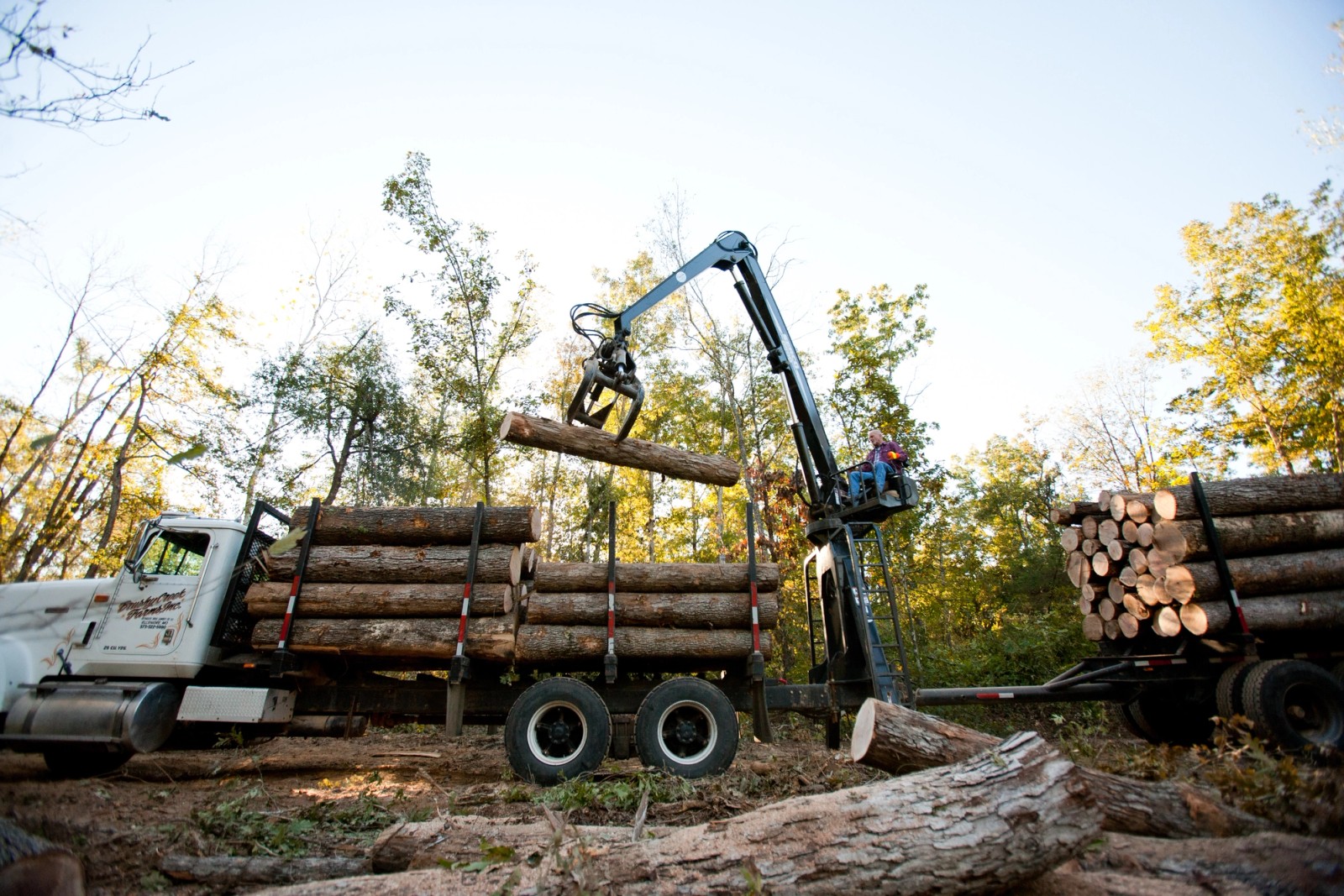
The chemistry is only half the trick. Crossties may be stacked to air-dry for six to nine months before treatment, or dried through an accelerated process called boultonizing. Imagine financing an inventory that spends that long simply waiting. Location, working capital, and reliable timber supply become as consequential as the formulation in the treatment vessel. The customer needs the finished tie on schedule, regardless of how long its ingredients have waited.
Koppers buys from independent sawmills, treats wood to railroad specifications, and offers pre-plating and track components. Its treating plants connect to major customers’ rail lines. Stella-Jones is a principal alternative in North American crossties. The contest involves price and quality, but also whether a supplier can deliver the specified product when a maintenance crew needs it.
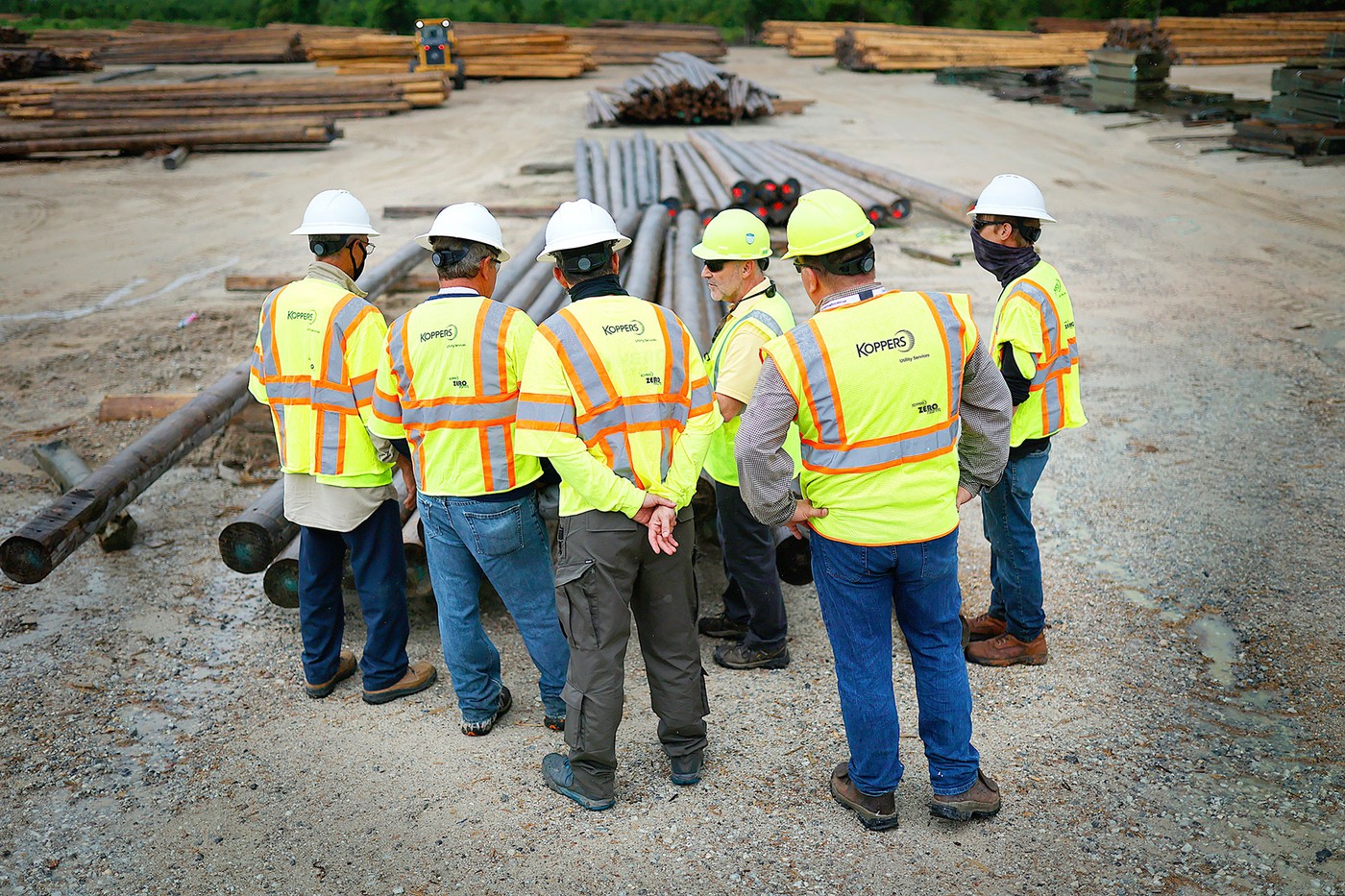
Utilities have a related problem. A pole must suit its load, location, and treatment requirements; a purchasing team also needs dependable replenishment. Koppers supplies investor-owned utilities, cooperatives, and municipalities. Owning wood-treatment chemistry alongside pole production gives it another way to coordinate supply. That connection is useful precisely because customers are buying an infrastructure component, with consequences far beyond its invoice.
A chemical company in the lumber aisle
Homeowners encounter a different part of the company through treated decking, fencing, and construction lumber. MicroPro is a micronized copper azole preservation technology; FlamePRO is a fire-retardant treatment brand. Koppers sells chemistry and technical support to wood treaters, which makes it a supplier behind products whose retail labels may attract more attention.
This business requires more than mixing ingredients. Formulation chemistry, wood science, testing, and treatment engineering determine whether a product performs in its intended application. Koppers also offers carbon analysis and applied research services. Its customer base stretches from wood processors to manufacturers needing consistent carbon feedstocks.
The revenue model follows those needs: sales of materials and treated products, supported by technical services and negotiated customer relationships. For a buyer, the useful question is which treatment and specification fit the job. A railway tie, residential deck, and marine piling are different assignments. Choosing the correct use category matters more than choosing an appealing brand name.
“Advancing infrastructure through safer, stronger, more sustainable solutions.”Koppers’ stated mission
The price of owning more of the chain
Integration was purchased, not conjured. In 2014, Koppers paid about $494.1 million for Osmose’s wood preservation and railroad services businesses, financed through bank debt. In 2024, it paid approximately $100 million in cash for Brown Wood’s utility-pole assets. Those transactions bought capabilities and geographic reach; they also committed capital to physical operations.
The utility-pole story includes a revealing reversal. Koppers exited the U.S. market in January 2015, then returned through the roughly $200 million Cox Industrial acquisition in 2018. Management pointed to the opportunity to return with greater scale. Its stated reasoning changed with the asset available: a broader network made the market more attractive.
What comes under pressure first? Recent results point to margins. In the second quarter of 2026, sales rose 3 percent to $520.1 million while adjusted EBITDA fell to $71 million. Koppers cited raw-material costs, pricing, freight, and legal expenses. It also reported a $147.5 million net loss, including $215.8 million of impairment, restructuring, and plant-closure costs.
The response included accelerating the planned closure of the Stickney, Illinois, carbon facility and reorganizing the operating network. An integrated supplier still depends on outside conditions. Coal-tar availability follows coke production; lumber and copper have their own markets. Owning adjacent processes cannot guarantee attractive input prices or enough demand to keep every plant busy.
The sale after the sale
Koppers’ recovery operation collects and processes used crossties for further uses and energy recovery. That extends the customer relationship beyond delivery. It also makes the circularity claim more specific: some material is recovered as fuel, rather than becoming another identical tie. Those are different outcomes, and the distinction matters.
The human side is equally concrete. Koppers calls its safety approach Zero Harm, with behavioral training and process-safety work. Its Robert Morris University partnership provides leadership development and tuition benefits. The company reported its lowest recordable-incident rate in its 2025 sustainability reporting. Those are measurable practices in a business involving heavy equipment and industrial chemicals.
The transferable idea is to examine the whole job surrounding a product. Koppers earns its place by addressing preservation, supply, delivery, and eventual removal together. The approach works when those connections reduce a customer’s headaches enough to justify the capital involved. Sparse demand, expensive freight, or a poorly utilized plant can undo that arithmetic. A piece of wood looks simple. Keeping it useful is the business.
Follow the wood
Explore Koppers, its railroad products, and recovery services. Watch the company overview and timber-treatment demonstrations or the 2026 Investor Day webcast.