The dangerous moment in a marketing campaign is not the brainstorm. It is the moment after the brainstorm, when the idea starts commuting. Strategy sends it to copy. Copy sends it to design. Design sends it to media. Media discovers that the format is wrong, the deadline was yesterday and someone, somewhere, has been optimizing for clicks while everybody else was talking about enrollment. By launch day, the campaign may still be polished. It is simply no longer the same campaign.
A to Z Communications has organized itself around that small, expensive problem. Founded in Pittsburgh in 1988, the independent agency brings brand strategy, design, websites, digital advertising, media planning, public relations and crisis counsel into one working system. The pitch is not merely that it can do many things. Plenty of agencies can. The pitch is continuity: senior people remain close to the work from discovery through delivery, so the objective is less likely to dissolve between disciplines.
This is especially useful in markets where audiences arrive in plural. A university speaks to teenagers, parents, adult learners, faculty and trustees. A hospital speaks to patients, physicians, regulators and communities. A bank must attract attention without spending trust. A nonprofit wants emotion, evidence and donations, often in the same sentence. A to Z has built its client list around precisely these complicated rooms: higher education, healthcare, financial services, energy, manufacturing, technology and civic institutions.
One idea, five rooms, no costume changes
The university is the perfect stress test
Consider Tennessee Tech. The university named A to Z its agency of record in 2019. The assignment stretched across strategic planning, admissions outreach, creative, website components, environmental graphics, programmatic media, geofencing, retargeting and reporting. In other words, it contained enough handoffs to lose an idea several times over.
Instead, the work was organized around prospective students as identifiable groups rather than one generic audience. A Snapchat-integrated Preview Day campaign lifted attendance by 20 percent. A targeted engineering effort delivered more than 250,000 impressions and nearly 1,000 inquiries, beating stated goals by 10 percent across the board. A summer campaign generated 1,613 unique inquiries and finished 12 percent above goal. In fall 2021, Tennessee Tech reported more applications than in any of the previous five years.

The lesson is not “use Snapchat.” Channels age too quickly for that. The portable lesson is to start with a behavior, assign the right message to a defined audience, and make every asset answer to the same outcome. A to Z calls its insurance optimization loop “Launch, Learn, Pivot.” The phrase could describe the university work, too. Launch gives you evidence. Evidence earns the right to change the plan.
“A to Z truly acts as an extension of our team.”Keli Henderson, California University of Pennsylvania
What failed first? The generic message
At California University of Pennsylvania, the useful change was personalization. Beginning in 2017, A to Z worked with the university across traditional and digital programs. One weekly campaign gave prospects personalized URLs, segmented the messages by audience and tightened the fulfillment process. The result was a 6.1 percent unique response rate and nearly 300 prospective students moved to applied status.
What changed the approach was not a new font or a louder headline. It was the recognition that a prospective undergraduate and a prospective graduate student should not be marched through the same door. The agency later folded age- and grade-segmented PURL campaigns into Cal U’s wider marketing plans. The first thing to fail, in this kind of work, is usually the broad message that was supposed to fit everyone.
That idea travels beyond education. The A to Z site now offers lead-generation systems for insurance agencies, a rare corner of the business where the price tags are public. The starter package is $2,000 per month, the growth package is $4,000, and the performance tier begins at $6,000. Landing pages, email nurture, paid social, search, retargeting and HubSpot automation are added as the system grows. Media spending is shaped by budget and desired outcomes.
Those prices do not describe the cost of A to Z’s bespoke brand, PR or agency-of-record assignments, which are quoted privately. They do reveal the business model: project work, continuing relationships, media services, retainers and, now, packaged recurring systems. For a buyer, the useful question is not whether $2,000 is cheap or expensive. It is whether the organization has enough lead value, sales follow-up and measurement discipline to make a monthly funnel worth feeding. Without those conditions, better ads merely deliver confusion faster.
A logo escapes into the city
The agency’s most charming case study may be Pittsburgh’s bicentennial. For the city’s 200th anniversary, A to Z held a seat on the commission and developed the identity, usage rules, brochures, public messaging, website, video and media relations. The mark escaped the usual habitat of a logo. It appeared on flower-seed packets, posters and patches worn by the Pittsburgh Penguins and Pirates.
More than 400 business partners joined the celebration, and it produced more than 1,400 media articles and interviews. This is what an integrated campaign looks like when it leaves the presentation deck: the symbol is recognizable, the rules are flexible enough for partners to use it, the events give reporters something to cover and the public begins to carry the identity around.
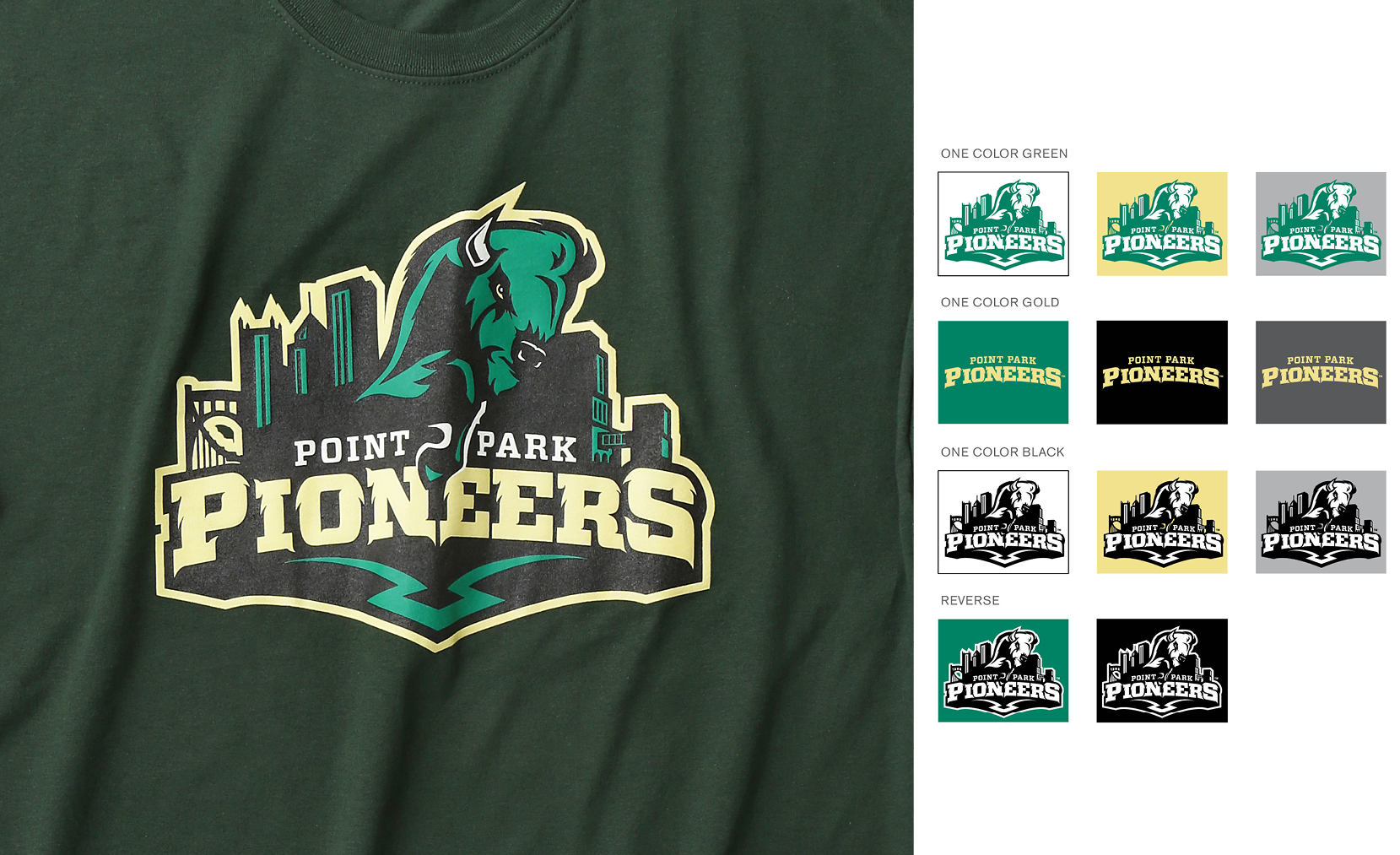
The same principle shows up at a smaller scale in the Point Park Pioneers identity. A to Z created the athletic logo, standards and merchandise applications. The university said anything bearing the bison kept flying out of its bookstore. That is a wonderfully unfashionable metric. No dashboard is required. People saw the mark and wanted to wear it.
The owner who inherited the through-line
In 2025, Erin Stinner moved from executive vice president to owner and CEO. She had joined the agency in 2014 after a communications career that included government, national media and executive counsel. The transfer matters because agencies often confuse a founder’s taste with an operating system. A to Z’s public materials under Stinner keep returning to the same institutional promise: senior-led work, direct access and measurement tied to qualified inquiries, applications, appointments, leads, conversions and revenue when the data allows.
The agency’s market position sits between two alternatives. A specialist shop may be sharper in one narrow discipline. An in-house team may know the institution from the inside. A to Z is most persuasive when a client needs several disciplines to behave coherently, lacks the internal capacity to coordinate them, and has an outcome concrete enough to measure. It is less obviously suited to a company that needs only a commodity production task, already has strong orchestration in-house, or cannot agree on what success means.
What another team can copy
- Write the business outcome before choosing the channel.
- Segment by real behavior and circumstance, not a decorative persona.
- Keep one accountable lead close from discovery through reporting.
- Give partners usable rules, then let the identity travel.
- Launch small enough to learn, and budget enough time to pivot.
The alphabet in A to Z’s name suggests comprehensiveness. The better interpretation is sequence. A campaign is a chain of decisions, and each decision ought to remember the one before it. The agency’s strongest work makes that chain visible: a message becomes an ad; the ad becomes an inquiry; the inquiry becomes an application; the application becomes a person arriving on campus. The handoff still happens. It simply stops being a place where the idea disappears.