The difficult thing about naming an advertising agency after people is that people eventually have to explain what the names mean. Burdette Ketchum had two of them. One belonged to Karen Burdette, who founded the Jacksonville shop in 1996. The other belonged to Will Ketchum, who became president and CEO in 2011. For years, the pairing was perfectly respectable. It was also the sort of name that revealed almost nothing about how the firm thought.
In February 2022, after 26 years in business, the agency renamed itself High Reason. This was not an acquisition or a frantic attempt to appear young. It was a strategic edit. The agency had spent decades telling clients to find the meaningful difference inside their business. When it finally turned that instrument on itself, the answer was not a person. It was a habit: ask why, find the evidence, identify the opening, make the creative leap, then check the arithmetic.
The new line, “Creativity. Calculated.”, neatly holds the contradiction. Advertising is supposed to produce feeling. A calculation sounds like the thing that kills it. High Reason’s position is that the calculation makes the feeling more useful. Research narrows the field. Strategy gives the idea a job. Measurement tells the team when affection has become action.
“You can outspend or you can outthink. We pursue the latter.”High Reason’s statement of approach
01 · The operating systemEight questions, one awkward number
High Reason is an integrated marketing communications agency. That phrase can mean almost anything, so here is the practical version. Its team conducts primary research, builds positioning and annual plans, designs brands and campaigns, develops websites, runs search and social programs, buys media, produces video, manages public relations, advises executives, and handles crisis communications. Clients can buy the whole chain or a piece of it.
The more revealing product is the sequence underneath those services. High Reason publishes eight questions that begin with the desired business result and end with the next pivot. In the middle are the target’s state of mind, the competitive white space, the brand’s distinctive claim, the moment of activation, and the measurement dashboard. Question six is wonderfully impolite: does the math work? Specifically, does the cost per conversion fit the economics of the business?
This is the central distinction between High Reason and an agency that begins with a medium. A web shop may start with the website. A PR firm may start with coverage. A production studio may start with the film. High Reason starts by asking what must change in the business, then chooses the customer touchpoints that can change it. The advantage is coherence. The risk is breadth: integrated service is only as good as the specialists doing each part, and a 16-person firm cannot plausibly be the deepest provider in every discipline.
02 · The useful failureThe problem that breaks first is often the story
Consider Markland, a 314-acre master-planned community developed by Hines in St. Johns County. Its first phase sold steadily, but it sat beside vast gated developments whose size produced longer amenity lists and larger ad budgets. The first story treated smallness as a disadvantage to overcome. Bigger competitors owned the obvious language of abundance.
High Reason spoke with early buyers. Their answer changed the premise: a smaller community made it easier to know the neighbors. Small was not the defect. Small was the social product. The agency positioned Markland as “Where Together Happens,” built the campaign and sales tools around that idea, and reported that Phase I and the premium Wolfe Pointe tract sold out. The lesson is portable because it is not “use this tagline.” It is “interview the people who already chose you; they may understand the advantage better than your category does.”
The same pattern appears in healthcare technology. Neurolens had a lens designed to address eye misalignment, but it first had to help eye-care professionals recognize an underdiagnosed problem behind headaches and eye strain. High Reason reworked the value proposition, professional and patient messaging, color, photography, and brand standards. The agency’s case study reports 130 new practices in a year, more than 15,000 digital tests, and eightfold revenue growth after the recommendations were put into use.
These are outcomes reported in the agency’s own portfolio, and that matters. Marketing rarely enjoys laboratory conditions. Neurolens also raised capital. Daily’s opened locations. Advanced Disposal had operational teams in the field. The fair claim is not that an agency single-handedly manufactured every percentage point. It is that High Reason designed work around an outcome specific enough to count. That already separates it from the case study whose triumphant metric is “impressions.”
03 · Proof in peculiar objectsA gas station can have a point of view
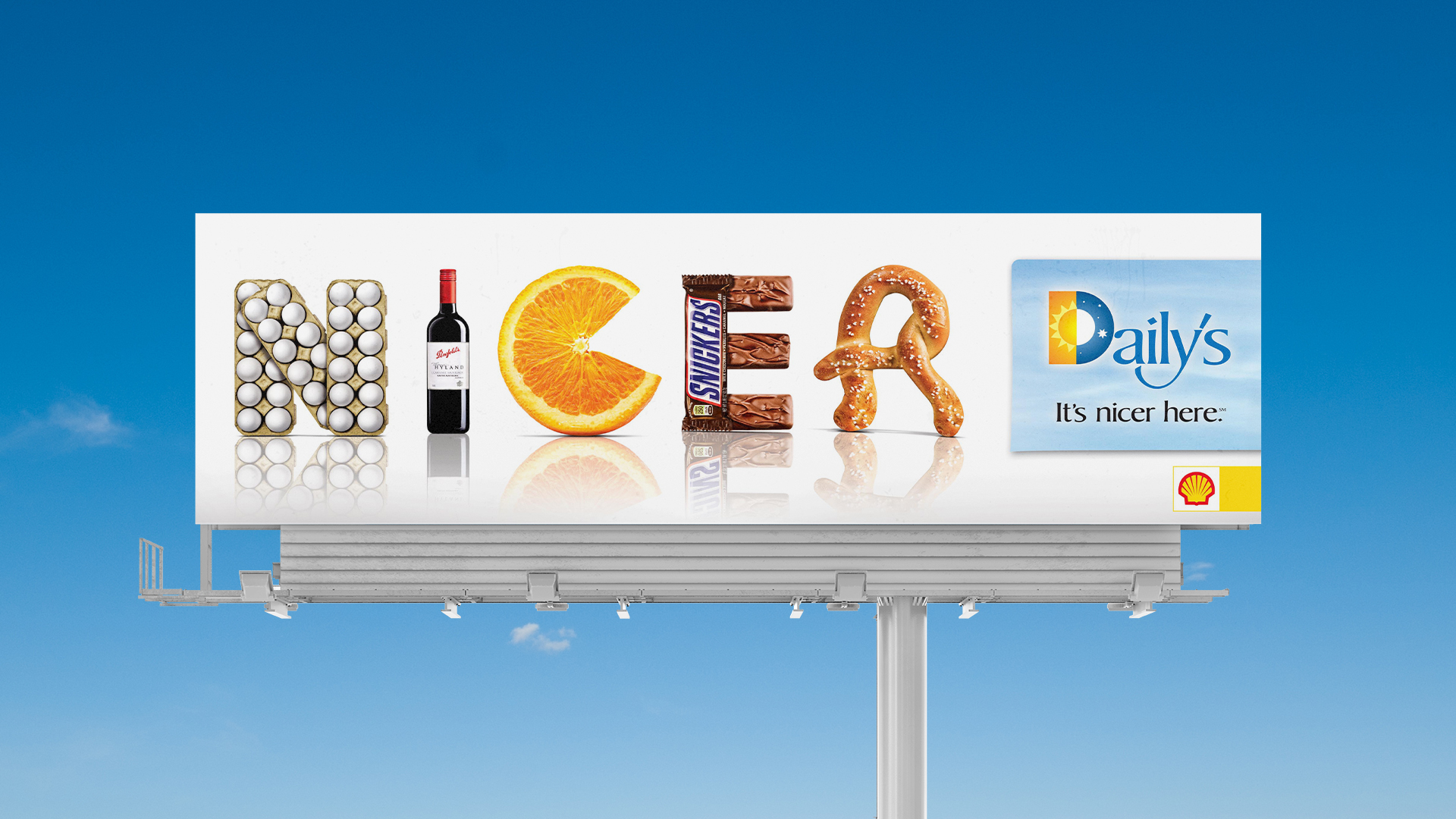
The Daily’s work shows the agency at its broadest. First Coast Energy wanted a convenience-store brand that meant more than gasoline. High Reason worked across the name, identity, retail environment, packaging, media, point of purchase, and eventually Dash, a fast-casual food operation. “It’s Nicer Here” is not a claim about octane. It is a behavioral standard that can be tested at the counter, in the restroom, and inside the sandwich wrapper.
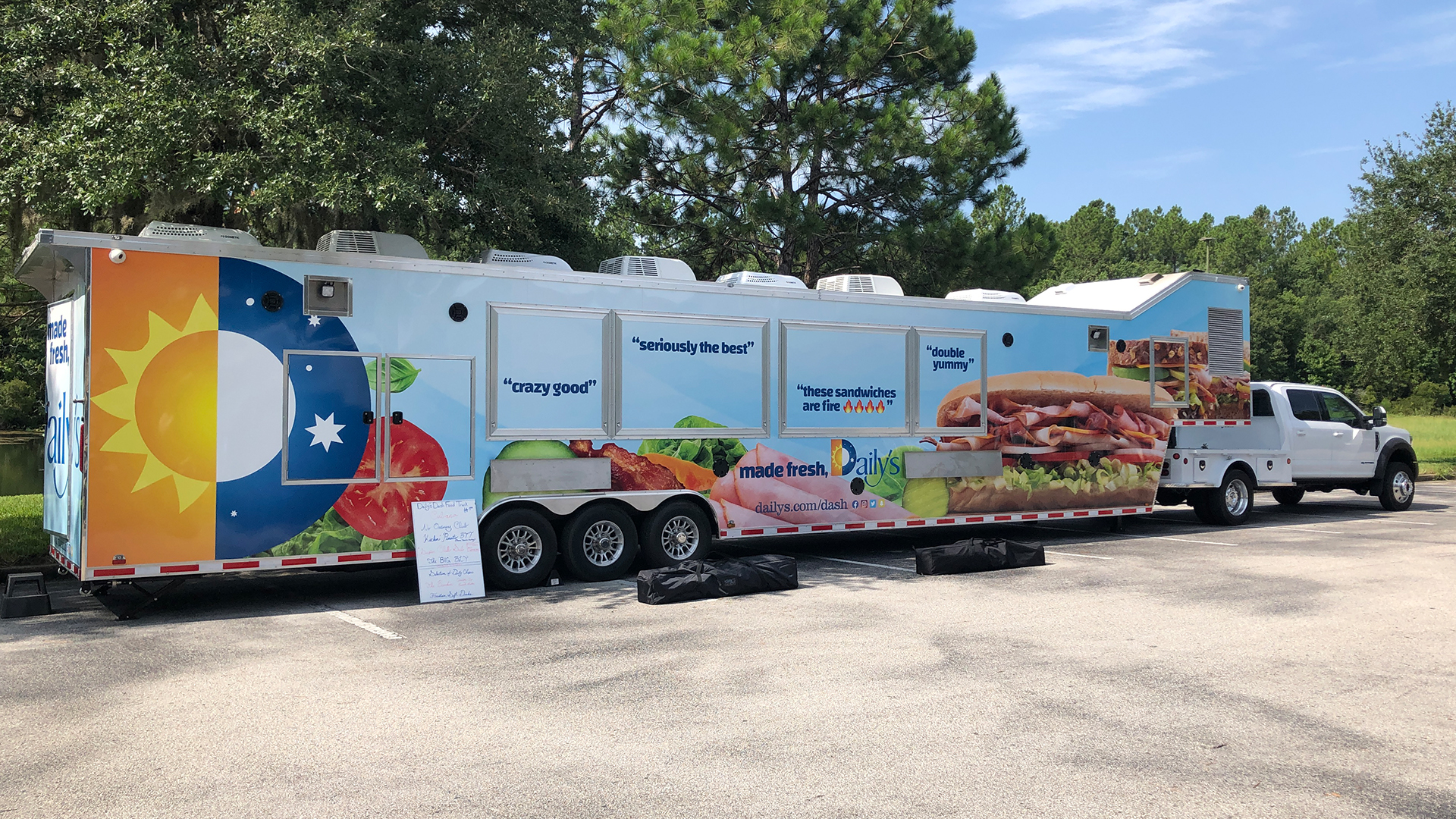
The campaign’s reported 16 percent year-over-year lift in same-store foodservice sales makes the work legible to an operator. But the wrapped food truck may explain it better. High Reason did not treat brand as a logo file passed to someone else. It carried the same proposition into a movable restaurant with five air-conditioning units and a sandwich large enough to challenge perspective.
Daily’s: name, store experience, packaging, media and foodservice
Neurolens, EssilorLuxottica, PECAA and merger identities
Communities, counties, regions and economic development
That range locates High Reason in the market. It is bigger in scope than a specialist boutique but smaller in headcount than a network agency. Its strongest public work clusters around complicated sales: healthcare products that require education, business services with multiple buyers, mergers with anxious employees and customers, civic identities with vocal stakeholders, and consumer brands whose experience lives in many places at once.
High Reason does not publish a rate card. One public reference point exists: Nassau County said its 2018 branding engagement with the agency’s predecessor cost $45,000. That figure belongs to one historical civic project, not to a current menu. For most buyers, the useful question is whether the agency can tie scope to an economic outcome before pricing the channels.
04 · The merger testWhen two histories need one future
Mergers expose the limits of surface-level branding. Medalogix and Forcura, two post-acute healthcare technology companies, needed a combined identity. The tempting solution would have been a portmanteau, the corporate equivalent of taping two name badges together. High Reason instead interviewed customers and industry leaders, built the positioning, and landed on Mosai: a mosaic in which fragmented pieces reveal a fuller picture of care.
The agency then designed the identity and standards, created trade advertising, and coordinated the launch through communications and media relations. Its published case says the message reached 900 customers and achieved complete resonance among the merged staff. “Complete” deserves the usual survey-method caution, but the choice of measure is intelligent. A merger brand has two audiences before it has any others: the customers who must understand the new proposition and the employees who must be willing to say it aloud.
This is where High Reason’s mix of public relations, research, and design becomes more than a bundle of services. The research helps decide what may be true. The identity makes it recognizable. Communications moves the explanation through a market. Measurement finds out where belief stops. A client avoids the familiar relay race in which a strategy firm hands its deck to a design firm, which hands files to a PR firm, each quietly editing the idea.
The cleverest thing High Reason sells is not certainty. It is a disciplined way to discover where certainty runs out.
05 · The borrowable partTake the questions. Leave the agency costume.
A reader does not need to hire High Reason to copy its most useful behavior. The framework is simple enough for an in-house team, a founder, or a nonprofit board. It also costs less than beginning with production and discovering later that everyone meant a different thing by “success.”
A five-move field guide
- Write the business change in plain language before naming a deliverable.
- Interview customers who chose you and customers who walked away.
- Turn the apparent weakness over. Ask when it becomes the advantage.
- Put the conversion economics beside the creative brief, not in a later meeting.
- Choose the signal that will make you pivot, and agree on it before launch.
There are conditions where this approach loses force. If the organization cannot share reliable customer or sales data, “calculated” becomes theater. If leaders commission research but protect a preferred answer, interviews become decoration. If a tiny engagement requires world-class depth in one technical channel, a dedicated specialist may be the better buy. And if nobody has authority to change the offer, no amount of positioning can repair the product underneath it.
The agency seems aware of the human counterweight. Its culture language is driven and ambitious, but also supportive and informal. Staff biographies mention dogs, baseball, blueberry bushes, vintage treasure, poker, and Edina, the office cat, whose full biography is “meow.” This is not evidence of effectiveness. It is evidence that a company named High Reason knows the danger of sounding like a graduate seminar.
In the end, the rebrand works because it makes a promise the agency can repeatedly be caught keeping or breaking. Does every recommendation have a reason? Does the creative connect to the customer journey? Does the math work? Burdette Ketchum was a name. High Reason is a test. The more interesting choice was not the new logo. It was volunteering to take the test in public.