media-planning
(82)
The Agency That Refused to Forget
For fifty years, Laughlin Constable has survived the advertising business by changing its machinery without surrendering its memory. Its newest bet is that an independent agency can turn human judgment into reusable intelligence - and still keep the humans in charge.
Flynn Wright Found the Answer at $1.88 a Gallon
Flynn Wright’s most useful product may be the pause before the pitch: find the human motive, then choose the message, medium and stunt that can move it.

The Ad Agency That Carpeted a Rhino to Make a Point About the Mind
Intermark Group built an advertising agency around a stubborn idea: people rarely do what a spreadsheet says they should. Its answer combines behavioral science, media buying and creative work - occasionally with a rhinoceros standing on the product.

Planit and the Six Months Nobody Was Selling
A Baltimore agency found its sharpest sales pitch in the half-year after a weed never appears. Thirty years in, Planit still makes its best work by looking for the part of the customer story everyone else walked past.

The Agency That Put a Number on Courage
GUT began with a second mortgage, a one-year no-poaching rule and a stubborn word: bravery. Eight years later, that word has become a 12-office operating system for making brands harder to ignore.

The Agency That Ate Its Own Org Chart
Inizio Evoke spent years collecting specialist agencies. Then it made the unusual admission that the collection had become the problem - and began turning a maze of names into one healthcare commercialization machine.

The Agency That Sent Media Away - Then Asked It to Come Home
Doner spent years pulling advertising apart into specialist shops. Its most revealing move was putting the pieces back together - and betting that the middle of America is a point of view, not a flyover zone.
The Agency That Put Two Histories Through One Door
Qantm Creative was born when two Virginia agencies retired their familiar names and moved under one roof. The useful lesson is not the new logo - it is how an agency turns inherited experience into one repeatable operating system.
The Agency That Learned to Sell the Unrepeatable
For nearly fifty years, Serino Coyne has marketed an awkward product: a live experience that disappears as it happens. Its answer is part poster studio, part media lab, and part box-office nerve center.

The Miami Agency That Stopped Translating America
Republica Havas built a business around a simple correction: people do not become generic consumers when they see an ad. Its journey from two founders over coffee to Havas's cross-cultural flagship shows what happens when culture moves from the footnote to the brief.

The Ad Agency That Leaves the Office
For 55 years, Mintz + Hoke has practiced a peculiar kind of advertising: before it makes the message, it tries to live inside the audience's problem. The result is an independent Connecticut agency that behaves part anthropologist, part media shop, and part very curious neighbor.
The Advertising Agency That Sold Itself to the People Already Inside
Mower spent decades assembling an independent agency. Then it made an unusual exit: the company became the property of its employees - and turned friendship into a research method.

The Agency That Bought the Building - Then Kept Rebuilding Itself
SCC has survived 37 years of advertising fashion by practicing a useful contradiction: stay independent, keep changing. Its newest act turns an awkward succession into a sharper proposition for brands that cannot afford to behave like the category leader.

VCCP Sold After Three Years. Then It Kept Acting Like a Start-Up.
A kitchen-table agency won O2 on day one, sold for up to £30 million three years later, and somehow preserved its taste for wrong answers. Its trick is not rebellion for its own sake - it is making twenty specialties behave like one company.
The Agency That Turned a Pizza Argument Into 19 Billion Impressions
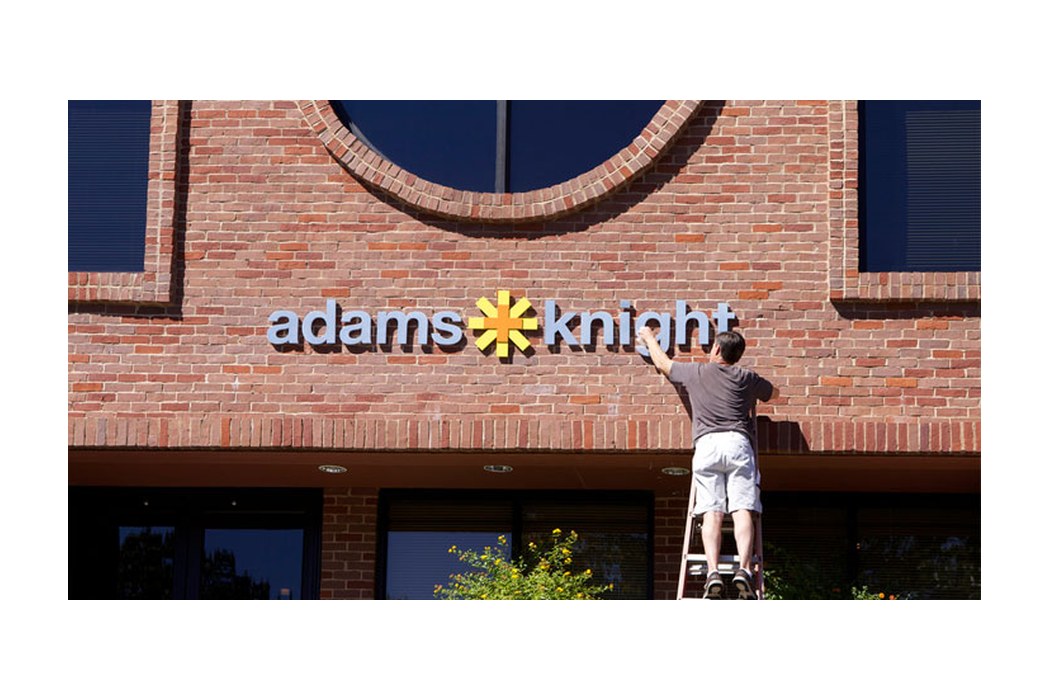
Adams & Knight found a cheaper way to market a small state: pick a fight people already wanted to have, then give the argument somewhere to go.

The Ad Agency That Refused to Be Bought
When holding companies came calling, GS&F chose a stranger buyer: its own staff. The result is a 48-year-old Nashville shop where the people making the work also own the consequences.

The Ad Agency That Learned to Move a City
R&R Partners wrote four words that escaped advertising and entered the language. The more revealing trick is what happened next: the Las Vegas agency learned to treat campaigns as coalitions, cities as products and persuasion as infrastructure.

The Most Expensive Part of Marketing Is the Handoff
A Pittsburgh agency has spent nearly four decades making a quiet bet: the fewer times an idea changes hands, the better chance it has of changing minds.
The Airplane That Learned to Hunt
Gravity Global built a worldwide agency around a contrarian idea: the harder a product is to explain, the more human its marketing must become. Then it painted a jet like a predator and watched a B2B campaign behave like popular culture.
DMH and the Website That Wasn't a Website Problem
The Kansas City agency makes websites, campaigns and brands. Its more interesting product is the moment a client realizes it asked for the wrong thing.
The Advertising Agency That Refused to Sell Time
Firehouse built its reputation on an awkward proposition: the best advertisement may begin with changing the business itself. One car dealer, four months of research and a pandemic made the case.

The Advertising Agency That Hid Its Founders in Plain Sight
Three men named Mealey and Hawkins built an agency from their middle names. Fifty-four years later, the disappearing act still explains how AB&C gets attention - by making the client the most interesting person in the room.

The Bank Ad With an Otter in Its Pocket
Crawford helped a regional bank sell checking accounts with sea otters, rebuilt trust around a zinc plant, and made a county name into a verb. The method begins where founder Marion Crawford began: in a newsroom, looking for the fact people will repeat.
The Agency That Learned a Good Idea Can Wear the Wrong Name
Allen & Gerritsen spent four decades building an integrated independent agency. Then one successful acquisition taught it a sharper lesson: the work can be right while the wrapper is wrong.

The Ad Agency That Built a Five-Story Argument
Two Tango spent four decades learning that information rarely changes behavior on its own. Its best work gives an abstract fact a body, a place and just enough surprise to make people feel it.
The Ad Agency That Put Feelings Ahead of Facts
Signal Theory spent half a century learning that people rarely buy for the reasons they recite. Its answer is an agency built to find the emotional signal hiding underneath the sensible explanation.
Level Mpls Found Its Edge in the Work Nobody Can Explain Quickly
A Minneapolis agency built a specialty out of the awkward brief: health warnings, fair-lending programs, workforce shortages and public services. Its trick is to make the complicated feel personal - then count what people do next.

The Ad Agency That Still Rides the Milk Truck
For 50 years, Lawrence & Schiller has sold a simple, expensive habit: go close enough to the customer that the useful truth becomes impossible to miss.
GKV - The Agency That Learned to Win With Less
A Baltimore agency built its identity around the underdog. The revealing part is not the slogan - it is what happened when a $14 million public-health budget shrank to $1.3 million and the work still had to work.
The Agency That Learned to Sell the Decision Before the Product
Fahlgren Mortine built a national communications business by noticing a stubborn truth: audiences rarely need a louder pitch. They need a better way to make up their minds.