There is a rejection letter hanging in an advertising agency on Coral Way in Miami. It was written in 1968 by the chairman of Young & Rubicam to Jorge Plasencia Sr., a Cuban exile and banker who wondered if the firm might use him as a writer. The answer was a polished no. His son discovered the letter decades later, after his father died - and after the son had built the advertising career his father quietly imagined.
This is almost too tidy as an origin story, except that Republica Havas did not begin with the letter. It began with coffee. Jorge A. Plasencia, then an executive shaped by Univision, the Miami Marlins and Estefan Enterprises, kept meeting his friend Luis Casamayor, who ran a design studio called Cosmyk. Plasencia offered operating advice; Casamayor brought the creative eye. Eventually the free consultation produced a more interesting proposition: why not build the thing together?
They opened Republica on November 13, 2006. Twitter was new. Facebook had just escaped the campus. Most agencies still maintained a sturdy wall between the people who made television commercials and the people who understood the internet. Republica started with digital, mobile and social in the same room. It also started with another refusal: multicultural work would not be a translated version of the supposedly normal campaign.
The expensive word is context
Translation changes words. Transcreation changes the premise. The distinction sounds like agency vocabulary until you see the mistakes it prevents: humor that arrives lifeless, a family scene that feels borrowed, a health message delivered by the wrong messenger, Spanish copy that is technically correct and socially tone-deaf. Republica's product is the context surrounding the sentence.
That product now comes in four broad forms - creative, media, health and experiences - supported by research, analytics, consumer science, public relations, social content and production. A food company can use it to understand which traditions its product enters. A pharmaceutical company can use it to see why a patient distrusts a category. A tourism board can use it to separate a postcard cliché from the city residents actually recognize.
The roster makes the commercial point. Republica Havas publicly names Toyota, Walmart, Google, Sanofi, GSK, PepsiCo, Goya, AARP, Baptist Health and Sedano's among its clients and partners. These are not brands buying a single language. They are organizations buying fewer cultural blind spots across strategy, creative and distribution. The agency earns through the familiar mix of retainers and project fees; its edge is the ability to connect specialist cultural knowledge with full-service execution.
Eleven players, eleven wrong names
The agency's cleanest demonstration happened on a soccer field. To explain name confusion, an early symptom of Alzheimer's, Republica Havas worked with Argentina's A.L.M.A. association and Racing Club. Before a league match, social posts showed jerseys with incorrect names and numbers. Then Racing's eleven players walked onto the field wearing teammates' surnames. For a moment, 40,000 spectators had the sensation the campaign wanted to describe.
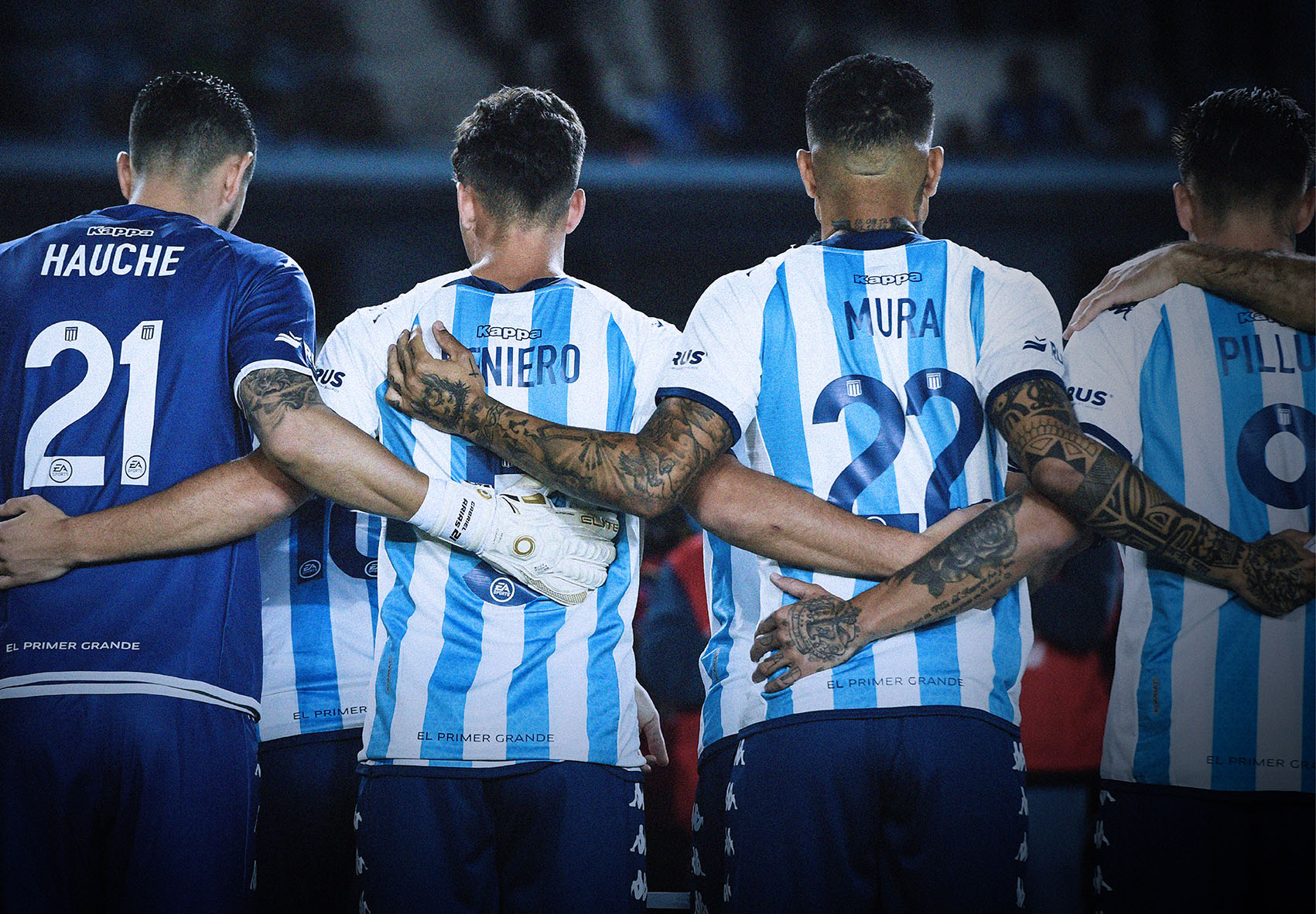
The idea traveled because it did not begin by explaining. It made the audience notice a small fracture in reality and only then supplied the cause. The work earned two Cannes Lions, plus a national Gold ADDY in 2024. Havas's corporate responsibility report later said the campaign accumulated 44 awards in that year. Awards are an imperfect measure, but here they reveal portability: an Argentine football device, developed by a Miami agency, could be understood without a paragraph of translation.
What failed first
The first obstacle was not creative quality. It was timing. In Republica's early years, telling a client to invest seriously in Facebook or Twitter could make the agency sound as if it had “three heads,” Casamayor later recalled. Miami created another problem: the founders had to persuade talent that a serious national agency career could happen somewhere other than New York, Chicago or Los Angeles.
Both objections aged badly. Social became infrastructure. Miami became a global city and a useful laboratory for an America with multiple cultural centers. Republica made the Inc. 5000 for five consecutive years, won an Ad Age Small Agency of the Year honor in 2016 and, by 2018, was ranked by Ad Age as the top independent U.S. multicultural shop.
Then independence itself became the constraint. Holding companies and private equity firms had approached the founders before. They listened and declined. What changed their minds was not a public purchase price - the financial terms of Havas's 2018 investment were never disclosed - but a particular bargain: Republica would keep its leaders, culture and Miami base while gaining a global platform, broader employee opportunities and access to media, data, entertainment and production capabilities.
What Republica brought
Cross-cultural strategy, minority-business credentials, an entrepreneurial Miami culture and client trust.
What Havas brought
International reach, shared media and technology, larger-scale production and a network of agency partners.
The name changed to Republica Havas. The position became more ambitious: first the network's lead U.S. multicultural offering, now described by the company as Havas's lead cross-cultural agency worldwide and the flagship inside Havas Miami. Its Coral Way building houses creative, media, health, customer experience and production teams in one Havas Village. The latest network layer is Converged.AI, Havas's shared operating platform for data, technology and audience intelligence. The useful caveat sits in the name of Republica's own discipline: computation can find patterns; it does not automatically understand why the pattern matters.
The part worth copying
Republica's lesson is not “open an office in Miami” or “add Spanish.” It is to move cultural decisions earlier. Ask who is absent from the research before polishing the concept. Put media planners near the creative team. Treat community organizations as collaborators with knowledge, not distribution channels with mailing lists. Hire people who recognize when a technically correct idea feels false.
A brief that behaves more like Republica
- Define the audience by behavior, context and community - not ethnicity alone.
- Research in the language and setting where the decision is actually made.
- Create from the insight instead of translating the finished general-market ad.
- Connect creative, media and measurement before launch, not during the postmortem.
- Choose a cultural detail that carries the idea, as the wrong surnames did on Racing's shirts.
This approach is less useful when “culture” is being used as a decorative shortcut, when the research group is too small to support the claim, or when a company wants authenticity without sharing decisions with the people whose lives supply it. It also cannot rescue a weak product. Cultural fluency improves the conversation; it does not repeal the market.
There is something fitting about the old rejection letter remaining in the office. Republica Havas is now large enough to work through a global network, yet the artifact keeps the founding argument visible. Madison Avenue once decided there was no room for one Cuban exile's voice. His son built a company around the suspicion that American business had been leaving too many voices outside the room - and that listening to them was not charity. It was the brief.