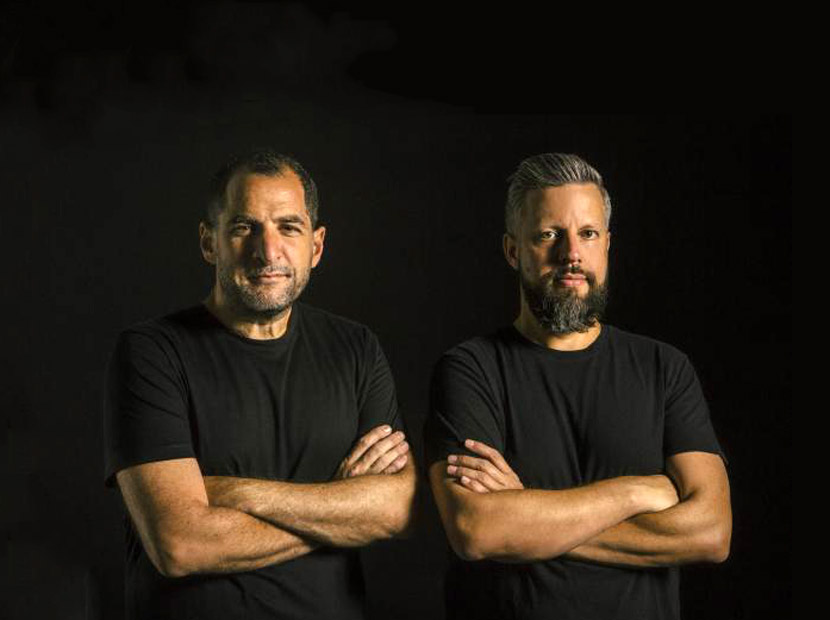
In 2018, Anselmo Ramos had an odd collection of assets for a celebrated advertising executive: a second mortgage, no salary, and a contract saying he could not call the clients or recruit the people who already knew his work. He and Gastón Bigio had left DAVID, the agency they built inside Ogilvy and WPP, to begin again. The restraint lasted a year. The missing paycheck lasted two. GUT started in shared workspaces in Miami and Buenos Aires with the sort of clean slate people usually request in theory and regret by lunchtime.
There was one advantage. Nobody could mistake the new agency for inherited momentum. Its first brief was itself. Ramos and Bigio wrote three words on a sheet of paper - courage, transparency, intuition - and chose a name that made the words difficult to forget. GUT would be a full-service creative agency for clients willing to move. Strategy, campaigns, design, production, social, media, influencer work, performance marketing, data and analytics all followed. But the product beneath the services was a decision: would a brand do the interesting thing after everyone had explained why it might fail?
Zero is a useful number
Agency origin stories tend to improve with age. This one is useful because the hardship had an operational consequence. Without an old roster to mine, GUT had to signal its desired customer plainly. Its early pitch was not “we can do everything.” It was “we want brave clients.” A company that wanted a quiet caretaker could rule itself out before the chemistry meeting.
That sounds reckless until one notices the second half of the system. GUT does not treat bravery as a light switch. It scores it. On the agency’s scale, zero means no appetite for a leap, ten means full commitment, and five is the negotiated middle. If a client falls below five, the conversation becomes practical: what evidence, protection or smaller experiment would move the score? The scale does not make a risky idea safe. It makes the disagreement visible.
“The work is the boss.”Anselmo Ramos, co-founder02 / The creative pattern
Borrow the room before buying another one
GUT’s recognizable campaigns often begin with a piece of cultural plumbing everyone else has stopped seeing. For Mercado Libre, the agency made radio spots consisting of a doorbell sound and placed them immediately after advertisements for 51 other brands across four countries. The previous spot named a product. The doorbell quietly suggested it could be delivered. Mercado Libre gained context without increasing its own media investment.
For the same client’s Black Friday campaign in Brazil, GUT and broadcaster Globo found another existing signal: the handshake in Mercado Libre’s logo. When handshakes appeared inside Globo programs, a contextual discount code appeared with them. Viewers began hunting through television for deals. The campaign won the 2024 Cannes Lions Media Grand Prix and was reported to have lifted Mercado Libre’s Black Friday sales 80 percent year over year.
Find the signal
A doorbell, a handshake, a beer glass in a painting - something people already understand.
Give it one job
Connect that familiar cue to the brand’s actual advantage, not merely to a clever line.
Make it travel
Design the thought so radio, television, social and conversation can each carry it.
The Artois Probability followed the same logic at a more eccentric angle. Stella Artois dates its heritage to 1366. GUT built an algorithm that combined art history with clues such as glass shape, liquid color, geography and historical competition to estimate whether beer in old paintings might have been Stella. It was data used not to flatten a story into targeting, but to turn a brand claim into a game.
What clients are actually buying
GUT is not a software product with a posted monthly price. It is a professional-services business. Companies retain or commission teams for brand positioning, creative strategy, campaign development, production, media planning and buying, social and influencer work, performance, e-commerce, loyalty, research and analytics. Fees are not public. The cost that matters inside the work is organizational: senior attention, fast approvals, access to data and a willingness to accept an outcome that research cannot guarantee in advance.
Its customers are correspondingly large: AB InBev and Stella Artois, Mercado Libre, DoorDash, Google Pixel, Kraft Heinz, Tim Hortons, Havaianas, P&G, Verizon, Coca-Cola, RIMOWA and others. In 2026, Turtle Beach selected GUT New York after a two-month review to rethink positioning, identity, social, influencer strategy and the gaming brand’s creative platform. GUT is competing with independent idea shops such as Wieden+Kennedy and Rethink, and with integrated networks and consultancies such as Ogilvy, VML and Accenture Song.
Choose one behavior your company wants to be known for. Define what it looks like at zero, five and ten. Then use the scale in real approvals. A word becomes culture only when it changes a decision.
The pandemic arrived before the mythology
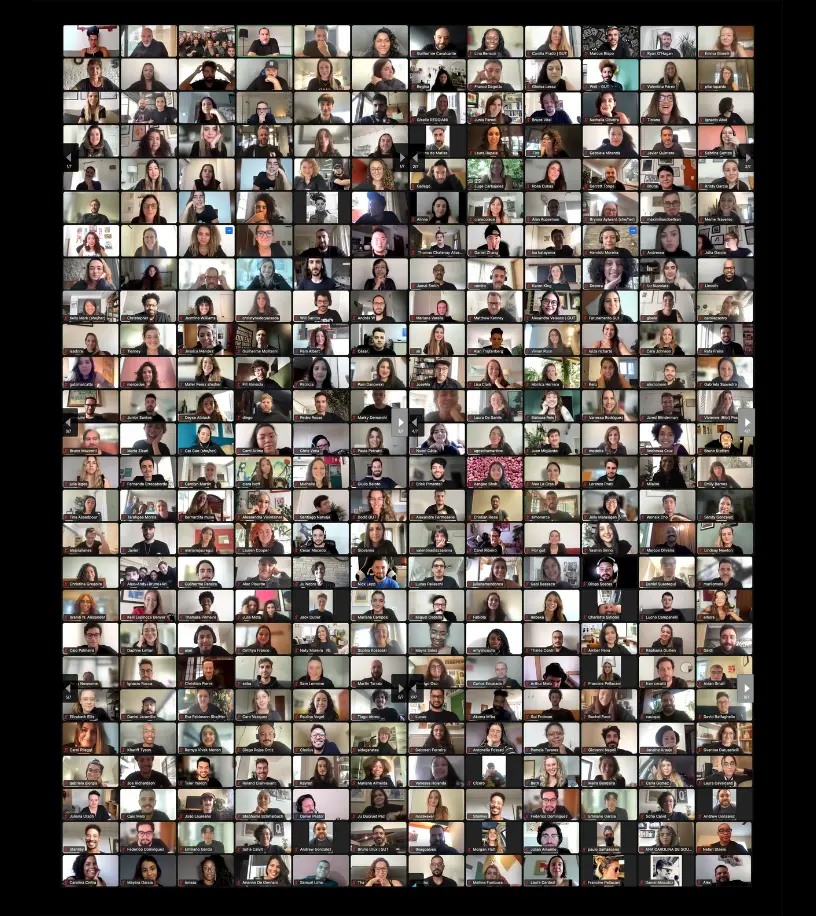
The first existential test was not a failed commercial. It was March 2020, less than two years after launch. Advertising budgets tightened and offices closed. By chance, GUT had gathered about 100 employees from Miami, Buenos Aires and São Paulo for a three-day Beginning of the Year meeting just before lockdown. The founders promised to finish the year with everyone still aboard. Their client mix helped: burgers, beer and other products people continued to buy, rather than airlines or cruises.
The experience hardened the agency’s belief that culture needed architecture. Today the rituals include peer-voted Gutsy Awards, founder conversations, a series honoring women in advertising and an Unbranded Content Contest. Anyone can submit an original idea, including people outside the creative department; the winning concept is funded without requiring a client logo. Black T-shirts became a uniform, but the more consequential choice was to let finance enter the creative contest.
The buyer kept the smaller company’s name
By 2023, the scrappy independence story had reached an elegant climax: 35 Cannes Lions in one year, including three Grand Prix, and the title of Independent Network of the Year. GUT Buenos Aires was named both Agency of the Year and Independent Agency of the Year. Then Globant, the technology company that had already been a client, bought 60 percent of GUT Agency LTD.
The amount paid for GUT alone was not disclosed. That matters because acquisition coverage often mistakes an aggregate table for a price tag. What can be said is more interesting. Other holding companies had approached the founders, who already knew that world and declined. Globant changed their minds after nearly three years as a client: it offered engineering, AI, martech and global reach, while GUT offered a recognizable creative identity. In 2025, the buyer consolidated its marketing and advertising operations under the GUT Network brand. The acquired name became the umbrella.
The scale is now roughly 2,000 people across Miami, Buenos Aires, São Paulo, Toronto, Mexico City, Los Angeles, Amsterdam, Madrid, New York, Singapore, Bogotá and Copenhagen. Its capabilities include AI, digital marketing, consumer experience, social, content, media, martech, analytics, healthcare and pharma marketing. The paradox is obvious: the company founded to escape a holding group now sits inside a 35,000-person technology company.
That does not make the original idea false. It makes the experiment harder. A bravery scale works when decision-makers attend the meeting, the client has room to move and the insight connects to a real business advantage. It works poorly when “brave” becomes a synonym for loud, when a regulated category leaves no room for surprise, or when committees reward novelty without accepting responsibility for it. An eccentric campaign cannot repair a weak product, a confused position or a missing distribution system.
The lesson is narrower and better. Name the behavior. Make it observable. Build rituals that let people below the executive floor practice it. Then find a cultural signal small enough to explain in one breath. GUT did not invent courage. It did something more useful for a company: it supplied courage with a ruler.