A Broadway ticket is a peculiar thing to advertise. It is expensive, date-stamped, perishable, and attached to a product the buyer cannot inspect beforehand. The cast may be famous, or the title familiar, or the reviews ecstatic. Still, the thing being sold is two or three hours that will happen once, in one room, and then be gone. Serino Coyne built an agency around that inconvenience.
Nancy Coyne and Matthew Serino started the New York firm in 1977, when a specialist shop for live entertainment was itself a new proposition. The agency's own description is bold: the world's first advertising and marketing agency dedicated to live entertainment, cultural institutions, and attractions. The practical version is even more interesting. Serino Coyne exists to convert anticipation into attendance.
Its roster now stretches beyond Broadway marquees to MoMA, Alvin Ailey, Lincoln Center, Manhattan Theatre Club, the New York Philharmonic, and attractions. The common denominator is not theater. It is presence. Every client must persuade a person to leave the sofa, travel somewhere, arrive at a particular time, and join an audience.
Do not explain the show
The agency's enduring idea was articulated by Nancy Coyne in 2008. The work, she said, was not to summarize a show. It was to give people a taste of what made it unique. That sounds like a copywriter's preference, but it is actually a product strategy. A synopsis delivers information. A theatrical campaign must manufacture a sensation.
“We don't try to summarize a show. We try to give a flavor, a taste: What makes it unique?”Nancy Coyne, co-founder
The process started months before an out-of-town tryout. The team read the script, listened to the music, studied sets and costumes, then worked out the creative and media strategies at the same time. A design had to live as a newspaper ad, a bus side, a television spot, and eventually a tiny screen. The object was consistency without flattening the show into a logo.
For A Catered Affair, the firm considered several illustrators before choosing one able to evoke a Norman Rockwell mood. For Cry-Baby, it looked toward 1950s pulp covers. For Legally Blonde, the pink pop language came from the production itself. The lesson is portable: begin with the thing's texture, not the channel's fashion.
The old Broadway constraint. Coyne described a rule of thumb in which weekly advertising stayed at or below roughly 10 percent of a show's weekly gross potential. A production capable of $1 million a week might have about $100,000 to introduce an unknown product inside one of the world's noisiest media markets.
This is also where the romance stops. Advertising cannot repair the performance. Former CEO Angelo Desimini put the hierarchy plainly: the show is the most important thing, and audiences have to love it. Word of mouth remains the decisive medium. A sharp campaign can get the first crowd through the door. It cannot dictate what that crowd says on the sidewalk afterward.
The poster grew a nervous system
Television once anchored the business. Then audiences fragmented, phones absorbed attention, and theater clients who once needed convincing about Facebook began asking for every new platform. What failed first was not the creative rule but the channel hierarchy. Serino Coyne's response was not to abandon the poster. It connected the poster to a larger machine.
Today the service list reads like an audience journey: brand strategy, creative development, 360-degree communications planning, media, influencers, social, partnerships, live experiences, analytics, research, ticketing and revenue management, websites, search, and events. The business model is the familiar full-service agency retainer or project engagement, but the expertise is unusually vertical. Creative people sit near media buyers, analysts, developers, partnership managers, event producers, and ticketing specialists because a sold seat is the shared finish line.
That puts the firm in a small specialist market alongside theatrical agencies such as AKA NYC, SpotCo, RPM, Situation Interactive, and Bond Theatrical. Its distinction is the breadth tucked inside the niche: the pitch is not merely show art or a media plan, but a connected operation that can follow demand into the box office.
The live-entertainment conversion loop
A campaign for Lincoln Center shows the mechanism. Serino Coyne used interest and intent segments to reach people already leaning toward ballet and the performing arts, served in-feed video, retargeted visitors to Lincoln Center's site with native ads, and placed the work in premium inventory. The reported video completion rate ran 214 percent above the same creative on YouTube. More strikingly, one in five people who clicked an ad bought a ticket.
This did not prove that a dashboard can replace taste. It showed what happens when the two stop living in separate departments. The image and message created desire; audience selection reduced waste; retargeting caught the hesitation; ticketing data revealed whether any of it mattered.
A city becomes the medium
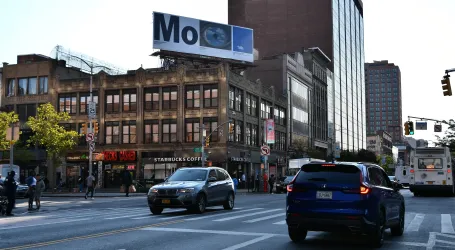
For MoMA in 2024, the problem was local familiarity. Tourism had not fully returned to its old pattern, so the museum needed to make itself newly relevant to New Yorkers who might feel they already knew it. Serino Coyne planned a citywide out-of-home campaign that treated the five boroughs less like inventory and more like a conversation. The work, called The Museum of Modern New York, won a 2025 Clio Entertainment award.
The same instinct can be more intimate. For Manhattan Theatre Club's Mary Jane, an influencer partner brought more than 20 creators from parenting, lifestyle, entertainment, and Broadway into Rachel McAdams' Broadway debut. The stated potential follower reach was 3.7 million. For Angels in America, a painted pair of wings outside the theater became a place where people photographed themselves and spread the campaign voluntarily. The ad stopped interrupting the audience and gave the audience a role.
The agency's list of claimed firsts has the swagger of a backstage wall: the first Broadway ad on television, the first on Netflix, the first digital marquee and 3D billboard, and the first audio ads in the New York City subway. There were giant snow globes in Times Square and, for reasons best appreciated as theater, a tractor driven through Midtown. The pattern matters more than the props. When a new channel can carry the feeling of a live event, the agency tries to make it perform.
The owner comes back into the room
Omnicom bought Serino Coyne in 2003, when the agency was already about 25 years old and reportedly handled more than half the productions then on Broadway. Twenty-three years later, the ownership story reversed. On February 27, 2026, CEO Matt Upshaw acquired the company from Omnicom and made it independent again. More than 70 employees stayed, the two companies retained a strategic partnership, and Serino Coyne moved into a new Times Square office at 1450 Broadway.
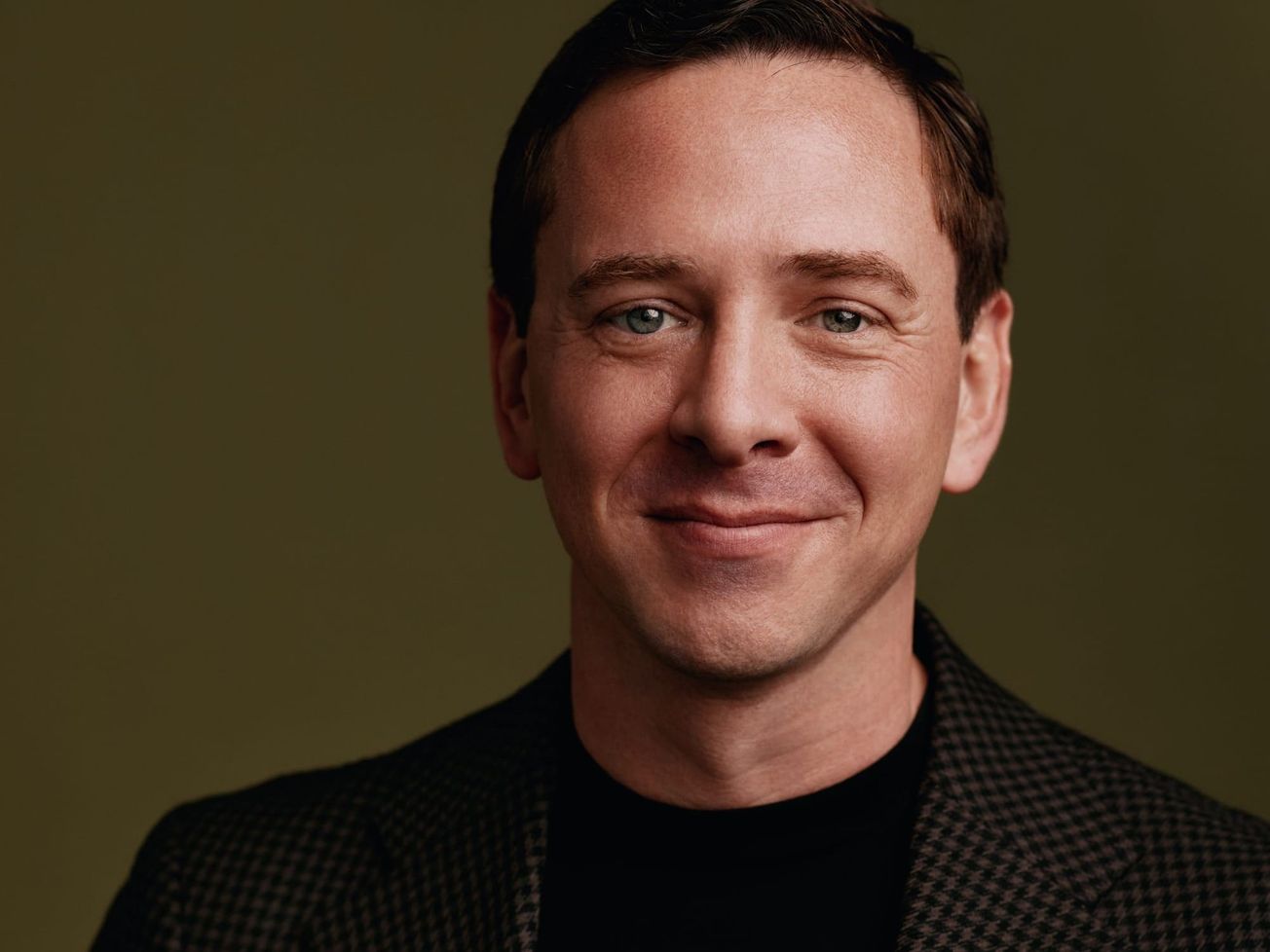
Upshaw described audiences as something crafted, not simply bought. That distinction is a quiet argument against commodity media. A generalist agency can purchase impressions. Serino Coyne's advantage is knowing why a Wicked loyalist, a MoMA member, a visiting family, and a tentative first-time theatergoer are not interchangeable units, even when all four appear in the same Times Square crowd.
Independence may make that specialization easier to protect. It also raises the stakes. Broadway is seasonal, hit-driven, expensive, and sensitive to tourism and consumer confidence. A house full of clients from one cultural ecosystem can be a moat when the ecosystem is healthy and a concentration risk when it is not. The method works best when the underlying experience is distinctive, inventory can be measured, and the team has enough time to build recognition. It works poorly when a producer expects media to replace product, when every audience is treated the same, or when novelty becomes the idea.
The useful parts to steal
- Sell the sensation, not the synopsis. Find the emotional texture that cannot be confused with a competitor.
- Design creative and distribution together. The message should change shape without changing character.
- Build a loop to revenue. Attention, retargeting, conversion, and yield should report to the same objective.
- Let customers join the scene. Murals, creators, events, and partnerships turn an audience into visible proof.
- Know what marketing cannot do. The campaign can create a first chance. The product earns the recommendation.
Serino Coyne's real product is not an ad. It is the carefully managed moment before a decision: the instant when a passerby sees a bus, a fan watches a clip, a parent hears a recommendation, or a museum regular notices a familiar institution speaking differently. The firm has spent nearly half a century making that moment lead somewhere specific. Usually, there is a curtain at the end of it.