The first thing that failed was the Super Bowl. In early 2003, R&R Partners planned to introduce a new Las Vegas commercial during the largest television event in America. The spot featured a woman returning from Vegas and slipping back into her ordinary identity. The NFL rejected it because Las Vegas meant gambling. This should have been a small disaster. Instead, the ban gave the campaign a useful first scene: the guardians of respectable entertainment were nervous about what Las Vegas represented.
The line at the end was “What Happens Here, Stays Here.” It did not explain casinos, hotel rooms or showgirls. It offered an alibi. That difference is the whole R&R story. The agency’s most famous product was not four words. It was a way of finding the private motive beneath a public purchase.
The family vacation was the wrong product
Las Vegas had spent part of the 1990s flirting with family tourism. Theme parks appeared; the city tried to make itself legible beside Orlando. The experiment never fit. After September 11, tourism softened and the destination needed a reason to travel that felt specific to Las Vegas.
R&R’s research found it. Visitors were not principally buying gambling. They were buying what the agency’s creative leadership called “adult freedom” - permission to become a slightly less supervised version of themselves. Copywriters Jeff Candido and Jason Hoff independently arrived at the same line. The coincidence gave the words a pleasing inevitability, but the decision to use them was anything but automatic.
“What Happens Here, Stays Here” sold the feeling around the product, then let the city rush in to fill the space.The useful idea
The agency’s own leadership worried that the concept could look seedy or alienate women. Public officials had to defend it in an open meeting. So R&R tested versions with the line, without it and with safer endings. The sharper version kept winning. Women-only research found the spots empowering rather than exploitative. Data did not domesticate the idea; it gave nervous decision-makers permission to approve it.
An agency that arrives before the advertisement
R&R was founded in Las Vegas in 1974 by Sig Rogich. Politics and advertising were mixed from the start. Billy Vassiliadis joined in 1982, bought the company with partners in 1994 and eventually became its longtime CEO. Michon Martin, a former prosecutor and government adviser, took over as chief executive in 2025 while Vassiliadis became chairman.
Those biographies matter because R&R is built less like a creative boutique than a compact influence machine. It houses brand strategists, media planners and copywriters, but also lobbyists, community organizers, crisis counselors, researchers, data scientists and immersive technologists. Its House of V capability works in augmented, virtual and mixed reality. Its partnership with CMV adds a Mexico and Latin America dimension; the Worldwide Partners network extends its reach further.
For a conventional product launch, this can be too much machinery. For a destination, hospital system, public agency or heavily regulated company, it is the point. These clients rarely suffer from an awareness problem alone. They have regulators, skeptical communities, elected officials, employees, trade partners and the occasional national trauma sitting between the message and the outcome.
What does it cost to move a place?
The number needs a footnote
In 2021, the Las Vegas Convention and Visitors Authority approved an R&R agreement with a ceiling of $500 million over four years, plus an optional two-year extension. That was not a $500 million agency fee. The ceiling included service fees, content creation and media purchases. Public documents put fiscal 2024 compensation at about $19.8 million across agency, content and media services.
The distinction matters because an integrated agency can look enormous on paper when it is administering media on a client’s behalf. R&R is private, so its own audited revenue and margins are not public. The honest description of its business is simpler: it wins project assignments and long relationships, charges for expert services, and often manages production and paid media. The Las Vegas relationship has lasted, in various forms, since the late 1970s.
That longevity has also attracted scrutiny. A 2007 internal audit found billing problems involving an events subsidiary, and later reporting described overpayments and unusually high commissions on some work. The episode is a reminder that integration creates power and administrative complexity at the same time. When one partner touches strategy, events, production and media, procurement discipline is not optional.
The slogan became a city-building department
R&R says its role in Las Vegas expanded far beyond broadcast advertising. It helped pitch and plan major sporting events, worked with airlines and tour operators, supported the campaign for Allegiant Stadium and the Raiders, and participated in efforts around Formula 1, the NFL Draft, the Super Bowl and a future Athletics move. This is not proof that an ad agency single-handedly built a sports capital. It is evidence that persuasion can operate upstream - before the logo, before the launch and sometimes before the vote.
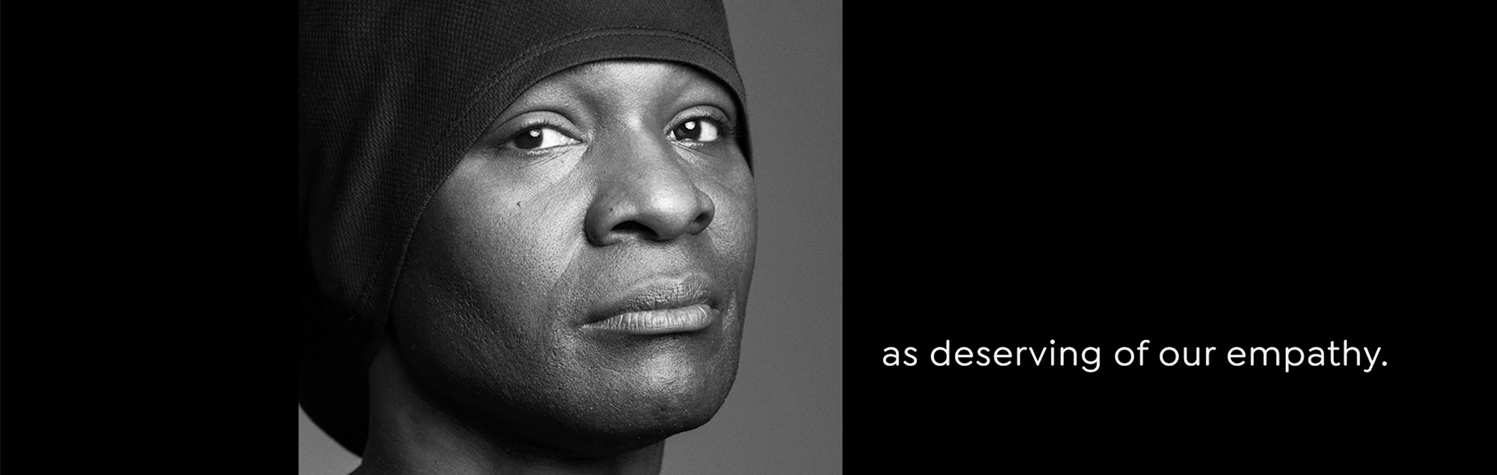
The same logic appears in smaller, more measurable campaigns. Project Human Dignity replaced stock images of homelessness with portraits of actual unhoused people, photographed to preserve dignity rather than perform misery. R&R donated more than 100 hours. Over 45 days, the work delivered 38.6 million impressions and 20,000 new website visitors, then helped build support during Utah’s 2024 legislative session for more than $50 million in emergency homeless services.
For Boeing, the agency built a visual and digital system around aerospace decarbonization; the resulting portal reported a 211 percent increase in visits. For a proposed blockchain city, a brief that began with a land-related government-affairs issue grew into branding, films, projections, a summit and a launch event completed in five months. Web traffic rose 6,100 percent. Different categories, same operating instinct: enlarge the assignment until it matches the actual obstacle.
The part worth copying
Most companies cannot copy R&R’s political relationships, its fifty-year file on Las Vegas or its bench of specialists. They can copy the sequence.
- Replace the category description with the human desire. Casinos became adult freedom; insurance became a helpful person answering the phone.
- Test the dangerous version and the safe version. Research is most valuable when it clarifies which risk the audience will accept.
- List everyone who can prevent the outcome. If the list includes officials, neighbors, employees or partners, the brief is larger than advertising.
- Measure the change that matters after attention: visits, consideration, funding, legislation, attendance or behavior.
The model works when the problem crosses borders between marketing, policy and public trust - and when a client will let one partner coordinate the whole field. It works poorly when the purchase is simple, the deadline leaves no time for coalition-building, or the organization is unwilling to hear an uncomfortable finding. Integration without authority becomes a crowded meeting. Boldness without research becomes a stunt.
R&R’s newest experiments make the old habit easier to see. In 2025 it built Nick Jolly, a tattooed AI holiday character with a detailed biography, empathy map, synthetic voice and real-time responses. Engagement and traffic quadrupled against earlier holiday efforts. The technology was new; the premise was vintage R&R. Do not start with the available format. Invent a character, a city or a public mood people can enter - then assemble whatever disciplines make it believable.
The agency’s moat is not that it can make an ad. It is that it knows when an ad is the last thing the problem needs.Fifty years, one operating instinct