There is an ordinary-looking parking garage at Charlotte Douglas International Airport where the cars learned to smile. One yellow coupe, photographed head-on, has a black grille curved into a grin. This was not an automotive campaign. The happy car was selling the convenience of booking airport parking online, one of those chores a traveler postpones until the suitcase is already open on the bed.
Chernoff Newman called the campaign Happy Space. It began with paid social and local news, then widened into print, digital display, digital outdoor, streaming radio and Axios Charlotte. In the first year, gross parking revenue reached $36.5 million - more than $10 million above forecast. A small piece of travel friction had been translated into a face.

The brief nobody puts on a mood board
This is the useful way to understand Chernoff Newman. It is an integrated agency headquartered in Columbia, South Carolina, with offices in Charleston, Charlotte and Orlando, plus a public-affairs foothold in Washington. It makes brands, ads, websites and media plans. It also explains genetic-risk research, warns families about counterfeit pills, promotes local produce, recruits nurses, turns port economics into public argument and helps state agencies speak without sounding like forms.
The glamorous part of advertising is the reveal. The harder business is the translation that comes before it. What does the audience fear? What are they busy doing instead? Which fact will move them? Chernoff Newman's stated process has five verbs - Study, Frame, Create, Launch, Evolve. The verbs are not decorative. They describe a business that earns money across the whole chain: research and strategy, brand and creative, public relations, public affairs, crisis work, media buying, web development, social and analytics.
Its customers are often institutions with many stakeholders and little room for a cute idea that cannot survive contact with reality: the South Carolina Education Lottery, MUSC Health, South Carolina Ports, Charlotte Douglas, the state agriculture department, colleges, utilities and infrastructure groups. Consumer brands sit beside them. The common need is influence under constraint.
The agency's real product is not an advertisement. It is a difficult idea, made easy enough to act on.
Two numbers worth more than a trophy shelf
Agencies are good at displaying awards because awards fit neatly on shelves. Outcomes are untidier. Chernoff Newman has plenty of the former - including 20 Midlands ADDYs for the 2021 season and five statewide public-relations honors announced in 2026 - but two client results explain the company better.
First-quarter sales - more than four times the game's initial projection.
First-year parking revenue - more than $10 million above forecast.
Cash Pop was a new South Carolina lottery game. Chernoff Newman gave it a lifestyle identity and a statewide, omnichannel launch. The first quarter brought in $20.2 million. Happy Space took the opposite sort of product - not a game, but a utility - and made the ease and savings visible. In both, the idea traveled across channels because it began with a recognizable human impulse: the wish for a little excitement, or the relief of removing one hassle.
What changed their mind
The company has been around since 1971, which means it has had to abandon more than one definition of an agency. In the 1980s, it added broadcast to the mix for regional tourism, energy, finance and public-safety clients. In 2014, it merged with Carolina Public Relations to enter Charlotte. The interesting decision came afterward: it did not immediately erase the acquired firm's name. Three decades of local reputation were useful, so the combined operation spent three years as Carolina PR | Chernoff Newman. Only after the services and cultures had joined did the old label disappear.
The first thing to fail, in other words, was the assumption that a merger must look complete on day one. Time changed the answer. By 2017, one name finally made sense. Two years later, Prolific acquired Chernoff Newman; in 2023, the relationship helped open a shared Washington office. The pattern is less conquest than careful integration.
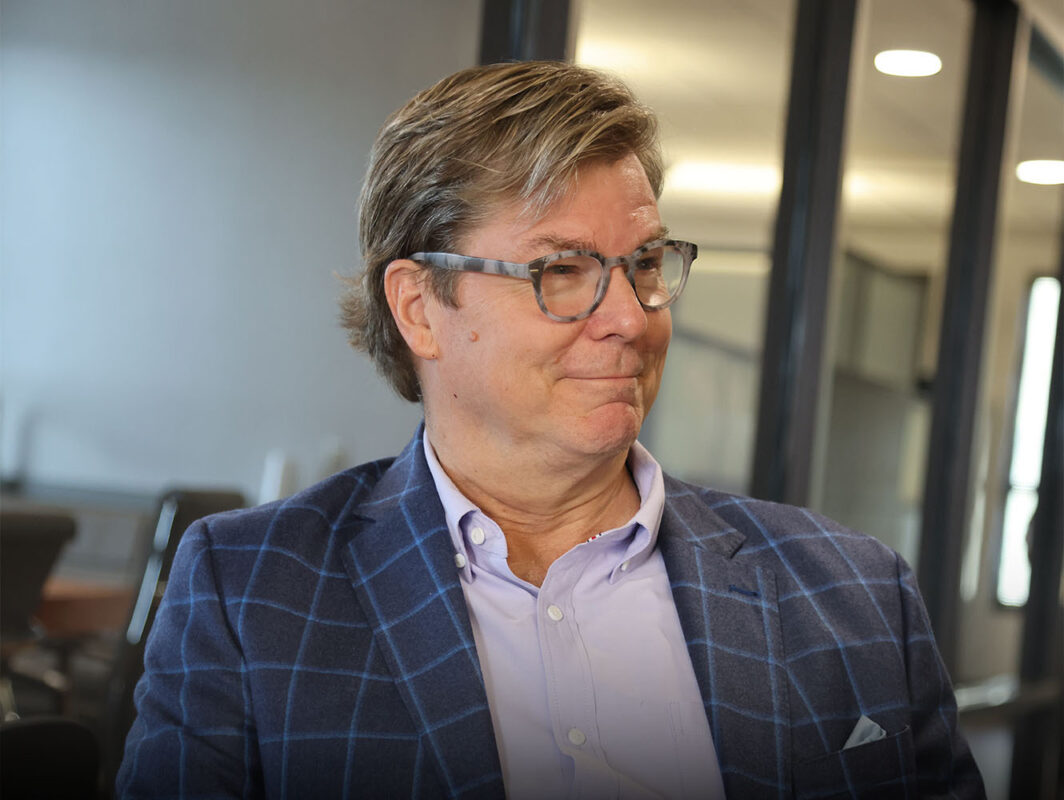
David Campbell became CEO in January 2025 after more than 25 years overseeing finance and operations. His résumé inside the firm is revealing: the person now responsible for creative ambition came up through the machinery that must pay for it. He has described himself, in effect, as a bridge between disciplines. He also judges barbecue competitions, a useful qualification for anyone accustomed to confident opinions and invisible criteria.
What the work costs - and what to copy
Chernoff Newman does not publish a universal rate card, and it should not: an issue-management assignment and a television production are different animals. Public procurement offers a narrow window. A 2026 South Carolina election-information emergency contract was worth $250,000. A lottery procurement capped evaluated hourly rates at $175 for a creative director, $140 for an art director or account supervisor, $120 for a copywriter or designer and $110 for an account manager. Production and media are separate. These are examples of public work, not a price for the whole agency.
Evaluated role caps in one public procurement, before production and media. Scope, channels and stakes determine the real bill.
The copyable part is not the rate. It is the sequence. Begin with the behavior, not the deliverable. Find one human tension simple enough to repeat. Let the idea choose the channels. Add channels only when they solve a distribution problem. Then report a number the client recognizes - bookings, sales, participation or revenue - rather than stopping at impressions.
That method asks something of the client. There must be a defined action, access to audience evidence, permission to simplify and a way to measure the response. It becomes less reliable when every stakeholder can add language but nobody can remove it, when the objective changes after launch, or when success is reduced to how many assets were delivered. Integration is valuable only if the parts share a decision.
The old agency with the hybrid offer
Chernoff Newman now packages its thinking under names such as Human IQ, a research-to-optimization philosophy that uses AI-assisted analysis without pretending the audience is a machine. MetricIQ gathers cross-channel performance in dashboards. Test Unit deliberately mixes advertising and PR to make earned-first ideas that can generate conversation before a paid-media budget does the heavy lifting. Its social practice says it can draw on a network of more than eight million creators.
None of these products is a moat by itself. Competitors can buy similar tools, recruit creators and build dashboards. The harder-to-copy advantage is institutional memory across categories where trust is slow and mistakes are public. A specialist PR firm may know the crisis room. A digital shop may know the conversion path. A large network may offer global scale. Chernoff Newman's bet is that many clients in the middle would rather have one team that can move from the boardroom to the billboard without translating the strategy twice.
The smiling car is a fine mascot for that bet. It is simple, slightly ridiculous and attached to a result. Most people will never admire the media architecture behind it. They will see the grin, understand online parking in half a second and get on with the trip. For a company in the business of attention, disappearing into the clarity of the message may be the most confident move of all.