public-sector-marketing
(21)
The Interesting Business of Making People Care
For 55 years, a South Carolina agency has specialized in the messages most people would rather ignore. Its trick is to make the complicated feel human - and then count what happens next.
The Campaign That Had to Forget Its Audience
Sage Communications built its name in the place where polished campaigns meet procurement rules, public scrutiny, and sudden policy reversals. Its most revealing work began when a nearly finished idea was told to start over.

The Empty Office That Taught Sanders\Wingo How to Think Bigger
A risky Austin expansion lost its launch clients almost immediately. The El Paso agency answered by learning to pitch harder, research deeper, and turn cultural fluency into national work.

The Tiny Agency Teaching City Hall to Speak Human
Most agencies sell attention. Slate sells something harder: a way for towns, cities, and counties to sound coherent when every resident is a stakeholder and every logo can become a council-meeting debate.

David Gorodetski Learned to Make Complexity Behave
He meant to paint. Instead, the Haifa-born founder built a communications career by stripping hard ideas to their essential line - and learned that a well-reasoned no can be more valuable than an easy yes.

The Agency That Put a Birthday Candle on a 75-Foot Rocket
Flock and Rally built a business around the unglamorous art of making many moving parts move together. Its best work shows what happens when audience research, public-sector fluency and a little theatrical nerve share one table.
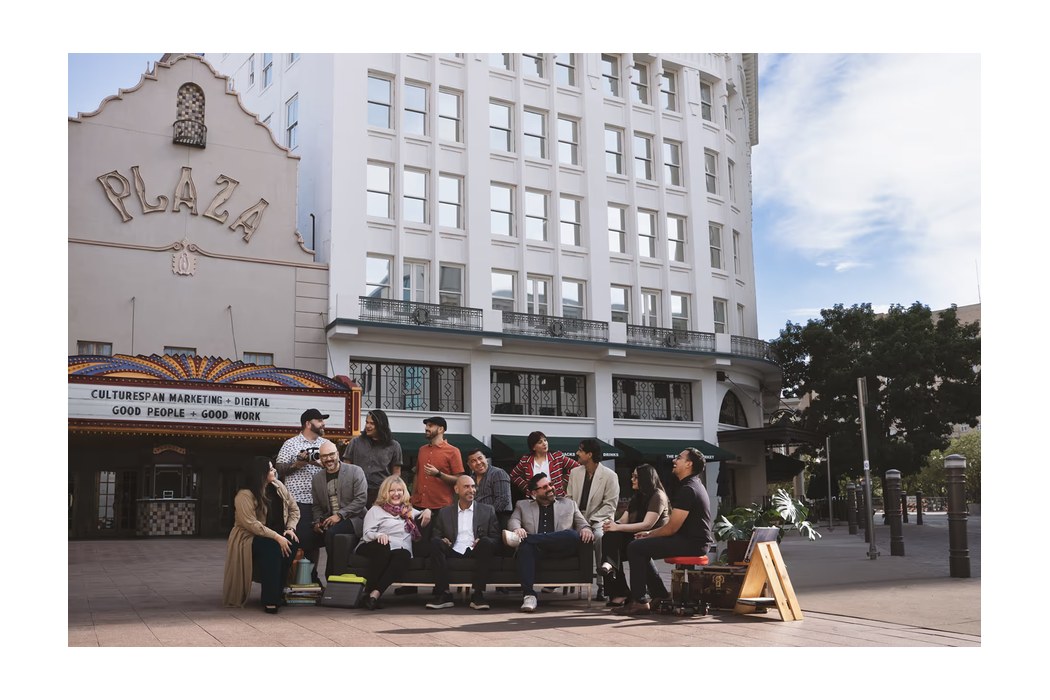
The Little Purple Spot That Changed Their Minds
An El Paso agency spent decades learning that Spanish is rarely the hard part. The hard part is finding the idea a community will trust - and being willing to discard the one that looked sensible in the conference room.

The Three-Person Job That Became Black Digital
Mike Utaegbulam discovered his old job required three replacements. He built an agency around that clue - then learned that doing everything yourself is a terrible way to scale.

EW Bullock Learned to Sell the Gulf Coast Without Shouting
A small Pensacola agency has spent four decades turning beaches, utilities and civic life into campaigns people can actually use. Its advantage is less about volume than proximity: knowing the place well enough to make the ordinary feel specific.
The Ad Agency That Sends Its Research Department to the Sidewalk
Vera Creative makes campaigns for people who may distrust the campaign-maker. Its answer is disarmingly practical: hire from the community, listen at street level, and let those conversations change the work.
The Marketing Agency That Rides the Bus Before It Draws the Map
3fold Communications built its business around a stubborn idea: before an institution asks people to change, somebody should listen to how they actually live. The result is an agency that rides every bus route, turns recycling into a love story and measures trust in enrollment, ridership and action.

LaRel Rogers Knows the Government Market Is Not a Side Quest
From a federal marketing fellowship to the knotty business of getting commercial software into government, Rogers has built a career translating between two worlds that rarely share a dictionary.

Jeffrey Scott Agency knows why you kept that thing
A storage ad, a reluctant city council, and a fruit snack with adult ambitions: inside the Fresno agency that turns familiar human problems into campaigns.

CENTRIC wants your next click to do some good
A San Diego agency turns public-service briefs into campaigns about everyday choices. Its most revealing work starts with a mosquito map, an empty classroom seat, or a very ordinary showerhead.

MacKenzie makes complicated places make sense
A national park, a ferry network, a century-old accounting firm: MacKenzie helps organizations explain what they have become. The interesting work happens before anyone draws a logo.

JPW Communications knows why your town isn’t listening
A water district asked for better communication. The research pointed to customer service. Inside the agency that helps governments figure out what the public is really telling them.

Verdin sells the town. First, it has to win the room.
A California agency turns towns into characters and public programs into stories. Its real specialty is giving visitors, residents, and the people holding the budget a reason to care.
Prosio Communications Wants California to Pay Attention
Air-quality alerts, safer roads, rent relief: the Roseville agency turns public policy into public messages. Its contracts show the craft, cost and complications of getting people to act.

Suzanne Behrens Spent 30 Years Making Government Technology Feel Human
She helped scale Microsoft's public-sector business from $100 million to more than $3 billion, then spent her final CMO chapter replacing mass marketing with precision. Her enduring idea is simpler than the software: sales and marketing should share the work, the numbers, and the consequences.

Joann Fitzgerald Sells Nova Scotia by Making Room for the Unexpected
For Joann Fitzgerald, destination marketing is an exercise in attention: find the gap between what travellers recognize and what they have yet to imagine, then give them a reason to cross it.

Tourism Nova Scotia Missed a $4 Billion Bet - Then Built a Better Playbook for Selling a Place
A pandemic broke the province's neat growth forecast. The rebuild reveals a useful lesson for every place brand: advertising works better when the product, the operators and the calendar improve with it.