Somewhere inside a federal agency, a perfectly sensible plan became the wrong plan. The subject was the emerald ash borer, an invasive beetle that destroys ash trees. The proposed remedy was wonderfully strange: recruit members of the public to help release tiny parasitic wasps that attack the beetle. Sage Communications had nearly finished the creative and media plan for the U.S. Department of Agriculture's Animal and Plant Health Inspection Service when the instruction arrived: stop.
This is the sort of moment that disappears from an agency reel. The clever pictures survive; the meeting that killed them does not. But Sage published the awkward part. Policy disagreement had dogged the project from the beginning. When production resumed, the target was no longer the general public. It was land trusts, large landowners, tribal nations, universities, extension services, and conservation groups. The work was not edited. It was rebuilt.
The first thing to fail was not the slogan. It was the premise about who needed persuading. Sage returned with three new concepts, including “Operation Biocontrol,” a knowingly theatrical treatment for a dry assignment. Then policy shifted again, and the campaign stopped in September 2019 before full implementation. On conventional scorecards, that is a frustrating ending. As a portrait of the company, it is unusually honest.
The unglamorous product is judgment
Sage sells the familiar agency shelf: research, brand strategy, public relations, paid media, social campaigns, websites, video, events, executive training, and crisis communications. Its customers span federal departments, technology vendors, security companies, schools, associations, arts groups, and nonprofits. The public roster includes USDA, DHS, Defense and State, along with Adobe, AWS, NVIDIA, Dell, AT&T, Georgetown University, and the Smithsonian.
That breadth can make an agency sound indistinguishable from every “integrated” shop. The useful difference is where Sage chooses to integrate. A government campaign has a buyer, an approver, a program office, an oversight environment, intermediaries, and a public audience that may distrust the institution speaking. A government contractor faces another puzzle: the person who notices a brand may not be the person who specifies, buys, or uses its product. Sage works in those gaps.
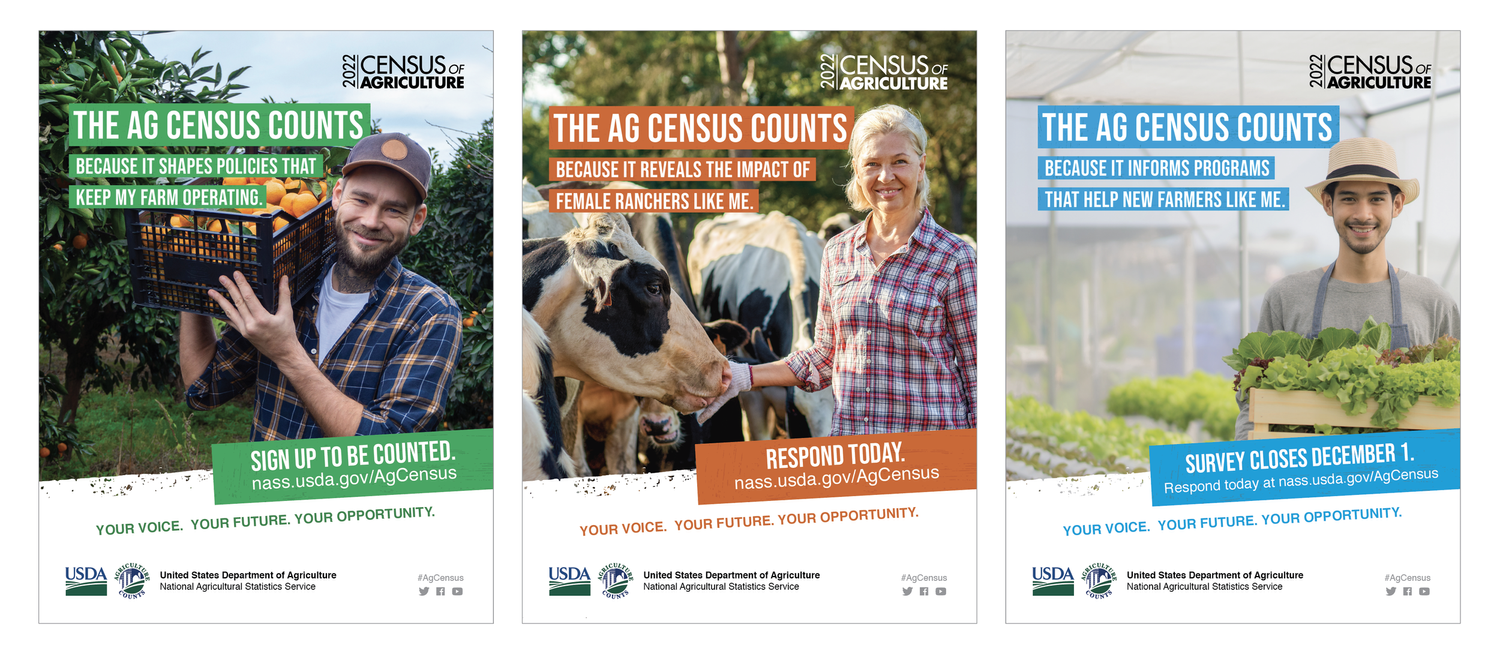
The 2022 Census of Agriculture shows the machinery at full scale. Sage built a hierarchy of messages, then distributed them through farmers, partners, local statisticians, influencers, radio, podcasts, print, digital advertising, and social media. The creative phrase was simple: “The Ag Census counts because...” The hard work sat beneath it, coordinating voices so that an exhausted audience would hear the same idea from people it already knew.
Those are reported campaign figures, not interchangeable measures of persuasion. A potential impression is not a person convinced. What matters is the architecture: national reach paired with small, credible nodes. Food Tank, the Rural Coalition, agricultural associations, universities, and chef Andrew Zimmern could each carry a version of the message into a different room.
“Knowing how to say no is the secret sauce.”David Gorodetski, Sage U fireside chat
From a basement to the Beltway's difficult briefs
David Gorodetski once expected to become a painter. Born in Haifa, he came to New York for graduate school, moved through a small design studio and Stackig Advertising and Public Relations, then became worldwide head of interactive creative services at Ogilvy PR. After September 11, the long days and large-company machinery felt less persuasive. He and Larry Rosenfeld started Sage in 2004, initially from Gorodetski's basement.
The founding combination was practical: Rosenfeld knew the government market; Gorodetski could turn complexity into visual language. Sage later bought Brotman Winter Fried, a regional firm with roots in 1969, adding community outreach and event experience. It became a GSA schedule contractor in 2008. These were not glamorous moves. They made the agency purchasable and widened the number of ways it could finish a job.
The emerald ash borer project's price is not publicly disclosed. Federal records do show larger purchasing vehicles, including a $15 million ceiling for a USDA Food and Nutrition Service agreement and an $85 million ceiling for HRSA-wide marketing services. A ceiling is permission to order up to an amount. It is not a project price, guaranteed spend, or Sage revenue.
That distinction is worth copying. Agencies often place an impressive contract ceiling beside a case study and allow the reader to merge the two. Sage's real economics appear conventional: retainers and projects, plus task orders placed through government contract vehicles. The company is privately held and has not announced outside funding. An external data estimate supplied for this profile puts annual revenue around $25 million, but Sage does not publicly report financials.
A leadership change made by listening first
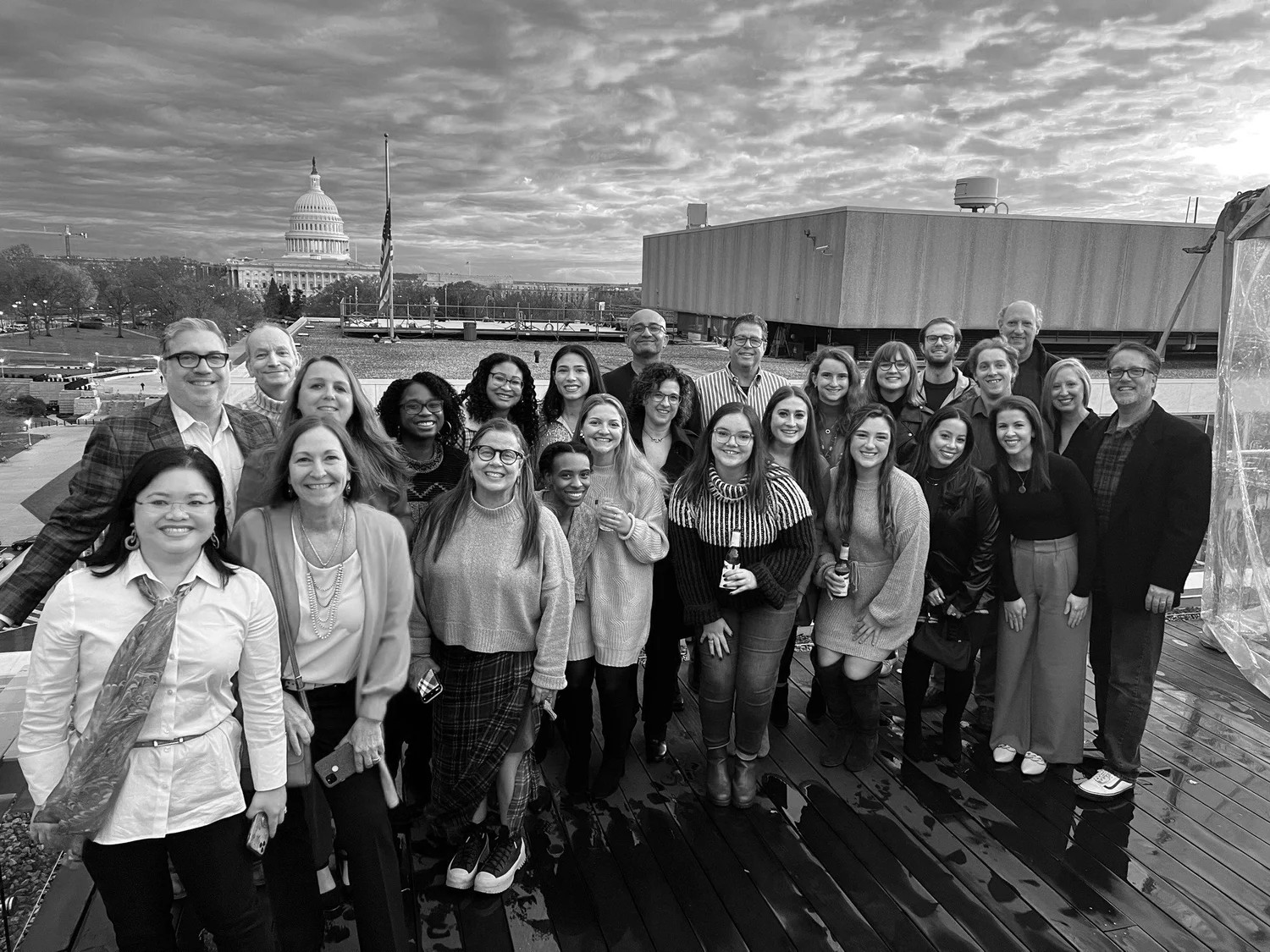
Rosenfeld retired as chief executive in 2021. Gorodetski took the role, and longtime partner Julie Murphy became president. The transition landed during the pandemic, when the company had tested remote work and then stayed remote. Rather than announce a personal doctrine, Gorodetski and Murphy interviewed employees in small groups. The collective view became the input to the next plan.
That behavior matches the firm's stated culture better than the usual values paragraph. Sage describes “substance over surface,” an all-learn, all-teach program called Sage U, and a habit of stripping buzzwords from a problem before making anything. Its community activity includes Sage Cares and a scholarship with Leadership Greater Washington. In 2026, that program offered two local students $1,500 each toward communications-related study.
The competitive field is crowded. A buyer can choose a global network, a Washington public-affairs specialist, a digital production studio, or its own internal team. Sage's case is strongest when all those disciplines must work through a regulated buying process and still produce something a human might notice. It is weaker when a client needs vast international office coverage, a pure performance-media machine, or a single commodity deliverable at the lowest possible price.
What another team can steal
- Map power before personasList who can approve, block, fund, amplify, and distrust the work. The end audience is only one actor.
- Design a modular campaignSeparate the core claim, proof, messenger, and channel. When one changes, the entire system need not collapse.
- Keep a second brief aliveAsk what you would do if the audience narrowed, the policy moved, or earned media disappeared tomorrow.
- Use trusted nodesFor fragmented communities, coordination among smaller credible voices can matter more than one national blast.
- Name the wrong metricContract ceilings are not revenue. Potential impressions are not belief. State what each number can and cannot prove.
This approach also has conditions. It depends on clients sharing policy uncertainty early, maintaining decision access, and paying for research and revision. It will not rescue a campaign whose institution lacks credibility and refuses to change its behavior. Nor does flexibility mean endless accommodation. Gorodetski's advice to younger staff is to learn how to say no, then explain whether the stop comes from missing help, missing knowledge, or a real concern.
The stopped beetle campaign is memorable because it refuses the tidy shape of an agency story. The audience changed. The team started over. The replacement never fully ran. Yet the client praised Sage for remaining responsive and producing useful work under shifting priorities. In government communications, the finished artifact is sometimes less revealing than the quality of the reset.