There is a peculiar kind of compliment that only arrives after you leave a job. Mike Utaegbulam received his in triplicate. He had spent years pushing the boundaries of nonprofit marketing roles - strategy here, creative direction there, execution everywhere - and when he moved on, he says the organization replaced him with three people. Most of us would file that detail under office gossip. Utaegbulam treated it as a unit of economic measurement.
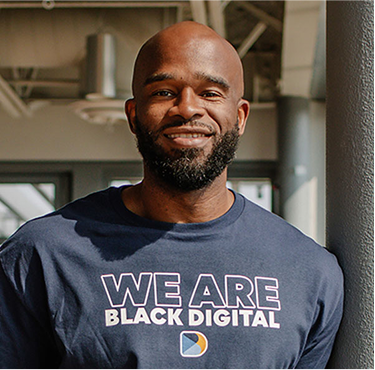
The discovery was not simply that he worked hard. It was that mission-driven organizations routinely bundled several distinct marketing functions into one overextended person. The website needed fixing. The campaign needed a concept. The social feed needed feeding. The board wanted numbers. The community wanted to be understood. Somewhere in the middle sat a capable employee, becoming a small agency without the invoices.
In 2018, Utaegbulam gave that invisible agency a name: Black Digital. He had spent more than a decade around nonprofits, higher education, and creative work, and he could see the mismatch plainly. Organizations doing consequential work often communicated it as if the consequence were self-evident. His joke is sharper than most positioning statements: “Nonprofits do really good work and a terrible job at marketing themselves.”
“When I left, they replaced me with three different people.”Mike Utaegbulam, founder and CEO
The side hustle meets its weather
Black Digital remained a side business until 2020. Then two currents met. Remote work made competent digital communication urgent, while the national reckoning after the murders of George Floyd, Breonna Taylor, and Ahmaud Arbery pushed more organizations to seek Black-owned suppliers. Utaegbulam has called it a perfect storm. The agency became his full-time focus and reached profitability in its first year.
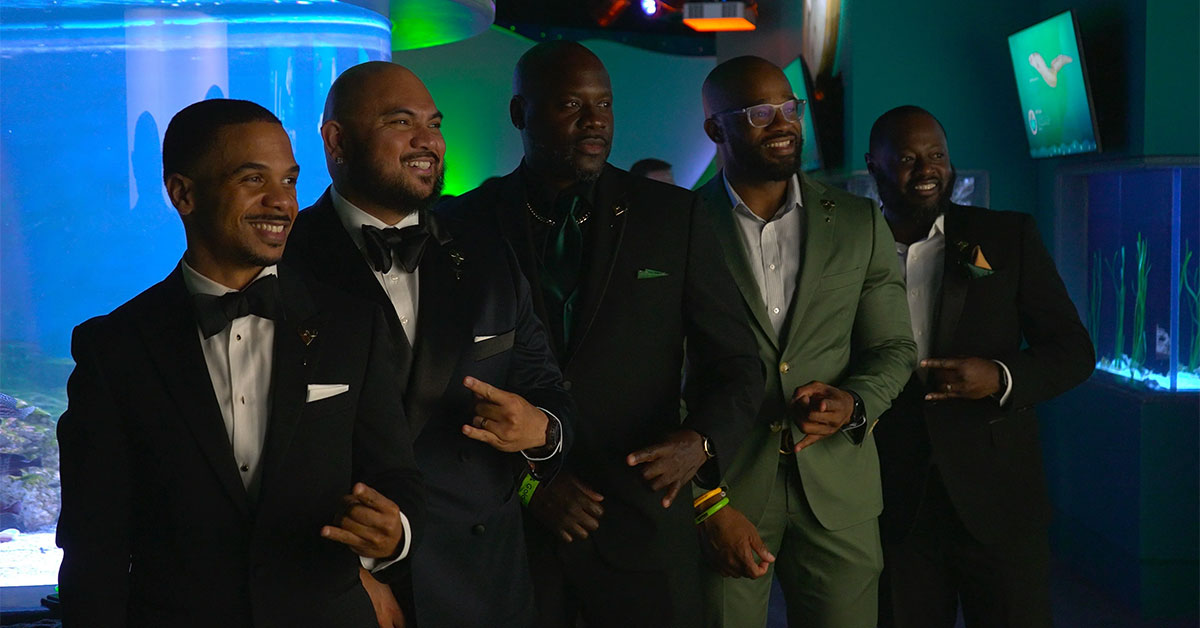
Success promptly revealed the parts of entrepreneurship that never appear on a mood board. What failed first? The boring machinery. Utaegbulam chose the wrong business structure, underestimated taxes, and lacked the systems required to scale. Then the founder became the system. Selling, servicing, administrating, and worrying tipped his work-life balance far enough to affect his health.
That changed his mind about self-sufficiency. He brought in contractors, narrowed his own work toward what he did best, and joined the Washington Area Community Investment Fund's Ascend Thrive cohort for help with HR, finance, pitching, and the quiet reassurance of other owners. His distilled advice is pleasantly unromantic: “No matter your size, you should never be doing it alone. It's hard to sell and service at the same time.”
Turn your overloaded job description into a service map. Separate strategy, production, distribution, and measurement before assigning people to them.
Do not mistake founder stamina for an operating model. Price taxes, project management, and specialist help into the work before demand arrives.
The product is coordination
Today, Black Digital describes itself as a strategy-led agency for nonprofits and foundations, higher education and HBCUs, public agencies, healthcare organizations, and professional associations. The menu is wide: audience development, fundraising campaigns, branding, content, paid media, social, websites, accessibility, testing, reporting, and ongoing creative production.
That breadth can look like the familiar full-service buffet. The more useful way to understand it is vendor subtraction. A lean nonprofit may otherwise hire a strategist, a web shop, a designer, a media buyer, a copywriter, and someone internal to make the five talk to one another. Black Digital's Marketing as a Service pitch is that these functions should share a roadmap, performance dashboard, and system of accountability. Its Creative as a Service offer handles recurring design, video, and copy requests, advertising a 48-to-72-hour turnaround for most of them.
The difference is cultural as well as operational. Mission-led clients are not merely selling a softer brand of detergent. They may be asking donors to trust them, students to imagine a future, patients to act on health information, or residents to participate in public life. Audience knowledge is not decoration in those settings. It changes the message, the channels, the imagery, and sometimes whether the communication is believed at all.
Receipts, with caveats
Agency case studies are naturally flattering, so the most useful figures are the ones tied to named engagements and attributed to clients. A Financial Alliance for Racial Equity project combined website work, content creation, campaign development, social strategy, and a quarterly digital publication. The client reported an 86.8 percent increase in event attendance, more than $120,000 raised for diversity scholarships, 532.6 percent growth in its social audience, and 4,500 additional website visits.
Another engagement reads like emergency medicine. A public-relations agency inherited two time-sensitive websites that a previous vendor had left unfinished or offline. Black Digital assigned a small team, repaired and launched both within 30 days, and trained the client's staff to maintain the content. The revealing detail is not visual. It is the handoff. A good agency can make itself less necessary after launch.
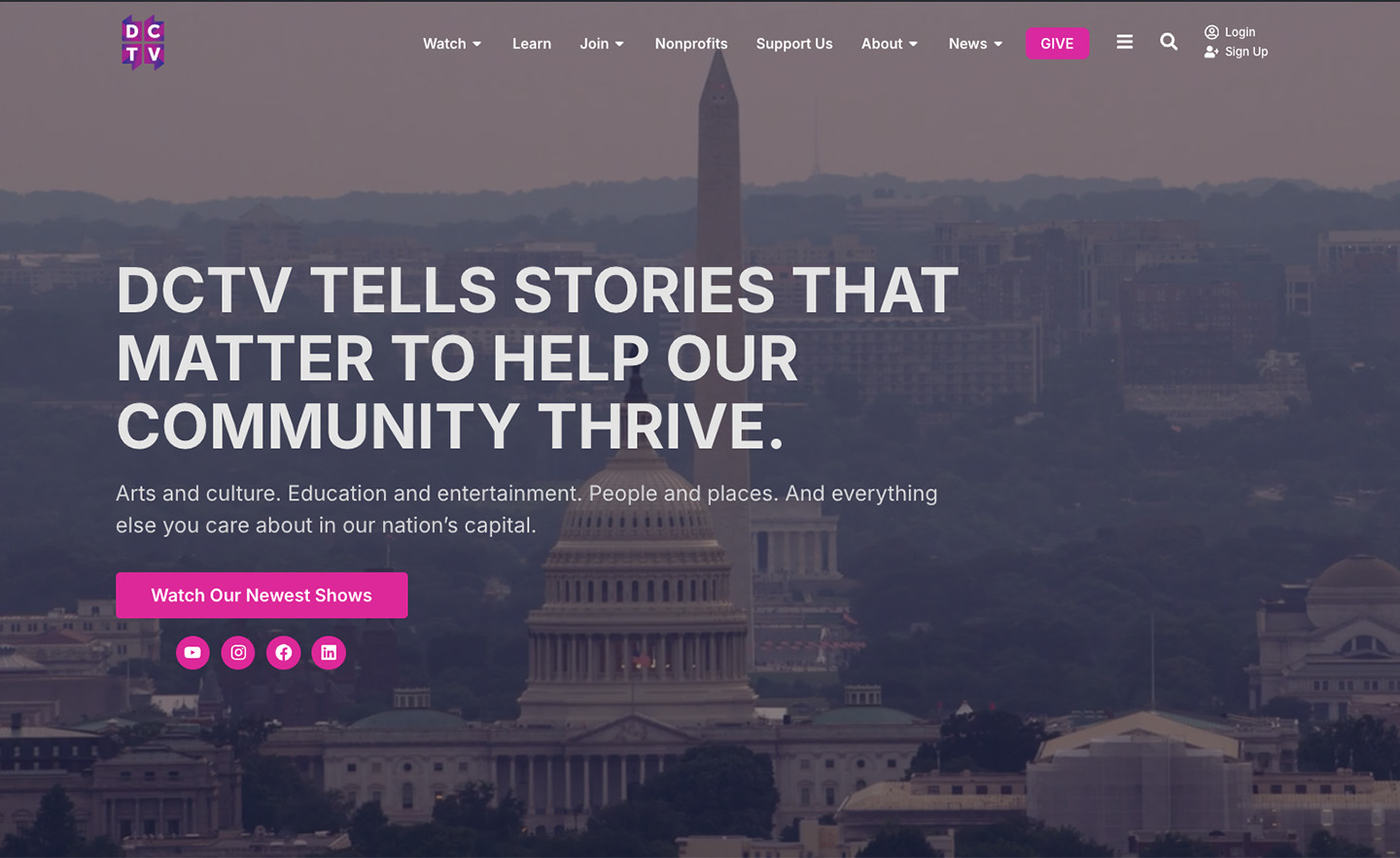
For DCTV, Washington's public-access network, the broken thing was a digital handoff: visitors landed in WordPress and were bounced into Drupal to stream programs. Black Digital studied Netflix, HBO Max, and Amazon Prime, consolidated the experience in WordPress, improved the backend, and trained DCTV's project manager. The finished site arrived ahead of the April 2025 benchmark and went live within 24 hours of final content insertion.
What it costs to stop juggling
Black Digital does not publish a rate card on its own site. Public agency marketplaces provide a useful, imperfect window: a minimum project size of $5,000, an indicated hourly rate between $100 and $149, and a common reviewed project band of $10,000 to $49,999. Those figures suggest a considered engagement for organizations with real budgets and internal decision-makers, not a quick logo commission.
The conditions matter. The model fits best when several marketing functions must move together, when stakeholder trust is central, and when the client can name an outcome beyond “make it look better.” It fits less neatly for a tiny organization with no budget owner, no timely access to content, or no capacity to approve work. An integrated agency cannot integrate a client that never decides. Nor is a broad partner always the right choice for an isolated technical problem that a specialist can solve faster.
One public review offered the rare note of friction: spend more time jointly defining strategic success metrics. That is worth lingering over. Marketing partnerships tend to fail first in the fog between activity and outcome. A hundred graphics can be delivered on time while the organization remains unsure what changed. The transferable move is to define the action - donation, application, registration, subscription, visit - before choosing the artifact.
A lane between empathy and plumbing
Black Digital competes with nonprofit specialists, generalist agencies, internal hires, and the freelance constellation every communications director assembles at least once. Its lane is the combination of community context and full-stack execution. Two Graphic Design USA awards in 2023, for work with Upwardly Global and The Executive Leadership Council, validated the creative side. The longer client relationships, rescue projects, training, and operational systems reveal the less photogenic half of the business.
That is where the three-person job returns. Utaegbulam's original advantage was his ability to see the whole chain from idea to action. The company became viable only when he stopped trying to embody the entire chain himself. Black Digital now sells the thing its founder once performed alone: coordination across specialties, with enough cultural understanding that the campaign feels written for people rather than demographic cells.
The lesson is useful well beyond agencies. If one employee's departure produces three requisitions, there is probably a business hiding inside the org chart. But the second lesson follows quickly: discovering three jobs does not mean one person should keep doing all of them.
Continue exploring