The trouble with the first website was that it worked for a smaller problem. Cosmic had built the Lakota People’s Law Project a site with one featured action on its homepage. Then the campaigns multiplied. A single spotlight could no longer illuminate everything supporters could do. The organization came back to the agency with a different brief: make room for an ongoing relationship.
The resulting Action Center offered a grid of issues, clear routes into campaigns and suggestions after someone completed an action. It also remembered completed actions, rather than continually offering the same task. A person could sign, learn, give and return. This is a small piece of interface design with a rather large premise: concern is something an organization must help people practice.
That premise explains Cosmic better than a list of design disciplines. The agency works on the distance between understanding a cause and participating in it. Its materials include logos, websites, copy and campaigns. Its recurring problem is the visitor who agrees with everything and leaves.
A desk away from the surf
Eric Ressler’s early obstacle was less philosophical. He was trying to work from a bedroom in a house shared with friends whose schedules left them free when he needed to concentrate. Surfing and bike rides were competing with the working day. In a later conversation about risk, he recalled paying for a coworking desk despite having little income. An additional bill bought him a boundary.
It also bought him proximity. A 2016 account of his NextSpace years describes a designer building a team through the Santa Cruz coworking community. When Cosmic acquired its own space, the shared tables, open layout and dogs came along. The place where work happened had helped determine whom the work was for.
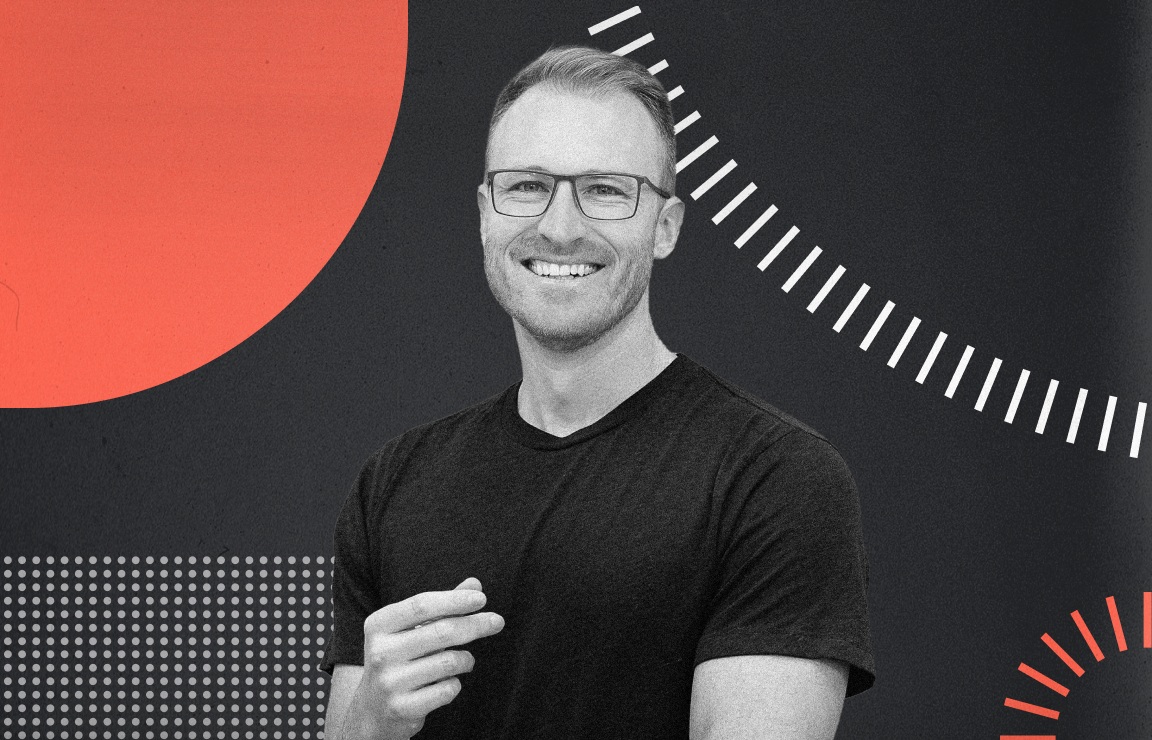
Cosmic dates its start to 2009. Its early clients included Silicon Valley technology startups and B2B brands. Social impact projects arrived alongside them and offered a different kind of satisfaction. In 2016, the agency deliberately made that sector its focus. The important change was in the customer it chose to understand.
Ressler has described being able to deliver the creative and technical work while still needing to learn the sector’s particular culture and constraints. Specialization required more than changing the agency’s introduction. His account of the transition includes a long wait for its benefits.
“We did not get to see the payoff for the work that we had done for years”
Eric Ressler, The Purposeful Strategist, 2023
The discomfort matters. A niche sounds wonderfully tidy when described after the fact. Living through the change means carrying today’s business while learning tomorrow’s. Cosmic’s history supplies a useful correction to the idea that a sharper positioning statement produces an immediate commercial reward.
Three audiences walk into a website
Consider STEM From Dance, which uses dance to help girls of color explore science and technology. The organization was preparing to expand after its first decade. Its website needed to serve students and parents, explain programs to schools and community organizations, and give funders a reason to support the approach.
Cosmic built different routes for those audiences. It refreshed a logo whose details were difficult to read at small sizes, developed a visual system with movement and gradients, and connected fundraising and forms to Givebutter and Mailchimp. The handoff included a brand guide and Figma training. The useful detail is the handoff: a growing organization needs to keep making things after the designers leave.
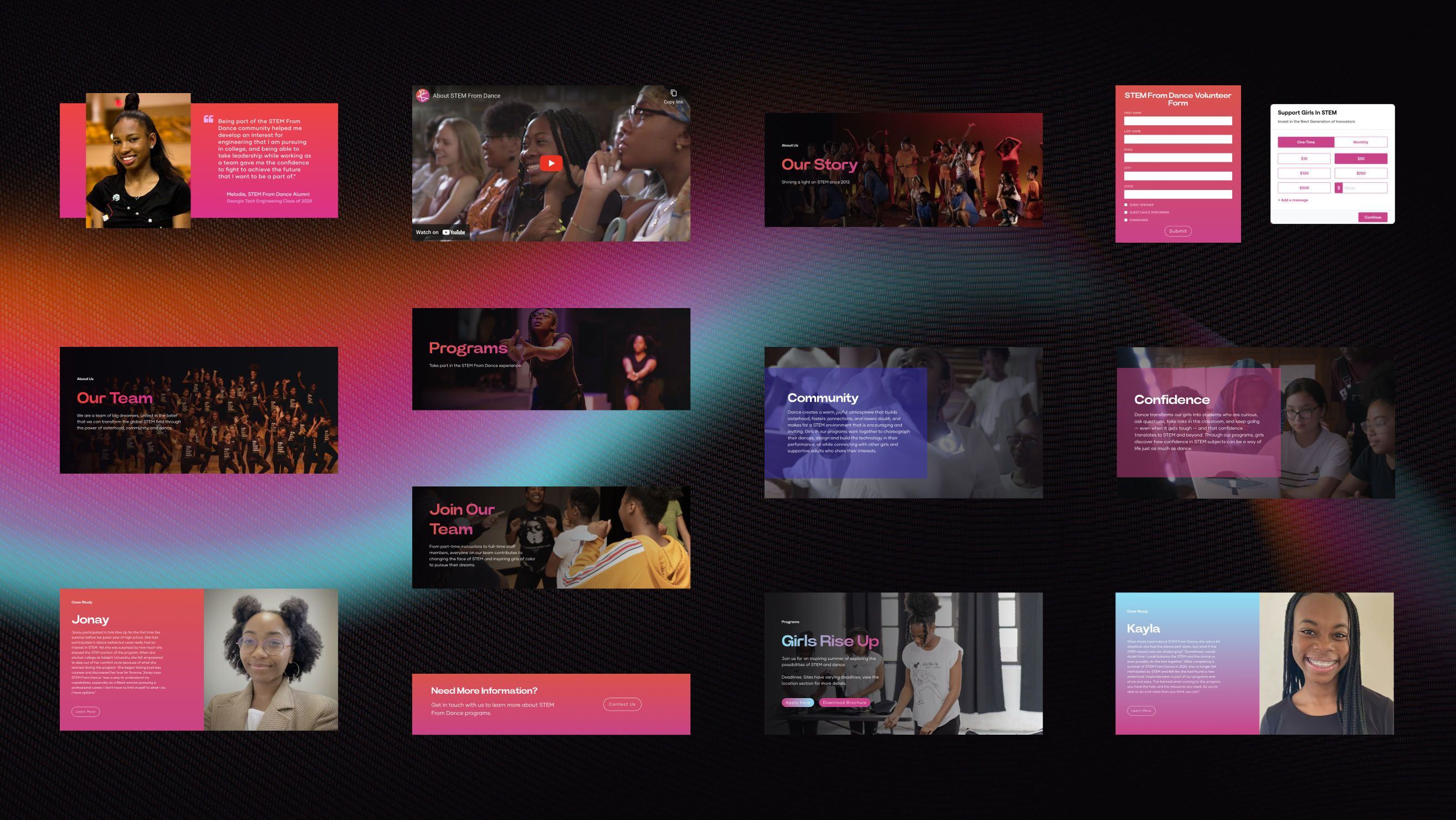
A reader can copy the underlying exercise without buying a redesign. Write down the different people arriving at a website. Beside each person, write the decision they need to make. Then check whether the page helps them make it. A parent looking for a program and a funder investigating an approach should not have to excavate the same pile of information.
An annual report with a future tense
Cosmic’s work for WEDO, the Women’s Environment & Development Organization, takes the same question into a less obvious format. An impact report can become an inventory: activities, numbers, acknowledgments, done. WEDO’s advocacy and coalition work needed a narrative that could accommodate change happening over several years.
The agency organized the 2024 report around past, present and future. Readers could choose where to enter. A transparent geodesic sphere represented interconnected activity; short interviews recorded at COP29 brought people into the account. The report’s release was followed by a monthlong awareness campaign. The document had a life beyond its announcement.
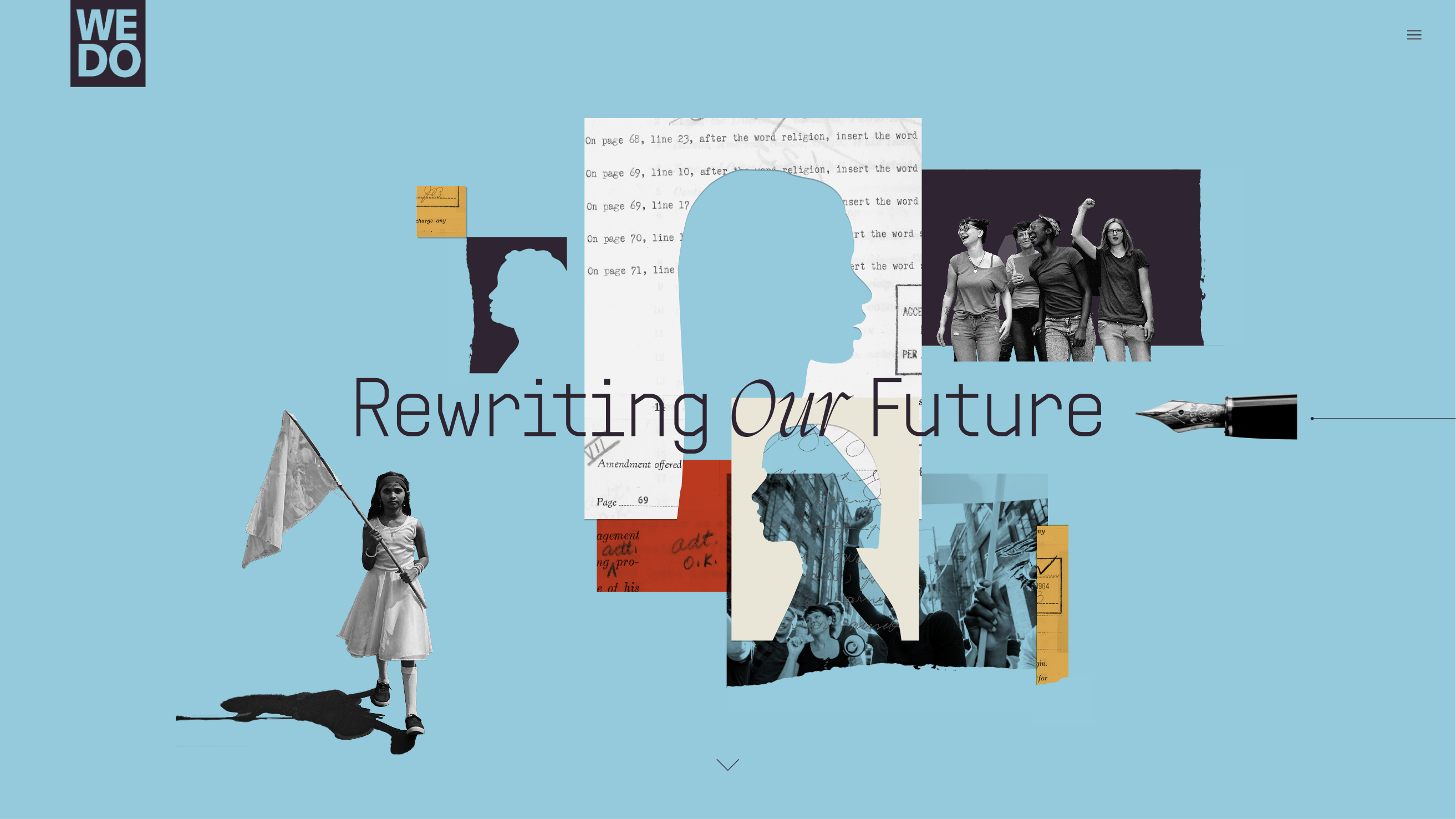
The transferable idea is to decide what a report should cause someone to do before deciding what belongs in it. A potential partner and an existing funder bring different questions. Structure can make those questions welcome. The figures still matter; the reader also needs somewhere to go with them.
For High Atlas Foundation, Cosmic connected a broader brand and website update to additional giving options. Supporters could create their own fundraisers, set goals and monitor progress. An interactive map made work across Morocco explorable. These are concrete services behind the agency’s language about community: ways for people to investigate and participate on their own terms.
The bill includes decisions
Cosmic sells professional services. Its three connected service areas cover brand strategy and identity, websites and platforms, and campaign strategy and creative. That puts it where a client might otherwise assemble a strategist, a design studio, a developer and a campaign adviser. Its chosen distinction is the combination of those capabilities around social impact customers.
For a buyer, the first useful budget conversation concerns scope. Cosmic’s published advice on selecting an agency tells prospective clients to disclose a budget range because creative work admits many possible approaches. A new identity, custom platform and ongoing campaign involve different decisions from a narrowly defined website improvement. Begin with the outcome and the resources available to pursue it.
The organizational cost deserves equal attention. Someone must settle the messaging, approve the work and continue publishing. Cosmic’s earlier marketing principles describe communications as an ongoing commitment requiring measurement and revision. My reading: the approach fits an organization prepared to maintain what it commissions. A team expecting a launch to finish its communications work is buying into a mismatch.
There is a similar boundary around experimentation. In its discussion of a minimum viable strategy, Cosmic encourages testing ideas sooner, while asking whether the people seeing an unfinished approach are ready for it. The practical lesson is to make the experiment legible. Tell participants what is provisional and what their feedback will influence.
The agency has homework, too
Cosmic publishes its own thinking through Designing Tomorrow. Jonathan Hicken joined Ressler as co-host for season two in August 2024, bringing the perspective of a nonprofit executive. In February 2026, the conversation turned to AI, video and the pressure to produce more content. Ressler described the podcast as a way to explore his thinking in public.
There are choices behind that output. Cosmic’s careers page describes remote work and a four-day, 32-to-40-hour working week. Its published rhythm makes capacity a relevant part of the story. A communications strategy has to fit the people expected to carry it out.
The clearest expression of Cosmic’s argument may be its September 2026 article on complex missions. Before simplifying the words, it asks leaders to examine mission drift and whether they can explain how their work produces change. That is a demanding question to bring to a design brief. It is also a sensible one. A visitor cannot follow a direction the organization has not chosen.
Go back to the person who has just signed the petition. The screen can congratulate them and stop. Or it can offer a useful next step. Cosmic has built a business around taking that second possibility seriously.