Imagine a government flyer arriving at a shop in Albany Park during the first terrifying months of the pandemic. The logo is correct. The typography is respectable. The message is urgent. None of this guarantees that the owner will trust it. But then the person holding the flyer produces an Arabic version. The owner looks at it and says, with something like relief, “I can’t believe you have the Arabic language posters!” The campaign has crossed its last and hardest foot.
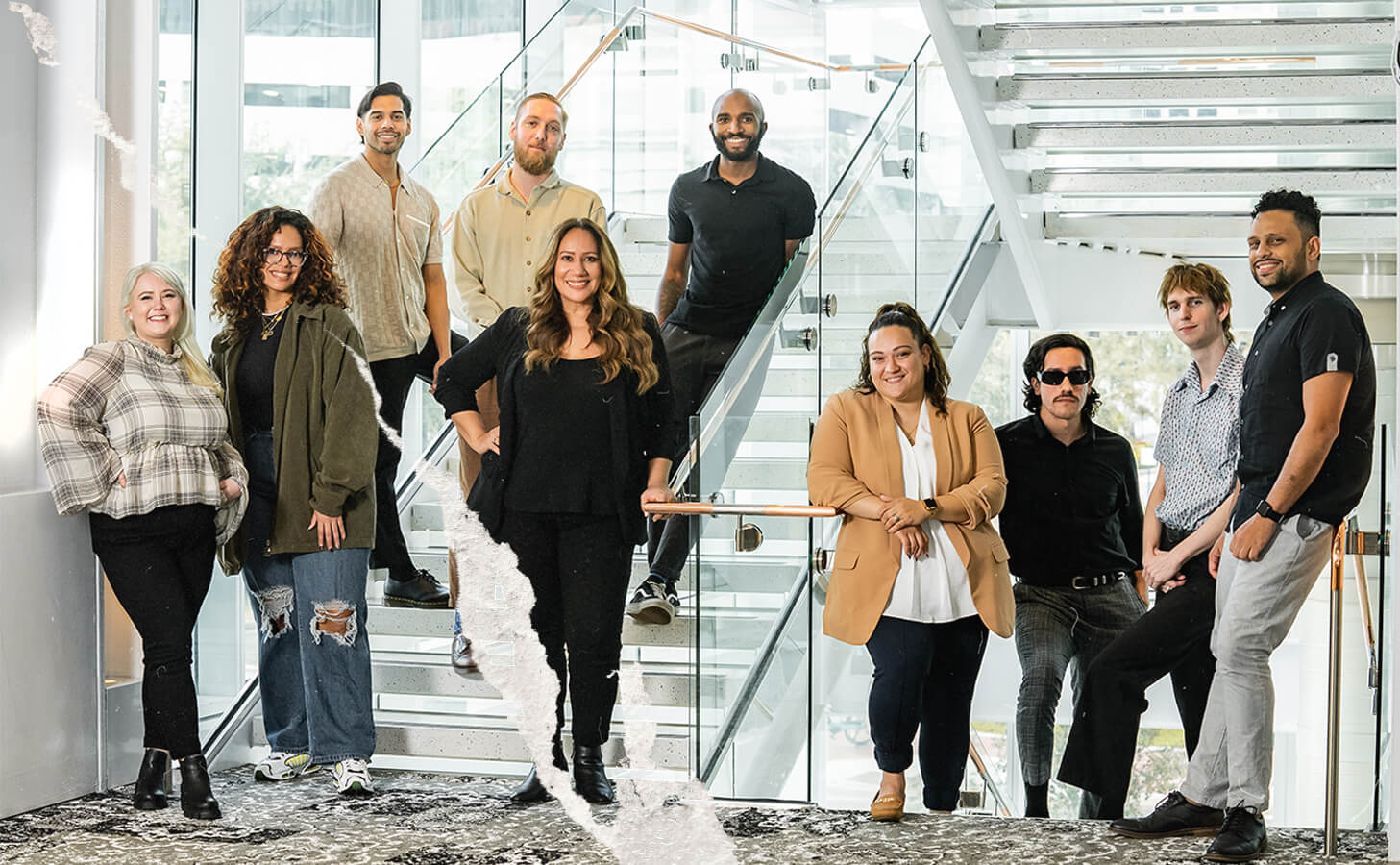
That foot is where Vera Creative has built an unusual business. The Chicago company founded by Cristina Vera Bridges in 2008 looks, at first glance, like a full-service agency: strategy, identity, advertising, websites, video, public relations. Then comes The Core, its community-outreach arm. Its ambassadors work festivals, knock on doors, staff tables and talk with people in the language they prefer. They do not merely deliver the campaign. They report back on whether it makes sense.
The useful intelligence between hello and goodbye
Most advertising treats distribution as the thing that happens after the idea is finished. Buy the media, post the video, hand out the palm card. Vera treats distribution as another round of research. A conversation reveals that a renter fears sharing immigration information. A landlord says mismatched branding between flyer and website feels suspicious. A parent can navigate a preschool site but still wants to speak to a person. Each objection is small enough to vanish inside a quarterly report and valuable enough to rescue the work.
“Real-time information is gold. The insight from just one event can improve the entire project.”Elijah Olige, writing about outreach at Vera Creative
The company's phrase for the system is “purpose-centered design.” It borrows the mechanics of human-centered design, then makes a political choice about who counts as an expert. Vera says it co-designs with people, not on their behalf. In practice, this means community members should appear before the campaign is polished, not afterward in a testimonial.
The campaign is a loop, not a launch
The first thing to break was the old map
In 2020, the familiar routes to a public audience stopped working. Chicago preschool enrollment fell to 14,856 children, a historic low, as families weighed in-person learning against a new disease. Shops in high-infection ZIP codes needed safety supplies, yet the ordinary act of walking through a door had become hazardous. Events, offices and comfortable assumptions about reach all failed at once.
Vera's response for the Illinois Department of Human Services was almost military in tempo and deliberately neighborly in tone. In roughly three weeks, it trained 32 canvassers for contactless outreach, targeted 10 ZIP codes and produced materials in English, Spanish, Arabic, Mandarin, Polish and Urdu. Its crews reached more than 5,500 businesses and distributed over 56,000 surgical masks. A custom mobile reporting tool collected thousands of data points as they moved.
The clever part was not the mask count. It was the connection between a state agency and thousands of shopkeepers who could explain what the state was missing. The same architecture appeared in Vera's rental-assistance work. Field research found suspicion of government aid, concern over immigration status and impatience with formal language. The campaign shifted toward plain explanations, trusted local messengers, materials in seven languages and a website with a four-step eligibility check. Feedback changed the instrument.
A preschool campaign with a customer-service desk
Vera's longest-running proof is Chicago Early Learning. Its connection to the city's early-education work dates to the agency's first year; since 2017, it has led marketing, strategic communications and outreach for a network of more than 500 preschool programs. This is not a tidy consumer brand. The audience includes families new to the school system, families who speak different languages, and families for whom one unanswered question can end an application.
The reported totals are substantial: more than 145,000 preschoolers enrolled, 2.3 million website page views and 618,000 visitors. A recent paid-media push produced 19 million impressions and over 40,700 QR-code scans. Yet the most revealing figure may be the nearly one quarter of canvassed families who had what Vera calls an in-depth conversation. Attention here is not a glance. It has office hours.
Even the lighter work follows the same theory. Tiny Mic Drop, Vera's short-form series, gives toddlers a microphone and occasionally lets them interview educators and Chicago officials. It is funny enough to share and useful enough to move parents toward the program. Launched in 2023, it had generated more than 130,000 impressions when it won a Silver ADDY in 2024. Policy communication, it turns out, can survive contact with a three-year-old.

What the invoice reveals
Vera is a private company and does not publish a rate card, revenue or funding history. One public document offers a useful glimpse. In Cook County's 2020 Census program, a subcontract allocated $100,000 to Vera for branding, outreach and community engagement focused on the Latinx population. Its named duties included leading outreach, co-creating the communications plan and helping execute it.
That line item explains the model better than a list of services. Clients pay for a joined-up engagement: research, creative, distribution and measurement, sometimes with software or web tools attached. The customer may be a government department, school system, nonprofit, advocacy organization or civic arm of a famous sports team. The audience is usually someone the institution needs to reach but cannot presume to know.
The part worth stealing
You do not need an agency or a six-language print run to copy the principle. First, recruit messengers who belong to the audience, then pay them for intelligence as well as distribution. Second, log objections in a form that the creative team can actually use. Third, give someone authority to change the message while the campaign is live. Finally, check for continuity: if the flyer, website and person at the table appear to come from three unrelated planets, trust leaks out through the seams.
The price of a real feedback loop
Listening only works when the answer can alter the plan.
This model becomes theater when ambassadors are treated as disposable distributors, when a client will not change approved language, or when a brief demands national scale without local relationships. It also costs more time than a media-only campaign. The return depends on a problem where trust and comprehension - not simple awareness - are the constraint.
This is where Vera sits in the market: somewhere between a creative agency, a public-affairs shop, a research practice and a well-organized neighborhood table. That breadth can look messy. It is also faithful to the problem. A family does not experience a campaign in departmental order. They see an ad, scan a code, open a site, ask a question and decide whether the answer feels true.
Cristina Vera Bridges started the company as a single mother in the 2008 recession. She later wrote that putting her name on the door mattered because Vera means truth. Plenty of agencies speak about authenticity. Her company built a field operation that can return from the sidewalk and report whether anyone believed it.
Keep exploring