In 1959, Cecil Brandon arrived in Myrtle Beach with a camera and a wonderfully compact business plan. He would make postcards. A postcard asks for very little: one arresting view, a few inches of copy, a stamp. Yet it contains the whole advertising problem in miniature. Turn a place into a picture. Make a stranger wish they were there. Give the buyer something worth sending.
Sixty-seven years later, the company with his name employs that same conversion trick on assignments that no longer fit in the mail. Brandon plans brands, buys media, builds websites, runs search and social, makes films, manages email, studies audiences and helps products travel through Amazon. Its clients include potato makers, lenders, utilities, hospitals, airlines and steel companies. The postcard did not disappear so much as sprout departments.
This is how Brandon became a useful case study in the most overused word in agency marketing: integration. Plenty of firms put a long menu on a website. Brandon has spent decades trying to make the items on that menu share a kitchen.

The postcard keeps changing shape
Cecil’s little company moved from postcards to brochures and from brochures to advertisements. He helped organize the cooperative golf marketing that promoted Myrtle Beach as the “Golf Capital of the World.” That move is worth pausing over. The clever act was not merely selling one course. It was persuading competitors that the destination itself could become the product.
Scott Brandon joined his father’s agency in 1993, purchased it in 2001 and renamed it The Brandon Agency. The second generation inherited the family name but not a requirement to preserve the old inventory. In an interview about the company’s development, Brandon described early internet work that included interfaces and booking engines. The trigger, he said, was consumer behavior and the technology people used.
That is the pattern. Do not worship the format; follow the transaction. A destination brochure helps someone imagine a trip. A booking engine lets them make it. A paid-search campaign finds the person already asking. Analytics shows which invitation worked. The tools change, but each addition closes a little more distance between attention and action.
One lead agency, several sharp instruments
The modern version of Brandon sits inside TBA Worldwide, an independently owned collective led by Scott Brandon. The network has more than 200 people, according to the company, and its specialist firms have deliberately plain jobs. Eight Oh Two does search and performance. Cineloco makes video and photography. Joybyte concentrates on social and influencers. SaleSurf Growth works on Amazon. TravelBoom knows hotels. TBA Outdoors knows the outdoor category.
The structure is a bet against two familiar disappointments. A broad agency can know a little about everything and not enough about the thing that matters. A collection of specialists can be excellent individually while leaving the client to conduct the orchestra. Brandon’s proposition is to keep specialist businesses focused while making their capabilities available through a common group.
In 2022, the collective bought Eight Oh Two and Cineloco. Joybyte followed in 2023. SaleSurf Growth arrived in 2025. Prices were not disclosed. That omission matters for anyone hoping to copy the acquisition program: buying expertise is not automatically cheaper than building it, and the economics cannot be evaluated from announcements alone. What can be copied is the design principle - give every added capability a clear job and preserve the expertise that made it worth adding.
The client does not buy every idea
Agency histories are usually edited into a sequence of wins. Scott Brandon has offered a more instructive memory. Writing after 25 years in marketing, he said he struggled with rejection and that it shut him down for a period. Eventually he learned that clients would not buy every idea, every pitch would not be won and management would remain imperfect.
“I just had a really hard time with rejection.”
Scott Brandon, on an early-career lesson
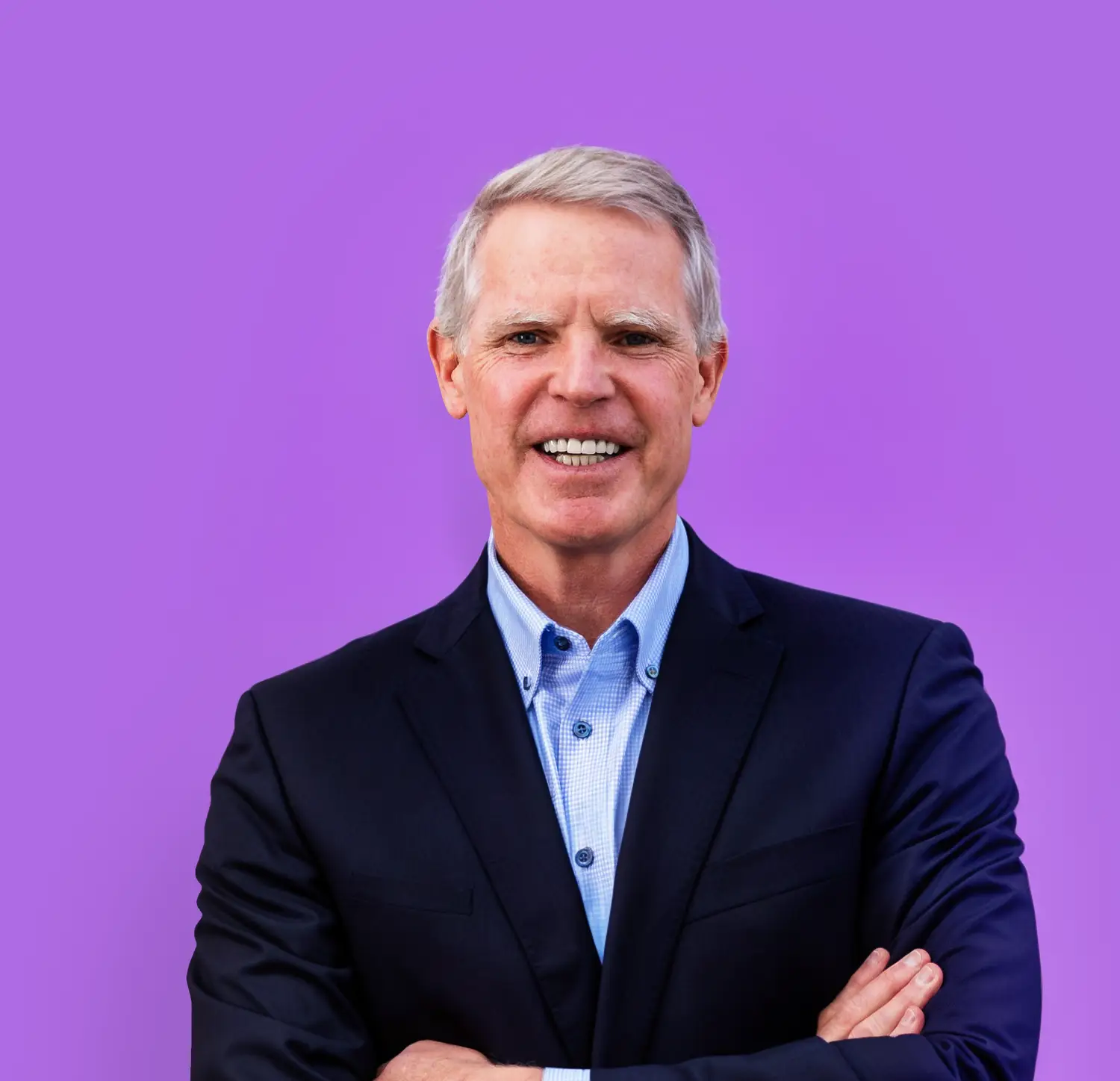
That is what failed first: not the company, but the comforting belief that good work produces automatic approval. What changed his mind was repetition. A declined idea became information, not a final judgment. It is an ordinary lesson with expensive consequences. Teams that cannot survive “no” either stop proposing interesting work or spend their energy defending it after the room has moved on.
The thought also explains Scott’s insistence on continuing to manage some clients personally. He has said that leaders cannot design a process they never follow. For an agency selling integration, this is more than executive visibility. Someone has to feel where the handoffs actually snag.
Mashed potatoes become a measurement problem
Consider Idahoan Foods’ collaboration with Tapatío. Brandon built a social-first campaign around an intentionally improbable object: spicy instant mashed potatoes. It produced photography, video, motion graphics, recipes and paid social content designed for the feed. Over 12 weeks, the agency reports more than 16 million impressions, a 74% increase in Instagram followers and a 79% increase in engagement.

Those numbers tell us the campaign traveled. They do not tell us its budget, incremental retail sales or profit. This is not a defect unique to Brandon; it is the perennial difficulty of agency case studies. Percentages need baselines. Reach needs frequency. Revenue needs margin and attribution. The reader should enjoy the evidence without making it perform tricks it cannot do.
Other case studies move closer to business action. For Security Finance, Brandon reports a 216% increase in click-through rate, a 262% year-over-year increase in organic conversion and a 51% increase in “start my loan” clicks after mobile-first brand, web and performance work. For Wilmington Health, it reports a 948% surge in appointment clicks. Pearson Farm’s online revenue, the agency says, grew fivefold from $400,000 to more than $2 million while its email list passed 70,000 subscribers.
The cases are different, but the progression is healthy: an impression, a click, an appointment, revenue. A buyer should decide which of these is the assignment before choosing the channel. The useful thing to copy is not “do more social” or “send more email.” It is to name the business action first and make each specialist show how its work contributes.
The price of “full service”
Brandon does not publish a rate card, and its public case studies do not disclose campaign budgets. There is no responsible way to tell a reader what the Idahoan work cost or whether another client could buy the same outcome for the same money. The annual revenue figure in commercial company databases is an estimate, not an audited disclosure.
A useful brief therefore separates four wallets. There is the agency fee for people and thinking. There is media spend paid to platforms and publishers. There is production - locations, crews, talent, post-production and usage. Then there is technology: software, data, hosting and marketplace tools. “Full service” describes coordination; it does not make every cost one thing.
The model works best when the client has a multi-channel problem, enough budget to execute beyond a single deliverable and access to the data needed to judge results. It is less convincing for a tiny one-off assignment, an organization unable to agree on an objective, or a team that wants the appearance of measurement without sharing commercial data. Integration cannot repair a vague brief. It merely lets the vagueness travel faster.
A rebrand catches up with the business
In May 2025, The Brandon Agency shortened its public identity to Brandon and unveiled a harder-edged visual system and voice. Rebrands invite mockery because the announcement tends to claim a typographic revolution. Here the more interesting change had already happened underneath. The business had spent years becoming a lead agency connected to focused operating companies. The new identity finally described the machine as it wished to sell it: creativity, strategy and performance in lockstep.
That positioning now serves national brands including Nucor, Primal Pet Foods, Idahoan Foods, stayAPT Suites and ScanSource. In 2026, Avelo Airlines chose Brandon for a creative and media assignment. The resulting campaign used the paper airplane as a metaphor for a practical benefit - regional airports with easier parking, shorter lines and nonstop routes - and localized the work across five markets.
The paper airplane is a pleasing descendant of the postcard. Both are small paper objects carrying an argument about travel. Cecil Brandon wanted a photograph to make someone visit Myrtle Beach. The Avelo work wants a nearby airport to feel like the secret route out. Between them sits the entire history of the agency: more channels, more data, more specialists, and the same old requirement to give a person a reason to move.
Steal the operating rule, not the service list
A company copying Brandon should resist copying its org chart. Ten capabilities assembled without a common decision are merely ten invoices. The better rule is sequential: begin with the commercial change, identify the audience behavior that precedes it, choose the channels that can observe or influence that behavior, and agree on the evidence before the work ships.
Then allow specialists to remain specialists. Brandon’s acquisitions did not vanish into one undifferentiated department; the acquired firms kept their names and focus. That arrangement preserves a reason for good people to stay while giving clients a route into the larger system. It can still fail through poor coordination, duplicated overhead or a lead agency protecting its own work. The safeguard is not the word “collective.” It is a clear owner, shared measures and permission to use only the capabilities the problem requires.
The postcard remains the right test. Can the idea fit in one clear frame? Does it make the recipient want to do something? And is there a practical next step? Brandon has made the delivery system considerably more complicated. Its best work keeps the answer simple.