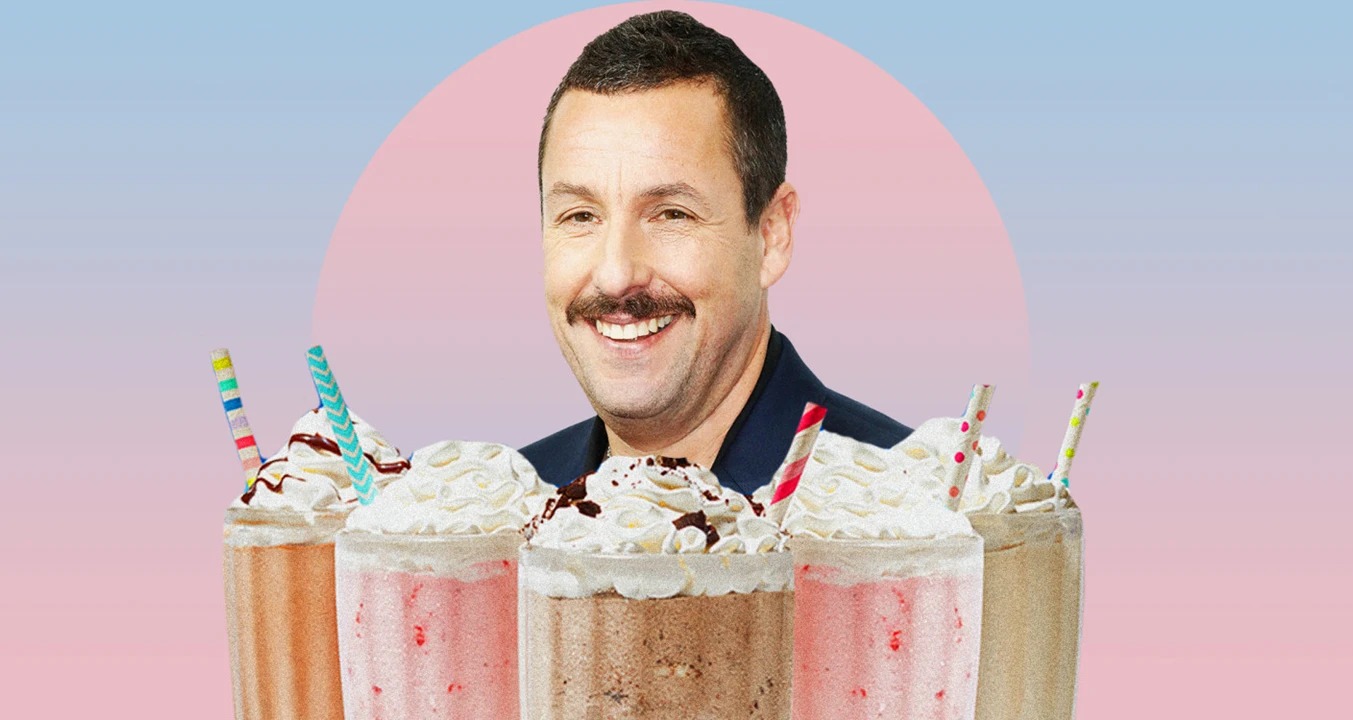
The useful thing about a milkshake is that nobody has to explain one. It is cold, sweet, instantly recognizable and, under normal circumstances, strategically unimportant. Then Adam Sandler visited an IHOP on Long Island. The encounter escaped into public view, Sandler made a joke about all-you-can-drink milkshakes, and suddenly a menu item had a cultural half-life. DeVries Global, IHOP’s communications agency, had a choice familiar to every marketer: prepare a tasteful response for a moment that would be dead by the time the tasteful response was approved, or move.
It moved. In a matter of hours, the agency and IHOP created Milkshake Monday, a one-day Long Island promotion built around unlimited shakes. Each milkshake sold sent one dollar to Comedy Gives Back, which was helping comedians after pandemic closures. Sandler posted about the activation organically. There was no paid talent partnership.
DeVries says the work produced more than four billion earned impressions and nearly 400 placements. IHOP’s share of voice almost doubled for the week, and milkshake sales at the restaurant that started the episode doubled against the prior year. Those numbers are extravagant. The underlying maneuver was plain: see the opening, give the brand a credible role, remove delay.
Campaign results reported by DeVries Global. The agency does not disclose the campaign’s total production cost.
A boutique became a network without admitting defeat
DeVries began in 1978, when Madeline DeVries opened a New York agency serving fashion and beauty brands. An early employee remembers eight people in the office and an entirely fashion-focused practice. The founding promise was unusually proprietorial: treat the client’s business as if it were your own.
Interpublic Group acquired the firm in 2001. The price was not disclosed; contemporary reporting put the agency’s prior-year revenue at about £7 million. Acquisitions often flatten the thing that made a shop worth buying. DeVries instead built its current pitch around the tension. It would borrow the reach, tools and geographic coverage of a holding-company network while behaving, in the client room, like a smaller firm.
“Substance” is the network. “Style” is the client experience. The business depends on keeping both words honest.DeVries’ 45th-anniversary proposition, condensed
Today the public footprint runs from New York to London, Berlin, Beijing, Shanghai, Hong Kong, Singapore and Taipei. LinkedIn places the company at 51 to 200 employees; supplied company data says roughly 200. This is neither the corner consultancy nor the enormous generalist agency. It occupies the middle: small enough to promise senior attention, distributed enough to execute across markets.
Culture is not a mood board
The agency’s favored phrase is “culture-in, not consumer-out.” Standard consumer planning often begins with a target segment and asks how to push a message toward it. DeVries says it starts with the forces already shaping how people talk, gather and decide, then looks for a role the brand can plausibly play. Its internal machinery includes cultural research, the DeCode Collective, idea-generation methods, influencer systems and integrated measurement.
The work ranges well beyond reactive PR. For Sephora, DeVries amplified concrete inclusion programs - the 15 Percent Pledge, an accelerator, a creator squad and a documentary - and reports that the retailer held the top DE&I share of voice among major retailers from 2020, accumulating more than 15 billion impressions. For Abbott in Singapore, the agency made hawker-stall owners the local faces of muscle health. The campaign drove more than 100,000 visits to a muscle-age calculator and over 9,000 nutritional-supplement sign-ups.
For Roche in Shanghai, the team created a Memory Cafe where people living with Alzheimer’s served as baristas and described the disease in their own terms. Hundreds registered as “friends with AD,” and the Shanghai government reposted the event. With Porsche, the problem was different: make an elite, male-coded marque feel relevant to younger people and women without sanding away its prestige. The answer localized the global Art of Dreams platform for Asian audiences.
- StrategyCultural intelligence, audience research and brand positioning
- EarnedMedia relations, public conversation and newsroom response
- InfluenceCreator strategy, partnerships and management
- ExperienceActivations, events, sponsorships and community programs
- ReputationCorporate communications, crisis counsel and executive visibility
- MeasurementCoverage, sentiment, share of voice and behavioral results
The bill is private; the trade is visible
DeVries makes money the conventional agency way: project fees and ongoing client retainers. Rates, margins and campaign budgets stay private. Even the 2001 acquisition price was undisclosed. The best available cost lesson is therefore negative space. Milkshake Monday carried production and operating costs, and one dollar per shake went to charity, but its central piece of expensive-looking media - Adam Sandler’s participation - was earned rather than bought.
What changed the client’s mind was not a deck. It was an external event with a rapidly closing window. That distinction matters. A brand team can copy the operating conditions: monitor relevant conversation, define permissions before the crisis call, give decision-makers a short route to yes, and pair the joke with an action people can join. It cannot copy the coincidence. Without an organic spark, a recognizable participant, genuine brand fit and a client willing to approve in hours, the same promotion would feel engineered.
Speed also has a failure mode. A company that confuses every trending post for cultural permission can arrive as an intruder. A regulated business, a safety-sensitive claim or a reputational crisis may require the deliberation that a pancake promotion can skip. DeVries’ more durable healthcare work shows the complementary skill: years of category knowledge, local advocates and careful measurement. The tactic changes. The cultural reading remains.
Forty-seven years, measured in widening circles
Madeline DeVries opens a fashion and beauty PR shop in New York.
Interpublic acquires the agency and supplies a platform for global expansion.
Milkshake Monday turns a brief organic moment into sales, coverage and a charitable donation.
A 45th-anniversary refresh codifies the promise of global substance with boutique style.
PRWeek names DeVries Outstanding Small Agency of the Year; its APAC operation reports 24 new clients and an 87% win rate.
The expansion from fashion into beauty, food, retail, travel, luxury and healthcare looks, from far away, like the ordinary broadening of an agency roster. Up close it is more specific. DeVries has kept returning to categories in which identity, taste and public opinion collide. It does not manufacture the culture around those products. It sells the judgment to know when a company may enter it, the craft to make the entrance useful, and the instrumentation to learn whether anybody cared.
That is why the milkshake matters. It is not proof that every brand needs a stunt. It is proof that an agency’s org chart, approval path and client trust can become part of the creative product. The moment was free. Readiness was not.