There is a dog asleep beside an off-road vehicle in one of WH inc.'s campaign photographs. A woman leans out of the van. A man scratches the dog's back. The product, a portable refrigerator, sits quietly in the middle of all this, behaving less like an advertisement than a useful member of the trip. This is the small trick at the center of WH's business. The Seattle agency would like the thing it markets to belong in a person's life before asking that person to buy it.
That position sounds almost quaint until you consider the alternative. Modern advertising can locate a runner, skier, sailor, camper, dentist, backyard cook, or craft-beer drinker with unnerving precision. It can also annoy that person with unnerving precision. WH's current line is “Stop interrupting. Start belonging.” The agency has turned that line into both a rebuke and a service menu.
WH inc. is the shortened identity of Williams & Helde, founded by Jim Williams and Ed Helde on a Seattle waterfront pier in 1969. The business is still independent and is now led by Jim's son, Marc Williams. Its clients have included Philips Oral Healthcare, Helly Hansen, Dometic, Danner, K2 Sports, BENETEAU, Big Green Egg, iKamper, 1UP USA, Redhook, Widmer Brothers, and 10 Barrel Brewing. This is not a random roll call. It is a catalogue of things that are worn, ridden, cooked with, sailed, packed, or poured.
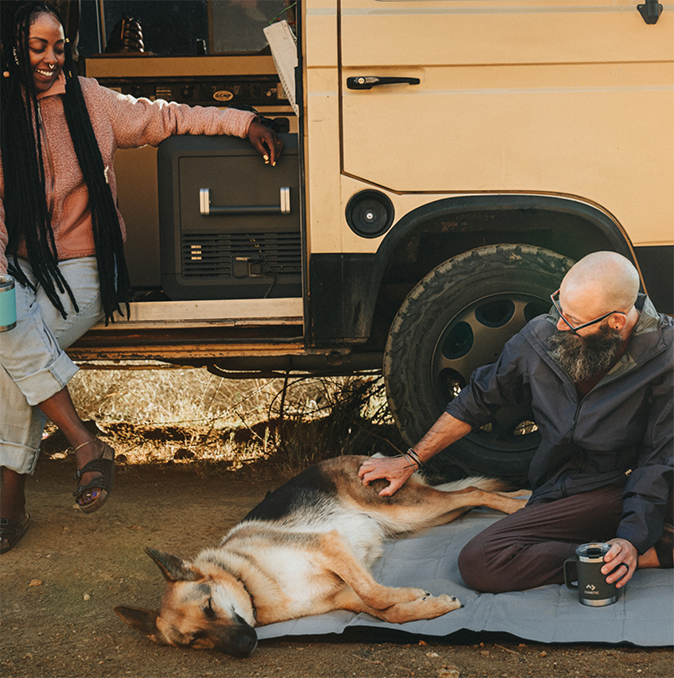
The refrigerator is in the van. The dog has already stolen the scene. WH's Dometic work makes utility look like part of the weekend, not a break from it.
The funnel was always suspiciously tidy
Marketing diagrams once moved people obediently from awareness to consideration to purchase. Actual people were less cooperative. They saw a boot in a shop, forgot its name, watched a review, asked a friend, abandoned a cart, bought a competing pair, returned six months later, and finally chose the first boot because a repair story convinced them it would last.
WH calls its alternative the Mobius Cycle. It has six parts: brand and product, influences, conception, consideration, purchase, and loyalty. The clever part is not the vocabulary. It is the refusal to put those stages in a line. Customers enter and leave at different points. A review can create desire; a bad checkout can destroy it; post-purchase support can produce the next sale. Marketing, in this account, is not a trip down a funnel. It is the maintenance of a loop.
This places WH in a particular corner of the market. It is more integrated than a narrow PR shop, but more specialized than a general agency that discovers the outdoors when an outdoor brief arrives. The firm sells consulting, creation, and promotion, individually or together. Consulting covers positioning, journey mapping, go-to-market planning, and customer experience. Creation includes identity, campaigns, design, video, digital work, copy, and playbooks. Promotion means media relations, paid campaigns, influencers, trips, and events. Engagement prices are custom; there is no public rate card.
“Disruption is dead. Preference is the new performance.”WH inc.'s current proposition
A pretzel explains the business
Consider Shock Top, a Belgian-style wheat beer, and Auntie Anne's, the shopping-mall pretzel institution. WH brought them together under the line “Beer Kneads Pretzels.” The pun is forgivable because the results were large: WH reports 116 million impressions, 16,000 sweepstakes entries, and thousands of social engagements.
Campaign figures are reported by WH inc. on its public work page.
The numbers are the proof point, but the mechanism is the lesson. The campaign did not invent a new human behavior. Beer and salty bread had already met. It gave two recognizable products a reason to appear together and invited consumers into the joke. This is WH's preferred territory: not pure awareness at the top of a funnel, and not a coupon at the bottom, but the middle where a brand becomes easier to like.
The same logic explains a more expensive-looking Dometic launch. To introduce the GO collection, WH took selected outdoor media on a 300-mile, multi-day overlanding trip to the North Rim of the Grand Canyon. The products were used in rough conditions, then supported by a press lookbook and media work at Overland Expo and SEMA. A portable outdoor product is a hypothesis in a showroom. On a dusty road, it becomes evidence.
The first plan can fail
WH's most copyable case may be the one that did not happen. Big Green Egg wanted wider consumer recognition and more presence on the West Coast. The original program called for BBQ media events and stops on the national competition circuit. Then the pandemic closed the circuit and removed the crowd.
The agency changed the container, not the idea. It sent test units to writers, supplied deep instruction on charcoal cooking, and connected journalists with the brand's chefs for coaching and recipes. The event had promised contact with a product, credible expertise, and a story worth retelling. Shipping the product and expertise preserved all three. The disposable parts were the stage, the travel, and the calendar.
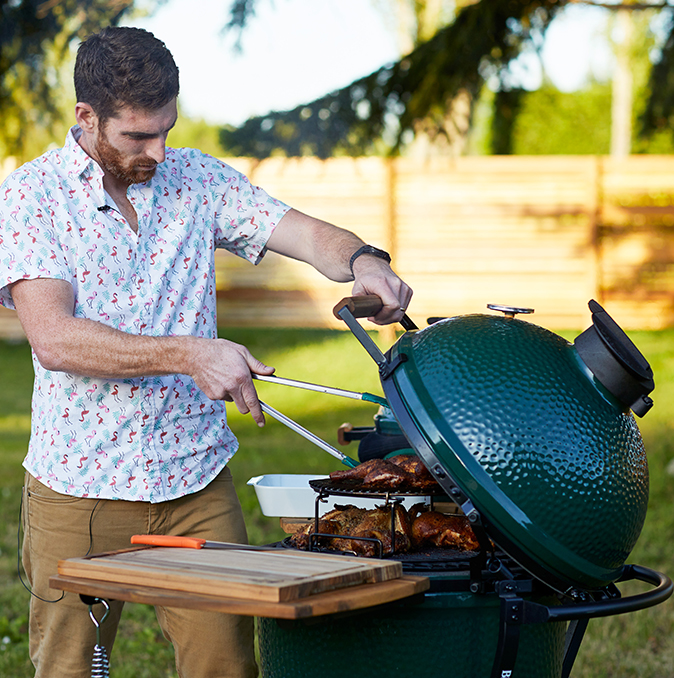
The live circuit went cold, so the green egg traveled alone. Product, coaching, and recipes did the work that an event tent was supposed to do.
Four things worth borrowing
There are limits. A field experience fails when the product cannot withstand unchoreographed use, when participants are chosen only for reach, or when a lavish trip has no path to useful coverage. A brand partnership fails when the audience overlap exists only in a slide deck. And a preference strategy will not rescue poor availability, a confusing checkout, weak support, or a product people do not want twice. WH's own framework quietly admits this. Product and purchase sit in the loop beside media and influence.
Who should hire this kind of agency?
WH is best suited to a brand with something demonstrable, a customer who researches, and enough patience to build credibility across several contacts. That describes outdoor equipment, marine products, professional health products, premium appliances, heritage food and beverage, and many durable consumer goods. It also explains why the agency can work in both B2C and professional-influence markets. A dentist recommending an oral-care product and a gear editor testing a rooftop tent are different intermediaries, but both convert evidence into trust.
| Strong fit | Why it works | Harder fit |
|---|---|---|
| Demonstrable products | Trips, trials, experts, and media can make performance visible. | Commodity products with no credible distinction. |
| Considered purchases | The Mobius model gives reviews, comparison, and loyalty proper weight. | One-click impulse sales judged only on immediate acquisition cost. |
| Heritage brands | Existing memory can be updated instead of discarded. | Leaders unwilling to let customers or journalists test the promise. |
Independence is part of the proposition too. WH acquired Hayter Communications in 2017, bringing outdoor PR and experiential expertise into the wider agency, but it has not become a holding-company network. Marc Williams says WH has worked with Sonicare and Helly Hansen for more than 20 years each. In an industry fascinated by winning accounts, keeping them may be the more revealing performance measure.
The company is now extending its method into publishing. Its book Stop Interrupting. Start Belonging. grew from roughly 15 years of research into what WH first called the Active Healthy Lifestyle audience and now calls the Performance Lifestyle Consumer. A new Substack applies that lens to platforms, algorithms, and buying behavior. The agency's observation is that the once-niche habit of researching, comparing, and choosing intentionally has spread well beyond people with expensive jackets and roof tents.
That may be WH's most useful claim. The outdoor consumer was not merely a category to target. It was an early model of the modern buyer: informed, skeptical, identity-conscious, willing to consult strangers, and quick to notice whether a brand belongs in the activity it sponsors. The rest of us eventually learned to shop the same way.