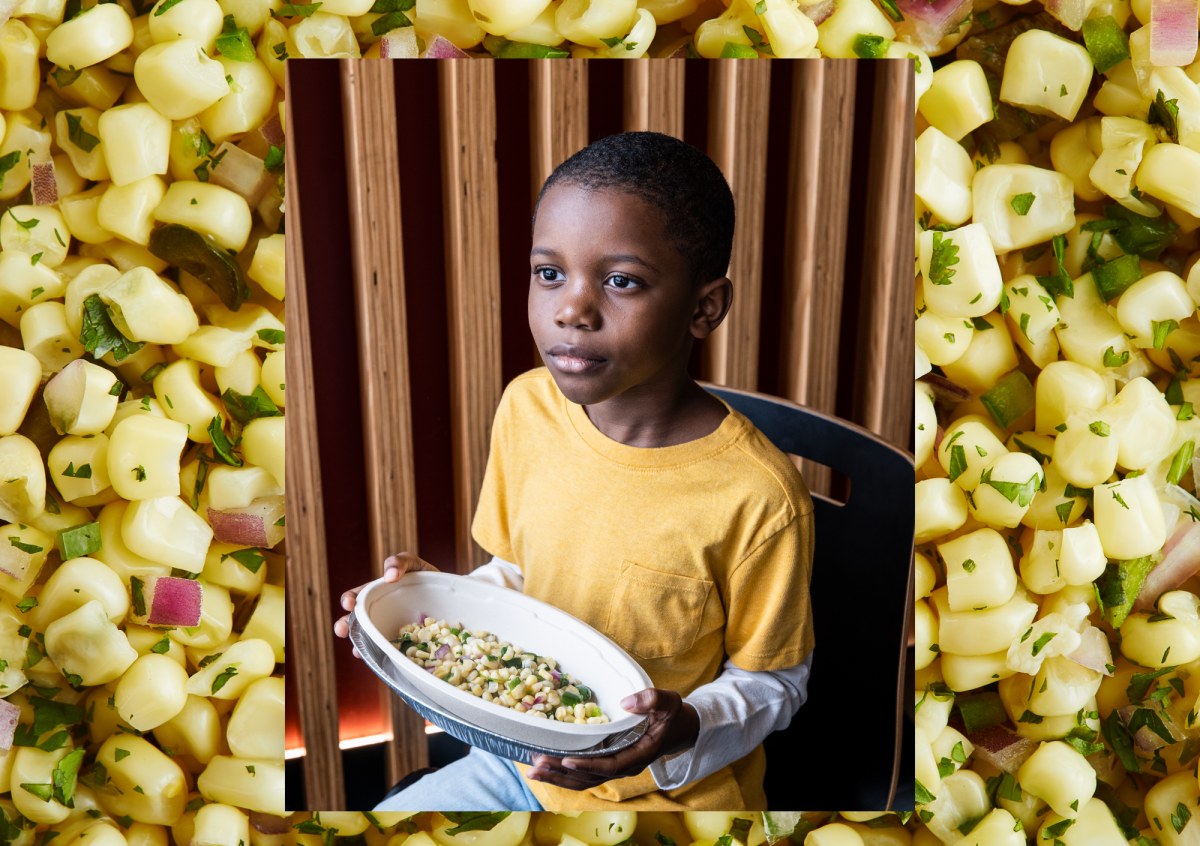
In August 2022, a seven-year-old named Tariq explained, with the gravity of a statesman, why he liked corn. The clip became an internet event. Somewhere between the first remix and the first corporate imitation, Day One Agency saw an opening for Chipotle, whose roasted chili-corn salsa supplied a perfectly plausible reason to join the joke.
Seventeen hours later, the agency had contacted Tariq, confirmed that he genuinely liked Chipotle, filmed him moving down a restaurant line that served only corn, edited the video, and published it. The result, by Day One's count, was 125 million organic views, 19 million engagements, 1.2 billion impressions, and Chipotle's best-performing post at the time. Paid media cost: zero.
This sounds like a story about a lucky meme. It is better understood as a story about plumbing. Anyone could see the clip. Far fewer organizations could turn it into appropriate brand behavior before the internet moved on. Day One's product is not clairvoyance. It is the removal of enough friction that judgment can still matter.
The missed vacation
The agency began before it was ready
Josh Rosenberg, Brad Laney, and Rob Longert worked together at M Booth before leaving to start their own firm in 2014. Their diagnosis was blunt. Brands kept asking PR people to publicize ad campaigns after the creative decisions were already made. But publicity cannot rescue an idea that gives an editor, creator, or customer no reason to care. The founders wanted the creative idea and the earned reaction to begin in the same room.
They also wanted a break. The plan was to take the summer off, regroup in September, and decide what to call the business. Then referrals began. The founders worried, not unreasonably, that prospective clients might forget them by September. The holiday lost. Day One started with no clients, no employees, and no settled name. YouTube became an early anchor, exposing the young agency to creators and a media system already shifting away from editors as the sole gatekeepers.
“The future of social is earned, and the future of earned is social.”Josh Rosenberg, co-founder and CEO
The observation aged well. The old front page asked everyone to notice roughly the same set of things. The For You Page gives each person a private weather system. In that world, a communications firm must understand subcultures, creators, comment sections, and offline behavior, then build a story native to each. Day One now sells creative strategy, narrative development, design, PR, creator casting, experiential work, and studio production. These are not unusual services. Their arrangement is.
Research with a pulse
Seventy-five people in the group chat
Consider Day One's most literal listening device. Group Chat is a geographically dispersed panel of 75 Gen Z participants. Members join a Slack channel, answer weekly questions, take surveys, attend events, and sometimes respond to client briefs. Day One pays per project on a sliding scale and also offers prizes. Rosenberg says clients can pose a question and receive an answer overnight.
He is careful about what it is: a directional sample, not a representative one. That caveat is the point. Group Chat is not a substitute for rigorous market research when a decision demands it. It is a way to discover that the adults in the conference room have misunderstood the premise before they spend three weeks polishing it.
The agency surrounds that panel with its own media: youth reports, an almanac, the Side Projects podcast, a magazine, and cultural essays. This material doubles as research and marketing. It gives staff a reason to interview people shaping culture before a client asks, and gives prospective clients a way to inspect the agency's taste. Day One does not merely claim curiosity as a value. It funds recurring occasions to practice it.
Fewer handoffs, larger output
The business is designed around the half-life of a joke
In 2019, as TikTok was changing the volume and tempo of brand content, Day One created its studio business. The aim was to get closer to production. Its Los Angeles operation now handles work ranging from short social videos to television. In 2025 the studio grew 33 percent, according to PRovoke Media, helping reported net revenue rise from $47.5 million to $51 million.
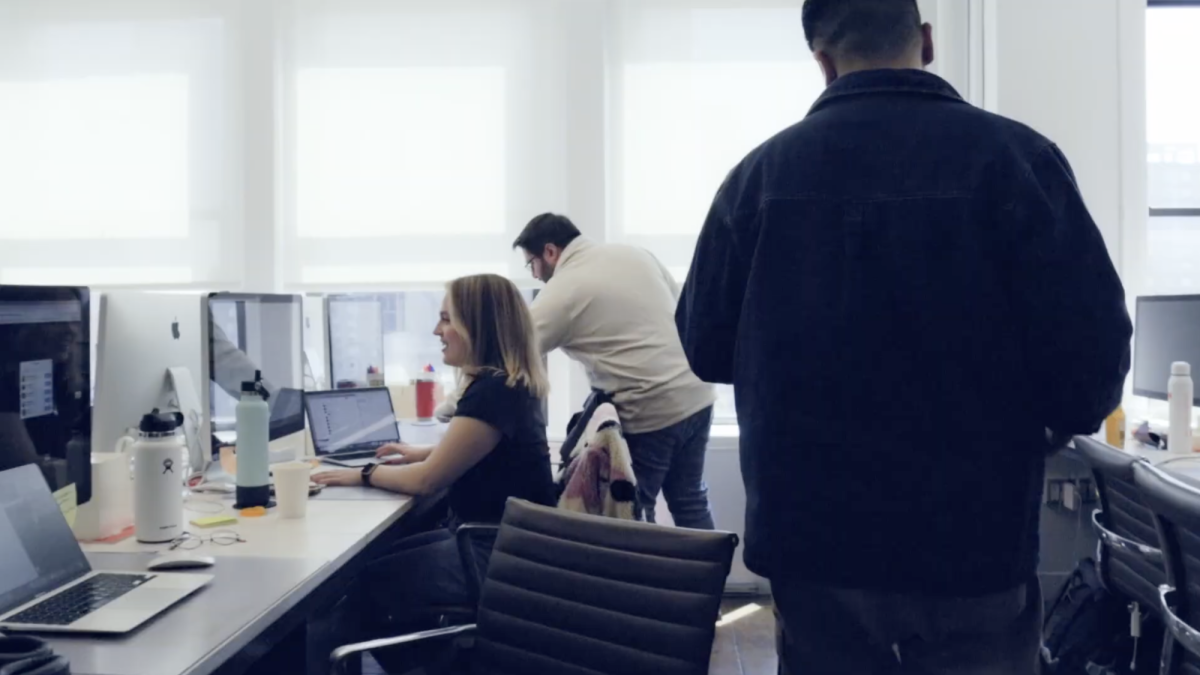
The firm operates as one profit center. That dry accounting choice matters. A PR department is less tempted to protect its budget from a studio department when both succeed together. The system can move from a comment-section observation to design, creators, production, and media relations with fewer commercial tollbooths along the way.
There is a Writers' Room, modeled loosely on television, that meets Monday and tries to launch trend-driven TikTok work before the weekend. There are 185 employees across four cities; 65 percent are Gen Z or young millennials. Day One reports a three-to-one employee-to-manager ratio and says 30 percent of its people have been promoted from within. The youthful skew does not guarantee cultural fluency, but it reduces the absurdity of marketing to young people without many young people in the building.
Speed alone would merely make mistakes arrive faster. The less visible ingredient is client trust accumulated over years. Day One has worked with Chipotle for roughly a decade. That relationship produced the Car Napkin Holder, a visor-mounted answer to the fan habit of stealing napkins, which sold out in 55 minutes. It produced “Tatted Like a Chipotle Bag,” turning an Adam Levine meme and Friday-the-13th tattoo culture into a promotion that Day One says eventually drove Chipotle's highest-performing sales day and $5 million in incremental sales in its 2026 edition.
What readers can copy: build a small listening panel, pre-agree the boundaries for rapid response, put decision-makers next to makers, publish useful research before the brief arrives, and test a new service with one paying client before staffing a department around it.
The useful limit
A weather station is not a climate model
Day One's method fits consumer brands with active communities, visible products, patient client relationships, and permission to behave in public. It is less convincing when regulation makes overnight approval impossible, when the customer is not spending time in fast-moving feeds, or when a brand has not earned the right to enter a subculture. A directional panel can reveal a live signal; it cannot prove national demand. Organic reach can demonstrate attention; it cannot always establish durable preference.
Nor is every success free. The media bill for “It's Corn” was zero, but the work still required people, access, editing, judgment, and a trusted client. Day One does not publish campaign fees. Its more honest lesson is that attention moves to costs elsewhere. You can save on distribution when the idea travels, but you must invest in the organization capable of recognizing and making that idea.
The company has recently added AI experiments, including Peel, a product intended to measure and predict how client messages surface in AI search. Yet its public argument remains conspicuously human. A machine can make more content. The scarce things are taste, trust, specificity, and the nerve to act while a moment is still intelligible.
That returns us to the bowl of corn. The clip did not succeed because a spreadsheet ordered it to. A person noticed something charming. Other people found a truthful connection to a client. A long relationship made a quick yes possible. Then a production system did not get in the way. Seventeen hours later, the internet was still laughing - and Day One was already there.