The first Small Girls PR office was not an office. It was a hot dog shack at South by Southwest. The budget was not a budget, either. Mallory Blair and Bianca Caampued started the company in 2010 with less than $100, no investors, no loans, and no résumé line from a PR agency between them. There was, however, a theory: brands were becoming people online, and most publicists were still treating the internet like a fax machine.
The theory arrived in a one-line email sent around four in the morning: “We are so dumb. We should run our own PR company.” The phrasing is useful. It contains neither a market-size chart nor a solemn founder myth. Blair had just been rejected for a community job at Kickstarter because she lacked experience. Rather than acquire experience in the usual sequence, she and Caampued manufactured their own.
Their first official client, handbag designer Katherine Kwei, came through Caampued's accessories blog. An early music project came through Blair's college connection to the band Anamanaguchi. They charged, by Blair's later account, “next to nothing.” This was the first thing that failed: pricing. The founders did not know what a PR engagement should cost, and the first six months were trial, error, fast food, and fish sticks at midnight.
“If we had priced ourselves in range with the market at the time, I'm not sure we would have won some of the accounts that we did.”Mallory Blair, on the awkward utility of starting cheap
A stunt is a compressed strategy
The visible part of Small Girls PR's work has always been the bit one can repeat at lunch. For prom-dress retailer Tiza.com, the founders wore prom dresses every day for 30 days. For GE, they helped create a truck that photographed visitors and rendered their faces in latte foam. For Olay, the agency made a waterproof photography book intended to be read in the bath. These are not subtle objects. Subtle objects are hard to describe to a friend.
But the lunch-table retelling hides the mechanism. Each object translates a business problem into an immediately legible scene. GE wanted additive manufacturing to feel human, so manufacturing became a face floating on coffee. Olay wanted an old body wash to signal transformation, so transformation became a physical book that survived the shower. Hinge wanted to be more than another dating app, so Small Girls PR helped sharpen “designed to be deleted” into a product position, events, data stories, and brand partnerships.
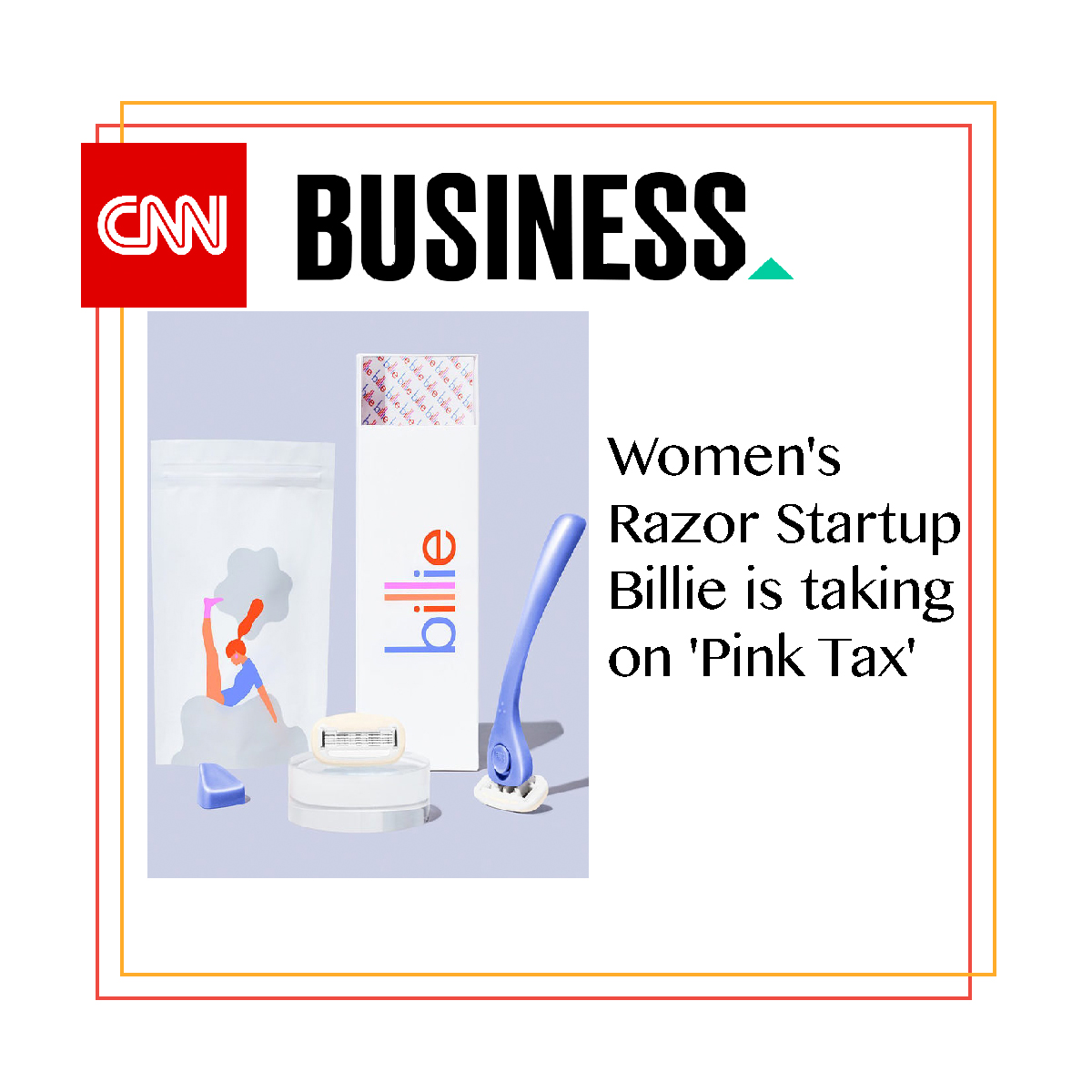
Project Body Hair for Billie is the cleanest example. A razor brand showed female body hair in an advertisement, something established competitors had avoided. Small Girls PR framed the image as a cultural first and connected it to Billie's existing campaign against the “pink tax.” The result was more than 270 placements and two billion impressions across more than 23 countries. Competitors later began showing body hair too. Coverage was the metric; changed category imagery was the proof.
The product is an excuse to pay attention
Small Girls PR calls its offer “full-funnel PR.” The phrase is less interesting than the integration beneath it. The firm starts with positioning, then carries the same idea through media relations, influencer work, content, events, mailers, pop-ups, affiliate programs, and paid amplification. It also handles reputation, crisis work, media training, and executive visibility. The customer may be a venture-backed startup searching for its first category story or a Fortune 100 company trying to sound like something other than a Fortune 100 company.
That is what a reader can copy. Begin with the tension, not the channel. Build one artifact or action that resolves the tension in public. Then design different routes for the idea to travel. The headline, creator post, physical event, and paid unit should feel like relatives, not roommates assigned by a media plan.
There is also a less photogenic lesson. By 2016, team leaders were measuring the time each person spent on accounts and reviewing profitability and efficiency every month. After every client call, staff recorded whether the client felt “psyched, neutral or not psyched.” Neutral was treated as a warning. The sparkle had instrumentation.
Why the founders changed their minds about scale
For most of its independent life, the agency grew without conventional outside capital. New business arrived largely through referrals. The pitch was the previous piece of work. In 2016, Small Girls PR even became an acquirer, buying Jaclyn Johnson's six-person Los Angeles agency No Subject after noticing how often it referred prospective clients there. The deal made the firm bicoastal.
By 2024 the market had moved again. Clients no longer wanted earned coverage in isolation. They wanted physical experiences and digital distribution, plus paid media, content, search, analytics, and research. Building every adjacent capability alone would have changed the firm's economics and speed. Joining Orchestra offered those resources immediately.
Orchestra acquired Small Girls PR in October 2024. The price was not disclosed. At the time, Small Girls PR had 75 employees in New York and Los Angeles; Orchestra had nearly 700 people across a portfolio of specialist firms. Blair stayed CEO and became an Orchestra partner. The agency kept its name. The buyer was not erasing the oddness. It was buying it.
The boundary of the trick
The Small Girls method depends on a real tension. Billie's work landed because the shaving category had spent decades pretending its product removed hair from already hairless legs. thredUP could respond to Burberry's destruction of unsold goods because resale was already central to its position. Remove that fit and a stunt becomes a mascot loose in a parking lot.
It also depends on speed, permission, and operational nerve. GE gave a tiny team 48 hours to pitch. Bill Nye had roughly ten minutes at the Emoji Science lab. Newsjacking requires a brand able to approve an intelligent response while the news is still news. Regulated products, cautious leadership teams, weak customer experiences, or brands without a credible point of view will struggle to use the model. Attention magnifies the product underneath it - including the flaws.
This is where Small Girls PR fits in the market. It is not a media-buying giant, though Orchestra gives it access to broader distribution and intelligence. It is not merely an influencer roster or an events vendor. Its specialty is the connective idea: the sentence that becomes an object, the object that becomes an image, and the image that becomes a story people volunteer to circulate.
The company's old name can sound like a dare, or a joke that survived its twenties. Its best work uses the same structure. Something initially unserious - prom dresses, emoji, latte foam - becomes a delivery mechanism for a serious commercial point. Fourteen years after the 4 a.m. email, that mechanism was valuable enough for a much larger company to buy. The fish sticks had become a process.