Long before a launch could trend, James LaForce carried news through Manhattan with his own two feet. Early in his career, he hand-delivered reports about the previous night's parties to a society reporter at Women's Wear Daily. It was public relations in its purest physical form: one person knew something, another person could print it, and the distance between them was a walk.
Today the company bearing his name occupies nearly the opposite world. A party arrives on Instagram before the ice melts. A phone launch is simultaneously a talent partnership, a press story, a social asset, and a measurement problem. The editor still matters, but so do the creator, the guest list, the retoucher, the paid-media plan, and the person who can get 400 samples out of Long Island City by Thursday.
LaForce's answer was not to abandon the old craft. It was to wrap a modern operating system around it.
01 / What the company actually sells
The difficult middle between an idea and public notice
LaForce is a New York-based, independent marketing communications agency. Its roots are in fashion, but its client roster now crosses beauty, retail, wine and spirits, hospitality, food, wellness, and consumer technology. Maybelline, Moët Hennessy USA, Uber, Target, Veuve Clicquot, Motorola, ASOS, Timberland, and Madewell are among the names the firm has publicly identified.
The problem these clients bring is usually broader than “get us press.” A brand may be famous but feel culturally stale. It may have a useful product with no reason for anyone to discuss it. Its campaign may need a celebrity, an event, a stream of social content, an executive point of view, or a response plan when the conversation turns. LaForce sells the judgment to choose among those levers, then the labor to pull them.
The attention supply chain
That range places the firm between a specialist publicity boutique and a giant advertising network. LaForce calls roughly 100 to 120 employees its sweet spot: large enough to execute for global brands, small enough that the people in a pitch can plausibly remain close to the work. There is no parent company, outside shareholder, or network mandate steering business elsewhere.
“Everything is built for a global, instant audience.”James LaForce, describing the change brought by social media
02 / The first thing that broke
Control left the room before the guests did
The first casualty of social media was the comfortable delay between an event and its public meaning. In the earlier model, a publicist could collect the evening, package it, and help decide how the story traveled the next morning. Instagram made the event itself the newsroom. LaForce told Glossy in 2017 that the story was now visible in real time, to a global audience.
That changed the work. Earned media could no longer sit in a separate box from visual production or social strategy. A campaign concept had to look good in the room, survive a phone camera, give journalists a reason to write, offer creators something they would actually use, and connect back to an objective a client could defend. The press release did not disappear. It stopped being the center of gravity.
The physical clues are revealing. LaForce built an in-house Creative Studio for concepting, art direction, design, photography, video, and retouching. It also established LaForce Lab, a 5,000-square-foot facility in Long Island City for product storage, sample trafficking, creative deliveries, shipping, and showroom work. Public relations had acquired a loading dock.
The economics follow the work. LaForce operates as a fee-based services firm, through ongoing relationships and project assignments spanning strategy, PR, digital, events, production, and corporate counsel. It does not publish a rate card, and no reliable public source discloses what individual campaigns cost. The visible investment is structural: people, space, production capacity, and the ability to keep more steps under one roof.
03 / The pandemic reset
Put the people doing the work in the room
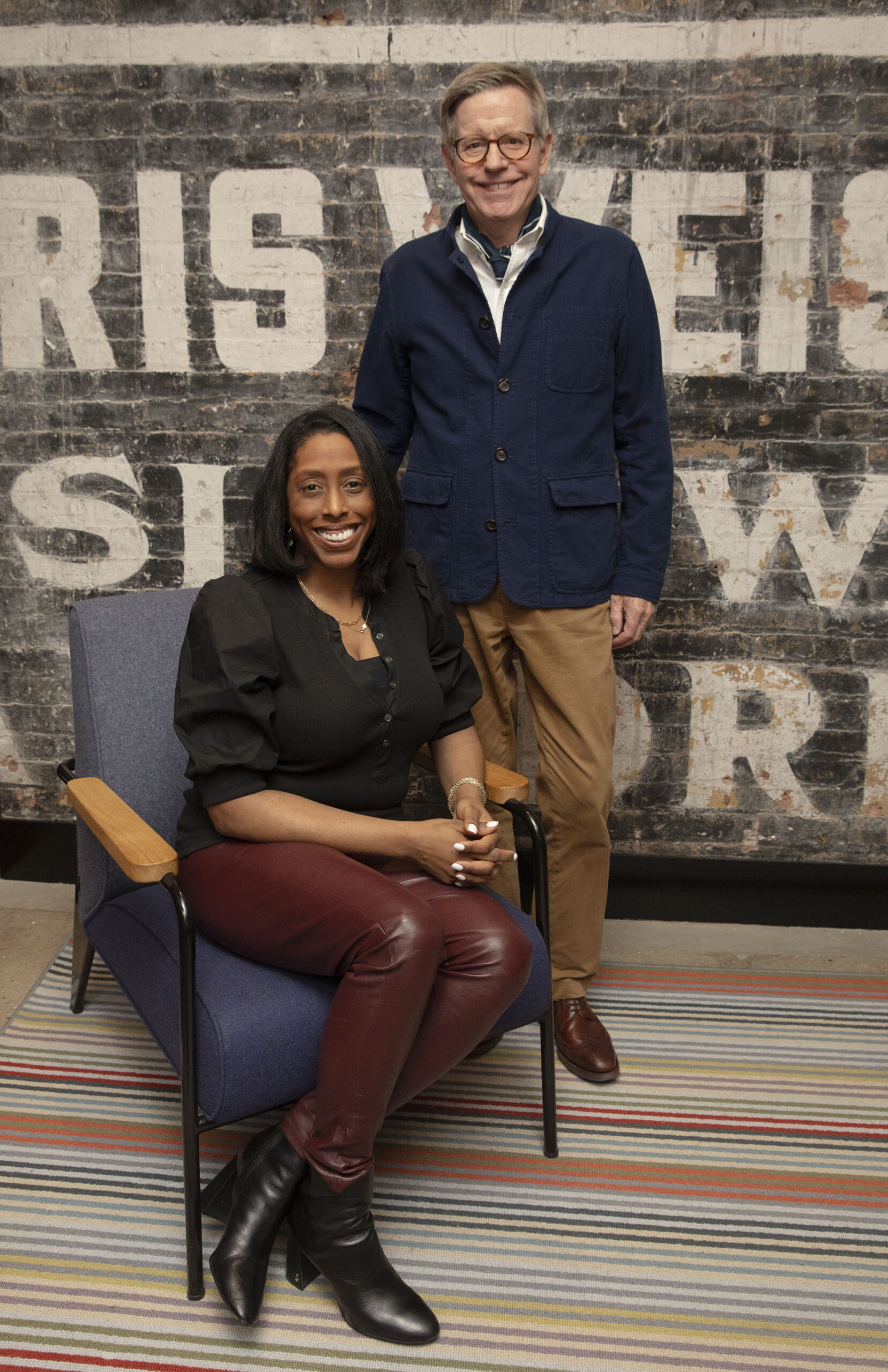
The more useful LaForce growth story is not a glamorous launch. It is an org chart. When Olita Mills became president around the pandemic, the future was unreadable and brand budgets were cautious. She changed how the agency approached new business. The people likely to run an account moved to the front line of the pitch. Senior leaders who had been embedded in individual teams began sharing their expertise across the agency.
The logic is almost embarrassingly plain. Clients dislike meeting a dazzling pitch cast and receiving a different account team. The revised system reduced that gap. It also forced the future operators of the account to learn the brand while developing the proposal. Mills later said the brand practice grew 60 percent over two years, though she was careful not to reduce the result to a single cause.
This is the part worth copying. Start with the result, not the stunt. Let the delivery team help sell the work. Move the best idea across teams instead of guarding it inside one unit. Add production capacity only when repeated demand justifies it. And remember that “integrated” is meaningful only when the handoffs get shorter.
A small-agency operating note
- Bring the eventual account lead into the pitch before the work is won.
- Design the earned idea for social pickup at the concept stage.
- Give senior specialists permission to work across team boundaries.
- Measure the intended outcome, not merely the number of outputs.
04 / Culture as an operating detail
The executive with Broadway tickets
LaForce calls itself culture-first, a phrase broad enough to fit on almost any agency wall. The particulars are more persuasive. The firm says women comprise more than 90 percent of staff. Its president is Black, its senior executive leadership is all women, and the company is gay-owned. Many senior employees have stayed nearly two decades.
Then there is Stephen Henderson, the Chief Joy Officer. It sounds ornamental until one hears how the job works. Mills tells of a new employee who had just arrived in New York and had never seen a Broadway show. Henderson learned this during an internal profile. Two tickets soon appeared on the employee's desk. In another case, a worker's commitment to a charity prompted a donation in that person's name. Joy, in this construction, is not a pizza party. It is evidence that somebody listened.
The same instinct extends outward through the LaForce Henderson Foundation, which says it has donated more than $2 million to national and grassroots groups, especially those working on women's and LGBTQ+ rights, education, human rights, and natural resources.
05 / Where the model fits
Useful when attention must become action
The LaForce model makes sense for a consumer brand with multiple audiences, a visual product, and enough ambition to connect press, talent, creators, events, and owned channels. It is especially suited to launches where cultural context matters as much as product specifications: a beauty ambassador, a fashion collaboration, a hospitality experience, a technology device seeking relevance beyond a review page.
It is less natural when the brief is a single commodity deliverable, when a tiny local business needs only neighborhood reach, or when a client wants guaranteed editorial control. Earned attention remains earned. Nor does integration rescue an idea with no genuine audience value. The machine can distribute a story; it cannot make people care by decree.
That is the pleasing contradiction inside LaForce. The firm has added analytics, paid amplification, virtual rendering, creator contracting, a studio, a showroom, a lab, and more than 100 events a year. Yet the product still depends on an old publicist's question: is this interesting enough that one person will tell another? The route became industrial. The test stayed human.