The problem with nostalgia is that it belongs to the person doing the remembering. A Bomb Pop can carry an adult back to a municipal swimming pool, a sticky July afternoon, or the metallic music of an ice-cream truck. To a twelve-year-old, however, it may simply be three stripes of frozen sugar competing with an entire phone.
This was the curious assignment facing Skirt PR, a Chicago communications agency founded in 2003 by Adrienne Eckert Petersen. Bomb Pop had recognition among millennials and Gen X. What it lacked was a native place in the visual and verbal culture of Gen Alpha. The old social approach revolved around a googly-eyed Pop character. The new audience revolved around people, jokes, group chats, short video, and a highly tuned suspicion of anything that arrived looking like an advertisement.
So the first thing to go was the googly eyes.
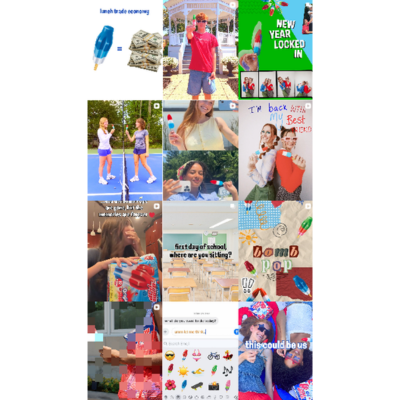
The popsicle did not need a new childhood
Skirt's answer was not to sand away the product's history. Red, white and blue remained. Summer remained. The team changed who carried the memory forward. Teen creators placed the product inside after-school hangouts, warm-weather adventures, jokes, dances and ordinary moments with friends. Instagram became a digital scrapbook. TikTok supplied the pace and slang. The imagery grew lo-fi and mixed-media - less product pedestal, more half-finished collage on a bedroom wall.
This distinction matters. Heritage brands often mistake modernization for disguise. They borrow whatever music, phrase or visual effect is currently popular and paste it over the old thing. Skirt's work preserved the recognizable object while rebuilding the social setting around it. The product did not pretend to be born yesterday. It found people who were.
The team tested memes, short videos, creator partnerships and reactive posts, then adjusted against performance and sentiment. It also built a distinct voice in the comments: lowercase, fast, slightly chaotic. The brand replied to creators, joined seasonal conversations and teased products that looked suspiciously like rocket pops. Those comments did more than collect likes. One exchange with Bubly became the opening to a broader collaboration - evidence that community management can behave like a tiny business-development office hiding under a post.
What Skirt actually sells
Skirt describes itself as a boutique public relations, social media, influencer and event agency. This can sound like a list assembled to satisfy a procurement form. In practice, the interesting part is the handoff. One brand story may begin as a pitch to an editor, become a creator brief, turn into a live pop-up, and return as a week of social content. Skirt sells the ability to keep that story recognizable while its format changes.
Consider Dryel, the at-home dry-cleaning product. Skirt refreshed its visual language, worked with fashion, family and lifestyle creators, and invited 75 Hearst editors to a “Refresh Express” pop-up at Hearst Tower. The campaign connected demonstration with publicity and reported $3.15 million in publicity value plus more than 1.4 million social impressions. The event was not decoration. It gave editors something tangible to experience, creators something legible to show, and the brand a reason to re-enter the conversation.
Or consider Sleep Innovations entering Mexico through Walmart. Skirt chose 12 paid creators in Mexico City, Guadalajara and Monterrey, built shoppable content around the retail path, and launched the brand's TikTok account from zero. It monitored weekly ecommerce and in-store unit data, using sales signals to adjust the work. The reported result was a threefold increase in ecommerce sales. Here, “influencer marketing” was not a pile of packages sent into the universe. It was a geographically specific retail launch with a measurement loop.
Where the agency fits
- CLIENTConsumer brands with a product people can see, try, taste or discuss
- PROBLEMAwareness, relevance, launch momentum or an aging story
- ALTERNATIVESeparate PR, social, creator and event shops - or an in-house team
- EDGEOne boutique team moving the same idea through all four channels
Thirteen million impressions, with a human in the middle
The agency's Purdue Global work shows the same habit in a less playful category. Online higher education is crowded, expensive and burdened by skepticism. The prospective student is not casually choosing a flavor; she may be a working parent calculating time, money and a career change. Skirt recruited creators whose audiences included people living those decisions, then spread the material across Instagram, TikTok, YouTube and LinkedIn. A parallel campaign raised the profile of Purdue Global CMO Kelly Hiller.
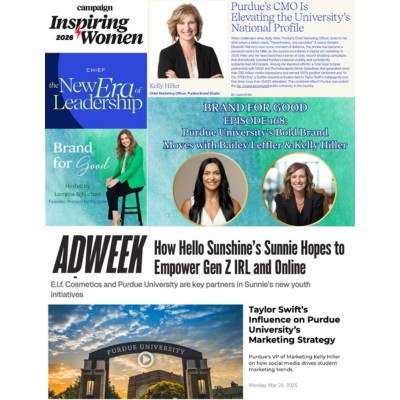
The numbers were substantial: 13.7 million impressions, 4.3 million video views and 40,300 link clicks. But the reusable principle is smaller. Match the messenger to the anxiety, not merely to the demographic. A creator who can speak credibly about work, parenting or reinvention is useful to an adult learner in a way a famous face may not be.
The copyable part
Keep the old brand's recognizable core. Replace the stale messenger. Cast creators for lived fit, give each platform its own native format, watch sentiment as closely as reach, and treat comments as active outreach. The method is strongest when the product is visual, affordable, culturally legible and easy to place inside real life. It becomes much harder when the purchase is private, highly regulated, infrequent, or too technical to survive a quick joke.
From boxes on the floor to a family-built office
Petersen started Skirt at 25 after beginning her public-relations career in New York. The name contained two ideas: the agency's fashion roots and the politely persistent ability of a publicist to skirt an obstacle. In its early years the firm was closely associated with fashion, beauty and Chicago lifestyle. Publicly named clients over time have included Birchbox, Rent the Runway, Warby Parker, Gilt Groupe, Oliver Peoples and the Museum of Contemporary Art Chicago.

Twenty-three years is long enough to watch the media business repeatedly eat its own vocabulary. Bloggers became influencers. Posts became content. Community managers became partnership scouts. Skirt survived by letting the nouns change while holding on to the job underneath: make a consumer notice, care, and act.
In 2026, Petersen wrote about opening a new office. Her first office, she recalled, involved hauling boxes alone, assembling furniture and eating takeout on the floor because there was no desk. This time her husband hung shelves while her children assembled chairs. It is a warm founder story, but it also contains the agency's business lesson in miniature. The object can remain the same - an office, a popsicle, a mattress, a degree. What changes is who gets invited to build the meaning around it.