A weed killer gives advertising people an easy picture. There is the villain, green and insolent. There is the spray bottle. There is the small domestic revenge of watching the villain collapse. A weed preventer presents a stranger problem: the better it works, the less there is to photograph. Planit, the independent Baltimore agency, looked at this absence and decided it was the product.
For Preen, it did not sell the moment of killing a weed. It sold the six months in which the customer could be doing something else. The agency studied audience segments, from empty nesters to first-time homeowners, and built messages around whatever each group would rather do than pull weeds. Preen went fully digital for the first time. Planit reports that website visitors rose 457 percent and clicks on retailer “Buy Now” buttons rose 147 percent.

What happened after “anything but weeding”
Two second-graders find a basement
Planit's story begins before either founder knew the word “brand.” Matt Doud and Ed Callahan met in second grade, grew up around Baltimore, went to rival high schools and entered the local advertising business by separate doors. They came away with the same suspicion: there had to be a better way to run an agency. In 1995, they started one in a basement.

Division of laborDoud describes himself as the rudder and Callahan as the sail. It is unusually accurate corporate poetry: one watches the horizon and keeps the shop on course; the other supplies creative force and pulls clients out of the comfortable water.
Their ambition was not merely to open another design shop. They wanted Baltimore to produce an agency capable of relaunching a brand, running an international program and taking a familiar retailer into new channels. Planit now works for organizations including Toro, DuPont, Great Stuff, Preen, Sheetz, CareFirst BlueCross BlueShield, LifeBridge Health, Curio Wellness and Riviana Foods. It remains privately held and independent.
“We only answer to ourselves. Sure, there’s no safety net. But there are also no guardrails either.”Matt Doud, on remaining independent
The medium is not the point
There is a revealing old remark from Doud about social media. It had once seemed scary. Planit's response was not to become bravely devoted to social. It was to follow the consumer. If customers were spending time there, the agency would learn the channel and put the appropriate message in it. Social eventually became a department.
That sounds obvious only because most useful ideas sound obvious once somebody has paid for the experiment. The distinction matters. A channel-first agency sells what it has. A consumer-first agency has to rearrange itself whenever behavior changes. Planit has consequently accumulated an unusually broad in-house toolkit: research and brand strategy, creative and production, media planning and buying, analytics, PR, influencer work, social and community management, plus full-stack web development, ecommerce and marketing automation.
The Planit loop, reduced to five moves
- Find the behavior everyone accepts. Gardeners pull weeds; contractors distrust battery power; foam is a commodity.
- Locate the unclaimed reward. Time back, power without compromise, pride in doing the job properly.
- Segment before speaking. Different people want different versions of the same benefit.
- Let the idea choose its channels. Media, PR, retail, code and content work from one premise.
- Measure the next behavior. Visits, purchase clicks, reach and sales matter more than compliments.
The odd advantage of making the whole machine
A full-service agency can become a buffet: many dishes, no dinner. Planit's case for breadth is coordination. Its media team can plan and buy across search, programmatic, social, retail, audio, out-of-home, print and broadcast. Its analysts build dashboards with tools such as Tableau, BigQuery and Google Analytics. Its PR group handles the launch, the influencer agreement and the crisis plan. Its developers can build the destination to which all that attention is sent.

For Great Stuff, Planit applied that machine to a product people tend to remember only when a cold draft finds them. It rebuilt brand standards, redesigned the website, made how-to video, ran paid social, worked with influencers and supported retail. The campaign reportedly reached 67.5 million users, generated 8.4 million video views and sent 471,700 visits to a landing page. The cans remained cans. The surrounding story became much larger.
The pitch they did not win
Advertising profiles usually treat losing as a clerical error. Planit offered a better detail in a 2025 reflection: the agency produced a couple-hundred-page response and an elaborate in-person pitch for a major account, then watched the incumbent keep the business. The work had spilled beyond ordinary hours and raised the temperature. What stayed with the writer was how little the team turned on itself.
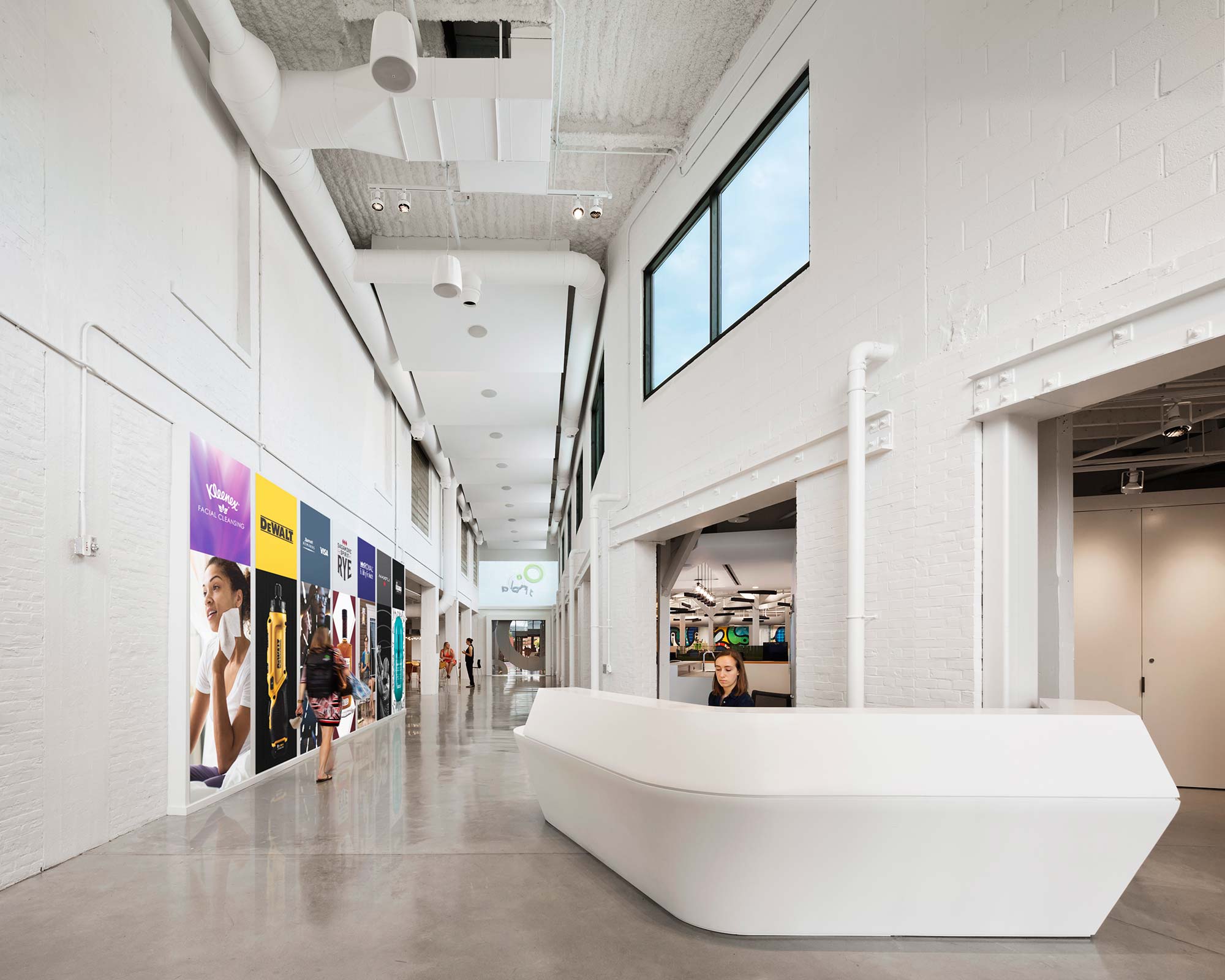
This is culture in the least decorative sense. Planit's staff page is full of jokes - “Pixel Padawan,” “Walkin' Talkin' Spellcheck,” “Ms. Purrblicity” - but the lost pitch shows the operating requirement beneath them. Integrated work depends on people helping outside their boxes. The agency also has the usual honors on the wall: workplace awards, seven appearances on the Inc. 5000 by 2023, four local ADDYs in 2025 and a Lifetime Achievement Award for Doud. The more useful achievement may be keeping a room civil after the client says no.
Bold, with a dashboard attached
Planit calls its approach “respectfully disruptive,” a phrase that could become fog in less careful hands. The respect is not politeness. It is evidence. A Sheetz July Fourth gas-price promotion generated nearly 6,000 media placements, a reported 1.2 billion impressions and $6.05 million in earned media value; the client recorded a record volume of gallons sold. A Minute Rice influencer effort produced more than 100 pieces of content, 7 million video views and over 1 million engagements. Creative got attention, then measurement gave the attention somewhere to go.

The business model is conventional: organizations hire the agency for strategy and execution across projects, campaigns and ongoing relationships. The choice around it is less conventional. Planit is best suited to a client willing to let research change the brief, give multiple disciplines access to the same problem and agree on what success will look like. A stakeholder who wants a predetermined ad produced exactly as imagined may find “respectful disruption” needlessly eventful. A team without usable audience data or permission to test will get less from the machinery.
The transferable lesson is not to copy the bright yellow Preen world or Toro's red smoke. It is to ask what happens immediately before and after the obvious product moment. Planit found six months hiding behind a bottle of weed preventer. Plenty of businesses have an equally valuable stretch of time sitting just outside the frame.