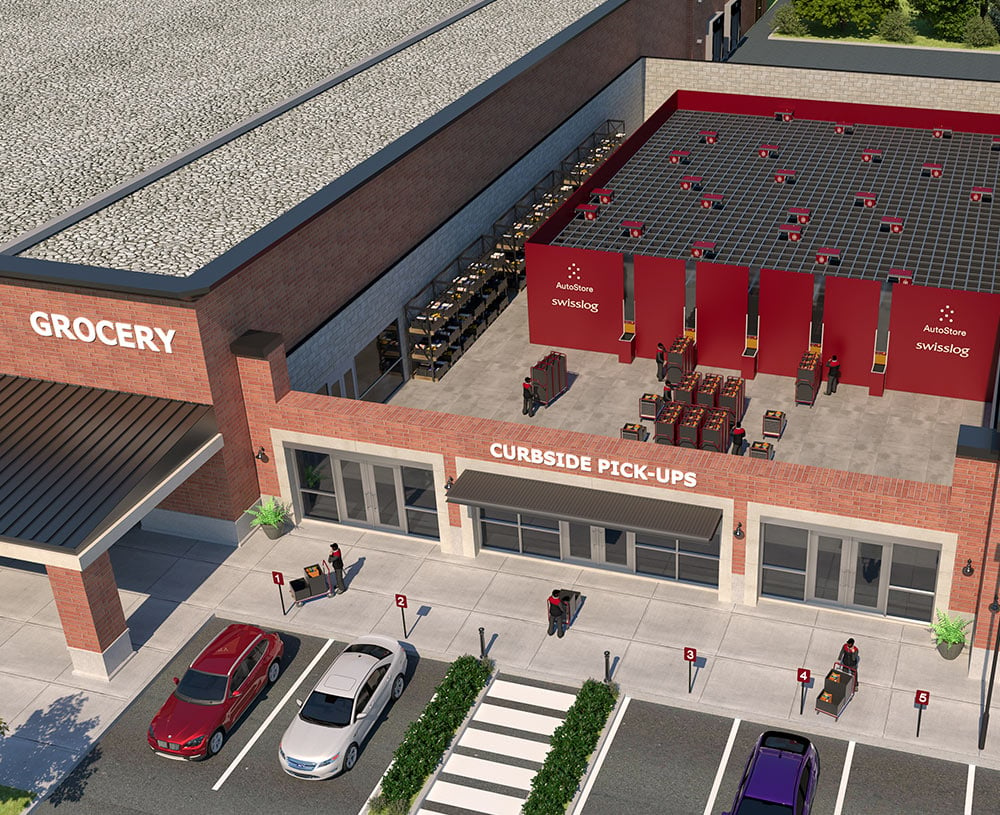
The most revealing sentence in Fahlgren Mortine’s portfolio is about a robot nobody was ready to discuss. Swisslog, a global logistics-automation company, wanted to sell sophisticated machinery to grocers preparing for the rise of online ordering. There was only one hitch: the grocers were still trying to understand the choices in front of them. A conversation about robotics was arriving before a conversation about fulfillment.
This is the ordinary tragedy of business-to-business marketing. The seller arrives with a solution; the buyer is still assembling the question. The presentation is polished, the product is clever and the audience is politely elsewhere.
Fahlgren Mortine changed the order. Working with Swisslog’s experts, the agency built a library of educational material about e-grocery strategies, then used email, social, search, advertising and media relations to lead prospects toward it. The robot remained in the story. It simply stopped being page one.
The agency is in the uncertainty business
Fahlgren Mortine calls itself an integrated communications company. That phrase can mean everything and therefore nothing. Here it has a more specific shape. The Columbus agency researches what an audience is unsure about, develops a story that reduces the uncertainty, and distributes it through the mix of channels most likely to change behavior. Public relations is still the largest part of the business. Digital became the second largest after investments in search, automation, analytics, experience design and media.
For Midmark, a medical-equipment maker trying to move sales conversations from products to clinical-environment design, the agency created a “Point of Care Ecosystem” series with white papers, webinars, podcasts, blogs and media work. Since 2016, Midmark’s published bylines increased tenfold and notable placements rose 650 percent. For COSI, the Columbus science museum, the agency used a new dinosaur gallery to advertise not merely dinosaurs but the larger usefulness of a hands-on museum. Paid attendance rose 33 percent against the comparable period; online page views rose 31 percent.
The product is often not the first problem. The first problem is helping someone understand what kind of decision they are making.The pattern inside Fahlgren Mortine’s strongest case studies
The same mechanism appears in softer territory. Visit Myrtle Beach had dozens of businesses offering sensory-friendly experiences, but a collection of accommodations is not yet a destination story. Fahlgren Mortine helped organize the evidence around a useful claim - America’s first autism-friendly travel destination. The campaign produced more than 400 media placements and more than 80 new requests for the local Champion Autism Network card, increasing cards in circulation by over 200 percent.
What happened after the story changed
Indexed to each campaign’s baseline
Sixty-three years of refusing a fixed shape
The company began in 1962, when H. Smoot Fahlgren opened Fahlgren & Associates in Parkersburg, West Virginia. It merged, expanded, entered a large holding company and returned to executive ownership. Neil Mortine became chief executive in 2010. The next year the business took the name Fahlgren Mortine, binding its advertising history to the public-relations operation Mortine had built.
The interesting number is not its age. It is the number of times the agency has consented to become something else. It acquired the Cleveland PR firm Edward Howard, folded in technology specialists, bought and integrated travel expertise, and in 2022 combined with thePLAN and Mindstream Interactive to deepen design, development, commerce, CRM and analytics. A traditional PR firm became a company that could make the campaign, the media plan and the digital place where the campaign lands.

In May 2024, The Shipyard acquired Fahlgren Mortine and kept the brand. The combination was described at the time as 400 professionals, ten offices and $350 million in billings. It joined Fahlgren Mortine’s earned-media strength and sector knowledge with The Shipyard’s media scale, creative resources and data capability. Neil Mortine became vice chairman of The Shipyard; Marty McDonald, the first woman to serve as Fahlgren Mortine president, continued to run the agency.
The result is an unusual position in the market. A client can buy a specialist PR firm, a performance shop, a creative agency or a large global network. Fahlgren Mortine occupies the middle: broad enough to connect public relations, creative, media and digital; specific enough to know the language of logistics, hospitals, universities and destinations. TURNER adds travel, hospitality and outdoor expertise. IPREX gives the operation an international network.
The business model is people, time and accumulated context
Fahlgren Mortine earns money through retainers and project fees, plus media planning and buying, production, digital implementation and measurement. Its clients range from Abbott, DHL Supply Chain and Copeland to universities, tourism boards, health organizations and consumer brands. In 2024, new wins included Airstream, Hostess Brands and Huntington Bank.
The less visible product is memory. An agency that has worked with Kroger for more than two decades does not have to relearn the business every quarter. Fahlgren Mortine says client relationships last 182 percent longer than the industry average. That number should be read as more than a satisfaction score. Long tenure lets teams notice patterns, survive an underperforming tactic and improve the next cycle with evidence that belongs to the client, not to a generic benchmark.
The culture is designed to preserve and refresh that judgment. Fahlgren Mortine University is its internal learning program; PRovoke reported 80 percent participation. FM Ignite funds outside education and certifications. A day of action gives employees time for advocacy and volunteering. The agency reports more than $2 million donated to communities and, after years supporting the cancer fundraiser Pelotonia, now works on it alongside The Shipyard.
The useful imitation
You do not need a nine-office collective to borrow the operating idea. You need the discipline to separate what you sell from what the audience must understand first. The compact version looks like this:
Name the decision
Ask what choice the audience is actually making, and which uncertainty is delaying it.
Build the useful object
Create the guide, framework, calculator, story or experience that makes that choice easier.
Distribute, then count
Choose channels after the object exists. Measure behavior, not merely exposure.
The sequence matters. Starting with channels produces the familiar meeting in which everyone has agreed to “do social” before anyone can explain why. Starting with the decision gives creative, PR, media and digital teams one shared problem. Integration stops being a list of departments and becomes an order of operations.
Three conditions the method needs
- A buyer with a real information gap. Education adds little when the choice is trivial, purely habitual or dominated by price.
- Access to credible expertise. Thought leadership without subject knowledge is just a brochure wearing glasses.
- Enough time and measurement to learn. A one-off splash cannot build the institutional memory that makes integrated work compound.
Fahlgren Mortine’s record is not spotless proof that every integrated campaign works. Case studies naturally show the winners. The more transferable point is smaller and sturdier: the agency’s strongest work begins before the message. It begins by diagnosing the moment when a person, a hospital, a grocer or a family does not yet know how to choose. Solve that, and the advertising has somewhere intelligent to arrive.
Continue exploring