knowledge-management
(44)
Sedarius Tekara Perrotta and the trouble with knowing too much
From a Romanian think tank to enterprise AI, Shelf’s co-founder has kept returning to the same problem: useful knowledge is surprisingly easy to lose. His answer begins with the work most people would rather hand to somebody else.

Jorge Zamora and the Value of a Small Shortcut
Before GoLinks, Jorge Zamora drew plans for physical infrastructure and taught himself to build a social network. His next idea came from noticing how much useful software stayed trapped inside big companies.

Ashutosh Roy and the Question That Wouldn’t Go Away
An overflowing inbox helped give eGain its start. Nearly three decades later, co-founder Ashutosh Roy is asking a harder version of the same question: how does a business give an answer people can trust?

Christophe Pasquier and the problem of the forgotten answer
He started Slite to help teams write things down. Nearly a decade later, Christophe Pasquier is asking a harder question: who keeps all those answers true?

Marybeth Alexander and the company she wants to share
She helped turn an abandoned help-desk project into KnowledgeOwl. Now Marybeth Alexander is working on a harder question: how much of a company’s success should belong to the people who do the work?

Sagi Eliyahu and the trouble with two answers
Before AI agents became a boardroom obsession, Sagi Eliyahu was asking why the same company could give a customer different answers. At KMS Lighthouse, that old question has acquired a very modern urgency.

Anthony Olivier and the business of being understood
He built MadCap Software around the people who explain how things work. Two decades later, Anthony Olivier is asking what happens when AI can produce more information than a company can keep in order.

Philipp Reißel and the trouble with knowing too much
A company can remember everything and still struggle to find an answer. From mining archives to multilingual models, amber’s co-founder has built a career around that awkward gap.

Sameer Bhatia and the customers who wanted to pay
A free quiz tool brought teachers to Sameer Bhatia’s door. The companies that followed helped turn his interest in sharing knowledge into ProProfs - and a plan to build a business that lasts a century.

Alexis Fogel and the trouble with knowing too much
After nearly a decade building Dashlane, Alexis Fogel started again with Stonly. His next problem was hiding in plain sight: experts write the instructions, but beginners have to follow them.

Andy Cook and the Trouble with Knowing Too Much
He and his co-founder could build the product. The harder lesson was learning what to forget, what to write down, and when to pick up the phone.

Emil Hajric and the art of staying small
He left Austin, kept building in Sarajevo, and once wondered whether to sell. Fifteen years into Helpjuice, Emil Hajric is still pursuing a global business with a short distance between the founder and everyone else.

Philippe Trounev and the business hiding in the instructions
A billing project needed better documentation. Philippe Trounev followed that inconvenience into Docsie, then kept following the questions customers asked of it.

Yatharth Jain and the answer hiding in plain sight
From customer-service operations to Knowmax, Yatharth Jain has kept returning to one problem: the company knows the answer, but the person helping you cannot find it. Now he is taking that same question into the age of AI agents.

Björn Michelsen and the Art of Getting Out of the Way
Björn Michelsen helped turn a team’s document chaos into Nuclino. A decade of collaboration software, practical writing, and a more playful form builder reveals a designer’s attention to the distance between intention and action.
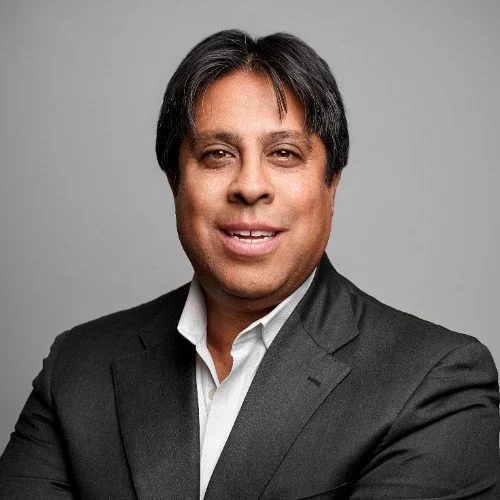
Yash Sabharwal and the problem next door
An optical scientist learned to run companies, found himself wrestling with spreadsheets, and asked his neighbor to help. At QbDVision, Yash Sabharwal is still working on how knowledge travels - and when a founder should get out of its way.

Igor Jablokov and the long road to a simple answer
Before Alexa became a household habit, Igor Jablokov was teaching computers to listen. At Pryon, the founder and chairman is working on the harder part: giving people answers they can check.

Colin Kennedy and the Expensive Problem of the Wrong Answer
Before enterprise AI can sound clever, someone has to make the company’s knowledge trustworthy. Shelf co-founder Colin Kennedy has spent two decades working on that less glamorous, more consequential layer.

Eddie Zhou Has Been Solving the Same Problem Since the Firehouse
Before enterprise AI became a boardroom phrase, Zhou was helping firefighters find building plans on an iPad. The Glean founding engineer has spent the years since pursuing one stubborn idea: intelligence is only useful when it arrives with the right context.

Rick Nucci Connected the Cloud. Now He Wants AI to Remember What Matters.
Across two companies and a quarter-century, the Philadelphia founder has kept returning to one stubborn question: how do you get the right information to the right place at the right time?

Daniel Stradtman Wants Companies to Stop Losing What They Know
After more than 25 years turning consumer research into corporate decisions, Bloomfire's CMO has a blunt diagnosis for the AI era: the cleverest system in the room is still only as useful as the knowledge people can trust.

Olav Kriken Sent 400 DMs. Four People Replied. Then Tana Found Its First Crowd.
The Tana CEO’s playbook began with an unglamorous bet: find four people, listen closely, and make the product worth talking about. His path from Norway’s west coast to Palo Alto is a study in community, conviction, and the useful art of doing what does not scale.

Ashu Roy Has Spent 29 Years Making Customer Service Less Confusing
Before enterprise AI had a name, Ashu Roy was already trying to make corporate knowledge answer back. His latest argument is characteristically practical: the model is becoming a commodity, but trustworthy instructions are not.

Eugen Alpeza Is Writing the Manual AI Forgot to Ask For
After seven years inside Palantir's complicated deployments, Eugen Alpeza reached an unfashionable conclusion: the model is rarely the hard part. His new company, Edra, is turning the scattered evidence of how work really happens into instructions an agent can follow - and a human can still correct.

Joseph D'Souza waited 97 minutes. Then he built a search engine for insurance.
One long hold call sent a serial entrepreneur into an industry he barely knew. Nine years, two product eras, and one Guidewire deal later, his real product looks less like AI than institutional memory.

David Lanstein Is Building the Search Bar His Old Team Needed
He went from writing software at Splunk to scaling sales at PagerDuty. The costly search habits he watched form along the way became the operating thesis for Atolio.

Martin Schneider
Martin Schneider is the co-founder and CEO of RemNote, the all-in-one note-taking and spaced-repetition app he started coding as an MIT computer science student in 2017 to fix his own habit of forgetting everything he learned a semester later. What began as a private side project he used alone for three years grew into a learning platform with over a million users, backed by a $2.8M seed round from General Catalyst, 468 Capital, Soma Capital and Dorm Room Fund. He blends learning science, neuroscience and software to chase a single idea: that you should be able to learn something once and remember it forever.

Arvind Jain
Arvind Jain spent a career making the world searchable. Then an employee survey showed him the harder problem was hiding inside the office.

Chris Mahl
Chris Mahl is President and CEO of Pryon, a Raleigh-based enterprise AI company building a retrieval-augmented generation platform that turns unstructured enterprise data into accurate, source-attributed answers. With more than two decades in enterprise software, he was part of the early leadership teams at Salesforce and Informatica, later ran revenue and operations as CRO at Botkeeper and Opentron Labworks, and held an executive role at Right Media Exchange before it was acquired by Yahoo. He focuses on scaling go-to-market and operations for technology companies and positions Pryon at what he calls the 'knowledge layer' of the AI stack.

Anna McGrane
Anna McGrane is co-founder and CEO of PacerPro, a San Francisco legal-tech company that turns the clunky federal court records system, PACER, into clean, automated workflows used inside nearly half of the Am Law 100. A former international lawyer who practiced securities law in Moscow and energy regulation in Beijing, she speaks five languages, read her first legal brief at twelve, and walked away from the law-firm track in 2014 to build software with her brother. She is a Fastcase 50 honoree and a Women of Legal Tech honoree.