The hold music kept going. Joseph D'Souza had called his insurance carrier with what he considered a quick question about his policy. Ninety-seven minutes later, the answer had become less interesting than the delay. Somewhere inside a company built to understand risk, a person could not find a piece of information for a customer waiting on the phone.
Most origin stories improve in the retelling. This one has acquired a precise number because the number is the point. Ninety-seven minutes is long enough for annoyance to become diagnosis. D'Souza began to see information overload as a system-wide condition in insurance: rules in PDFs, product details in portals, updates in email, and exceptions lodged in the memory of the colleague everyone asks.
He was not an insurance veteran arriving with a polished thesis. He had built two businesses in India, sold the events company LifeSong Events at 28, and co-founded Start Early India, a nonprofit education program in Mumbai. He had lived in India until 2012. By the time he approached insurance, he knew the machinery of starting. The industry's language, habits, and trust networks were new.
An outsider starts taking notes
D'Souza responded to his unfamiliarity with fieldwork. He spent months at trade shows and insurance conferences. He read. He listened to podcasts. He made cold approaches to people who understood the daily operations he did not. Regional and national events provided introductions into a business where, as he later wrote, nobody knew his name.
That posture mattered. Insurance companies have accumulated their systems and processes over decades. A founder can spot an awkward customer experience from the outside and still misunderstand why it exists. D'Souza's advice to other outsiders is to resist performing expertise. Explain your view, ask whether it is wrong, and invite the person across the table to fill the gaps.
He also did something that complicates the usual division between business founder and technical builder. D'Souza did not come from a software background, so he taught himself some code and hired contract developers. The first version, he has said, was held together with the digital version of duct tape. It was still useful enough to place in front of demanding buyers. Their interest showed that the delay on his phone call was part of a problem companies would pay to address.
“You have to have that real connection with the user's problem. That informs everything - how we structure the data, how we surface results, what features we need.”Joseph D'Souza
The first answer was too small
ProNavigator launched in 2016 with a customer-facing insurance chatbot. The premise was direct: give policyholders faster responses and help insurance organizations improve sales and service. Early versions also reached toward chat and voice. The company won customers, including a project with Wawanesa, and raised more than $2 million in seed funding.
Then the listening produced an inconvenient result. The more the team learned, the clearer it became that the customer waiting outside was downstream from a larger problem inside. Employees in underwriting, claims, brokerage, and call centers were trying to navigate hundreds or thousands of documents. A typical team might rely on 500 to 15,000 files stored across SharePoint, OneNote, internal portals, and drives. The chatbot could answer a question, but the organization still needed a reliable way to find and govern the knowledge behind that answer.
Around two years into the company, D'Souza and his team chose a full rebuild. He has called the decision scary. The new direction became Sage, a natural-language knowledge platform for insurance professionals. Instead of treating every question as a generic web search, the software learned the vocabulary of the vertical and respected what each user was permitted to see. It returned relevant snippets in seconds and produced analytics about common questions and missing knowledge.
The change turned an easy-to-picture product into a less visible but more consequential one. Customers see a chatbot. Employees feel the quality of an internal knowledge system through the absence of delay: fewer searches, fewer escalations, and fewer questions sent to the person who always seems to know.
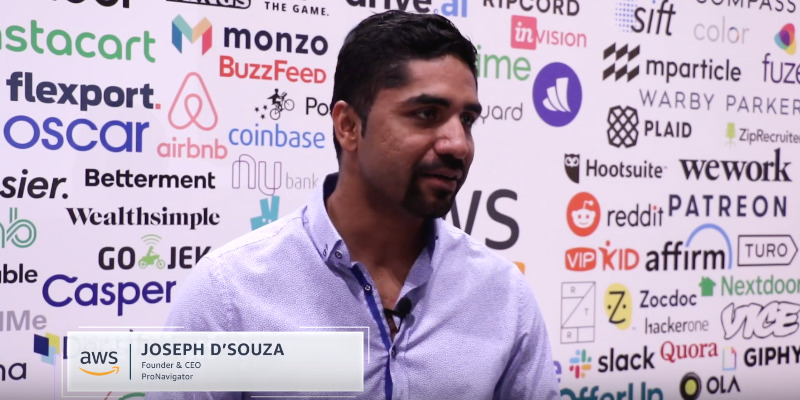
Every office has a Greta
D'Souza gives the knowledge problem a human name. “Greta” is the valued, experienced employee who carries an informal map of the company: which rule applies, where the latest version lives, and whom to ask about the odd exception. She is generous with answers. That generosity becomes a queue. The same questions arrive again and again, the answers are not captured, and no dashboard reveals what the organization keeps failing to explain.
When Greta retires, the files remain while the connective tissue disappears. D'Souza calls this an exodus of expertise. It is particularly costly in insurance, where an answer can affect underwriting, billing, claims, or a customer conversation. His proposed response is not merely more documentation. A library no one can search is still a delay. The questions themselves need to become data: Which ones repeat? Which go unanswered? Where are subject-matter experts overloaded? What should become training, a job aid, or a governed response?
This framing also explains ProNavigator's timing. In 2020, the company announced a C$5.6 million financing. In 2021, Sage won Innovation of the Year from the Insurance Brokers Association of Ontario. A $10 million growth investment followed in 2022, along with a second headquarters in Raleigh, North Carolina, led by D'Souza. The company was no longer selling a novelty at the edge of insurance. It was selling faster access to the operating memory in the middle.
“Focus on the outcome you're trying to achieve for your customers and then work back from there.”Joseph D'Souza
Going narrow while AI went wide
ProNavigator secured its .ai domain in 2018 and built natural-language models before generative AI became a recurring slide in corporate presentations. D'Souza's distinction is useful: a general tool can look impressive in a demonstration and remain brittle in a regulated, domain-heavy environment. The question was never whether AI sounded current. It was whether AI fit a real, fragmented knowledge problem.
The answer required the company to go narrow. Insurance has its own language, document structures, permissions, and consequences. D'Souza says the team spent countless hours beside brokers, underwriters, and claims agents, watching them search and noting where they stalled. Domain expertise became less a marketing category than a design constraint.
Work backward
Begin with the customer result before choosing the technology.
Learn the language
A vertical product earns trust through specific workflows and rules.
Partner selectively
Use platforms for foundation work when they free the team to solve the core problem.
That focus did not make the company static. By 2025, D'Souza was talking about another shift in expectations. Enterprise buyers increasingly wanted a system to do more than locate a passage. They wanted software that could identify what changed, suggest the next action, draft a communication, or pre-fill part of a workflow. Efficiency remained useful, but the purchasing question had become whether the product could drive a measurable business outcome.
He described a coming class of enterprise software where execution becomes the product. The phrasing is futuristic; the path is consistent with the old phone call. Find the expensive pause. Understand why it occurs. Put the next useful step where the worker already is.
The next chapter gets a larger map
In October 2025, Guidewire announced a definitive agreement to acquire ProNavigator. At the time, ProNavigator served 34 insurance organizations, including 12 customers shared with Guidewire. The plan was to bring insurance-trained search and contextual retrieval into the systems used by underwriters, claims adjusters, brokers, agents, and customer-service representatives.
For D'Souza, the deal extended the same premise across a much wider operating surface. He told customers that their trust and feedback had shaped the platform, that the same team would continue the work, and that Guidewire would add resources and reach. He planned to stay for the next chapter.
There is a neat temptation to read the deal backward and make every earlier choice look inevitable. The actual record is more useful. D'Souza began with a symptom. He entered a field he did not know, built a rough version, earned enough trust to keep learning, and then abandoned the first product when a larger problem appeared. Capital, awards, U.S. expansion, and an acquirer came later.
His public advice often returns to that sequence. Start with progress, not perfection. Meet people where they are. Treat feedback as an advantage. Growth comes from focus. These are simple sentences, but the company history gives them weight. Progress included digital duct tape. Feedback led to a rebuild. Focus meant choosing insurance when the broader AI market was easier to talk about.
And the 97-minute call remains a useful object in the story. It is a reminder that institutions rarely experience information overload as an abstract problem. A person experiences it as time: the customer on hold, the new employee searching, the expert interrupted, the adjuster waiting for a rule. D'Souza built ProNavigator by following those minutes back through the system. The next phase is about returning them.