Marybeth Alexander had helped create a rather awkward arrangement. The people working at her software company had shorter weeks and better hourly pay than the people who owned it. Her co-founder, Pete Grigg, supplied the diagnosis: “our teammates are living our dream.” It was an observation with the unfortunate advantage of being correct.
KnowledgeOwl had found a way to offer experienced people good rates for fewer hours. The arrangement gave them room for the rest of their lives. Meanwhile, the founders were still working the long weeks familiar to anyone who has ever mistaken ownership for permission to answer one more email. Alexander could have resolved the discrepancy by asking everyone else to work more. She wanted the founders to work less.
That choice opens a useful window onto Alexander, who calls herself KnowledgeOwl’s Chief Executive Owl. Her business makes software for organizing information into knowledge bases. Her recurring interest is what happens to the people on either side of the screen. Can customers get useful help? Can colleagues afford their lives? Can the owners enjoy the conditions they are so pleased to offer others?
A job advertisement with room for a hero
Before the owls, Alexander was attracted to a Craigslist advertisement for a “Customer Hero/Tech Geek” at SurveyGizmo, the survey-software company now called Alchemer. The application made a résumé optional. She applied without making one, pleased that her skills could do the introducing.
The job came with a less theatrical label: account manager. Alexander disliked it. Customer Hero sounded like the work she wanted to do; account manager sounded, to her, like working at a bank. When she became the support team’s manager, colleagues began using Customer Hero in their signatures. Eventually they chose individual personas, including a wizard and a gunslinger. Alexander adopted Support Goddess.
She initially worried that customers would find the titles frivolous. With angry customers, she sometimes retreated to the safer Support Manager. Then she found that even unhappy people could enjoy a little personality. The title mattered because it changed how an interaction felt.
There was a limit to the wordplay. The team once coined a nickname for customers likely to struggle with a software transition: fusstomers. Alexander came to see that the supposedly cute word encouraged a dismissive habit. It was retired. Her distinction was practical: give colleagues names they enjoy; avoid giving customers names they would hate to overhear.
The project that refused to stay shelved
SurveyGizmo’s internal startup program produced HelpGizmo in 2011. The ambition was a full help desk, including ticketing. The program ended, but Alexander’s support team still needed somewhere to keep useful answers. In 2012, its developers revived the project during their 20 percent time and repurposed it as an internal knowledge base.
The documentation team began using it for customer-facing material the following year. Alexander became product manager and brought in Grigg as lead developer. She had originally hired him into support; he had since moved into development. Their working relationship joined the experience of answering questions with the ability to build something that could answer them again.
HelpGizmo acquired its first paying customer in April 2014. In 2015, Alexander and Grigg bought the business from SurveyGizmo and renamed it KnowledgeOwl. They were taking responsibility for a product that already had users, revenue and a reason to exist. The new name also solved a mascot problem. HelpGizmo had experimented with a zombie named RH, for real help. An owl was easier to find inside the word knowledge.
The pleasure of doing one piece well
Alexander’s experience in support helped her draw a boundary around the product. Customers could use a separate help desk for tickets. KnowledgeOwl would concentrate on the knowledge base and work alongside other tools. That meant refusing some apparently reasonable requests, including forums and light ticketing.
Concentration did not make the work simple. As she explained to fellow founder Arvid Kahl in 2024, focusing on a small part of a problem reveals how complicated that part can be. The team tracked requests even when the answer was initially no. A boundary could guide development without becoming a permanent prohibition.
Her advice about documentation has a similar economy. When a customer asks a new question, write a short article and send the link. The next person can find the same answer. She also acknowledges a small irony: founders who dislike support may be quicker to document things than people who enjoy helping directly. Affection for a conversation can make it tempting to have that conversation repeatedly.
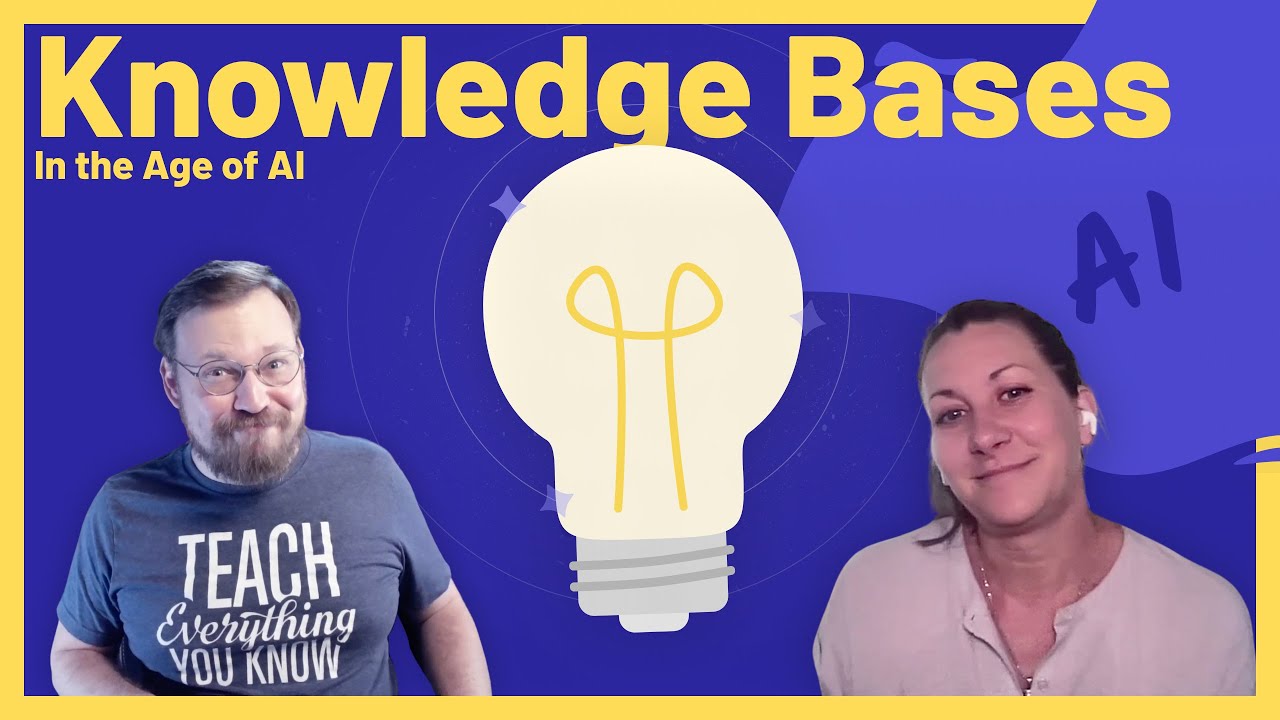
She has carried that idea beyond the support inbox. In 2015, she described how useful documentation could attract prospective customers as well as help existing ones. An answer written for someone who has already bought the product can also help someone deciding whether to buy it. Sales, marketing and service begin to share a desk.
Twenty-five hours, with a complication
The shorter working week emerged from an ordinary hiring conversation. An early prospective support colleague proposed enough well-paid hours to make KnowledgeOwl their only job. For a bootstrapped company unable to hire an entire conventional team, buying fewer hours from experienced people made financial sense. For those people, it made room for other pursuits.
Over time, 25 hours became the company’s definition of a full-time role, combined with flexible scheduling. Some colleagues preferred shorter days. Others grouped their hours into fewer days, or worked evenings and weekends. The arrangement asked the company to organize around the work rather than a single shared timetable.
Alexander’s account includes the difficulty of scheduling meetings across time zones and different working patterns. It also includes the founders’ own slower progress. In January 2024, she reported working roughly 30 to 40 hours a week, with 25 still a goal. That detail gives the policy some credibility: building a better arrangement for employees had been easier than learning to inhabit it herself.
The point reaches beyond a scheduling perk. Alexander was treating the founders’ satisfaction as a legitimate business concern alongside everyone else’s. A company designed to support good lives would be an odd achievement if its owners were permanently excluded.
“I’m an optimist.”MARYBETH ALEXANDER
Putting the kindness in writing
By 2020, Alexander was trying to turn the company’s instincts into explicit commitments. KnowledgeOwl adopted open book management and began formalizing its mission, policies and measures of progress. Internal reports acquired the name State of the Parliament, after a colleague described the team as a friendly parliament of owls. Company meetings became Parliamentary Sittings. The paperwork arrived wearing feathers.
The first public annual report recorded a more demanding exercise: the company’s initial B Impact Assessment scored 23.5. Certification required 80. The team documented policies, tracked its practices and changed its operating agreement to recognize its effects on society and the environment. Wanting to run a considerate business was a beginning; recording what it actually did required more work.
One practical expression was KO for Good. The company expanded its nonprofit discount to B Corps and other organizations with a social or environmental purpose. Eligible organizations could receive a 25 percent discount, with further reductions, including free subscriptions, available where cost remained a barrier. The approach relied on an honor system rather than making generosity an obstacle course.
The certification process also supplied a lesson in persistence. An early application failed after an impact-business-model classification was rejected. In the successful submission, the discount program was recognized as an impact business model. KnowledgeOwl became B Corp certified on December 6, 2023, with a score of 80.7. A belief had acquired policies, an assessment and a date.
An owl company votes for an eagle
Alexander’s sense of participation extends to giving. In March 2026, she announced Rainforest Trust as KnowledgeOwl’s new environmental giving recipient. Through its 1% for the Planet membership, the company commits one percent of revenue to environmental causes. Revenue matters here: the commitment is calculated before the comfort of a profit.
The team votes each month on a project to support. February’s choice involved protecting habitat for jaguars, giant anteaters and the black-and-chestnut eagle in Argentina. March’s involved pangolins and bonobos in the Congo. For colleagues scattered across a remote company, the vote supplies something concrete to decide together. An owl-themed software business had found room in its affairs for an eagle.
The same attention to individuals appears in how colleagues describe Alexander. Kate Mueller has singled out her respect for customers and employees, and the effect her good faith in people has on the work. Alexander’s public team profile lists kindness, service and problem-solving as her superpowers. Those are modestly domestic powers for someone with a goddess title.
Who gets to own the next chapter?
Alexander now lives in Bay St. Louis, Mississippi, while leading a company that began in Colorado and works remotely. She also teaches: in the fall 2025 information-architecture master class, she joined Mueller to help people organize their knowledge bases. The concerns remain close to the support desk: making information findable, helping someone make progress, answering the question in front of her.
Her larger unfinished project concerns ownership. In her tenth-anniversary reflection, she reiterated her ambition to make KnowledgeOwl employee-owned. It remains a stated goal. She wants the people doing the work to have a real stake in the result.
“I’m an optimist,” she wrote. The interesting part is the machinery she keeps attaching to that disposition: a discount someone can actually claim, hours someone can actually use, a vote someone can actually cast. Employee ownership would extend that habit into the structure of the company itself. Alexander and Grigg once bought the software they worked on. She would like the people working beside them to have an ownership story too.