Somebody had to organize the research. At a think tank during his Peace Corps service, that somebody was Sedarius Tekara Perrotta. The assignment lacked the obvious attractions of an entrepreneurial origin story. There was no garage, no dramatic unveiling, no queue of customers around the block. There was other people’s information, and the unappealing responsibility of making it usable.
He has described the work as the task others preferred to avoid. Years later, as Shelf’s co-founder and CEO, he would be selling a solution to a more elaborate version of it. The documents had multiplied. The organizations had grown. Artificial intelligence had joined the meeting. Somebody still had to decide what the system should know.
That continuity makes Perrotta an interesting figure in an industry fond of announcing fresh beginnings. His career runs through consulting, custom software, enterprise knowledge management and AI. Across those changes sits a stubbornly ordinary question: how does something one person has learned become something another person can use? The difficulty is in the journey between the two.
Before the filing system, a river
His route to that question included a considerable detour. Working as an IT consultant in Sydney, he used his earnings to travel through Southeast Asia. A stay in an Akha village in northern Laos encouraged a longer visit elsewhere. He contacted Brazil’s indigenous affairs agency, FUNAI, obtained permission and arranged to spend time with a Tucano community in the Upper Amazon.
The trip involved flying to Manaus, organizing supplies with a local contact and travelling upriver. Gifts included fishing nets and metal pots. In his later account, the visit became a lesson in perspective: office pressures looked different after living somewhere whose daily demands were so far removed from his own. He subsequently joined the Peace Corps and served in Romania.
There is a temptation to turn travel into a founder’s secret weapon, as if every boat journey contained a concealed business plan. Perrotta’s account offers something more modest and more useful. He remembered the experience when work became difficult. It gave him a point of comparison. A disappointing pitch could remain a disappointing pitch without becoming the end of the world.
An answer needs a way to travel
In Romania, his knowledge work concerned research into information and communications technology. Later projects brought him into contact with institutions including the World Bank, Harvard Business School and MIT. He built a business around custom knowledge platforms, SharePoint sites and portals. The practical appeal of software was straightforward: organizing information once was less useful if nobody could retrieve it afterwards.
By January 2010, he was president of Neuron Global. A contemporary announcement described a platform the company built for 1nService, a network of technology integrators. Members could search for other members, identify relevant capabilities and find opportunities to collaborate. Colin Kennedy, later a Shelf co-founder, appeared in the announcement as Neuron’s vice president of business development.
The detail matters because it puts a date on a recurring interest. Long before today’s conversation about AI agents, Perrotta was working on the connections between scattered people, information and decisions. The unit of value was a useful encounter: the right company finding a partner, a colleague finding an answer, an organization locating expertise it already possessed.
A search box can look deceptively democratic. Everyone gets the same small rectangle and a blinking cursor. Behind it, however, sit decisions about vocabulary, structure and relevance. Neuron’s work dealt with that backstage machinery. It also gave Perrotta and Kennedy a shared professional history before their names appeared together on Shelf’s launch announcements.
- ResearchMake a think tank’s material usable
- NetworksConnect members and expertise at Neuron
- Enterprise AIGive systems dependable business context
Librarians enter the startup story
Shelf’s own history dates its founding to 2017, with Perrotta, Kennedy and Tobias Jaeckel as co-founders. Early coverage described a product intended to gather dispersed workplace content into a place where teams could find it. Documents, web articles, PDFs and videos all belonged in the same conversation. Office knowledge rarely has the courtesy to arrive in one format.
The team consulted Harvard librarians, information architects and change management specialists while developing its approach. Its organizing sequence ran through assessing, capturing, organizing, finding and connecting. The presence of librarians is a pleasing corrective to the idea that every software problem must be solved by somebody encountering it for the first time.
Librarians have spent a long time considering the difference between possessing material and making it discoverable. Shelf brought software and AI to that distinction. Perrotta’s early explanations placed considerable weight on retrieval: a team should be able to reach what it needed without remembering precisely where somebody had put it.
For an executive selling enterprise software, this is a useful discipline. The buyer may purchase a platform, but the employee experiences a moment. A question arrives. A search begins. An answer either appears or fails to appear. All the architecture eventually meets that small test, usually while somebody else is waiting.
A colleague who finds the correct document has completed only part of the job. The next person must be able to repeat the success after a policy changes or a team moves. That is where the organizing work becomes an ongoing obligation. A useful system has to accommodate turnover, revisions and the simple fact that its users have other things to do. Perrotta’s recurring subject is the effort required to keep that obligation manageable.
The clock on the customer’s side
Contact centers gave the problem a visible clock. Perrotta’s 2019 writing concentrated on the time agents spent finding answers and the administrative effort required to maintain knowledge systems. Hiring, training and floor coaching could help, he argued, while leaving the underlying difficulty of connecting questions to answers unresolved.
He also addressed a less theatrical problem: maintenance. Information needs updating after the initial software rollout. Managers need to see which searches fail and which material people actually use. A knowledge system can look orderly on launch day and gradually become a well furnished room whose labels no longer match the cupboards.
This part of his work is revealing. The problem extends beyond the cleverness of retrieval to the reliability of the material being retrieved. Someone must notice when content becomes stale. Someone must have a way to correct it. Automating those chores was central to the case he was making before generative AI made data quality a more fashionable subject.
“My experience researching, organizing, and maintaining massive amounts of information began there.”
Perrotta, on his Peace Corps work
A large cheque for a small delay
On August 23, 2021, Shelf announced a $52.5 million Series B led by Tiger Global and Insight Partners. Existing investors participated alongside individuals including Datto founder Austin McChord and Procore founder Tooey Courtemanche. The financing connected a fairly specific operational problem to a substantial pool of capital.
Shelf reported fourfold growth over the preceding year and three years without customer churn. It also said its software reduced customer service representatives’ average answer lookup time from more than four minutes to less than 20 seconds. Those were company-reported results, attached to that announcement and that period, rather than a promise about every future deployment.
The contrast explains the attraction. A few minutes feels small when considered once. A contact center encounters the same category of delay repeatedly. Perrotta’s business concerned those repetitions: the accumulated cost of people searching for information that their employer already owned. An enterprise can spend heavily acquiring knowledge and still leave its employees waiting for it.
When the reader is a machine
Generative AI gave the old problem a new reader. In his December 2024 Eye on AI conversation, Perrotta discussed inaccurate, duplicated and outdated material inside enterprise systems. Shelf’s pitch concerned making that material observable and improving it before it shaped an AI response. A fluent answer does little to settle an argument between conflicting documents.
That distinction changes how one reads his career. The earlier work helped people navigate organizational knowledge. The newer work also prepares knowledge for software that generates answers from it. The responsibility for maintaining the underlying material remains. In fact, a system that answers quickly can make the consequences of neglected maintenance arrive quickly too.
By July 2026, Perrotta was describing Shelf’s direction in terms of agentic AI. His account emphasized modeling policies, workflows and business logic, with a reasoning layer tied to organizational context. He presented knowledge management as a foundation for systems that take action as well as return information.
The ambition extends the stakes of his original assignment. If a person reads an obsolete document, that person may question it. An automated workflow needs explicit ways to distinguish the applicable policy, the relevant context and the permitted action. Perrotta’s proposed answer puts organizational knowledge close to the center of the system’s design.
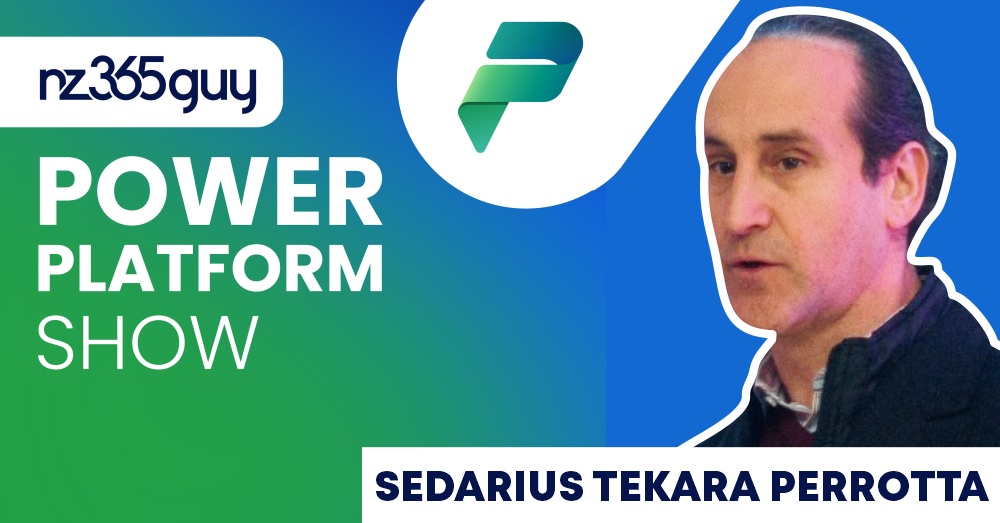
Still interested in the next bus
There is more to his public persona than enterprise diagrams. He describes travel as a lasting pleasure, with nearly 100 countries visited, and talks about outdoor pursuits including diving and mountaineering. Earlier trips could involve months of backpacking between consulting engagements. Family travel now shapes the choices. Adventure has acquired some practical scheduling requirements.
His professional life contains a similar combination of curiosity and practical instruction. A Georgetown alumnus and participant in MIT’s New Enterprise Program, he has also mentored through the Founder Institute. His November 2023 KMWorld keynote addressed the changing role of the knowledge manager in the age of generative AI. The person once assigned the unwanted organizing task had become an advocate for its importance.
Perrotta’s stated ambition at Shelf is to help people obtain better, more accurate answers. It sounds almost excessively reasonable for an AI company. Yet the reasonableness is the point. His career keeps returning to the inconvenience between having information and being able to act on it. There is always another document, another version, another question. Somebody has to make the answer worth finding.