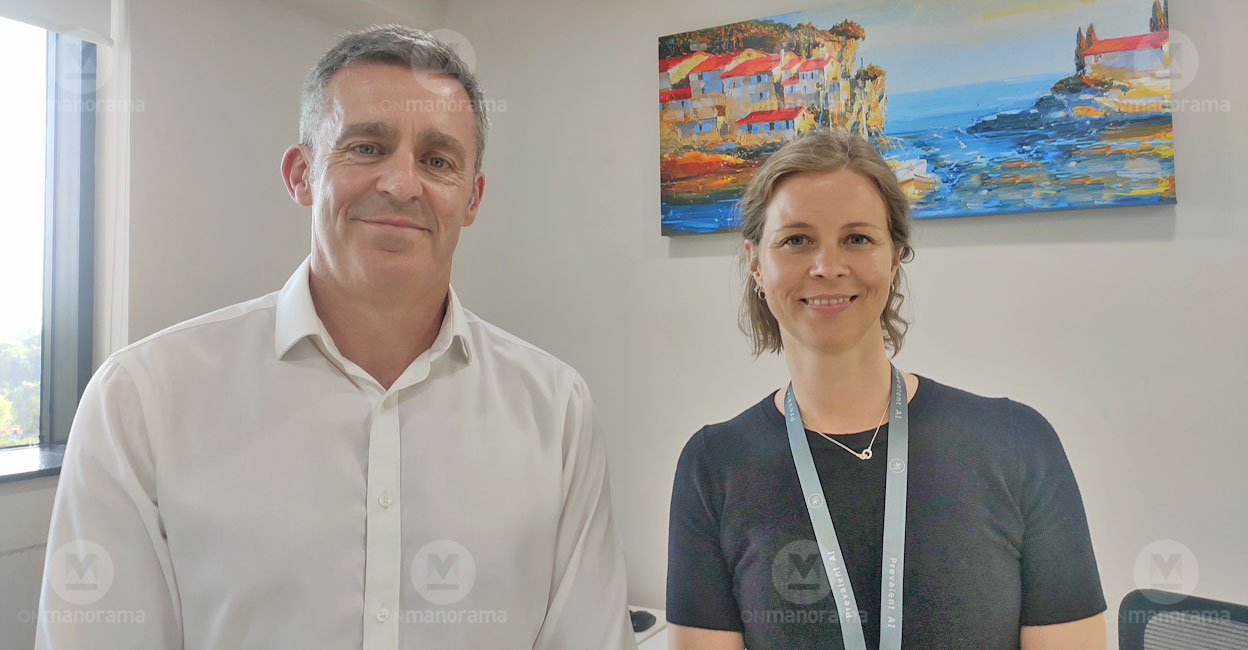
A company can own a remarkable amount of information and still struggle to answer an ordinary question. Which machines belong to it? Who can reach them? Which protections actually work? Paul Stokes has built a business around that awkward gap between having records and understanding what they mean. The awkwardness is part of the appeal: the answer may already be somewhere in the building, surrounded by software purchased to help find it.
On 19 August 2026, Prevalent AI announced a $22 million growth investment from Integrity Growth Partners. It was the company's first primary capital raise in nine years. Stokes, its co-founder and chief executive, had reached that point through a business the company describes as bootstrapped and profitable from its first customer. The cheque arrived after the customers, an order of events that gives this particular funding announcement some character.
The plan is to expand internationally, including in the United States, and take its connected-data technology into more enterprise uses. For Stokes, the subject remains recognisable even as the market vocabulary changes. Before AI agents became an executive preoccupation, he was already asking how anyone could make sound decisions when the underlying information lived in separate, contradictory accounts of the same organisation.
A career with more than one ending
Stokes came to Prevalent AI with experience at BAE Systems, Deloitte and Cognizant. His career then ran through two businesses concerned with finding meaning in difficult information: Wynyard Group, where he was co-founder and chief operating officer, and Cognevo, where he was co-founder and chief executive. Wynyard worked in security and crime analytics and reached an initial public offering in 2013.
His education ran alongside that business career. He received a New Zealand Prime Minister's Business Scholarship in 2012, and his LinkedIn profile records study at the London School of Economics from 2012 to 2014. His professional biography lists a master's degree from LSE. These are the coordinates of an executive working across commercial management and analytical technology, rather than a founder suddenly discovering security with the arrival of a fashionable acronym.
The earlier company history deserves its full punctuation. Wynyard entered administration in October 2016. Telstra subsequently bought Cognevo's business; its annual report records the acquisition on 25 November. Cognevo's technology analysed behaviour across networks for anomalies and potential threats. An IPO and an acquisition belong in Stokes's story, but so does the difficult setting of that sale. A career becomes more intelligible when the awkward chapters keep their place.
- 2013Wynyard Group
Initial public offering - 2016Cognevo
Business acquired by Telstra - 2017Prevalent AI
Company founded
Too many boxes, too little clarity
Prevalent AI was founded in 2017. Alongside Stokes were Arun Raj and a founding group that included former GCHQ director Sir Iain Lobban and Andrew France, formerly responsible for cyber defence operations at GCHQ. Stokes brought company-building experience into a team with intelligence and operational expertise. The combination mattered to the proposition: security judgement, data engineering and analytical methods had to work together.
In a 2019 interview, he explained that those disciplines were too often isolated inside organisations. He also gave a pleasantly unglamorous illustration of joined-up security: sophisticated digital protection is of limited comfort if someone can walk into the office and print the information. It is the sort of observation that makes the expensive apparatus briefly look rather embarrassed.
His writing had already taken aim at the industry's appetite for more products. An August 2018 article called “Oh, No, Not Another Security Product” described buyers confronting complicated collections of proprietary tools. He argued for interoperable platforms and more flexibility for customers. The complaint was commercial as well as technical: every extra purchase brought work for the people expected to operate it. A security product could be impressive on its own and troublesome in company.
“They have a shortage of context.”
Paul Stokes · August 2026
The board does not need a Kubernetes lesson
Stokes has a useful instinct for the distance between a specialist and the person signing the budget. In an August 2019 essay, he wondered whether a typical board member could recognise a DNS record or spell Kubernetes. The joke carried a serious point. Directors would make better security decisions if the discussion reached them in the language of business exposure, financial consequences and the organisation's appetite for risk.
He also resisted the idea that a more attractive dashboard would settle the matter. Each customer had its own operations, culture and risks; understanding those particulars required a close relationship. Information needed to stay current. A polished picture of last week's exposure could have all the authority of a board presentation and all the usefulness of yesterday's weather forecast.
His July 2019 World Economic Forum essay developed the financial argument. Security investment should be assessed against the losses it might prevent, then measured again after safeguards were introduced. In his account, continuous quantitative information gave finance and risk executives a way into the conversation. It also gave security leaders a way to explain what their spending achieved. Prevention is difficult to display in a trophy cabinet; disciplined measurement at least gives it a ledger.
A buyers’ guide in a sellers’ market
The Managed Security Forum supplied another outlet for that concern with the customer. Stokes co-founded the group and described himself as its chair in 2019. Its work included a buyers' guide, introduced in late 2018, which organised services into basic, core, advanced and complementary capabilities. The purpose was to help companies decide what to retain internally and where an outside provider might help.
The guide also drew on anonymised submissions from providers to examine the market and its skills requirements. This was practical translation work. Buyers faced companies using overlapping terms for different offerings, while providers were trying to explain where their expertise mattered. A shared vocabulary would make comparison possible. For a founder selling sophisticated analytics, helping a customer ask a less confused question was a fairly direct expression of the business idea.
Kochi belongs in the picture
The geography of Stokes's story reaches well beyond London. In May 2022, he was in Kochi discussing plans for a Security Data Science Academy at Prevalent AI's Infopark centre. The intended audience included graduates and working professionals across Kerala. The proposal connected an immediate business need with a longer view of how a local technical workforce could develop.
He described a Kerala team of more than 100 people experimenting in security data science and serving large international customers. That number belongs to 2022, rather than standing in for today's headcount. His argument for the academy was straightforward: talented technologists could learn to apply scientific methods to data, and the growing volume of information required more people who could derive meaning from it.
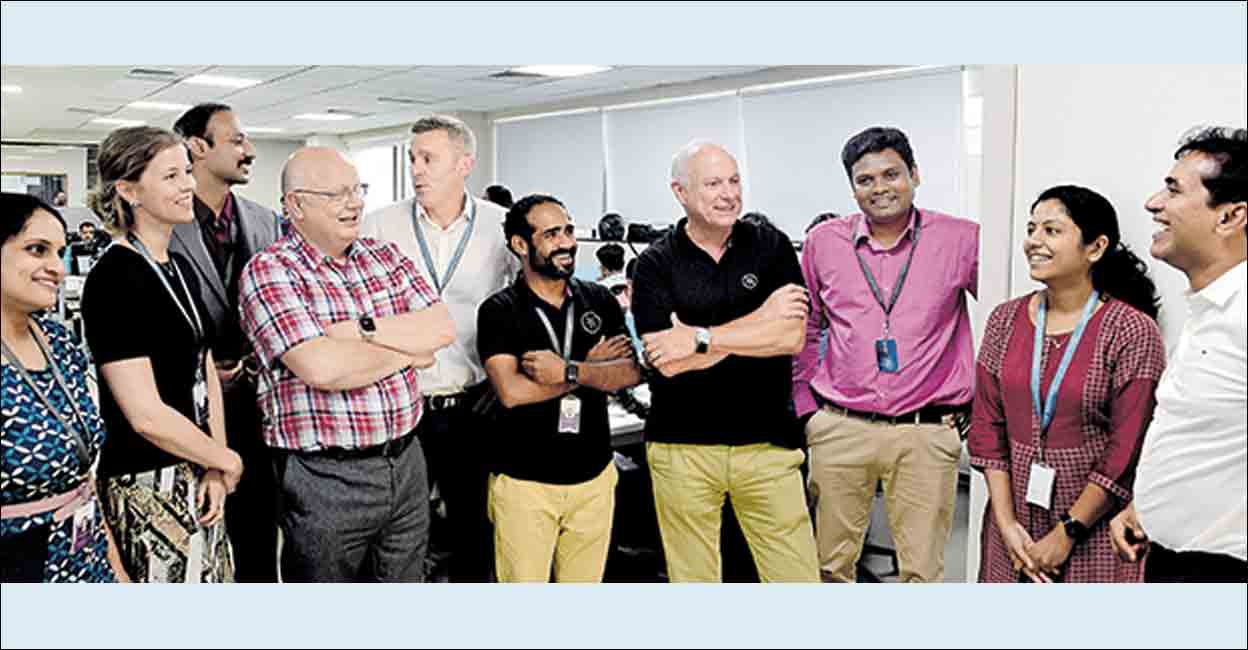
In the photographs from that visit, Stokes appears with colleagues and with HR director Sara Mottus. They add a useful human scale to a business usually described through networks and analytics. The centre and proposed academy also put substance behind the word “team”. Training people to interpret difficult information was part of the work, alongside developing the technology that would help them do it.
A graph, and the raised eyebrows
In a 2026 interview with The Stack, Stokes recalled explaining knowledge graphs to enterprise customers several years earlier. Customers would raise their eyebrows at the idea that they needed a graph. The team would work through the explanation. Now, he said, technology leaders more readily understood the need for context between raw enterprise information and the people or AI agents using it.
The anecdote captures a familiar difficulty for a technical founder: describing the machinery before the customer has a reason to care about its name. A knowledge graph can sound like homework. The practical questions are more inviting. Does an account belong to this person? Is that device covered by the expected control? How do these separate records relate to one another?
Stokes's August 2026 account describes the data fabric bringing information from many systems into a common structure, reconciling duplicate records and connecting entities in a live graph. He also identifies two early operating choices: keeping customers in control of their data through private-cloud or on-premises deployment, and building closely with their teams. The relationship continues after installation, because the environment being represented keeps changing.
One enterprise. Many versions of the truth.
The same question, a larger audience
His public work has kept returning to the limits of detection alone. In writing on risk hunting, he called for actively searching out gaps in controls and overlooked exposure before they become incidents. That position gives the larger story some continuity. Better visibility is valuable when someone can use it to intervene, assign responsibility and correct a problem. A clearer map still needs a person prepared to act on it.
The next phase brings additional people into that effort. On 2 September 2026, Prevalent AI appointed Nitin Maini as chief technology officer. Stokes said Maini's experience in scaling engineering organisations would matter as the knowledge graph expanded into areas including financial crime analysis and operational intelligence. This is a stated direction for the business, with the familiar security work continuing alongside it.
A September account of the expansion also described plans to grow the Kochi development centre and pursue the US market. The connections now run from Stokes's London base to Raj and the team in Kerala, and toward a broader set of customers overseas. The founder's job includes making that expansion work without losing the detailed understanding on which the original proposition depended.
The phrase Stokes used at the funding announcement was a “shortage of context”. It is a compact description of a problem that can hide in plain sight: a business has invested in collecting information, yet the relationships that would make it useful remain difficult to see. After years of explaining why those relationships matter, he has a larger audience willing to listen. The interesting part comes next, when the questions get asked inside a customer's working day.