Before Slite had a proper hiring process, a candidate offered to supply one. Arnaud suggested coming in to work with the team for a day. They could assess him; he could assess them. Christophe Pasquier, who was building software to help people organise their knowledge, was still collecting quite a bit of his own.
It is a small episode, and a useful introduction. Pasquier’s public account of building Slite contains plenty of product ambition, but also the less flattering details: hiring for jobs he did not yet understand, rushing decisions, assuming another employee would automatically mean more work accomplished. The company that wanted teams to write things down had to learn what was worth writing.
That question has followed him through several versions of Slite. At first, the task was to make team notes pleasant enough that people would actually use them. Today, it includes getting software to notice when a company’s explanation of itself has fallen behind events.
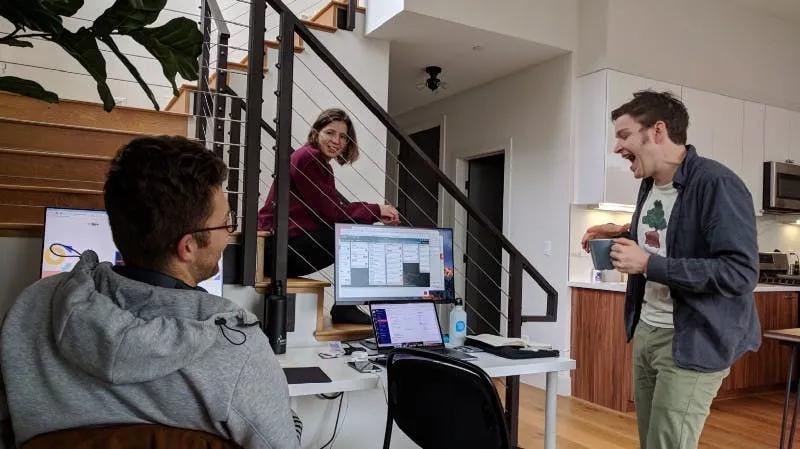
A house in Santa Clara
Pasquier describes himself as a French engineer and product person. Work on Slite began in 2016 at eFounders, the startup studio now called Hexa; the company dates its founding to 2017. His early pitch borrowed a lesson from Slack: bring the ease of a familiar consumer experience into the less forgiving world of workplace software.
Finding the right technical partner was part of that beginning. Pasquier later recalled seeing Pierre Renaudin’s résumé in the studio’s shared recruitment system. He recognised the name: he had read Renaudin’s React and Redux tutorials and remembered the care with which they explained difficult ideas. Pasquier could build prototypes, but knew the product needed engineering beyond what he could provide alone. A piece of public writing had offered him a glimpse of a future colleague’s thinking before they met. Renaudin became Slite’s CTO. It is a fitting connection in this particular company: somebody took the trouble to explain how something worked, and the explanation eventually helped bring two people together.
Slite would do for team writing something like what Slack had done for messaging. Notes, meeting records and processes would have a shared home. The pitch was brief enough to survive a conversation: a note app for teams.
In 2018, the eight-person team temporarily moved from Paris into a rented house in Santa Clara for Y Combinator. Slite had secured a $4.4 million round led by Index Ventures. The attraction of California included mentorship and an unusually receptive audience for new business software.
Then the temporary visas expired. The team returned to Paris, and Pasquier weighed the advantages of both places: American customers and investors, French engineering talent. The company’s eventual working arrangements would loosen the connection between recruiting somebody and persuading them to move to the same city.
Y Combinator
April 2020
Slite Agent
By April 2020, announcing an $11 million round led by Spark Capital, Pasquier described two ambitions that had gradually converged: making a useful productivity product and making a company people wanted to work in. Slite’s own projects increasingly began with written thinking. The product and the workplace were influencing each other.
The interview question that waited three years
One particularly durable idea arrived during a design interview. Pasquier asked Rob McMackin what unusual feature he would try if he could build just one. McMackin suggested a small video attached to a document, allowing its author thirty seconds to introduce the work.
This was 2018. McMackin lived in Seoul; Pasquier lived in Paris. The idea stayed with Pasquier even as it disappeared into the company’s store of possible projects. Three years later, it became Cover videos.
The intervening experience gave the suggestion a purpose. A written update could preserve all the useful information and still fail to convey excitement. A carefully prepared document might reach its reader without the voice or expression that would have made it easier to understand.
Pasquier’s commitment to writing left room for a talking face. He also added a qualification when retelling the interview: he would make the assessment question more focused next time. Even a successful experiment could contain a lesson about doing it differently.
“proactive, frequent, and short communication”
Christophe Pasquier’s less catchy alternative to “overcommunication”
The sandwich problem
Remote work supplied plenty of opportunities for such qualifications. When Slite discussed overcommunication, a colleague wondered whether making a sandwich required announcing it. Another worried that too much information would bury the important points. Pasquier conceded that the word itself was rather unhelpful.
What he wanted was regular, concise information about work and outcomes. Give people autonomy, and they still need to understand what the rest of the team is doing. A short update can preserve that connection without turning every action into a notification.
He treated this as a skill colleagues could practise and improve together. The point of an asynchronous company was to let people work without needing constant interaction. Keeping everyone informed required its own deliberate effort. Silence was a surprisingly poor substitute for a communications policy.
His management thinking also made space for frequent individual conversations, public appreciation and feedback about roles and expectations. By 2020, he was describing remote culture as something managers had to keep developing. Geography could change quickly; understanding one another took more attention.
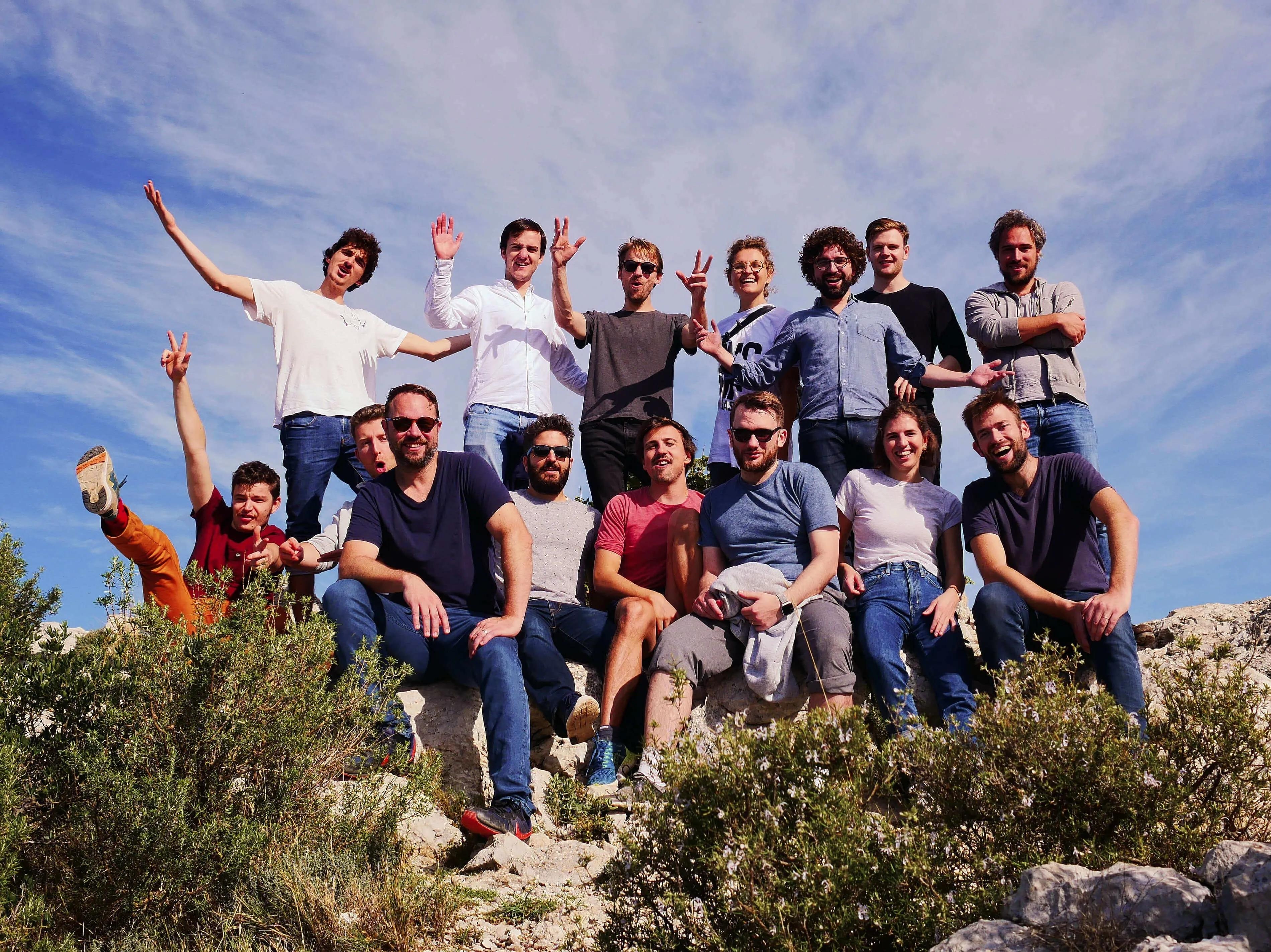
The team’s in-person gatherings acquired the name OffSlites. They also created another practical question: how should a distributed company bring people together without casually multiplying flights? Pasquier wrote about choosing closer destinations and more considered travel. Even the company retreat, that apparent reward for surviving the calendar, needed a little homework.
A hundred CTOs, none of them human
In late 2022, the product questions changed. A colleague named Jason had been explaining advances in AI at team gatherings. What had seemed material for intellectual curiosity suddenly became something Slite could put into a product. The team built prototypes in December and released the beta of Ask in January 2023.
Ask let people question their team’s documents. Pasquier approached the possibilities with a thought experiment: imagine having a hundred copies of your CTO available to work on your behalf. What would you give them to do?
There was a condition. These imaginary colleagues would have only the context you supplied. They could read, organise and help, but they could not retrieve facts nobody had given them. The fanciful premise led straight back to ordinary company housekeeping: recording useful information, finding it again, identifying what needed attention.
A conceptual reading of his product thinking, from team notes to ongoing upkeep.
The documents disagree
One of Pasquier’s explanations of AI reliability included a pleasingly awkward example from Slite itself. Its documents described different names for document statuses. Some names belonged to older versions. Others had been discussed without ever reaching the product.
A person reading the archive could be confused. An assistant reading it could be confidently confused on everybody’s behalf. Better sentence-making did little to settle which description the company actually stood behind.
Pasquier separated the difficulty into missing information, outdated information and contradictions. That distinction matters because each calls for different work. An unanswered question might need a colleague. An obsolete instruction might need an owner. Contradictory pages demand a decision about which one should govern.
His concern gave the product a less glamorous assignment than simply producing answers. It had to help people inspect and improve the material those answers depended on. The filing cabinet had acquired a voice; somebody still needed to check the files.
Writing in public, imperfectly
For all his attention to written work, Pasquier did not describe public writing as effortless. In 2024, he explained how he had made it a habit: a checklist in his everyday document, an accumulating backlog, and a commitment to posting at least twice a week.
He captured ideas on his phone, then prepared posts during quieter stretches. Product demonstrations gave him another way to communicate. He wanted people to see what his colleagues were making, without polishing away the feeling that an actual person was speaking.
That preference has a longer history. When discussing Slite’s brand, he recalled drawing three concentric circles: the team, customers and the wider community. Values inside the company could travel outward through the experience of working with it. For a founder selling shared knowledge, the way knowledge travelled from his own team was part of the work.
Who keeps the answer true?
Slite’s next complication was that useful company knowledge would always escape the knowledge base. A project changed in a project-management tool. A conversation settled something in Slack. Customer information belonged in customer systems. Asking everyone to turn every movement into a tidy document was quite a clerical ambition.
Super emerged from that difficulty, searching across the company’s tools. Pasquier’s account of its development describes repeated changes to the interface and an insistence that people should be able to examine the material behind an answer. Familiar chat alone did not resolve the problem.
In June 2026, he announced that Super would merge into Slite as Slite Agent. Its remit included monitoring documentation, proposing changes when it became outdated, and supplying context to other AI agents. The information in a knowledge base now influenced software acting on a team’s behalf, as well as colleagues looking something up.
Across those changes, Pasquier has kept returning to the same human difficulty. Somebody needs to explain what the team knows. Somebody needs to notice when that explanation stops being true. He has spent years trying to reduce the effort between those two moments. It is an ambitious destination for a note app, and a thoroughly recognisable problem for anyone who has ever followed yesterday’s instructions.