architecture
(32)
Bergmann built the connections.
A Rochester bridge engineer built a firm around local knowledge and many disciplines. Four decades later, Colliers bought the connections as much as the capabilities.

Boutique makes room for taste.
A vacation-rental platform built on a stubborn idea: the place you stay should be a reason to go. Its real product is the judgment that gets you there.
AECOM and the price of certainty
Cities hire AECOM to make complicated things work together. A $337 million construction charge shows why knowing who carries the risk matters as much as knowing how to build.

SCB knows what a building can become
An empty office tower. A campus that needs room to grow. SCB finds the next use hiding inside the brief - and tests whether it can actually be built.

Modelo gives the model a voice
Architects learned to design in three dimensions. Their clients were still looking at flat pictures. Modelo built a browser-based meeting place between the two.

SketchUp lets everyone in on the plan.
A drawing is useful only if someone else understands it. SketchUp built a business around that small problem - and followed it all the way to the construction site.

Material Bank puts the showroom in one box
A designer needs to touch the tile. A manufacturer needs to meet the designer. Material Bank built an overnight delivery business around that small, expensive gap.
DWG FastView put CAD in your pocket. Quiet costs extra.
Gstarsoft made technical drawings portable with a viewer for phones, browsers and PCs. Its next design problem was the advertising that got between people and their work.
RIOS designs the reasons people stay
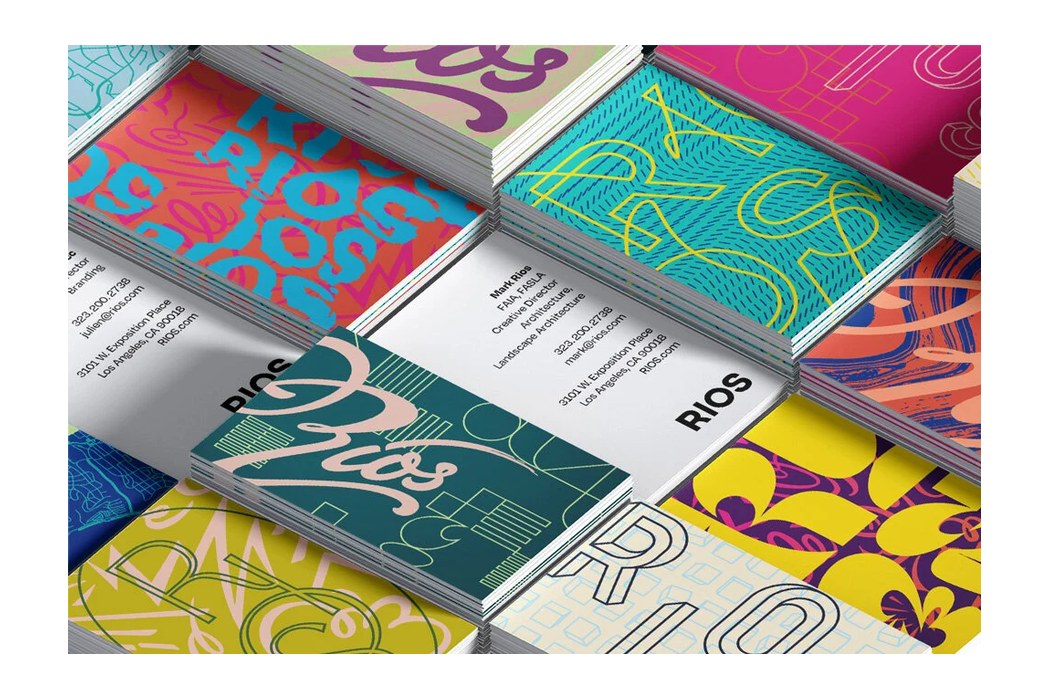
A pink chair, a loading dock, a backstage corridor: RIOS treats the overlooked parts of a place as the main event. Its work shows how architecture earns its keep after the opening photograph.
The Buildings That Bring People Back
For 67 years, a Fresno architecture firm has practiced a quiet trick: design for the people who stay, then train the people who might return.

The Publicist Who Went Back to Design School
Mary Jo Fasan spotted a peculiar gap: brilliant designers could shape a room, but often struggled to explain why it mattered. Twenty years later, Jo Communications still makes its living in that gap.
Hello PR Group knows who should hear about your chair
In the design business, a beautiful object still needs an introduction. Hello PR Group has built its practice around knowing which story to tell, who should hear it, and when to open the door.
Secret Agent knows who’s in the room
The Los Angeles communications agency grew out of design’s social world. Its founder’s work shows why getting people together can matter as much as getting a story into print.
A Design Partnership sells the story behind the room
A former interior designer built an agency around the work that happens after the photographs are taken. Today, A Design Partnership connects design firms and home brands with editors, audiences, and commercial partners.
Taylor & Company knows a building has more than one story
A desert house. A hospital. A leadership handover. Julie D. Taylor’s PR firm finds the different stories inside each, then gives editors a reason to care.
Bricolage wants to give togetherness a floor plan
A Santa Monica design workshop moves between apartment buildings, rain barrels, and homes for living alone together. The common question: what should we share, and what should we keep to ourselves?
JK & Co. knows what to keep
A storage building becomes an art gallery. A working winery becomes a place to linger. Inside the Los Angeles studio finding new uses for buildings that already have a past.
Rapt Studio knows why your office feels wrong
A noisy corridor, a rescued floorboard, an owl in a reading room. Rapt Studio uses the small details of working life to ask a bigger question: what should a company feel like from the inside?
ONE NINE Architecture Has Plans for the Leftovers
The California design firm connects office renovations, custom interiors and nonprofit work. Even its fabric scraps get another assignment.

NBS wants buildings to match the small print
A delivery of the wrong handrails shows why construction specifications matter. NBS has spent half a century turning those instructions into a business - and now it is bringing carbon data into the same conversation.

CMap and the high cost of spreadsheet hell
A growing professional services firm can win the work and still lose the margin. CMap connects the quote, the people and the invoice - and is betting its next chapter on AI that knows the business.
BASE4 - Architects, Engineers, Designers
A Boca Raton firm decided architecture should behave more like a factory than an atelier - so it wired together designers on four continents into a 24-hour workday and pointed the whole thing at one goal: build faster and cheaper.
Vobi
Vobi is a Sao Paulo-based, all-in-one project and construction management platform for small and midsize construction businesses across Latin America - contractors, remodelers, architects and engineering firms. It rolls estimating, budgeting, scheduling, a client portal, purchasing and payments (Vobi Pay) into one system, with AI agents for finance, procurement and work diaries. Backed by Y Combinator (W22) and MAR Ventures, the platform says it manages over R$5 billion in construction projects annually.

Autodesk
Autodesk is a design and make software company whose tools power the buildings, products, movies, and infrastructure of the physical world. Best known for AutoCAD, the company now spans architecture, engineering and construction (Revit, Civil 3D, Forma), product design and manufacturing (Fusion, Inventor), and media and entertainment (Maya, 3ds Max, Arnold). With roughly $6 billion in fiscal 2025 revenue and a near-fully subscription business, Autodesk's stated mission is to empower everyone, everywhere to design and make anything - increasingly with cloud platforms and AI woven into the workflow.
HOMMA Group, Inc.
HOMMA Group is a Palo Alto-based smart-home developer that builds residences with proprietary technology baked in from day one, rather than bolted on by the resident afterward. Founded in 2016 by former Sony and Rakuten executive Takeshi (Ted) Homma, the company designs the architecture, hardware, and software together so lighting, shades, thermostats, and door locks adapt to residents automatically. Its Cornerstone AI platform lets builders embed and remotely manage smart systems across multi-unit developments, with projects spanning Portland townhomes, a Boston high-rise, and a 30-unit Portland tower built with Mitsubishi's Diamond Realty Investments.
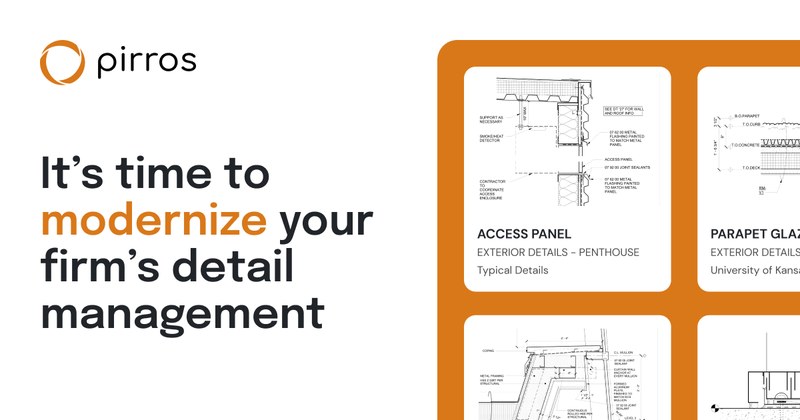
Pirros
Pirros is an AI-powered content intelligence platform for architecture and engineering firms that lets designers find, compare, reuse and standardize Revit details and families across every project, team and office. Founded by former structural engineers Ari Baranian and Peter Johann, the Los Angeles company automatically ingests a firm's historical drawing sets and makes them searchable by geometry - no manual tagging - so designers stop digging through cluttered server folders and start reusing vetted work. Often described as 'GitHub for construction,' Pirros integrates directly with Revit and Autodesk ACC/BIM 360 and serves over 300 firms and 15,000+ users.

Treasury
Treasury is a San Francisco startup building a registry and discovery system for the world's most valuable spatial assets - architecture, film sets, real estate, monuments, experiential art and nature scans. Co-founded with Zaha Hadid Architects and Spaceform, it protects and distributes the work of spatial creators in the age of spatial computing and generative AI, letting builders license premium 3D environments while letting creators fingerprint their work, track licensed use, and get paid for the 'design DNA' that trains the next generation of AI.

Tulane University
Tulane University is a private research university in New Orleans, Louisiana, founded in 1834 as the Medical College of Louisiana to fight cholera and yellow fever. Now one of 71 members of the Association of American Universities, it enrolls roughly 14,000-15,000 students across schools spanning medicine, public health and tropical medicine, law, architecture, business, science and engineering, social work and liberal arts. Known for a deep service ethic - it became the first major U.S. research university to require public service for graduation after Hurricane Katrina - Tulane pairs high-level research with a distinctive New Orleans culture.
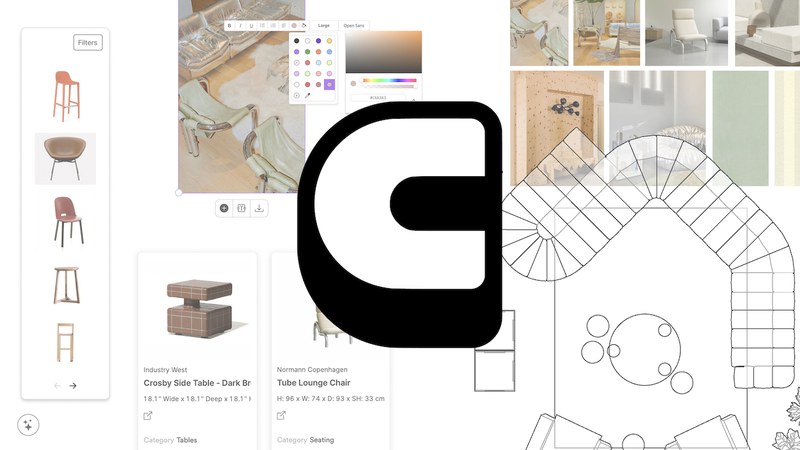
Canoa
Canoa is a browser-based design platform that gives interior designers and architects one connected workflow to collect inspiration, build data-rich mood boards, lay out furniture to scale, pull real product data, and generate FF&E schedules. Founded in 2019 by Federico Negro out of the Brooklyn Navy Yard, Canoa replaces the scattered stack of Revit, AutoCAD, Excel, and PowerPoint with a single AI-assisted canvas, while pushing the furniture industry toward circular, low-carbon practices.
Acelab | Material Hub
Acelab is a New York-based AEC technology company building an AI-powered Material Hub for the architecture and construction industry. The platform helps architects, designers, and building owners research, compare, specify, and document building products from a database of more than 250,000 products across 10,000+ brands, with native Revit integration and tools that keep a single material selection synced across every project document. Founded in 2019 by Harvard and MIT architecture graduates, Acelab is used by over 20,000 firms, including more than half of the top 100 global architecture practices.