Donald Bergmann started his company because another company was being sold. In 1980, after eighteen years at Rochester engineering firm Erdman Anthony, he heard that his employer would pass to an outside owner. He struck out on his own. Four decades later, the business carrying his name joined Colliers Engineering & Design. There is an apparent contradiction here, and a useful question: what makes an engineering firm worth keeping together when its ownership changes?
- Bergmann connected architecture, engineering and planning for public and private clients.
- Its projects joined technical design to the awkward business of making different interests fit.
- Colliers acquired the firm in 2021; the Bergmann rebrand was completed in 2023.
First, find the people.
By 2001, the founder was describing a practical limit on growth: finding enough qualified staff. Opening in another city could help recruit specialists as well as win assignments. Geography meant access to people. That detail makes the later story easier to understand. A consultancy can own computers and drawings, but its capacity goes home every evening.
Bergmann’s work ranged across buildings, transportation and environmental consulting. The common purchase was professional judgment: investigate a site, develop a workable design, coordinate disciplines and help carry the assignment through construction. A client bought a team’s time and expertise. The deliverable might be a bridge design, a building plan or a study that helped decide whether to proceed at all.
The useful work happens between disciplines.
For a municipality, the problem might begin with a flood wall. For a developer, a building. For a transport agency, a crossing. Each quickly acquires neighbors: drainage, access, environmental review, structural constraints, public expectations. Bergmann’s breadth gave clients a way to bring several of those conversations into the same commission. That is the practical attraction of a multidisciplinary design firm.
Rochester’s West River Wall illustrates the combination. The city described roughly 2,200 feet of deteriorating flood-control wall, vegetation, trail shortcomings and poor river access. Its objectives included restored flood protection, neighborhood connections and better views. Bergmann led a consultant team that included landscape architects and other engineering specialists. A twelve-foot pedestrian and bicycle trail became part of the result. Safety and public space occupied the same drawing.
“National Firm. Strong Local Connections.”Bergmann’s 2017 brand slogan
The customer list crossed familiar boundaries: municipalities, institutions, developers and corporations. Publicly documented work included the University of Rochester, Buckingham Properties and the City of Rochester. The firm’s niche sat between a specialist practice hired for one technical task and the much broader resources of a national consultancy. Its pitch combined disciplinary range with people who knew the territory.
A small site with too many moving parts.
At Erie Harbor, a missing segment of Rochester’s Genesee Riverway Trail ran through a compact private parcel beside an apartment development. Bergmann provided preliminary and final design for the trail project. The setting included a former railroad station, now Dinosaur BBQ, along with a historic raceway, a masonry arch bridge and a dam. Finding room for a walkway also meant deciding what people should still be able to see.
The harder puzzle was sequencing. Build the promenade first, and subsequent building work could damage it. Build the apartments first, and the promenade would have to be constructed within a narrow riverside strip. Run separate projects simultaneously, and responsibility for delays or damage could become contentious. These were alternatives examined by the team, rather than evidence that three approaches had already failed.
Construction breakdown presented at the 2020 Local Bridge Conference. Project costs, not Bergmann’s fees.
A public-private arrangement coordinated the work; part of the promenade was supported above the building’s garage. That physical overlap explains why coordination mattered. The published construction breakdown totaled $4.5 million, including $1.6 million for the pedestrian bridge. Those figures describe the project’s construction components. Treating them as Bergmann’s consulting price would confuse what the client built with what the designer earned.
Then the capabilities changed hands.
Bergmann had already used acquisition to extend its own practice. In April 2017, it bought Philadelphia architecture firm spg3, adding capacity and a second office in that metropolitan area. Later that year, Bergmann Associates shortened its public name to Bergmann. Its new slogan placed national reach beside local connections. Growth was becoming an exercise in preserving proximity while adding expertise.
Colliers’ rationale followed a similar pattern. Bergmann brought architectural design, building engineering and experience with large projects and design-build delivery. The November 2021 combination produced an organization of approximately 1,800 people across sixty service locations. Those were combined figures. Bergmann itself had nearly 500 employees around the transaction. The appeal was complementary capability that could be offered across a larger client network.
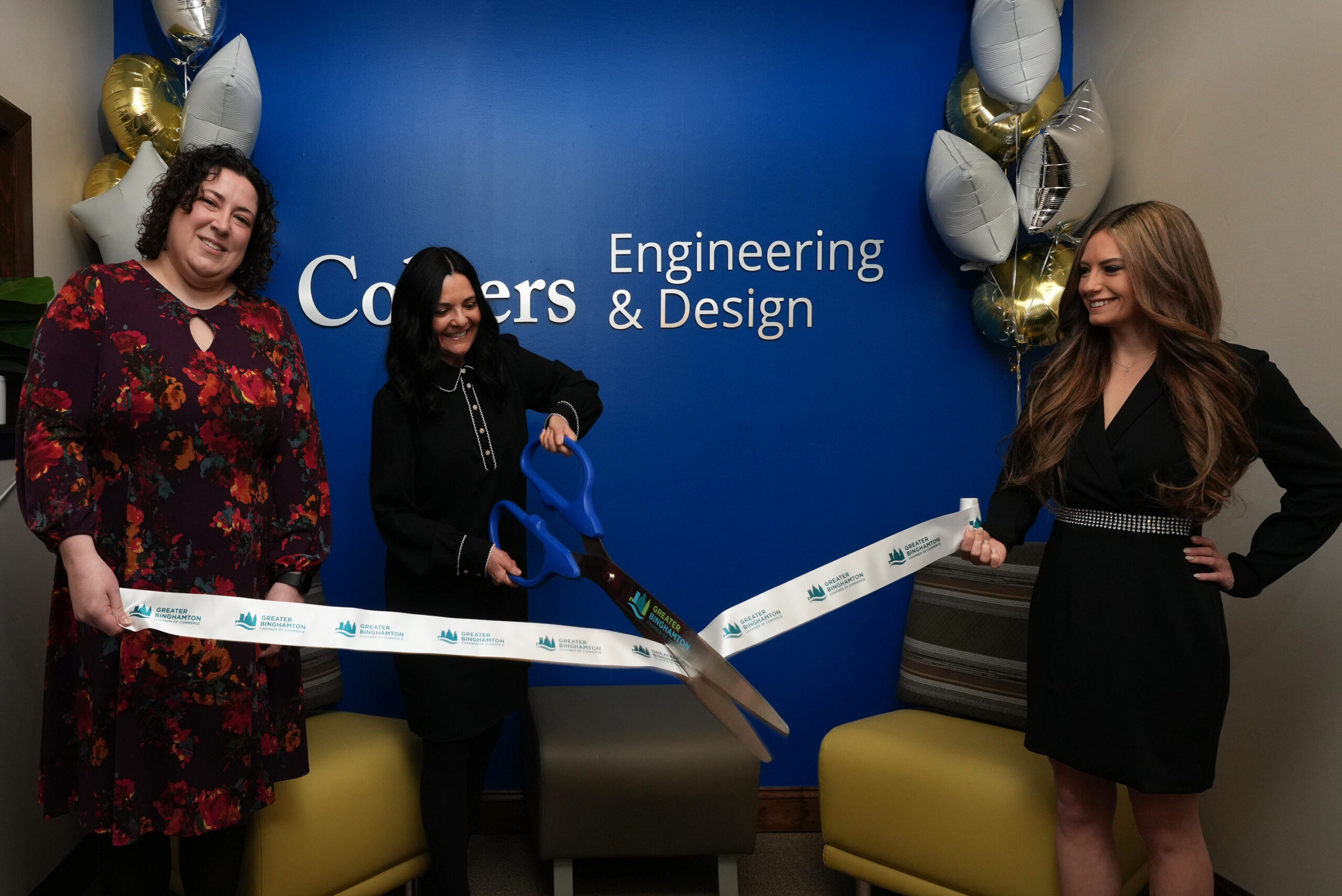
Senior leadership continued overseeing operations and retained significant shareholding in the combined business. That arrangement helps explain how a sale could be presented as continuity. The rebrand took longer than the original announcements anticipated: completion came on September 5, 2023. In February 2024, a Binghamton ribbon cutting promoted the new identity and an office with surveying, environmental and infrastructure staff.
Keep the connection close to the work.
For a client evaluating this kind of practice, the useful next step is to describe the whole assignment: the site, approvals, neighboring projects and construction constraints. Ask which disciplines will be involved and who coordinates them. Rochester selected the West River Wall team through a request for proposals. The breadth on a firm’s website becomes useful only when it translates into a defined team and a clear scope.
The transferable lesson is specific: add specialties clients need, keep experienced people close to their communities, and make responsibility for coordination explicit. A public promenade resting on a private garage demands more than neighboring names on an organization chart. Someone must own the interface. That principle travels well beyond engineering.
It also has limits. A narrow inspection may need one specialist, with little benefit from a broad service menu. A larger firm still needs clear authority, compatible contracts and knowledge of the place. Bergmann’s story suggests why those details deserve attention. The name on the office can change in a day. The relationships that make a difficult site workable take much longer.