Michael Hein once had an architecture practice whose principal, workforce and growth problem could all fit in the same chair. In the 1990s, he struggled to get beyond a one-person operation. Three decades later, he leads a company built around helping other design firms find room to grow. The difference between those two chapters is the subject of his working life: what has to surround a talented person before talent becomes a business that can keep going?
Hein is the co-founder and chief executive of The HFW Companies. He co-founded it with Daniel Forguson and Matthew Westphal. The firms joining their network bring names of their own, some with decades of local history attached. Hein has made retaining that history part of the proposition. A business can acquire a company in an afternoon of signatures. Earning the confidence accumulated under its name is a rather longer appointment.
A map before a floor plan
His education began with geography at the University of Wisconsin-Eau Claire, with an emphasis on cartography and economic development. Architecture followed at the City College of New York, then graduate study in urban planning and architecture at the City University of New York’s Graduate Center. The subjects move outward and inward: territory, building, city. Each requires an understanding of how one piece relates to the surrounding pieces.
That sequence provides a useful way to read his later career, without pretending a degree determines a destiny. HFW’s expansion involves geography, technical practice and the economics of running a firm. Hein now works with those questions at once. A prospective partner brings a place, a set of skills and an organization that has to function after the transaction closes.
He has also worked inside larger organizations. His career includes leadership roles at Jacobs and work at Bunge, as well as his own firm, MW Hein & Company. The small practice gave him a direct encounter with the limits of working alone. Larger firms showed him the value of structure and colleagues who could carry a shared plan. His eventual business would make access to that surrounding organization something smaller firms could buy into.
The job with integration in its name
In November 2017, KAI Design & Build announced Hein’s appointment as chief integration officer. He was to work with president Michael Kennedy Jr. on strategy, communication and operating systems. Kennedy described him as a collaborative leader familiar with multidisciplinary design, system integration and document coordination. The assignment put organizational connections in the job title.
It was an apt preparation. At KAI, architectural design sat alongside engineering, construction and construction management. Efficiency depended on people with different responsibilities communicating well enough to deliver a common result. The work had the familiar architectural complication that an elegant drawing is only the beginning of getting something built.
Hein’s later leadership at HFW would extend that coordination across separate businesses. The scale changed, but the administrative questions remained recognizable. Who knows what? Who needs help? Which decisions belong close to a client, and which benefit from a broader view? Those questions are less photogenic than a finished building. They nevertheless help determine whether there will be another one.
Three founders, many front doors
Hein, Westphal and Forguson set out to build HFW in 2020. Their backgrounds supplied architecture, engineering and finance to a company that would invest in existing firms. The proposed network would let businesses preserve their regional identities while gaining resources and opportunities across a national organization.
A consequential step arrived in November 2021. VSS Capital Partners announced its partnership with HFW, alongside HFW’s first member firm, Fort Lauderdale-based Miller Legg. The transaction terms were undisclosed. The plan included continuity of the member firm’s identity and operations, with owners able to retain equity. The three founders would devote their full time to HFW.
For Hein, the appeal of VSS included acquisition experience and familiarity with smaller businesses. Miller Legg president Mike Kroll welcomed access to the HFW team’s knowledge and opportunities to expand. These were complementary expectations: capital and transaction experience at one level; professional experience, clients and an established business at another. Getting them to reinforce each other became the founders’ assignment.
What a local name carries
Hein calls HFW’s approach a house of brands. The description sounds almost domestic, which is helpful: the occupants arrive with possessions worth keeping. Partner firms have their own client relationships, technical specialties and reputations. HFW offers shared resources and access to colleagues elsewhere while those firms continue building their names.
Recruiting, human resources, employee benefits, business development and work sharing are among the practical benefits described in the model. None requires a client to forget the firm it already trusts. In principle, a local team gets a wider range of support while maintaining the relationship that brought the work through its door.
The distinction matters to the person considering an ownership transition. A firm’s name can carry years of promises kept. The attraction of Hein’s proposition is that those years remain usable. Its daily test is whether shared services actually help the people doing the work. Keeping the sign is straightforward; making the organization behind it more capable takes continued attention.
Partner identities remain part of the model. Resources connect across the network.
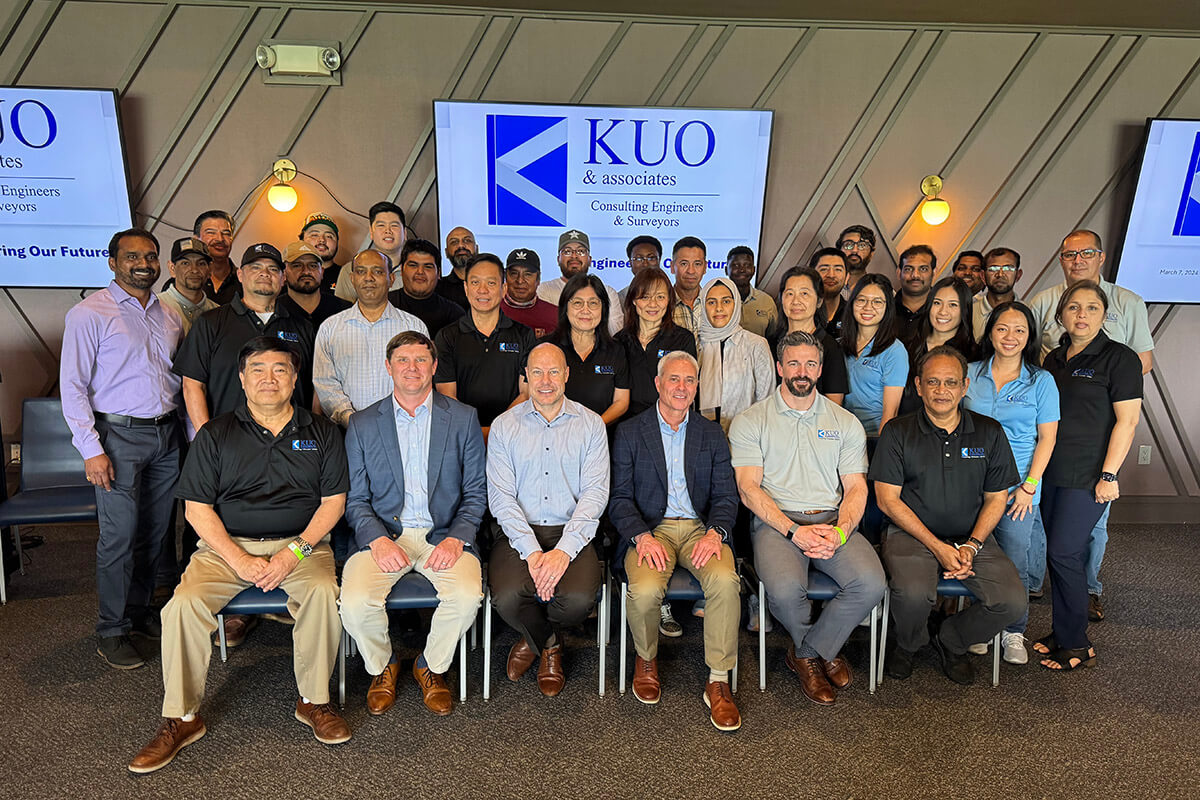
KUO illustrates the appeal. The Houston engineering and surveying firm had served Southeast Texas since 1985 when it became HFW’s eighth partner in March 2024. Its work covered water resources, transportation, site development and surveying. President Shaheen Chowdhury had spent 31 years there. He wanted additional support for a company that already had experience and client relationships.
Hein’s interest was similarly specific: Houston’s infrastructure needs and KUO’s established position. The partnership paired a regional practice with a larger pool of expertise. There is nothing abstract about the geography in that calculation. Water, roads and development happen in particular places, where clients need professionals who understand the ground beneath the plans.
The work keeps its authors
The network’s architectural work also makes the point. In 2023, INVISION won an AIA-Central States Merit Award for turning the upper floors of a historic John Deere factory building in Waterloo into Lincoln Savings Bank’s headquarters. It also received a Citation Award for MidAmerican Energy’s training center. GastingerWalker, working with Gensler, received a Merit Award for Woolsey Hall at Wichita State University.
Those achievements belong to the project teams. Hein’s role was to celebrate member firms whose design work was earning recognition. A profile of a chief executive can too easily leave the impression that every drawing passed through his hands. Here the relevant achievement is building an organization in which separate teams can continue doing work under their own names.

In May 2025, INVISION’s expansion brought Atlanta-based Macgregor Associates Architects into the picture. The firm’s industrial expertise included distribution facilities, warehouses and data centers. It would operate as Macgregor Associates Architects/An INVISION Studio. HFW helped INVISION with acquisition targets, due diligence and other resources. The support could flow through a partner firm as that firm pursued an expansion of its own.
A bigger network needs more than a bigger number
Hein has added people to make the shared organization function. HFW hired its first in-house talent acquisition business partner in 2024, Hortencia Williamson, to support recruiting across the network. In 2025, it added dedicated information technology and communications directors. Those appointments addressed ordinary necessities of growth: finding colleagues, maintaining systems and making sure people know what is happening.
January 2026 brought a further division of responsibilities. Westphal moved from chief operating officer to chief growth officer, with a focus on acquisitions and business development. Steven Summers became chief operating officer. Michael Desrochers took responsibility for Project Excellence & Delivery as vice president, while Forguson continued as chief financial officer. Hein remained chief executive.
The changes made growth and delivery distinct leadership assignments. A new partner creates opportunity, along with more work coordinating the organization. Summers’ remit included consistent operations and shared reporting tools. For a network selling the benefits of collaboration, those mechanisms matter: colleagues need dependable ways to turn an available capability into a delivered project.
Annual ranking positions. Longer bars show an improvement in rank, not revenue growth.
The public numbers trace the expansion. HFW entered Engineering News-Record’s Top 500 at No. 281 in 2023, reached No. 242 in 2024, then No. 203 in 2025. In May 2026, the company announced No. 169 and combined prior-year revenue of $117.4 million. These are network figures. They give a measure of the organization Hein and his colleagues have assembled, rather than a measure of any one person’s design output.
The office is where the colleagues are
HFW established its headquarters in Dallas in 2026, closer to existing Texas operations. Hein explained that corporate leadership would remain distributed across several states. His own base is Nashville. The headquarters move followed the network’s business geography while leaving its dispersed way of working intact.
That arrangement suits a chief executive whose stated problem-solving approach begins by going to see the work. His biography describes asking why an issue needs solving, then establishing the desired outcome. The questions are simple enough to sound obvious. They become more useful when asked before an organization has spent weeks perfecting a solution to the wrong problem.
“Every problem is large enough to be seen and small enough to be solved.”
Michael Hein, describing the moment to act
Away from work, Hein rides with United by Design, a cycling club bringing together architects, designers, engineers and friends. There is a pleasingly literal version of professional collaboration here: people from the design community spending time together outside an office. The group’s summer miles also prepare its riders for charitable events in the fall.
The distance between a solo architecture practice and a national network can look enormous on an organization chart. Hein’s account puts a more ordinary lesson underneath it: people need a plan, resources and enough trust to work together. His present job is to make that combination available to firms that already know their craft. An architect who once struggled to expand his own practice is now attending to the conditions that might let somebody else expand theirs.