accounts-payable
(32)
The Back Office Has Too Many Front Doors
Series wants a finance team to stop acting as the human bridge between banks, payroll, bills and contracts. Its answer is a menu of connected software, with the identity of each business entity at the center.
The Fine Print Behind PayEm's $247 Million Headline
PayEm set out to turn every company purchase into a controlled, traceable decision. Its journey from expense-report frustration to a $500,000 acquisition is also a lesson in reading fintech's biggest numbers carefully.

Tungsten Network and the art of getting an invoice accepted
The London-born invoice network tackles a stubborn business problem: getting different companies’ accounting systems to understand each other. Its history shows why persuading suppliers matters as much as moving data.

ApprovalMax puts a checkpoint before the money leaves
The accounting software knows what you spent. ApprovalMax tackles who agreed to it - turning invoice chases, purchase orders and payment approvals into a record a finance team can actually follow.

Modulr wants to make payday boring
Behind the payroll run, the used-car sale and the supplier invoice sits a surprisingly complicated money journey. Modulr is building a business by taking the manual work out of it.
B2BE makes the paperwork move. The hard part is getting the rules right.
Orders arrive as PDFs. Suppliers want different formats. Finance wants to get paid. B2BE has built a business in the gaps between those demands - and its customer stories show why automation starts before the software.

The $800 Million Bet on Making the Invoice Disappear
Thomson Reuters bought Pagero for roughly $800 million because Europe’s invoice is becoming a live tax report. The prize is not prettier paperwork - it is a network that makes the paperwork vanish into the workflow.
Webexpenses Wants the Receipt to Disappear Before Finance Has to Chase It
The Witney software company has spent 25 years turning the office's least-loved ritual into a controlled flow of data. Its bet is simple: catch the receipt, policy breach and coding error while the purchase is still fresh - not during month-end archaeology.
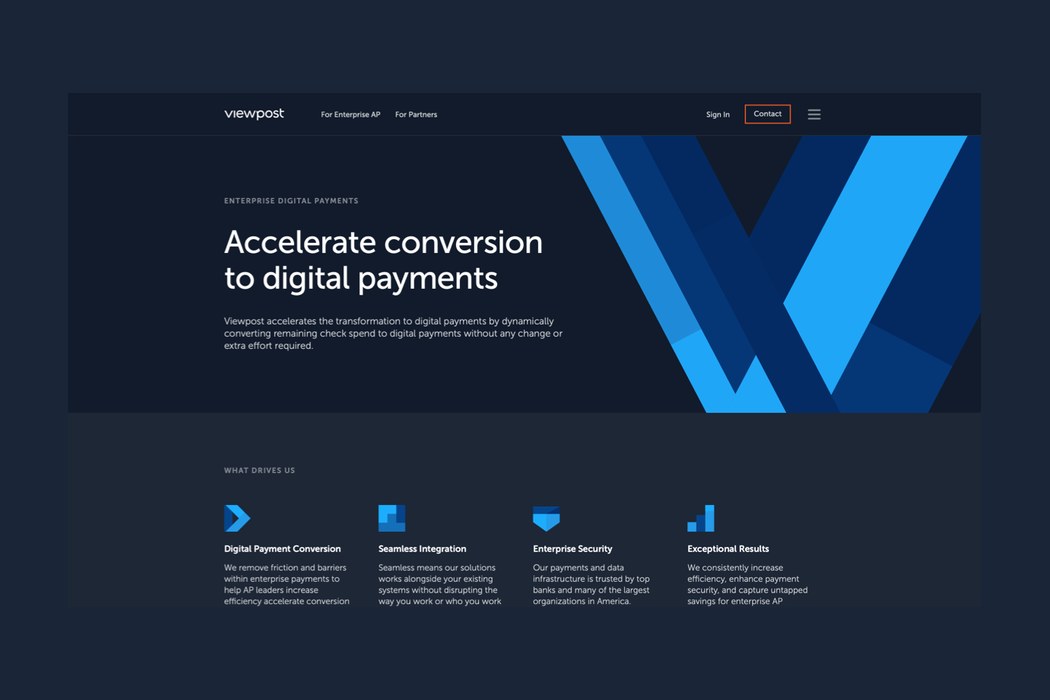
Viewpost Found a Business in the Checks Everyone Else Gave Up On
Most payment companies want to replace the plumbing. Viewpost built its second act around the opposite promise: send the same check file, keep the same partners, and let it hunt for digital payments in the stubborn remainder.

The $10 Trillion Receipt: How Coupa Is Turning Corporate Spend Into an AI Advantage
Coupa spent 20 years persuading companies to put every purchase through one system. Now it is betting that the resulting data - roughly $10 trillion of it - can turn procurement from a back-office checkpoint into an autonomous operating layer.

BILL Put the Back Office on Autopilot - Then Turned It Into a $371 Billion Money Highway
Small businesses came for fewer checks and cleaner approvals. BILL stayed to build the payment rails - a network moving more than 1 percent of U.S. GDP while quietly turning accounting chores into transaction revenue.
Priority Commerce Bought a Bankrupt Payments Darling - Then Turned It Into a Cash-Flow Machine
The Georgia fintech started with card processing, paid roughly $37 million for Plastiq after its Chapter 11 filing, and stitched merchant services, payables and treasury into one engine. The bet is simple: the company that sees the whole cash cycle gets more ways to earn.
The Expense Report That Refused to Die: How Concur Turned an $8 Million Near-Miss Into SAP’s $8.3 Billion Cloud Bet
Concur began with floppy disks and a universal workplace nuisance. Three pivots, one near-death cloud bet and a record SAP acquisition later, it is trying to make the expense report disappear altogether.
Oversight Wants to Audit Every Dollar - Before the Weird Ones Get Away
Most finance teams still inspect a sliver of company spend after the fact. Oversight sells a different bargain: watch every transaction, find the odd ones early, and let human auditors spend their time on what actually looks wrong.
The $10 Trillion Supplier Ledger: How Apex Analytix Turned Payment Mistakes Into a Risk Platform
A 1988 recovery-audit shop now watches the supplier records behind more than $10 trillion in annual spend. Its real product is not a dashboard - it is the moment a company stops trusting bad data by default.
Mohawk Medbuy Built the Hospital Supply Chain Nobody Notices - Until a Drug Goes Missing
Hundreds of hospitals pool their purchasing power through one Burlington organization. The clever part is no longer just negotiating a lower price - it is turning invoices, shortages and clinical judgment into shared infrastructure.

The Back Office That Decided Spreadsheets Were the Enemy
Alek Koenig left Affirm to build the financial plumbing for the soda, skincare and snack brands blowing up your Instagram feed. The pitch is boring on purpose: stop reconciling five systems by hand.
Quadient
A century-old maker of postage meters quietly turned itself into a software company. Here is how Quadient bet its future on the mail nobody thinks about - the bills, statements and packages that decide whether a customer stays.

Cardda
Cardda is a Chilean fintech (YC W22) building all-in-one spend management for Latin American businesses. It combines virtual and physical corporate cards, automated local and international transfers, reimbursements, and accounts payable in one dashboard, plus a payments API for mass payouts. It plugs into Chile's SII tax service and ERPs like SAP, Oracle, Defontana and Nubox, giving finance teams real-time control over company spending.
Cedalio
Cedalio is an AI agent platform for the office of the CFO that automates accounts payable, procurement, and utility-bill processing. Its specialized agents read invoices and bills from email, portals, and drives using vision models, run 3-way matching against purchase orders and receipts, flag duplicates and anomalies, and handle LATAM tax compliance before data reaches the ERP. Founded by ex-Wolox engineers and backed by Y Combinator (S23), the company began as a blockchain-verifiable database and evolved through sustainability data into finance automation, keeping auditability as its throughline.

Peakflo
Peakflo is a Singapore-founded, Y Combinator-backed (W22) finance automation platform that puts B2B accounts receivable and accounts payable on autopilot. It connects to accounting systems and ERPs to automate invoice collections, bill payments, expense reimbursements and reconciliation, helping finance teams get paid faster, cut vendor payment time and reclaim thousands of hours a month. Positioned as the AI-native alternative to legacy AP/AR tools for the mid-market and Southeast Asia.

Weel
Weel (formerly DiviPay) is a Sydney-based fintech that gives Australian and New Zealand finance teams an all-in-one corporate card and spend management platform. It combines virtual and physical Visa cards, budget controls, approval workflows, accounts payable automation and AI-powered receipt and invoice capture so businesses can track every expense - from a coffee to a large invoice - in real time and sync it straight to their accounting system.
Docyt
Docyt is a Santa Clara, California AI company that automates accounting and bookkeeping for small and mid-sized businesses, accounting firms, and multi-location operators. Its platform captures documents, reconciles the general ledger continuously, categorizes transactions, and produces real-time financial reports, layering on top of QuickBooks rather than replacing it. In 2025 the company launched HpAI (High Precision Accounting Intelligence), an accounting-specific AI engine trained on 128 billion accounting data points, with an initial vertical focus on hospitality and hotels. Founded in 2016 by Sid Saxena and Sugam Pandey, Docyt has raised roughly $27.2M to date.

Ascend
Ascend is a San Francisco-based financial operations platform purpose-built for the insurance industry. It automates the money workflows brokers, agencies, wholesalers, MGAs and carriers deal with every day - billing and invoicing, premium collection and financing, cash application, commission reconciliation and carrier payables - so businesses close their books faster and cut manual accounting work. Founded in 2021 by Andrew Wynn and Praveen Chekuri, the company is trusted by more than 4,000 insurance businesses, including over half of the 50 largest brokers in the US, and in 2026 agreed to merge with premium finance firm Honor Capital to form what the companies describe as insurance's first fully vertically integrated, AI-powered financial operations platform.

Auditoria.AI
Auditoria.AI is a Santa Clara-based enterprise software company that builds agentic AI agents for corporate finance teams, automating accounts payable and accounts receivable workflows across major ERP systems. Its SmartBots act as digital teammates that digitize invoices, chase collections, answer vendor and customer inquiries, and surface real-time cash intelligence - all governed by company policies and auditable at every step. Founded in 2019 by serial entrepreneur Rohit Gupta, the company processes more than $9B in invoicing and $2.4B in collections annually and raised a $38M Series B in early 2025.

Plooto
Plooto is a Toronto-based fintech that automates accounts payable and accounts receivable for small and medium-sized businesses and the accounting firms that serve them. It unifies invoice capture, approval workflows, domestic and international payments, and two-way reconciliation with QuickBooks, Xero, and NetSuite - giving finance teams one place to control money moving in and out. More than 10,000 organizations across North America use the platform.

Routable
Routable is a San Francisco fintech that automates the unglamorous plumbing of business payments - accounts payable, mass payouts, and vendor onboarding. Founded in 2017 by Omri Mor and Tom Harel and backed by Y Combinator and the Altman brothers, its cloud-native platform captures invoices with AI-powered OCR, runs approval and compliance workflows, handles tax forms, and pushes money out via ACH, real-time rails, and cross-border methods while syncing back to accounting systems.

Ramp
Ramp is a finance operations platform that combines corporate cards, expense management, bill pay, procurement, travel, treasury and accounting automation into one system. Built to save businesses time and money, it uses AI to cut manual finance work, enforce spend controls, and surface savings. Founded in 2019 by Harvard friends Eric Glyman, Karim Atiyeh and Gene Lee, Ramp serves 70,000+ organizations and reached a $44B valuation in June 2026.

Order.co
Order.co is a New York-based AI-powered spend efficiency platform that consolidates business purchasing, approvals, payments, and reporting into one system. Founded in 2016 as Negotiatus and rebranded to Order in 2022, it helps mid-market and enterprise companies cut costs through AI-driven sourcing, a 17,000+ vendor network, and accounts payable automation, overseeing more than half a billion dollars in annualized spend for customers like WeWork, SoulCycle, and Hugo Boss.

Nanonets
Nanonets is a San Francisco-based AI company that turns messy, unstructured documents - invoices, receipts, contracts, claims - into clean, structured data that flows directly into systems like SAP and Salesforce. Founded in 2017 by Sarthak Jain and Prathamesh Juvatkar, the company builds OCR and deep-learning agents that automate the dull back-office work nobody wants to do.