spend-management
(43)
ApprovalMax puts a checkpoint before the money leaves
The accounting software knows what you spent. ApprovalMax tackles who agreed to it - turning invoice chases, purchase orders and payment approvals into a record a finance team can actually follow.

Gatekeeper Wants Your Contracts to Stop Renewing Themselves
The vendor-management company connects contracts, supplier risk and spending in one place. Its most persuasive pitch is the money and hours customers say they recovered from work nobody wanted to own.
Webexpenses Wants the Receipt to Disappear Before Finance Has to Chase It
The Witney software company has spent 25 years turning the office's least-loved ritual into a controlled flow of data. Its bet is simple: catch the receipt, policy breach and coding error while the purchase is still fresh - not during month-end archaeology.

The $10 Trillion Receipt: How Coupa Is Turning Corporate Spend Into an AI Advantage
Coupa spent 20 years persuading companies to put every purchase through one system. Now it is betting that the resulting data - roughly $10 trillion of it - can turn procurement from a back-office checkpoint into an autonomous operating layer.

Fairmarkit Found Billions Hiding in the Purchases Nobody Wanted to Touch
Fairmarkit started with the corporate purchases too small and tedious for anyone to love. Now its AI agents run sourcing work from intake to award - and customers say the bigger prize is not merely savings, but time.

BILL Put the Back Office on Autopilot - Then Turned It Into a $371 Billion Money Highway
Small businesses came for fewer checks and cleaner approvals. BILL stayed to build the payment rails - a network moving more than 1 percent of U.S. GDP while quietly turning accounting chores into transaction revenue.
The Expense Report That Refused to Die: How Concur Turned an $8 Million Near-Miss Into SAP’s $8.3 Billion Cloud Bet
Concur began with floppy disks and a universal workplace nuisance. Three pivots, one near-death cloud bet and a record SAP acquisition later, it is trying to make the expense report disappear altogether.
Rippling Wants One Employee Record to Run the Whole Company
The $16.8 billion software company started with onboarding and kept going - into payroll, laptops, app access, corporate cards, compliance, and AI. The wager is simple: if worker data is clean, the back office can finally stop copying and pasting.
The $1 Trillion Procurement Bet: Zycus Wants AI to Finish the Job, Not Just File the Form
Zycus spent more than two decades building the plumbing of corporate purchasing. Now it is betting that procurement's next interface is a sentence in Teams - and its next worker is an AI agent with guardrails.
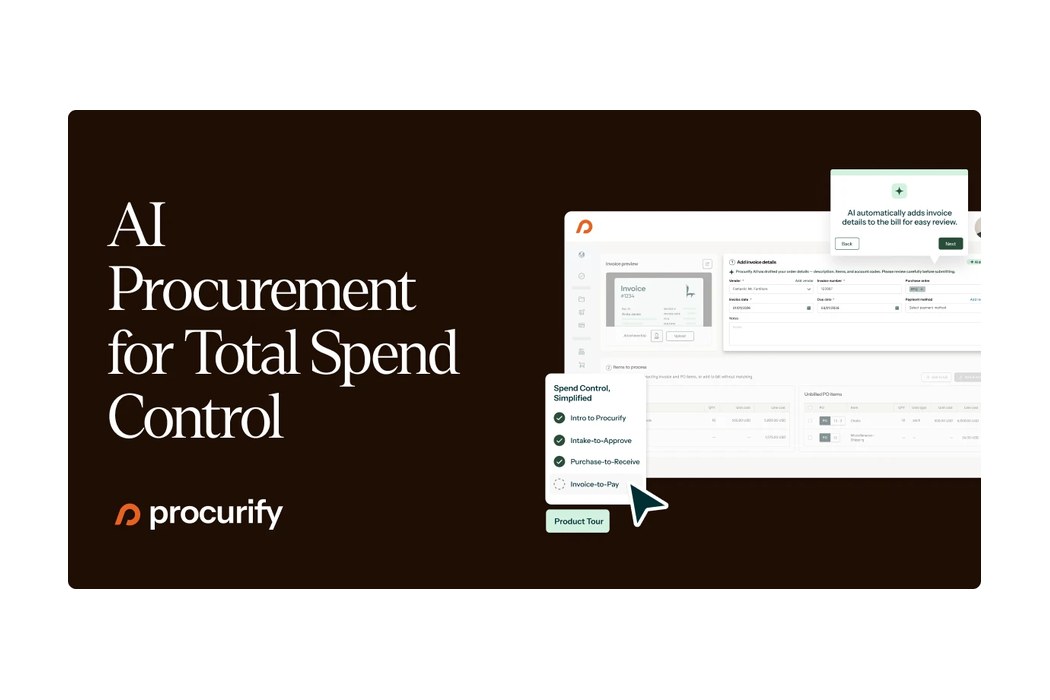
Procurify Wants to Catch Every Bad Purchase Before the Money Moves
The Vancouver company found a valuable gap between spreadsheets and enterprise procurement suites. Now it is betting that a decade of customer spend context can turn AI from a chatty assistant into a careful operator.

Torpago Quit Chasing Ramp - and Turned the Banks Into Customers
Brent Jackson built a credible corporate-card challenger, then decided he was fighting in the wrong arena. Torpago's sharper bet is to give community banks the software, controls and operational muscle to run modern card programs under their own names.
Corpay
The company once known for fuel cards now sits inside invoices, hotel bookings, foreign-exchange trades and millions of everyday business purchases. Its next act is a deliberate turn toward corporate payments - with AI, APIs and new settlement rails layered onto an unusually physical financial network.
AppZen
AppZen built its business around an unglamorous but expensive corporate blind spot: the receipts, invoices and card charges that finance teams cannot inspect one by one. Now its AI is moving from flagging suspicious spend to resolving the work itself - while leaving the company’s existing finance stack in place.

Borong
The Procurement Platform Built for Enterprises and Suppliers Across Malaysia

Bayzat
Reduce HR admin time, run payroll in minutes, streamline all your payments, and deliver world-class employee experiences - unified on one platform hyperlocalised for the GCC.

Cardda
Cardda is a Chilean fintech (YC W22) building all-in-one spend management for Latin American businesses. It combines virtual and physical corporate cards, automated local and international transfers, reimbursements, and accounts payable in one dashboard, plus a payments API for mass payouts. It plugs into Chile's SII tax service and ERPs like SAP, Oracle, Defontana and Nubox, giving finance teams real-time control over company spending.
Jisr | جسر
Jisr (جسر, Arabic for 'bridge') is a Riyadh-based HR and finance software company building a cloud platform that unifies HR, payroll, talent and spend for businesses in Saudi Arabia and the wider MENA region. Founded in 2016-2017 as Saudi Arabia's Vision 2030 got underway, Jisr localizes its product deeply - integrating directly with government portals like GOSI, Mudad and Muqeem so companies can run compliant payroll and workforce operations. In October 2023 it raised a $30 million Series A led by Merak Capital, reported as the largest Series A for a SaaS company in the Middle East. The platform is used by thousands of organizations processing billions of riyals in payroll.

Mbiz
Mbiz is an Indonesian business-to-business e-procurement platform, founded in 2015 by the Lippo Group, that digitizes how companies and government institutions buy goods and services. It connects enterprise buyers with a network of certified vendors across categories such as office supplies, IT equipment, electronics and services, while bundling free e-procurement tools including online approval, e-tendering, e-invoicing and inventory tracking. Its sister platform, Mbizmarket, extends the same total-procurement approach to micro, small and medium enterprises.
penny.
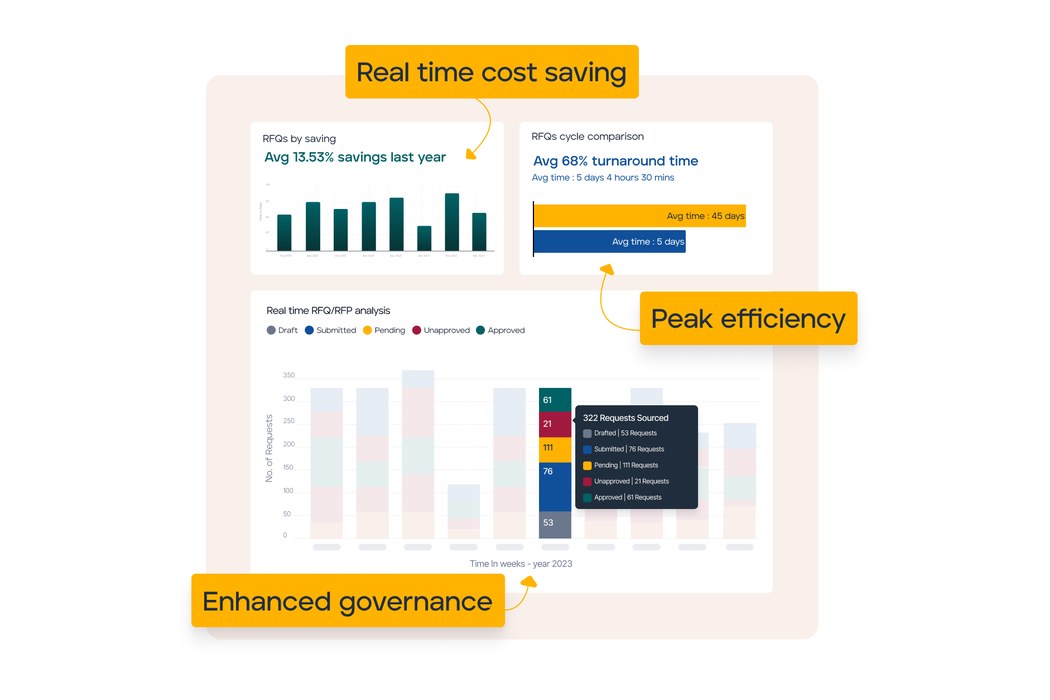
penny. is a Saudi-based B2B SaaS company that digitizes the full source-to-pay procurement cycle on one cloud platform. It combines e-sourcing, RFQs, purchase orders, supplier management, spend analytics and AI-driven automation so enterprises can cut costs, tighten governance and speed up buying. The modular, customizable system is used by companies across 75+ countries and is layered with AI tools like the Bidly.ai sourcing assistant to make procurement faster and more transparent.

RemotePass
RemotePass is a global employment and payroll platform that helps companies onboard, manage, and pay distributed teams across more than 150 countries. It combines Employer of Record (EOR) services, contractor management, and compliance with an embedded fintech layer that gives workers USD accounts, global cards, and health insurance. Founded in the UAE in 2021 and dual-headquartered in Boston and Abu Dhabi, the company has facilitated over $800 million in cross-border payroll for more than 35,000 workers.

Weel
Weel (formerly DiviPay) is a Sydney-based fintech that gives Australian and New Zealand finance teams an all-in-one corporate card and spend management platform. It combines virtual and physical Visa cards, budget controls, approval workflows, accounts payable automation and AI-powered receipt and invoice capture so businesses can track every expense - from a coffee to a large invoice - in real time and sync it straight to their accounting system.

Cerebri AI
Cerebri AI is an Austin-based data engineering and artificial intelligence company that builds purpose-built AI agents for corporate travel, expense (T&E), and indirect procurement. Founded in 2016 by Jean Belanger and Steve Harter, the company originally pioneered a customer-experience metric called Cerebri Values before pivoting to become a leader in AI-powered analytics for the $1.5 trillion corporate travel market. Its AIQ Data Foundry unifies fragmented TMC, corporate card, expense, and HR/ERP data into a finance-grade foundation, on top of which its CAI Agents - a 'digital employee' workforce - automate hotel RFPs, air contract compliance, trip cost reconciliation, and ESG reporting while measuring ROI on every action.

Cledara
Cledara is a software management and spend platform that helps growing companies discover, buy, manage and cancel their SaaS subscriptions from one place. By pairing virtual cards with a system of record for every application, Cledara gives finance and IT teams real-time visibility into software costs and usage, automates invoice collection and accounting, and enforces approval workflows. Founded in 2018 by Cristina Vila Vives and Brad van Leeuwen, it serves 1,000+ customers across 32 countries.

Exponent
Exponent is a New York-based fintech building a financial operating system for America's franchise operators. It combines expansion and acquisition lending, a franchise-focused corporate charge card, and an AI-powered accounting suite so multi-unit operators - the people running dozens of Burger Kings, Dunkins, or Wendy's - can get capital faster and see real-time financials without waiting for month-end reports. Founded in 2023 and led by former Visa and Stripe executive Sohel Roopani, Exponent serves 100+ operators representing over 10,000 locations and raised $40M in equity and credit in 2026.

Omnea
Omnea is an AI-native procurement orchestration platform that turns the slow, fragmented process of requesting, vetting, buying and renewing suppliers into a single, governed workflow. Founded in 2022 by former Tessian executives Ben Freeman and Ben Allen, the London- and New York-based company gives employees one 'front door' to make purchase requests in natural language, then automatically routes those requests to the right people and systems while tracking spend, risk and renewals. It serves enterprises including Spotify, Wise, MongoDB, Albertsons and Adecco, and has raised over $75M from Insight Partners, Khosla Ventures, Accel and others.

Pliant
Pliant is a Berlin-based B2B fintech that turns corporate payments into programmable infrastructure. Its API-first platform lets companies issue physical and virtual credit cards, automate spend controls and receipt handling, and plug card data straight into accounting systems like DATEV and NetSuite. Through its cards-as-a-service model, banks and software platforms can launch their own branded card programs. Founded in 2020 by Malte Rau and Fabian Terner, Pliant runs on the Visa network across 30-plus countries, serves more than 3,500 businesses, and raised a $40M Series B in 2025 to expand into the United States.
Procol
Procol is an AI-powered procurement platform that automates the full source-to-pay lifecycle - intake, strategic sourcing, eAuctions, supplier management, and spend analytics - for enterprise procurement and finance teams. Founded in 2018 by Gaurav Baheti and Sumit Mendiratta, the company pairs autonomous AI agents with white-glove service to help large enterprises cut procurement cycle times and unlock cost savings. Procol says it serves 200+ enterprises managing over $20B in spend, including IKEA, Hershey's, Havells, Emami, and the Tata Group.

Spresso.AI
Spresso.AI is a New York-based enterprise SaaS company that uses AI, machine learning and reinforcement learning to help retailers, brands and CPG companies set profit-maximizing prices at the SKU level. Spun out of the online wholesaler Boxed, Spresso packages its Pricing Intelligence, Enterprise Commerce Suite and Spend Management tools into a modular platform that continuously tests price points and allocates customer traffic toward the most profitable one. Led by CEO Jared Yaman and backed by funds and accounts managed by BlackRock, the company serves roughly 15 enterprise customers, including AEON Group and Fortune 500 brands.

ITILITE
ITILITE is a SaaS company that folds business travel booking, expense reporting, and corporate cards into a single platform for mid-market and enterprise companies. Founded in 2017 by two former McKinsey consultants who were tired of the manual sprawl of corporate travel, it now serves 250+ enterprises globally, promises human support in about 30 seconds, and has moved into AI with tools like the Iris travel analyst and the Mastermind analytics console.

Levelpath
Levelpath is a San Francisco-based enterprise software company building an AI-native procurement platform that unifies intake, sourcing, contracts, and supplier management in one system. Founded in 2022 by the team behind Scout RFP (acquired by Workday for $540M), Levelpath aims to make procurement software people actually enjoy using - mobile-first, fast, and powered by AI agents that automate the repetitive 'ugh' work of buying at large companies. It has raised roughly $100M total, most recently a $55M+ Series B led by Battery Ventures in June 2025.