public-safety
(47)
The Drone That Refused to Come Down
SiFly kept a quadcopter aloft for 3 hours, 11 minutes. The harder feat is making that extra time pay for itself on the ground.

The Walkie-Talkie That Learned to Roam
Kodiak did not replace the radio. It smuggled the radio's best habit - one-button group conversation - into the phone, then sold the trick through the world's mobile carriers.
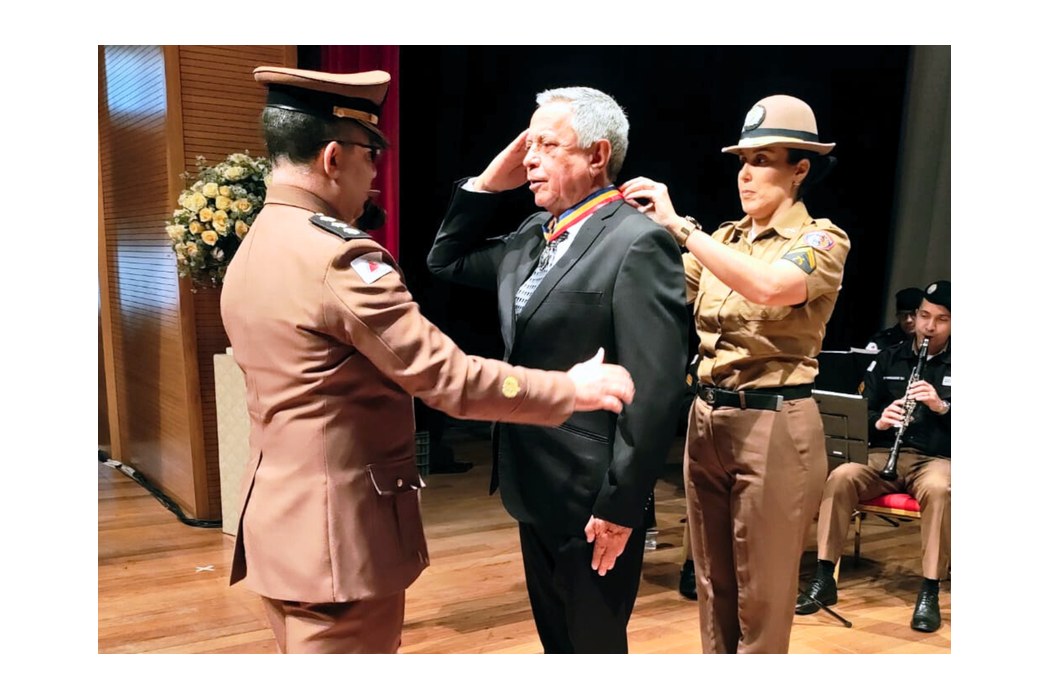
The Uniform Comes Off. The Institution Stays.
UMMG began with a problem most institutions prefer not to see: what happens to the person when the uniform comes off? Seventy-eight years later, its answer still mixes advocacy, practical care and the stubborn preservation of memory.

911MEDIA knows who is reading
Police associations already have an audience. 911MEDIA builds the magazines, websites and advertising programs that give that audience a reason to keep paying attention.

SOSA puts a price on the right introduction
New Jersey awarded SOSA $2.352 million to help international companies find their footing. From cement investments to public-safety pilots, its business is getting promising technology past the first meeting.

Mindr Built a Business Around Getting the Car Keys Back
The company behind Intoxalock connects breath tests, repair shops, insurance and court reporting. Its next bet is persuading people to buy alcohol monitoring before a judge requires it.

Gorilla Technology’s Next AI Act Comes With a Bigger Bill
Gorilla made its name teaching cameras to spot trouble. Its next act is financing and deploying AI compute across Asia - a bigger business with a much bigger bill.

Northgate Information Solutions: the business behind Britain’s payday
An oil-depot explosion exposed how much everyday life depended on Northgate’s software. Its later breakup scattered the name, but the payroll, housing and public-service businesses kept going.

GoodSAM Built a Digital Shout That Travels Through Walls
A neurosurgeon and a software engineer began with one awkward fact: the right person is often nearby, but has no idea help is needed. GoodSAM turned that gap into a dispatch, video and volunteering platform used by emergency services around the world.

Flock Built a $7.5 Billion Crime-Solving Network. Now It Has to Prove the Network Can Police Itself.
Flock made license-plate intelligence cheap to deploy and easy to share. The product worked so well that the governance around it became the company’s most important engineering problem.
Critical Response Group Built the Map for the Moment Everyone Starts Shouting
CRG took a battlefield habit - one shared picture, one shared vocabulary - and carried it into American schools. The hard part was never drawing the map. It was making sure the right map appeared in the right hands when communications began to fray.
The Ankle Monitor Is the Small Part of Track Group's $35 Million Bet
Track Group built a recurring business around a device nobody chooses to wear. Its harder job is making every alert useful to the officers, victims, and supervised people who have to live with the consequences.

The Software Behind the Sirens: How ImageTrend Turned Emergency Paperwork Into a 43-State Data Moat
ImageTrend built a durable software business in the least glamorous seat in the ambulance: the paperwork. Now its vast emergency-response data network is becoming an AI-powered operating system - and a useful lesson in how vertical software wins.

Evolv Sold the End of Security Lines. Then Reality Walked Through the Scanner
The Boston-area company turned the security checkpoint into a subscription business used by schools, hospitals and stadiums. Its next act depends on proving that speed, detection and sober claims can finally travel together.

Juvare Built the Operating System for the Hour Everything Goes Sideways
When hospitals fill, storms land or a power grid falters, the first casualty is often a shared sense of reality. Juvare sells that shared picture - and a growing stack of tools for acting on it.

The Danish Earpiece Quietly Wired Into America's Security Details
A Copenhagen audio startup bet that cops and bodyguards deserved better than the earpiece that came in the box. Seven years and five patents later, its 360 sits in the ears of security details who can't afford to miss a word.
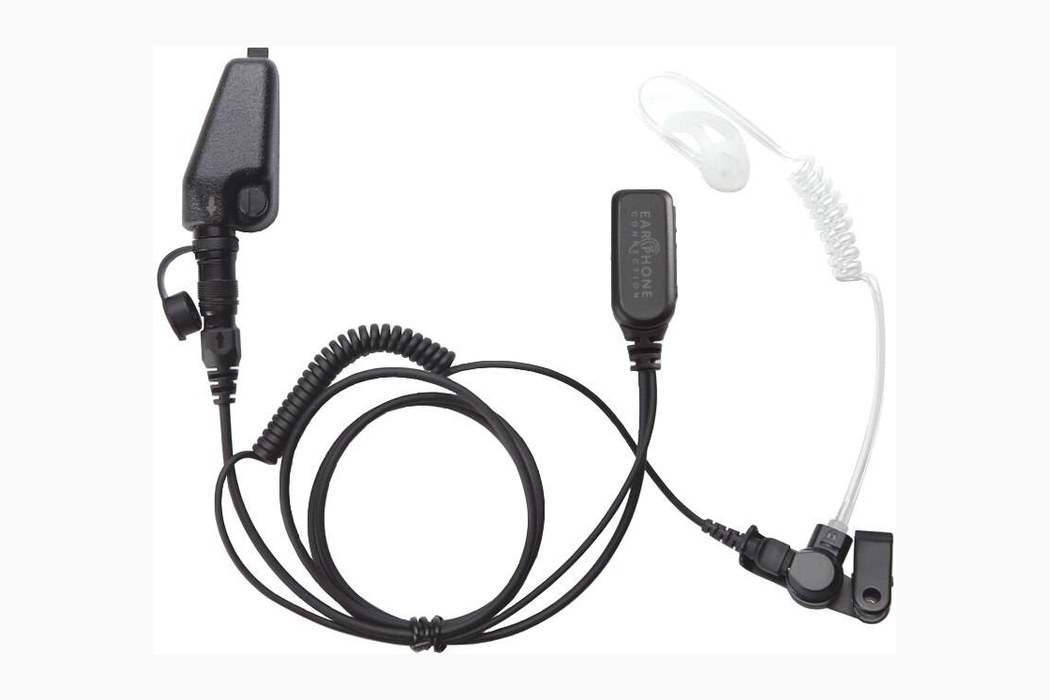
The Guy From "Cops" Who Now Fixes The One Thing Every Officer's Radio Gets Wrong
For 25 years, a small California shop has quietly rebuilt the earpiece the police radio industry treated as an afterthought - starting with a man who spent years filming officers before he ever sold them anything.

AT&T Spent $134 Billion Chasing Hollywood. Its Comeback Runs Through Boring, Beautiful Fiber
The telecom giant’s costly media adventure ended in retreat. Now AT&T is making a simpler wager: own the pipes, bundle the connections, and make reliability interesting again.
Your Smoke Alarm Can't Smell Gas. DeNova Detect Thinks Your Next One Should.
New Cosmos sold 75 million gas alarms across Asia before most Americans knew the category existed. Now its Chicago-area outpost is quietly wiring the U.S. for a hazard no smoke detector was ever built to catch.

Atlantic Radio’s 36-Year Bet: When Phones Falter, the Walkie-Talkie Still Gets the Job Done
A South Florida team of eight has spent 36 years selling an unfashionable advantage: one-button communication that survives noise, weather, dead zones and work gloves. Its real product is not the radio - it is removing every reason the radio might fail on shift.

The 66-Year-Old Radio Company Betting Your Cell Phone Will Fail You
Cell towers go down in storms. Midland Radio has spent 66 years selling the backup - and turned a fading CB brand into the default radio for Jeep trails, farm fields, and emergency closets.

The Fire Chief Had Two Radios and Still Couldn’t See His Crew - 3AM Built the Missing Map
A volunteer firefighter saw crews tracked with magnets and radio calls. The Buffalo company he co-founded spent a decade turning that blind spot into FLORIAN - and learned why emergency technology has to fit the incident, the budget and the procurement system.

Tyler Technologies
Tyler Technologies built a $2.3 billion business in the least glamorous corner of software: the machinery of government. Its advantage is not a single killer app, but a web of systems that makes switching difficult and public work increasingly connected.

Enghouse Systems
How a quiet Markham software company turned buying unloved businesses into a decades-long compounding machine - one contact center, video platform, and telecom system at a time.

Quantela Inc.
Quantela is a smart-city technology company that helps cities and communities digitize urban infrastructure through an AI- and IoT-powered data platform. Founded in 2015, it evolved from a dashboard tool into a full urban infrastructure platform spanning smart lighting, traffic, public safety, digital advertising and citizen services. Quantela is known for pioneering an 'outcomes-based' business model, funding projects up front in exchange for a share of the resulting revenue or savings, and operates across the Americas, EMEA, India and Asia-Pacific.

Bulzi, Inc.
Bulzi, Inc. (styled Bulzī, pronounced 'bulls-eye') is a dual-use technology company that uses edge-AI and Internet of Things (IoT) sensors to deliver situational awareness, security, and safety solutions. Originally built to measure out-of-home advertising audiences by passively detecting nearby mobile devices, Bulzi adapted its RF-sensing platform for defense and public-safety missions with roughly $2M in SBIR funding from the U.S. Air Force and Army. Its products span passive C5ISR sensing (SAFER), base access control (z-BASE), and medical-grade vital-signs monitoring (BioSCOUT), serving warfighters and first responders alongside commercial advertising customers.

Corti
Corti is a Copenhagen-based healthcare AI company that builds clinical-grade models and APIs helping developers and health systems automate medical conversations. Its Symphony model powers speech-to-text, medical coding, clinical note generation, and agentic workflows, serving roughly 100 million patient interactions a year across providers, insurers, EHR vendors, and public-safety dispatch centers - including the NHS. Corti positions itself as privacy-compliant, healthcare-specialized infrastructure that outperforms general-purpose models on medical tasks.

Zencity
Zencity is a govtech company that builds the leading platform for community trust, purpose-built for local government. It combines AI-driven social listening, statistically representative resident surveys, and communication tools to help cities, counties, and public safety agencies understand what residents think and turn that input into decisions, budgets, and policy. Founded in 2016 and headquartered in New York and Tel Aviv, Zencity works with more than 600 government agencies and has raised roughly $93M in venture funding.
Airspace Defense
Airspace Defense (formerly Airspace Systems) is a Silicon Valley company that secures the low-altitude airspace where drones increasingly operate. Its patented Airspace Spatial platform fuses Remote ID, RF and electronic sensing, radar and AI analytics to detect, identify and track unauthorized drones and their operators at city scale. Founded in 2015 by a team from Apple, Google and Cisco, the company serves public safety agencies, national defense and major enterprises, and its autonomous Interceptor drone is held in the Smithsonian National Air and Space Museum.
Obvio
Obvio is a San Carlos, California startup building solar-powered, AI-equipped camera pylons that watch intersections for dangerous driving - running stop signs, speeding, illegal turns, crosswalk violations and distracted driving. The cameras process footage on-device, flag only genuine violations for human review, and hand verified cases to local police, who decide whether to issue citations. Obvio installs the hardware for municipalities at no upfront cost and earns revenue from a share of citation fees. Founded by former Motive engineers Ali Rehan and Dhruv Maheshwari, the company raised a $22 million Series A led by Bain Capital Ventures in June 2025 and reports that early Maryland deployments cut stop-sign running by roughly 50-70%.