There is a peculiar moment in any uniformed career when the clothes go back into the wardrobe and the person wearing them becomes, administratively speaking, a former version of himself. The schedule disappears. So does the rank. The colleagues scatter. An institution that once occupied every hour of the day can suddenly feel very far away.
That moment is the reason UMMG exists. The initials belong to the União dos Militares do Estado de Minas Gerais, a private association based in Belo Horizonte. But its original name was more revealing: the União dos Reformados da Polícia Militar - the Union of Retired Military Police. It was created on January 10, 1948, when retirement could look less like a reward and more like exile.
The founders' first insight was not complicated. A career may end on paper while its obligations, friendships and identity do not. People who had spent their working lives protecting the public were finding that the apparatus around them had no equally practiced way to protect them. The first thing to fail was continuity. UMMG's answer was to build some.
01 / The useful and the ceremonial
A dentist, a bed and a medal
Professional associations often divide neatly into two types. There are the useful ones, which help with a claim, a form or an appointment. Then there are the ceremonial ones, which arrange speeches and polish plaques. UMMG is interesting because it refuses the division.
By 2007, its Belo Horizonte headquarters was publicly described as holding a transit hotel, dental, physiotherapy and psychological clinics, a games room, an auditorium and an events hall. Members could also turn to the association for hospital, funeral and financial assistance. This is not a glamorous product catalogue. It is a list assembled by watching where life becomes inconvenient, expensive or lonely and placing a service there.
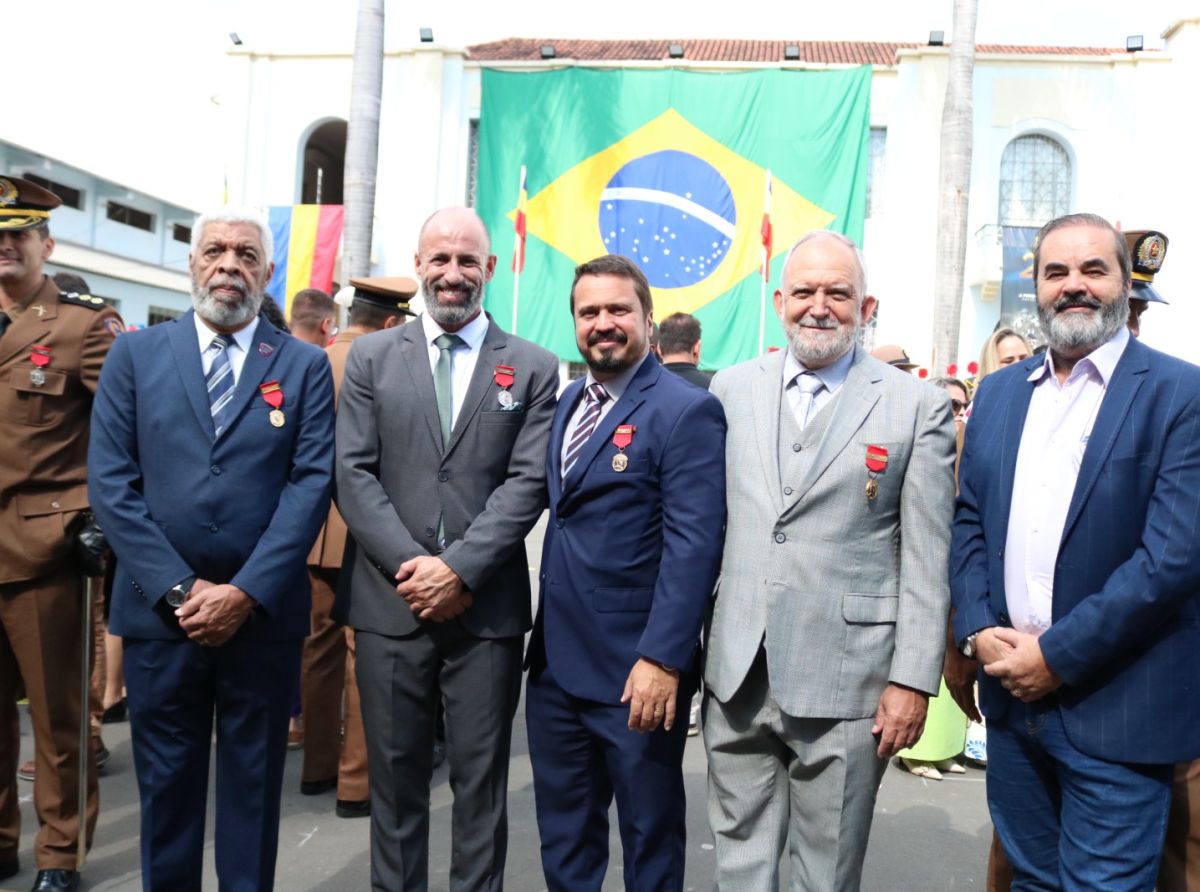
Then come the medals. UMMG organizes veteran ceremonies connected to the anniversaries of the Minas Gerais Military Police and Fire Brigade. The Dever Cumprido medal carries a remarkably long clock: it recognizes eligible members who served for 30 years and then reached 30 years in retirement. Most loyalty programs lose interest after twelve months. UMMG is still counting after sixty years.
“The work of the organization is to promote quality of life for the Minas Gerais military family.”Zeder Gonçalves do Patrocínio, UMMG president, 2007
The ceremony is not decorative excess. It does a different job from the clinic. The clinic says your needs still count. The medal says your history still counts. Together they turn membership into something more durable than a discount card.
02 / Geography is part of the product
The 1,100-kilometre round trip
Minas Gerais is a place where a statewide promise can be defeated by a map. In a 2016 public hearing, UMMG representative Jorge Batista de Araújo Filho recalled traveling from Belo Horizonte to Teófilo Otoni while serving as a regional director. The return journey could pass 1,100 kilometres. He compared it with a 420-kilometre European trip that crossed the Netherlands, Belgium and France. The joke contained an operating problem: centralization is easy to announce from Belo Horizonte and punishing to use from elsewhere.
UMMG said it had a presence in 18 interior municipalities in 2007. In 2025, a formal agreement pushed the regional logic further. The Minas Gerais Military Police permitted the association to use existing buildings in Lavras, Bom Despacho, Divinópolis, Governador Valadares, Uberlândia, Montes Claros, Manhuaçu, Ipatinga and Barbacena for five years.
What did UMMG do? It expanded access without first constructing a real-estate empire. What did it cost? The public notice described the permission as free. The copyable idea is simple: if your members already gather inside a trusted institutional network, borrow the network before buying new walls.
One membership, four kinds of continuity
This model is strongest where the parent institutions cooperate, facilities already exist and members share a dense professional identity. It travels less well to a scattered workforce without common buildings, shared rituals or a reason to remain connected after employment. UMMG benefits from all three.
03 / Influence without pretending to be the state
The association in the room
UMMG is not the Military Police. It is not the Fire Brigade. It is not the military pension institute, the legislature or a court. Its leverage comes from sitting between these bodies and the people who must navigate them.
That position appeared plainly in 2016, during a federal hearing in Belo Horizonte on the proposed unification of Brazil's police forces. UMMG attended to state its members' position. The association's role was not to issue an order; it was to ensure that people affected by the policy were represented while the order was being imagined.
Its market is crowded in a productive way. ASPRA represents police and firefighter personnel. AOPMBM represents officers. The Officers' Club, CSCS and other groups serve overlapping constituencies. They compete for attention and members, but they also appear together at ceremonies and around common policy demands. UMMG's difference is historical emphasis: it began with the retired, then widened its circle without abandoning the after-service question.
04 / The thing worth copying
Design for the day after
The obvious lesson from UMMG is that member organizations should offer useful services. The better lesson is about timing. Most employers and institutions are designed around the period when a person is maximally legible to them - enrolled, employed, uniformed, billing hours. UMMG was designed around the day after that legibility ends.
That changes what counts as a product. A short-stay room matters because Minas Gerais is enormous. A funeral benefit matters because families eventually face the administrative edge of a life. A hearing appearance matters because rules are easier to influence before they harden. A medal matters because status is not childish simply because it cannot be entered on a balance sheet.
The formula is not mysterious: find the transition where your institution becomes bad at seeing people; place practical help at that seam; keep the old identity available without trapping anyone inside it. UMMG has spent 78 years refining that sequence. Its longevity does not prove every position it takes or every service it offers is right. It proves the original observation was durable.
The uniform comes off. The person remains. Build from there.