energy-storage
(44)
Darren Van’t Hof Learned Solar Through the Ledger - Now He Has to Win the Argument
After two decades financing the energy transition and 15 years inside SEIA’s boardroom, Darren Van’t Hof has crossed from underwriting solar’s growth to defending its place in America’s power supply.
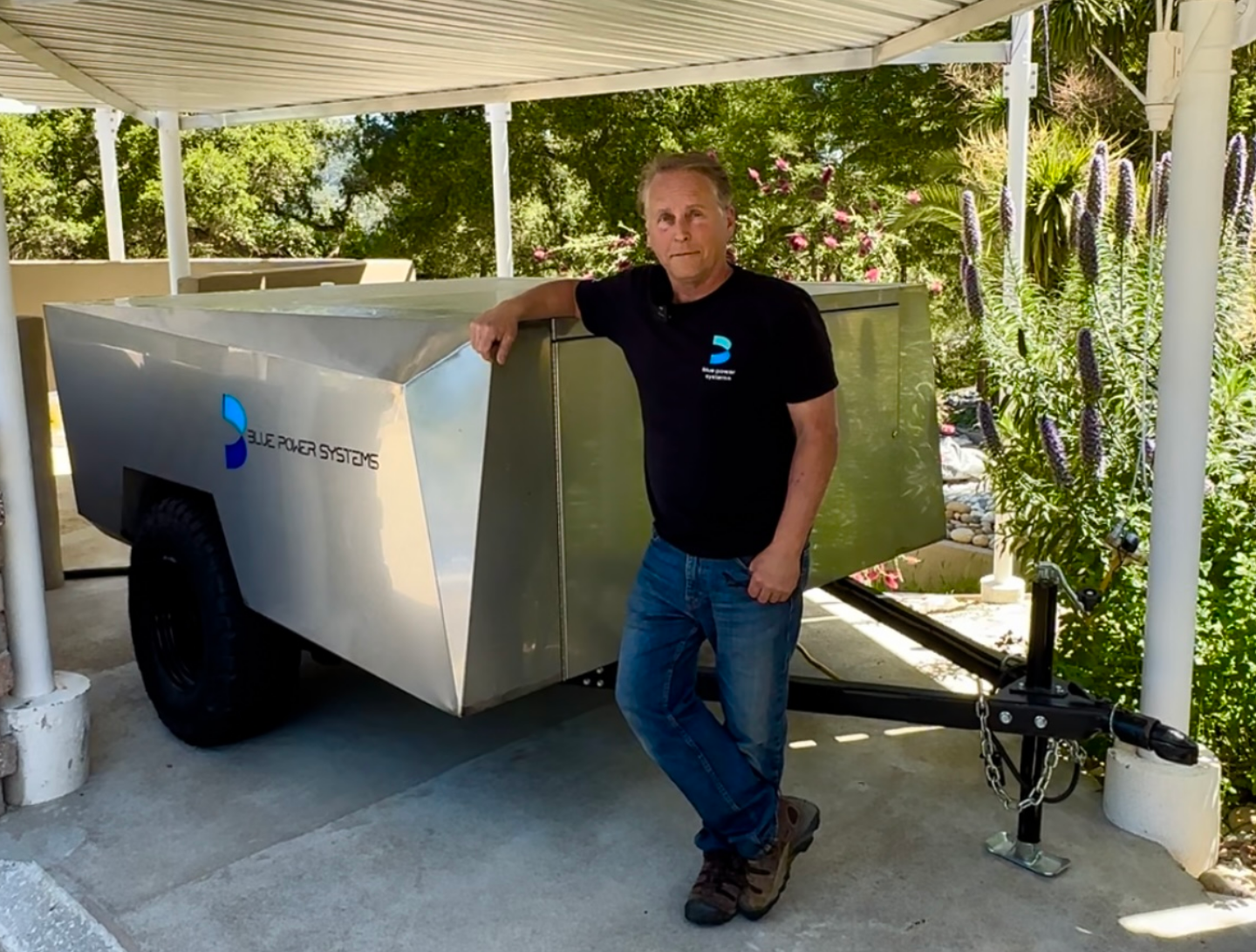
Ray Caamano's Long Bet: Make the Grid Optional
A high-school dropout taught himself electromagnetics, helped rethink the electric drivetrain, and spent decades learning one stubborn lesson: reliable power is a systems problem.

Michael Baker Is Teaching Batteries to Wait for the Right Five Minutes
A grid battery can make a fifth of its annual revenue in a single five-minute interval. Michael Baker built Tyba around the quiet, difficult art of being ready when that interval arrives.
Rajan Kumar Put the Battery Factory on a Diet
A stretchable battery started the company. A stubborn factory bottleneck changed its course. Now Rajan Kumar is betting that better batteries begin with a faster, cleaner way to make the part inside.

The Battery’s Hardest Job Is Leaving the Lab
For three decades, Yutaka Wakai has worked where promising materials meet unforgiving machinery. His years at Blue Current put him at the quiet hinge of the battery business: turning a silicon-rich, fully dry chemistry into something a factory can repeat.

Paul Gaynor Built a Renewable-Energy Career for the Years After the Ribbon Cutting
The Longroad Energy co-founder has spent four decades learning that a power project is not a product launch. It is a promise measured in permits, financing, megawatts and years.

Matthew Irvin Is Teaching the Grid to Use Time
The Maplewell Energy co-founder spent his career around power plants and utility constraints. Now he is betting that smarter timing - from refrigerated drinks to distributed batteries - can make the electric system more flexible.

Deep Chakraborty Is Building Memory for the Rooftop
He arrived in America with one suitcase, a sitar and a ticket he still keeps. Decades later, Deep Chakraborty is trying to give every solar roof something the industry has often misplaced: a continuous memory from first sketch to long-term performance.
Jim Murphy Built for the Grid's Long Game
After 25 years beside founder Michael Polsky, Invenergy's finance-minded co-founder has taken the CEO seat. His operating idea is simple: relationships compound, execution matters, and the power grid cannot run on slogans.

Arnold Leitner Has Been Redesigning Power Since He Was 19
A teenage passive-house project became a 35-year argument with the electric grid. Now the physicist behind SkyFuel and Leitnium is betting that homes should make, store, and command their own power.
John Ahlman Wants the Solar App to Be the Thing You Show Your Neighbors
SolarEdge's North America marketing chief has a practical theory of the energy transition: make the hardware work together, make the data legible, and give a happy homeowner something worth showing at the kitchen table.

Yasovardhan Chinni
Yasovardhan Chinni, known in the industry as YC, is a marine engineer turned entrepreneur who runs YC Ventures, a Dubai-based diversified investment group built around a maritime core. Starting from the engine room, he founded Nan Lian Ship Management in 2015 and expanded into commercial shipping, ship management, maritime fintech, marine e-commerce, and energy storage. Through YC Ventures he owns and operates a fleet of tankers, bulk carriers, and offshore vessels while backing ventures like ShipFinex, Shipskart, and Terranova Green Energy.
Sam Dai
Sam Dai is the co-founder and CEO of Enpower Greentech, a battery cell maker building semi-solid-state, lithium-metal, and silicon-rich cells. Trained as a physicist at Tsinghua and a materials scientist at UT Austin under Nobel laureate John B. Goodenough, he started the company in 2012 with fellow post-doc Che Yong. The company has shipped over 3 million solid-state cells, holds more than 100 patents, and runs facilities across the US, China, Japan, and Germany. Dai was selected for Unreasonable Impact Asia Pacific 2024.
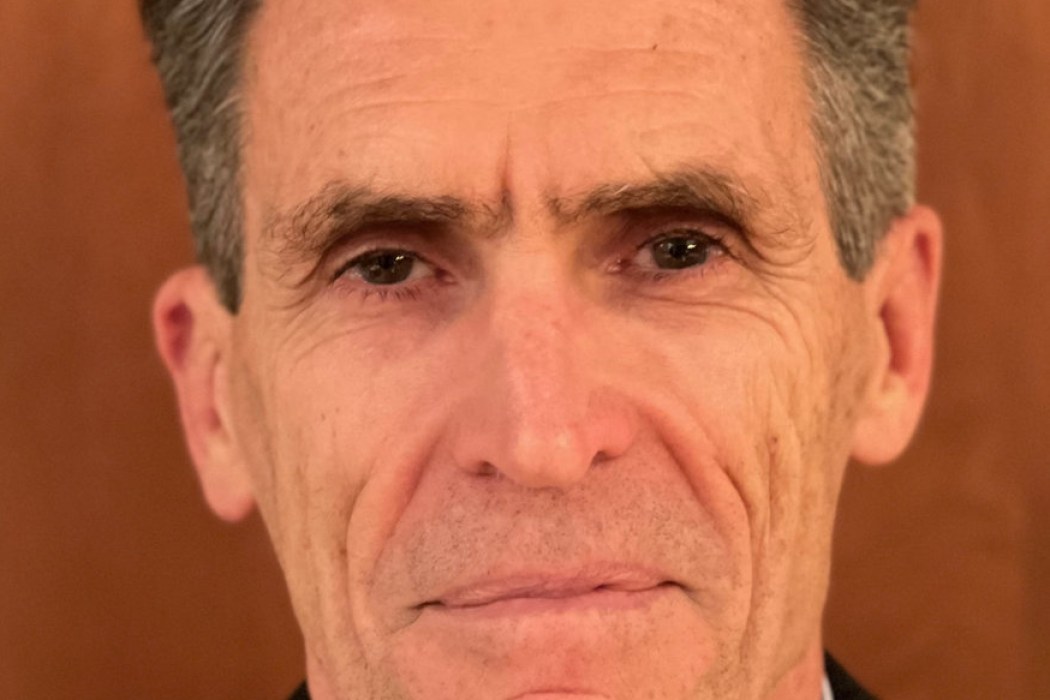
Steve Bisset
Steve Bisset is an Australian-born engineer and serial founder who has built two companies four decades apart in two different industries. In the 1970s he left an 18-month stint at Intel - where his first assignment was finding the first working 8080 chip in a tray of parts - to start Megatest out of his bedroom with $10,000 of vested stock and a housemate from Caltech. Megatest grew into a semiconductor test equipment company, survived the 1985 industry collapse that cut it from 450 people to about 200, listed on NASDAQ in 1993, and was acquired by Teradyne in 1995 for $245 million. In 2009 he co-founded Terrajoule, now Terrajoule Energy Inc. in Palo Alto, on a deliberately unfashionable premise: pair concentrated solar heat with pressurised hot-water storage and a reciprocating steam engine, a machine nobody had manufactured commercially since the 1950s. Terrajoule raised an $11.5 million Series A in 2013 led by New Enterprise Associates with Air Liquide, and Bisset continues to pursue low-cost dispatchable solar as an alternative to PV-plus-battery, with work extending into India.

Steve Huang
Steve Huang is the founder and CEO of KiWi New Energy, a Taiwan-born, San Mateo-based startup building what he calls an operating system for global renewable energy. A serial green entrepreneur with more than 15 years across the semiconductor and solar value chain, Huang went from NVIDIA and public silicon-wafer ventures to a near-total collapse when Chinese rivals undercut his micro-inverter business, then rebuilt around an AI-driven energy datacenter that matches clean supply with retail and small-business demand in real time.

Sujeet Kumar
Sujeet Kumar is the co-founder and CEO of Ionblox, a Fremont, California battery company building pre-lithiated silicon-anode lithium-ion cells for electric vehicles and electric aviation. A materials scientist with a Ph.D. from the University of Rochester and more than 60 patents to his name, he previously served as CTO of Envia Systems, where his team developed one of the first 400 Wh/kg lithium-ion cells with a silicon anode. Ionblox, formerly Zenlabs Energy, has raised roughly $32 million in Series B funding from backers including Lilium, Applied Ventures, Temasek and Catalus Capital, and markets cells that promise higher energy density, up to five times more power, and 10-minute fast charging.

Christopher Gosline
Christopher Gosline was the co-founder and first CEO of SYSO Technologies, a Boston company that turns passive solar, wind, and battery projects into active participants in wholesale power markets. Before SYSO, he ran a $100M+ software business at demand-response pioneer EnerNOC and helped build BlueWave Solar as a senior vice president. Trained in geographic information systems and energy policy, he spent more than two decades pushing toward a grid that runs without fossil fuels, and was known as much for the team he built as for the funding rounds he closed.

Mohamed Badawy
Mohamed Badawy is the founder and CEO of Scalvy, an Austin-based hardware startup building modular 'Power Neuron' electronics that replace centralized inverters, chargers and DC-DC converters in electric vehicles, energy storage and AI data centers. A former tenured associate professor at San Jose State University who founded and directed its Center of Power Electronic Converters, he left academia in 2024 to commercialize the modular architecture he had been researching. In March 2026 Scalvy closed a $13.9M Series A co-led by Silicon Badia with Azolla Ventures, Climate Capital and SkyRiver Ventures.
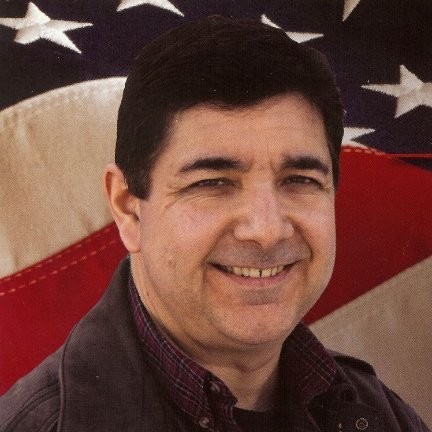
Bob Abboud
Bob Abboud (Robert G. Abboud) is a nuclear engineer turned energy-storage executive who runs Beacon Power, the company that keeps spinning carbon-fiber flywheels to steady the U.S. power grid. Trained at Purdue and Northwestern, he cut his teeth researching at Argonne National Laboratory and engineering reactors at ComEd before founding RGA Labs, an Illinois engineering firm, and picking up patents in magnetics and superconducting technology. He also spent nearly a decade in local politics as village president of Barrington Hills and ran for U.S. Congress in Illinois's 16th district in 2008.
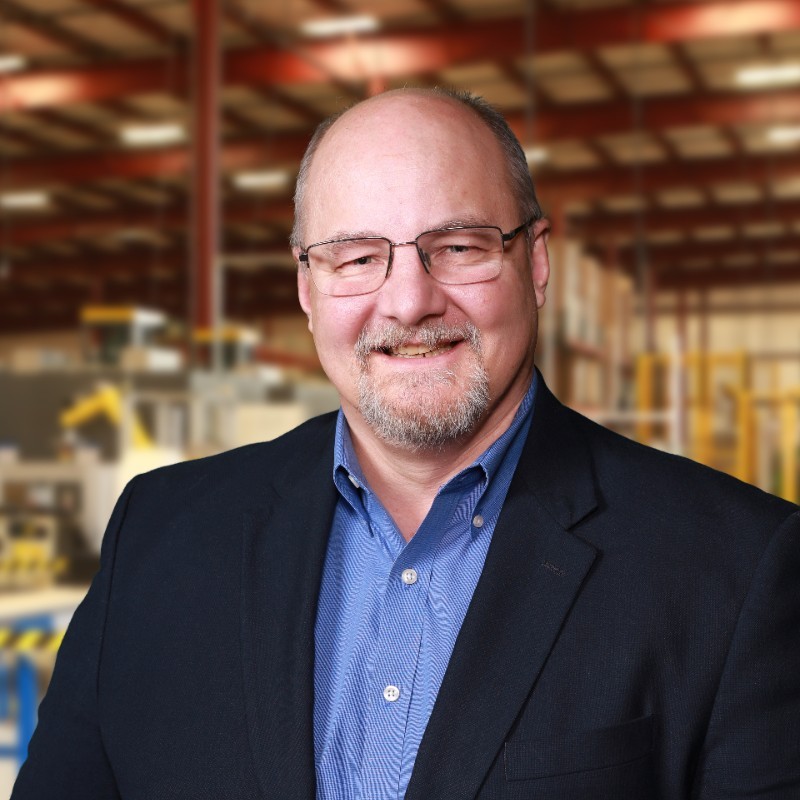
Edward Shaffer
Dr. Edward O. Shaffer II is the CEO and founder of Advanced Battery Concepts, a Clare, Michigan company he started in 2009 to reinvent the 160-year-old lead-acid battery instead of chasing lithium. His patented GreenSeal bipolar architecture strips cost, lead and weight out of large-format storage while keeping the batteries fully recyclable, and it has been licensed to battery makers around the world including Crown, Clarios, EnerSys, Exide, Trojan and Monbat. An MIT-trained materials scientist and former Dow Chemical R&D manager, Shaffer argues that energy storage only scales when it is economically, socially and environmentally responsible - all three at once.

Jamal Burki
Jamal Burki is the co-founder and CEO of Renewance, Inc., an Elmhurst, Illinois company that manages industrial and grid-scale batteries across their full lifecycle - installation, monitoring, decommissioning, repurposing, and recycling. A former Motorola telecom engineer turned energy-storage operator, he built Renewance in 2015 with two ex-GE Energy Storage colleagues to solve a problem few were watching: what happens to the millions of batteries powering the clean-energy transition once they wear out. Under his leadership the company has commissioned and serviced over 20 gigawatt-hours of storage, decommissioned more than 100 megawatt-hours, and built RenewanceConnect, an AI-assisted platform for battery asset management and regulatory compliance.

Jin Lim
Jin-Myoung Lim is the co-founder, CEO, and CTO of ACT-ion Battery Technologies, a Dallas-based deep-tech startup reinventing how cathode active materials (CAM) are made for lithium-ion batteries. A PhD mechanical engineer from Seoul National University with 2,272+ research citations and an h-index of 27, Lim spun ACT-ion out of Hunt Energy Enterprises in 2019 with a bold thesis: that the biggest bottleneck in the battery supply chain isn't the chemistry - it's the manufacturing process. His Hydro4Crystal platform produces coated single-crystal CAMs continuously, with lower energy, cost, and emissions than any incumbent method, and it works across chemistries from LFP to NMC. In 2024, the technology won an R&D 100 Award. By late 2025, ACT-ion had raised $11.5 million from BASF Venture Capital, LG Technology Ventures, Mirae Asset Capital, and Korean institutional investors, and was breaking ground on a pilot plant in Carrollton, Texas.
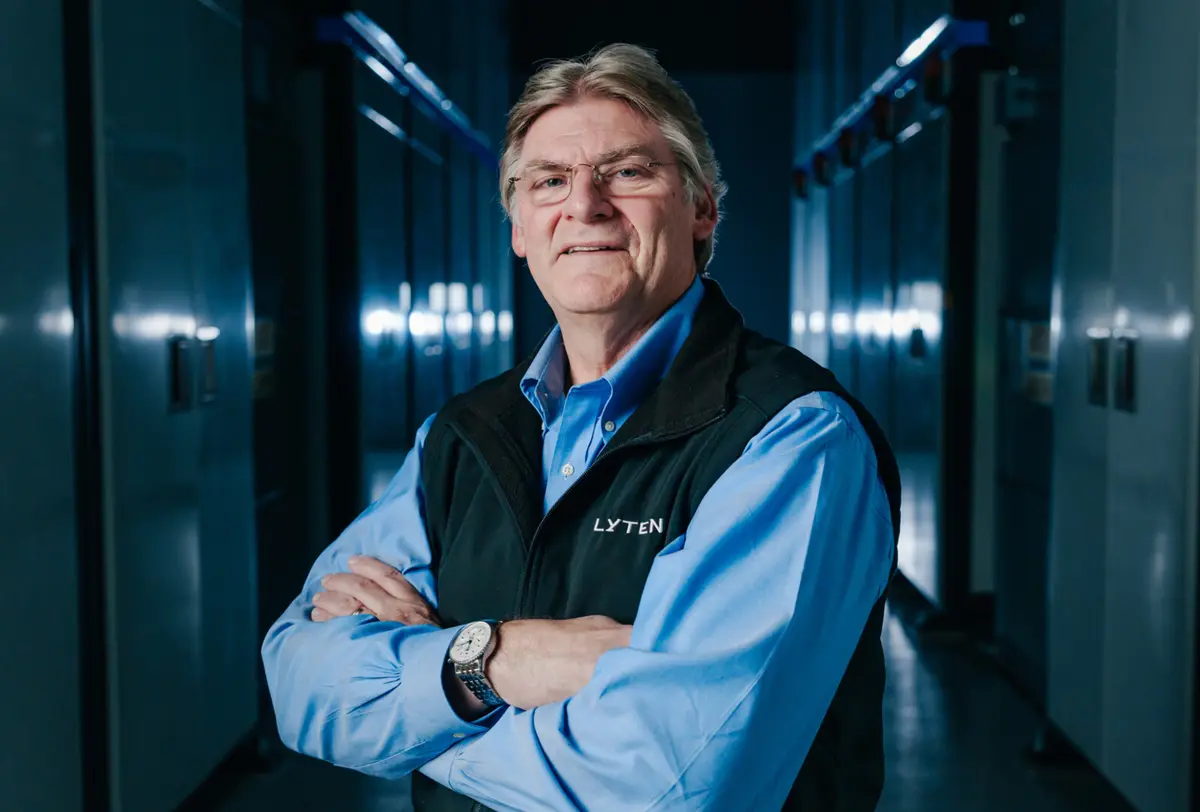
Dan Cook
Dan Cook is the CEO, Co-founder, and Investor at Lyten Inc, a San Jose-based deep-tech company pioneering 3D Graphene supermaterial and next-generation lithium-sulfur batteries. With over three decades spanning General Motors, NeXT Computer (under Steve Jobs), Bay Networks/Nortel, and private equity at Cerberus Capital, Cook pivoted to found Lyten in 2015 around a serendipitous discovery: trying to turn methane into clean hydrogen, the team accidentally created a revolutionary 3D graphene material. Under his leadership, Lyten has raised over $1.2 billion, shipped lithium-sulfur A-samples to automotive and military customers, announced the world's first lithium-sulfur gigafactory in Reno, Nevada, and in 2025-2026 acquired significant Northvolt assets across Europe to become one of the largest battery manufacturers on the continent.
Bill Grinstead
Bill Grinstead is the co-founder and CEO of Orenda, a Brooklyn-based renewable energy company building standalone battery storage that keeps New York City's overloaded grid from buckling. A former finance professional who cut his teeth at Susquehanna International Group and the $7B private equity firm Marlin Equity Partners, Grinstead traded markets for megawatts in 2020. Under his lead, Orenda has grown into one of the largest energy storage developers in downstate New York, claiming roughly a 34% share of the NYC storage market and a development pipeline measured in the hundreds of megawatts, while handling everything from site origination and permitting to construction and live operations.
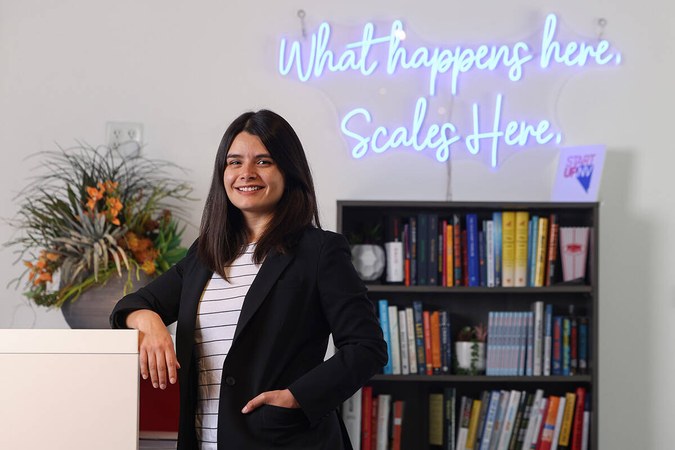
Maryssa Barron
Maryssa Barron is the founder and CEO of BuildQ, an AI-powered project intelligence platform for the energy sector that structures project data, automates due diligence, and accelerates clean energy financing and M&A. A Harvard graduate, Stanford-trained lawyer, and licensed D.C. attorney, she spent nearly a decade in renewable energy - pioneering early power purchase agreements and rising to COO at a global independent power producer - before building the tool she wished had existed. She founded BuildQ in 2024 while studying for the bar exam, won the 2025 AngelNV competition and over $1 million in funding, and within a year had grown the platform to 300+ projects, 10+ gigawatts of clean energy capacity, and over $150 million in deal flow.

Murari Ramkumar
Murari Ramkumar is the founder and CEO of Vimano, a deeptech materials startup building PFAS-free, ion-conductive membranes for flow batteries, green-hydrogen electrolyzers and fuel cells. A materials scientist trained at NITK Surathkal and the University of Pennsylvania, he co-founded the company in 2019 with Dr. Nagesh Kini and is chasing an audacious goal: to put a Vimano membrane inside one of every two large-scale energy storage devices, electrolyzers and fuel cells on the planet. In 2025 Vimano raised roughly $2.9 million in seed funding led by Ankur Capital.

Paul Huelskamp
Paul Huelskamp is the co-founder and CEO of Anode Technology Company, a San Francisco startup building AI-orchestrated mobile microgrids and battery energy storage systems that deliver grid-independent electricity to EV depots, data centers, construction sites, and live events. A renewable-energy financier turned hardware founder, he previously built and ran Moxion Power, which raised more than $110 million to replace diesel generators before it went bankrupt in 2024. In 2025 he returned with a leaner, software-first venture and $9 million in seed funding from Eclipse Ventures, determined to 'finish what we started.'
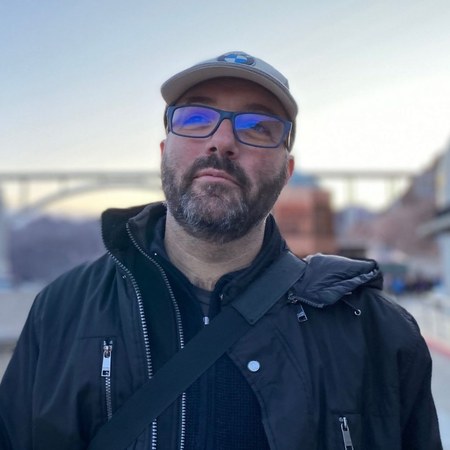
Shawn Murphy
Shawn Murphy is the co-founder, CEO and CTO of Titan Advanced Energy Solutions, a Salem, Massachusetts company using ultrasound to see inside lithium-ion batteries. After deploying instruments for NASA at Draper Laboratory and building Royal Dutch Shell's innovation engine, Shell TechWorks, Murphy spent the summer of 2016 painting wave-propagation equations on the walls of a Croatian guest room. The result is technology that reads a battery's true state of health and charge in real time, claimed to be about 100 times better than the industry standard - now deployed on cell-manufacturing lines to catch defects before they ship. Titan raised a $33M Series B led by HG Ventures in 2021.
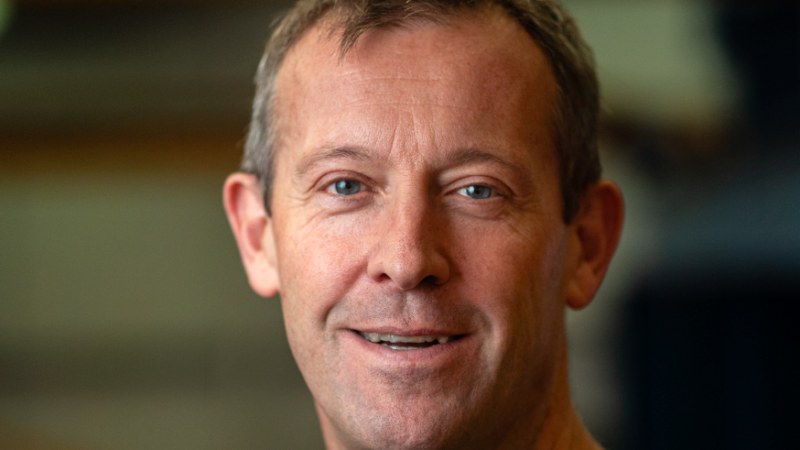
James Macnaghten
James Macnaghten is the co-founder and CEO of Caldera, a Hampshire-based climate-tech company turning cheap renewable electricity into stored industrial heat using blocks of volcanic rock and recycled aluminium. A Cambridge-trained mechanical engineer with 25+ years in business and 20+ patent families to his name, he spent a decade running grid-storage pioneer Isentropic before founding Caldera in 2017. He also owns Scudamore's Punting Co, Cambridge's largest tourist business. In 2025 Caldera closed a Series A backed by Germany's GEA Group and landed its first major order, a 10 MWh storage boiler for an NHS hospital.
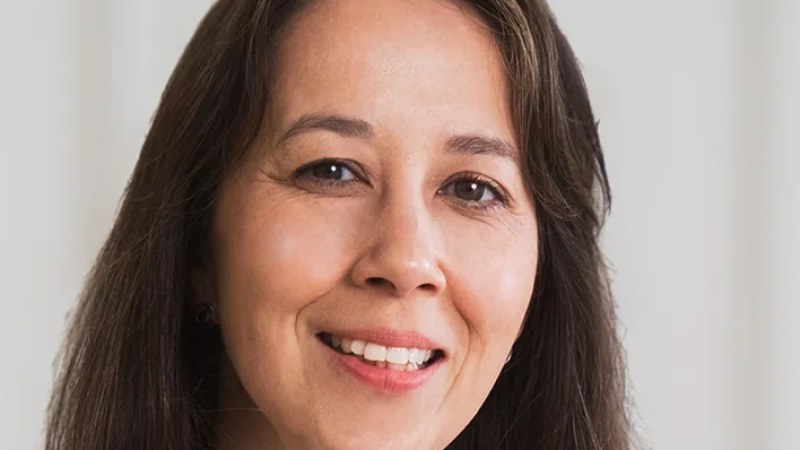
Nanna Nielsen
Nanna Nielsen is the Chief Business Officer of Critical Loop, a Los Angeles-area industrial power company that helps factories, airports and data centers get electricity in days instead of years by pairing battery storage with autonomous control software. A Danish-born operator who once ran banking operations for fintech unicorn GoCardless - overseeing more than $52 billion in transactions for 93,000+ businesses - she now applies that same operational rigor to fixing America's grid bottleneck. The company raised a $26 million Series A in April 2026.