energy-storage
(62)
The Electrician Who Never Came to Quote
Treehouse’s wager is that the hardest part of electrification is not the charger, battery or heat pump. It is the unruly journey from “I want one” to a permitted wire in the wall - and the company is trying to turn that journey into a product.

The Solar Lobby That Learned to Sell Sunlight as Infrastructure
SEIA does not make panels or sell electricity. It makes a scattered industry act like one - with lobbying, data, standards, and a very Washington belief that the right spreadsheet can become a constituency.
Innovestor puts venture capital on the roof
The Finnish investment manager connects startup funding, commercial property and battery storage. Its wager: owning more of the route from invention to everyday use can make each investment more useful.
Outpost Ventures Wants Uncle Sam on the Cap Table’s Side
The Alexandria investor backs technology with two potential buyers: business and government. Its bet is that public funding can help private capital carry expensive inventions further.
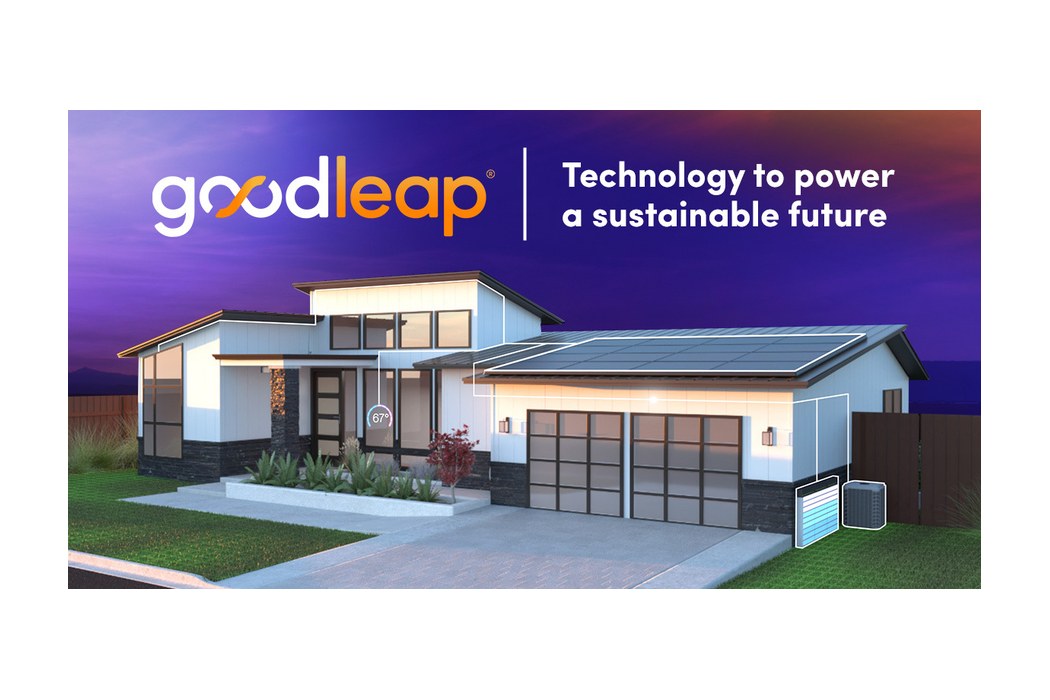
GoodLeap Put a Loan Desk in the Solar Salesman’s Pocket - Now It Wants the Whole House
GoodLeap turned a five-minute financing decision into a clean-energy growth engine. The bet now is bigger - that the same software connecting a contractor, a homeowner and Wall Street can also connect millions of houses to the electric grid.
The 70-Day Hardware Sprint: Motivo Built a Company for the Projects Everyone Else Calls Impossible
Motivo puts mechanical engineers, coders and fabricators under one roof, then hands them the sort of brief that makes a normal vendor ask for another quarter. Its real product is not a robot, tractor or aircraft part - it is a faster way to make hard technology real.

The Tiny Box That Lets Solar Installers Refuse the Walled Garden
Tigo Energy spent nearly two decades making a small, unglamorous box beneath the solar panel unusually consequential. Its wager: installers will pay for safety and intelligence without surrendering the freedom to mix brands.
Invenergy’s 38-Gigawatt Trick: Build the Power Plant, the Contract, and the Patience
The Chicago power builder became North America’s largest privately held independent producer by treating energy as a full-stack business. Its advantage is execution across decades - and its latest pivots show exactly where that model bends.
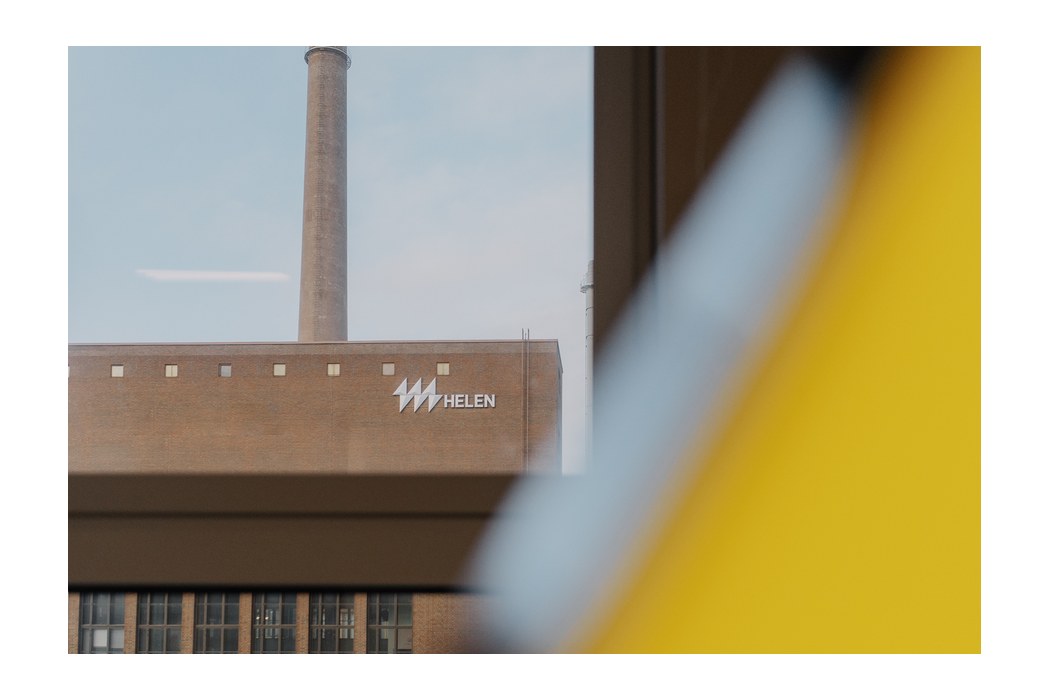
Helsinki Killed Coal Without Freezing: Helen's Blueprint for Rebuilding a City While It Runs
A century-old municipal utility retired its last coal plant, cut direct emissions 56% in a year and survived the next hard winter with heat reliability above 99.9%. The useful idea is not one miracle machine - it is a network designed to swallow whatever clean heat source works next.
Enact Solar Wants to Be the Operating System for Every Rooftop - From First Sketch to First Fault
Solar installers still lose hours to tool-switching, proposal rework and disconnected monitoring. Enact is stitching design, engineering, financing and long-term asset care into one record - and its PVComplete acquisition makes the wager much more interesting.

The Henderson Company Betting Your Roof, Your Locks and Your Light Switch Belong on One App
Solar panels, door cameras, thermostats and monitored alarms - most homeowners buy them from four different companies. LivSmart's pitch is that they should have bought them from one.
The DJI Battery Guys Who Turned a $12M Kickstarter Into a Home Energy Company
A team of ex-DJI battery engineers used Kickstarter as a factory floor, turned camping gear into home power, and built a billion-dollar clean-energy company one power outage at a time.
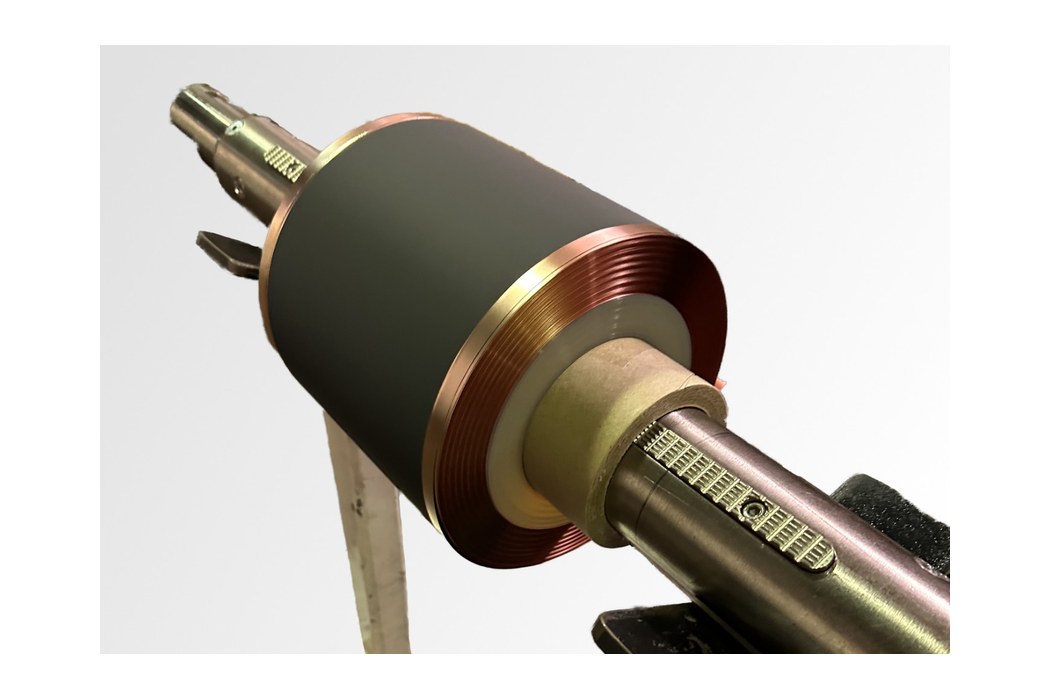
The Battery Startup Betting That the Next Breakthrough Isn't Chemistry - It's the Coating Machine
Ateios ripped the solvents and forever chemicals out of battery-making and replaced the oven with a flash of light. The result coats three times faster - and Kodak, a Nobel laureate, and a Fortune 100 electronics giant have all shown up to look.
The Solar Investor Turning Small Power Plants Into Big Infrastructure
True Green Capital built its business in the awkward middle of renewable energy: projects too small for utility-scale giants, yet too capital-intensive for many developers. Its answer is to assemble, operate and eventually sell them at institutional scale.

The Power Plants Nobody Wants - Until the Grid Needs Them
Rockland Capital built a private equity strategy around the awkward middle of the energy transition: keeping the grid reliable while cleaner power scales. Its edge is not a new technology, but an operator's appetite for complicated assets.

The VC That Shows Up With Wrenches
Most venture firms write a check and offer advice. FP Solutions writes the check, then sends mechanical engineers, supply-chain specialists, and factory-builders to help startups actually make things - rockets, batteries, building materials, and semiconductor wafers grown in orbit.
The Firm That Publishes Its Homework
Cathie Wood built ARK Invest on a heresy in money management: tell everyone what you are buying, why, and when - then let them watch.

The Company Betting America's Grid on a Reactor It Once Switched Off
It runs the largest nuclear fleet in the country, sells power to three-quarters of the Fortune 100, and just agreed to bring a piece of Three Mile Island back online for Microsoft. Inside the utility quietly rewiring how America pays for clean power.

Generac
How a generator built in a Wisconsin barn became the machine millions of Americans buy the week after the power goes out - and why Generac now wants a say in the grid itself.
SolarEdge Technologies
The Israeli company that made every solar panel report for duty individually - and then had to fight its way back from a near-death inventory crisis.

Bell Resources
Bell Resources is building AI-powered Roadside Hubs that fold ultra-fast EV charging, automated car washing, clean energy and smart retail into a single connected stop.
錫力科技 YC Synergy
錫力科技 (YC Synergy) is a Taiwan-based clean-energy company building hydrogen fuel cell power systems and end-to-end hydrogen infrastructure - electrolysis-based green hydrogen production, storage, and refueling. Founded in 2012 and headquartered in Xindian, New Taipei City, the firm designs and integrates fuel cell systems for stationary power, maritime vessels, and road transport, working with partners such as Germany's EKPO Fuel Cell Technologies and Stan Shih's zero-carbon ship venture Porrima. It was named Asia-Pacific Fuel Cell System Company of the Year by Energy Tech Review in 2024.

YC Ventures
YC Ventures is a Dubai-based diversified investment company built on a maritime core. It owns and operates dry-bulk ships, manages technical and crew operations for a wider fleet, and recycles the returns into technology ventures spanning maritime fintech (Shipfinex), marine e-commerce procurement (Shipskart), lithium energy storage (Terranova), and youth leadership education. Led by Group CEO Yasovardhan Chinni, the group works across the UAE, India, Singapore, Nigeria and the USA under the operating idea of owning the asset, running the voyage, and compounding the capital into the next venture.

Hysata
Hysata is an Australian clean-energy manufacturer commercialising a capillary-fed electrolyser that splits water into hydrogen at around 95% system efficiency, well above conventional electrolysers. Spun out of the University of Wollongong, the company aims to produce green hydrogen at the lowest cost to help decarbonise hard-to-abate sectors such as steel, chemicals and heavy transport, and is scaling toward gigawatt-scale manufacturing at Port Kembla, New South Wales.
Swap Energi
Swap Energi is an Indonesian e-mobility startup that runs Southeast Asia's largest battery-swapping network for electric motorcycles. Instead of waiting to charge, riders exchange a depleted portable lithium-ion battery for a fully charged one at more than 1,500 stations - a process that takes roughly nine seconds. The company pairs this energy network with its own SMOOT smart electric motorcycles and a rider app, and has raised about US$29 million to electrify Indonesia's fleet of over 125 million two-wheelers.

Base Power Company
Base Power is an Austin-based energy company that installs large-capacity home batteries and sells electricity to homeowners as a licensed Texas retail electric provider. Founded in 2023 by Zach Dell and Justin Lopas, it pairs whole-home backup with low fixed rates, using its growing fleet of distributed batteries as a virtual power plant that charges when power is cheap and discharges when the grid is strained. The company raised a $1 billion Series C in October 2025 at a $4 billion valuation and is building its own battery factory in Austin to scale nationally.
Blue Current, Inc.
Blue Current is a Hayward, California solid-state battery developer building what it calls a 'silicon-first,' fully dry battery platform. Its Silicon Elastic Composite chemistry ties glass-ceramic electrolyte particles to silicon anode particles with compliant polymers, constraining silicon swelling so high-silicon cells can cycle stably at low pressure without flammable liquids or PFAS. Positioned as a safety-focused, B2B licensing and pilot-manufacturing company, Blue Current targets electric mobility, grid-scale storage, and consumer devices, and closed an $80M+ Series D extension led by Amazon in December 2025.

Scalvy
Scalvy is an Austin-based power electronics company building a modular, software-defined platform called the Power Neuron that distributes power conversion and control to the edge of each battery pack instead of routing it through a single centralized block. The approach targets three power-hungry markets - AI data centers, grid-scale energy storage, and electric mobility - promising higher usable energy, ultra-high efficiency, and faster development cycles. Founded in 2022 by Mohamed Badawy, the company raised a $13.9M Series A in March 2026, bringing total funding to roughly $17M.

Chariot Defense
Chariot Defense is a South San Francisco defense-technology company building hybrid-electric power systems for the battlefield. Its Amphora platform delivers quiet, high-density, software-controlled power to distributed military hardware - drones, sensors, radios, electronic-warfare and directed-energy systems - so that energy never becomes the limiting factor in a fight. Founded in 2024 by former Anduril and Archer engineer Adam Warmoth, the company raised a $34M Series A led by Andreessen Horowitz in February 2026, bringing total funding to roughly $41-42M, and has fielded its systems with the U.S. Army and the Defense Innovation Unit.

Cool Earth Solar
Cool Earth Solar is a California solar company with two lives: it launched in 2006 as a venture-backed clean-energy startup chasing utility-scale power with cheap, air-inflated plastic concentrator dishes, then evolved into a locally owned residential and commercial solar installer serving the Stockton-to-Placerville corridor. Today it designs, engineers, and installs solar power and battery storage systems in-house - no outsourcing - under CEO Rob Lamkin, and has been a recognized SunPower dealer, winning national and regional dealer awards.