The first thing Treehouse wants to do inside your home is not to enter it. You answer a short survey. You point a phone at the electrical panel, the meter and the stretch of wall where the charger might live. Somewhere else, software and people study the evidence. A scope appears. Then a price. Only after this remote rehearsal does an electrician arrive to pull wire.
The short circuit
- Treehouse sells the whole installation journey, not a new charger or battery.
- Its customers include homeowners and the companies that need thousands of installations to feel like one program.
- The transferable trick is to remove avoidable visits and paperwork while keeping licensed judgment at the job site.
- The hard limit is physical variation: old panels, long cable runs and local permit offices do not behave like software.
This sounds like a small change until you remember how electrical contracting usually begins: phone calls, calendars, a preliminary visit, a quote that may not resemble the next quote, and a homeowner suddenly promoted to project manager. The electric car may update itself overnight. The circuit that charges it still belongs to a world of municipal forms, crawl spaces and somebody finding the correct breaker.
Treehouse, founded in 2021 as Drive Technologies, noticed the mismatch. The team ran an early proof of concept around residential EV charging in California, then renamed the company after the experiment worked well enough to suggest a larger ambition. The charger was the wedge. The underlying problem was installation.
The product hiding behind the product
You can buy an EV charger in minutes. You cannot know, from the box, whether your house has spare breaker space, enough service capacity, an easy cable route or a permit department with unusual preferences. Hardware manufacturers and automakers dislike this uncertainty because it arrives at the exact moment a customer is supposed to feel pleased with a purchase.
Treehouse packages the uncertainty. Its residential offer can cover assessment, design, a charger or 240-volt circuit, permitting, installation and inspection. If the panel is crowded, the answer need not be a costly service upgrade. A circuit can sometimes be reconfigured; charging amperage can be lowered; a subpanel or smart load-management device can make the available electricity take turns. The expertise is less “put box on wall” than “choose the least foolish way to put box on wall.”
One job, five handoffs made visible
For Toyota and Lexus customers, introduced to the service in 2026, Treehouse says a virtual scope can produce an upfront installation quote in 48 hours or less, with just one home visit for the physical work. For a fleet operator, the same machinery coordinates chargers at employees’ houses across the country. For a heat-pump company, an API can request electrical work and webhooks can report what is happening. The customer sees a smoother project. The partner sees a repeatable system.
“The industry needs an evolution, but not a revolution.”Eric Owski, co-founder and CEO
Software, meet the person with the fish tape
The quote explains Treehouse better than the fashionable phrase “AI-powered.” Owski is not arguing that electricians should disappear. Treehouse’s founding proposition is that the trade needs a better operating layer around it. Computer vision can inspect photographs. Data from completed jobs can sharpen a scope. Software can repeat load calculations and assemble paperwork. Yet a licensed professional still has to judge the site, comply with code and make the physical connection.
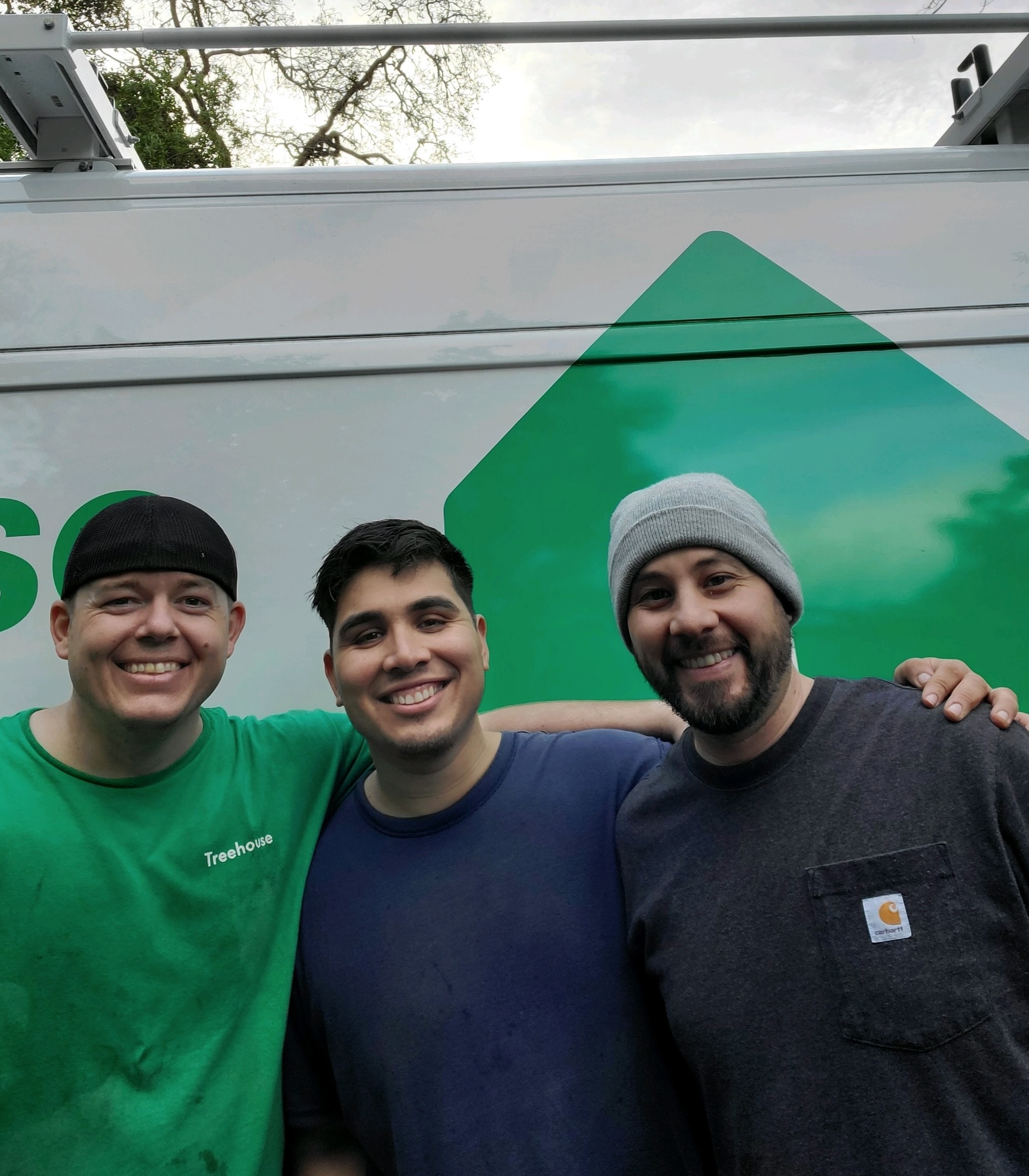
That pairing is the company’s difference. A homeowner can hire a local electrician directly. A national coordinator can route a lead to a contractor. Software firms can track a ticket. Treehouse tries to own the complete result: a centralized brand and project layer, a virtual assessment engine, code and permit management, and licensed field fulfillment. It calls the model Installation-as-a-Service.
The economics follow the job. Treehouse earns money on installation projects sold directly or through partners, while its platform lets an automaker, utility, fleet or hardware company offer installation inside its own customer journey. Public materials do not give a universal consumer price, for good reason: thirty feet of accessible cable is not the same project as trenching, a full panel or a service upgrade. The company’s promise is not that every job costs the same. It is that the price and scope become knowable earlier.
The charger was only chapter one
By 2024, Treehouse said it had helped thousands of EV drivers. It then expanded into the electrical work around batteries, bidirectional charging, heat pumps, heat-pump water heaters, induction stoves, panel upgrades, commercial sites and multifamily buildings. This was not a random menu. Every item repeats the same inconvenient pattern: a desirable electric product collides with the particular history of a building.
Partnerships reveal where the company fits. Elephant Energy designs and installs HVAC systems while Treehouse handles the electrical side. Eaton supplies smart panels, chargers and home-energy hardware while Treehouse scopes and fulfills projects. Holman and Synop connect take-home fleet installations to driver energy tracking and reimbursement. Toyota and Lexus put the home charger closer to the vehicle sale. Tenet can fold charger hardware and installation into an EV loan.
This is a distribution strategy disguised as customer service. Instead of waiting for a homeowner to search “electrician near me,” Treehouse appears where the electric product is already being chosen. The installation becomes an attachment to the car, battery or appliance. The partner gets fewer abandoned customers. Treehouse gets demand before the customer starts collecting bids.
What another operator can steal
The useful lesson is not “add AI to contracting.” It is more specific. Pick a job that occurs often enough to learn from, but varies enough to punish a crude fixed price. Ask customers for structured evidence before dispatching scarce labor. Turn expert judgment into checklists and software where possible. Keep an expert in the loop where the evidence is incomplete. Then give one party responsibility for the messy handoffs that customers otherwise perform themselves.
Treehouse’s co-founder and product chief Daniel Francis had personally electrified his home with mini-splits, a heat-pump water heater and an EV. He also spent nearly a decade working on AI and data products at LinkedIn. That combination matters. The company’s product is shaped by the annoyance of being the homeowner and the discipline of structuring data - plus the electrician’s knowledge of what can go wrong behind a wall.
The model has leverage when
- jobs repeat across many locations;
- customers can capture useful site evidence;
- partners need consistent pricing and status;
- permitting and design can be standardized in pieces.
It loses leverage when
- the building hides crucial conditions;
- local rules resist a shared workflow;
- contractor quality varies at the last mile;
- a simple local job needs no coordination layer.
Those limits are not footnotes. Virtual assessment transfers risk from a preliminary visit into the quality of the evidence and the accuracy of the scope. A national network can make availability broad, but the customer ultimately experiences one crew on one day. Old houses conceal surprises. Permit offices are stubbornly local. On a straightforward job, a trusted nearby electrician may be faster or cheaper because there is less machinery in the middle.
Treehouse’s bet is that the market will produce far more than straightforward jobs. Each new EV, battery and heat pump asks the same old electrical system a new question. Brands that sell those products do not want the answer to be a shrug and a list of phone numbers. They want an install button.
That is why the most telling Treehouse metric may not be money raised or states covered. It is the missing visit at the beginning. The absence is the feature: one truck roll removed, one quote pulled forward, one portion of a physical-world project made to behave like a product. Then the electrician arrives - not to discover what the job is, but to do it.